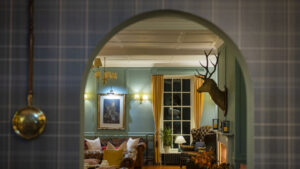
Palmetto Bluff, a 20,000-acre expanse of land nestled along the May River between Savannah, Georgia, and Beaufort, South Carolina, is a place of singular beauty, where live oaks, pines and palmettos dominate the landscape, while the spartina-lined river and its tributaries twist through the land, attracting a diverse assortment of coastal birds, sea creatures like dolphins and blue crabs, and countless species of fish.
It’s also a place where history is embedded in the community. Archeologists from Palmetto Bluff have found artifacts in its soil dating from the Civil War era back to 10,000 BC. Prior to the 19th century, Native Americans used to fish for redfish, trout and flounder in the May and hunt deer, fox and rabbit on the land. Inhabitants left behind records of their cultures and toils—ceramics, pipes, tools used for harvesting oysters. Sometimes painful and sometimes beautiful, sometimes surprising and always powerful, the layered stories of human history reveal themselves in the earth of Palmetto Bluff.

So, when South Street Partners, the Charleston, South Carolina- and Charlotte, North Carolina-based private equity real estate investment firm that bought the community in 2021, decided to add a new golf course at Palmetto Bluff, they knew they had to respect the land and its history. They were already working closely with the Palmetto Bluff Conservancy, a non-profit organization founded in 2003 to protect the land and wetlands throughout Palmetto Bluff. With the Conservancy’s support, South Street asked Bill Coore, co-founder of the golf course design firm Coore & Crenshaw—his partner is legendary golfer Ben Crenshaw—to design the new course.
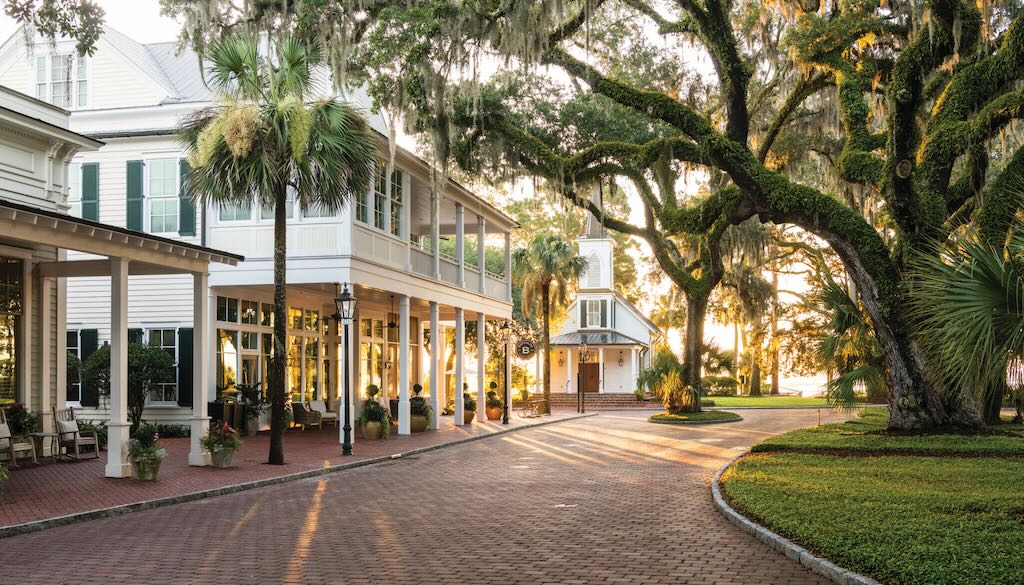
In the golf community, Coore is renowned for designing courses that seem to emerge organically from the environment, as if they were always there, just waiting to be recognized. He was a natural to design the course—he even had a history with the land: Decades before, Coore had walked the very same acreage when a previous owner was considering building a golf course. That project had never come to fruition. This one would.
“The site here—first of all, it’s sandy,” which is helpful for drainage, Coore, now 78, said recently. “Second of all, the vegetation—the big oak trees, the big pine trees, the understory trees and the magnolia, the hollies . . . is extremely attractive.”
South Street agreed. They assured Coore that they didn’t want the course surrounded by real estate, even though the sale of homesites around a Coore & Crenshaw course would be lucrative. The ethos of a Coore & Crenshaw golf course is that it’s a pristine experience, a world unto itself. No matter how tasteful they might be, homes around the course would dilute that magic. “South Street said, “Choose the site to best showcase the ideal course routing,” Coore recalled. “It’s not meant to sell real estate.” That was exactly what Coore needed to hear.
The currently unnamed Coore & Crenshaw course is estimated to open winter 2025-2026. Its debut will mark a compelling new phase in the growth of Palmetto Bluff. But it also represents continuity, an appropriate and seamless evolution in a long and eventful history. To understand why, it’s helpful to know just a little about that history.

The story of Palmetto Bluff—the modern story, anyway—begins in 1902, when a New York financier named Richard T. Wilson Jr. bought 10,000 acres of land in the town of Bluffton. The land was inexpensive then, and for a New Yorker weary of cold and snow, the idea of a mild winter was alluring. Over the next two decades, Wilson would acquire an additional 10,000 acres. Naming his estate Palmetto Bluff, Wilson built an enormous four-story mansion on the land. Surrounded by stables, barns, kennels, and gardens, it contained an estimated 40 bedrooms. Wilson’s wife, Marion, enjoyed the company of society, and the couple’s numerous friends from New York would come to visit and stay for weeks. For the Wilsons, the beauty of South Carolina and the sophistication of New York meant the best of both worlds.
But Wilson’s romantic tenure in South Carolina would come to a tragic end. On March 2, 1926, a fire of unknown origin consumed the house. Legend has it that, though the occupants safely evacuated, a distraught Richard Wilson twice attempted to reenter the inferno to rescue valuable art, books and other possessions, fortunately restrained by onlookers. The fire raged for three days—a mansion that big took time to burn—and reduced the grand building to ashes. An emotionally devastated Wilson, too overwhelmed to consider rebuilding, sold the land to J.E. Varn of the Varn Turpentine and Cattle Company. Wilson returned to New York and died three years later, never seeing Palmetto Bluff again. Today, the ruins of the Wilson Mansion—a few stone columns, a section of brick wall, a five-step stairway ending in mid-air—still linger in an area now aptly named “Wilson Village,” a poignant reminder of the grand dreams of a bygone era.
In 1937, Varn sold the land to the Union Bag and Paper Company, which originally planned to harvest timber there to make, as one might guess, bags and paper. But company executives came to believe that this land was too special to be turned into a tree farm. Instead, in the 1970s, Union Bag built a hunting and fishing lodge on Palmetto Bluff at which they hosted their biggest clients.
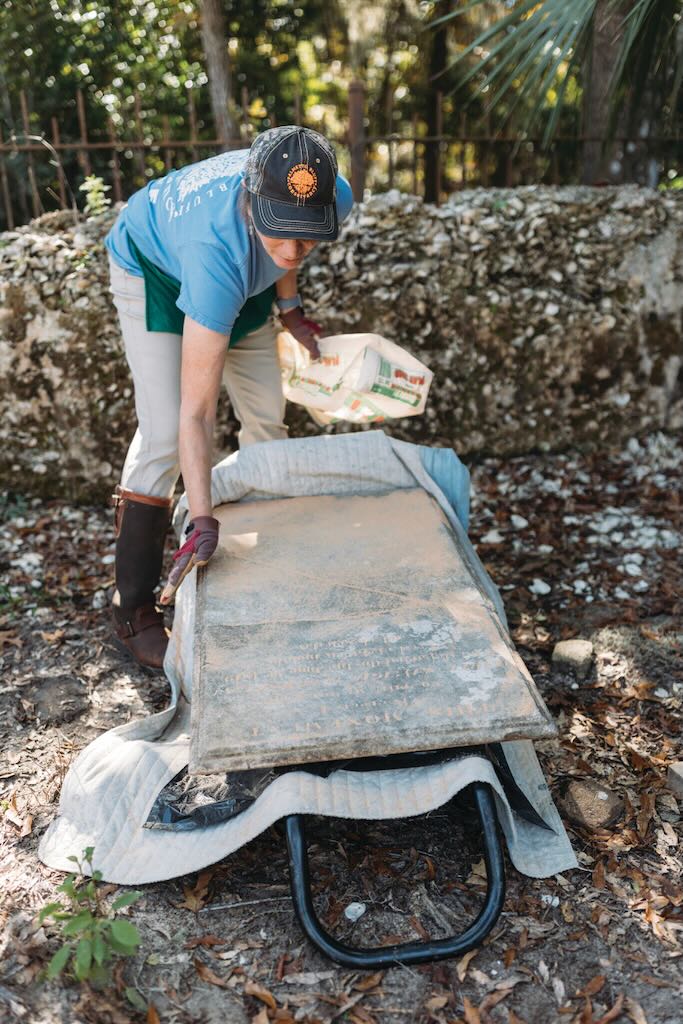
All of which meant that, for most of the 20th century, the great majority of the 20,000 acres at Palmetto Bluff had been left untouched—a stroke of good fortune. Had it been developed in the 1970s and 1980s, Palmetto Bluff might not have enjoyed the benefits of America’s evolving appreciation of its increasingly scarce coastal beauty. Not until the year 2000 did a Charlotte, North Carolina-based developer purchase the land. The tasteful homes built were designed to blend in with the landscape. Palmetto Bluff’s first community center, Wilson Village, was built, as well as the Palmetto Bluff Club and the Wilson Lawn and Racquet Club. A Montage Palmetto Bluff luxury resort opened in 2016. (Photo by Joel Caldwel)
The original land planners were supported in their work by the then-new Palmetto Bluff Conservancy. Intended to help build in compliance with local, state and federal guidelines, the Conservancy forged a balance between development and conservation. “We were set up to make sure that development and our natural environment can coincide in harmony,” says Conservancy director Jay Walea. Since the land of Palmetto Bluff had been privately held for centuries, it was unlikely that it would be preserved indefinitely, left alone and untouched. The key was to steward the land with a spirit of gratitude for its beauty, reverence for its history, and concern for its future: Everyone who experienced its forests, pathways and waterways would want generations to come to be able to share that experience. Palmetto Bluff was too magical to risk it falling into the hands of another cattle farmer or paper company that might not be as well-intentioned as its prior owners.
“I fell in love with this place from day one,” says Walea, who’s been involved with Palmetto Bluff for over 30 years. “From the time my feet hit it, I knew that there was no other place like it in the world.”

The Conservancy has an expansive mission. It identifies land for conservation; ensures that developers comply with regulations; pursues ecological research; and promotes outreach, education, and community engagement such as naturalist camps for kids. The results are tangible. Palmetto Bluff’s healthy, mixed-pine hardwood forest provides shelter and food for, among others, wild turkey, white-tailed deer, rabbits, fox and quail. The deer population is surveyed and culled so that it’s healthy, and every year the Conservancy donates hundreds of pounds of venison to local charitable organizations. Its land management also includes controlled burning, to create wildlife corridors and prevent more severe fires. The burns work to boost species variation and ground cover. More than 200 varieties of birds, ranging from bald eagles to Baltimore orioles, have been documented on Palmetto Bluff.
South Street was founded in 2009 by four friends who worked in the industry. They had made a name for themselves as an innovative group of investors and planners who think about their purchases not in terms of an exit strategy, but in terms of generations. As a result, South Street has earned a reputation as a firm that believes in “designing with nature,” an approach to development that prioritizes conservation not just as a moral imperative but as a means of enhancing stakeholder value—which further incentivizes homeowners to conserve the land. It’s the most effective way, the firm believes, to ensure a balance of environmental beauty with human activity.
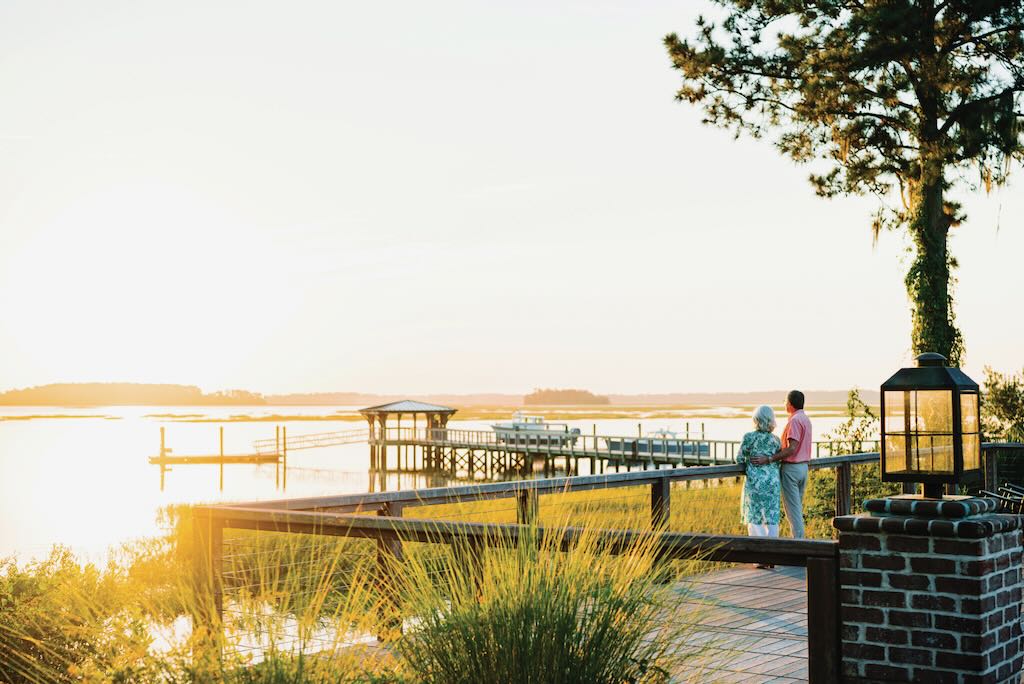
South Street’s first big purchase, in 2013, was Kiawah Partners, which made them the master residential developer of the 10-square-mile Kiawah Island, a barrier island south of Charleston, and owner of the Kiawah Island Club. At Kiawah, South Street demonstrated the thoughtful development strategies that it would bring to Palmetto Bluff. The firm added amenities—new restaurants, more activities, enhanced shopping—that made homeowners want to spend more time at their vacation homes, which translated into longer visits, out-of-season visits, even full-time residency. They paid attention to all the different generations of families, creating camps and classes that parents could share with children—and activities that allowed parents to spend time with each other while their children played and learned. South Street even donated the land for a leading-edge health center, creating access to top-notch medical care for both Kiawah homeowners and local area residents. The MUSC Health Kiawah Partners Pavilion is not only a moral good—before, locals had to drive an hour to Charleston for comparable care—it’s an economic enhancement: The previous lack of medical care had meant that Kiawah property owners spent less time at their homes on the island. Now that obstacle to greater enjoyment of their homes was removed.

South Street’s stewardship has meant an active four years for Palmetto Bluff. The Covid epidemic saw current homeowners spending more time in their homes alongside increasing demand from potential buyers who wanted to change their way of life. When they purchased Palmetto Bluff, South Street first focused on the completion of Moreland Village, the community’s second vibrant center. A third, Anson Village, is in the works. “As with every Palmetto Bluff neighborhood that’s preceded it,” South Street says, “the developmental dictate remains to preserve and protect one of America’s treasured landscapes while creating a human settlement.” Crossroads, a nine-hole golf course designed by King-Collins and intended to make the sport more accessible and inclusive, opened in early 2024. There are now seven restaurants, a coffee and ice cream shop, an art gallery, a Montage hotel, and even a speakeasy. Activities include fishing, kayaking, hiking, horseback riding, biking, birdwatching, waterway tours, and a sporting and shooting club. And there’s the 18-hole Coore & Crenshaw golf course coming soon.
All of this, of course, is against the backdrop of rare and singular natural beauty—of water winding its way through land, of wildlife free to roam, plants and trees growing as they did centuries ago. Even as so many things have changed at Palmetto Bluff, the wonder of nature’s creations stays the same.