Every morning, I follow the same routine: brush my teeth, do my skincare, take supplements, apply makeup, and put on jewelry. But unlike adding 50 SPF, when I put on the diamond ring that ordains my left pinky, apply the back to each diamond stud post, and snap shut the miniature hoops, or “huggies” as they are often referred to, I feel a sense of comfort.
Not because of the stones themselves but rather because each one used to be my grandmother’s. When she passed, she made a point that my mother, sister, and I keep and reuse each stone we inherited. Understanding the unique experience of working with a jewelry designer to create a custom piece, Worth decided to sit down with two expert designers, Anthony Robert and Jean-Paul Xavier, who combined have over 60 years of experience. Together they outline their unique processes and how to create a piece that is promised to be cherished for generations to come.


Anthony Robert, a seasoned jewelry designer with over four decades of experience, began his journey in the jewelry industry serendipitously. “I was an engineer for General Motors for 13 years,” stated Robert. “[I] went to their college of engineering called ‘General Motors Institute’ [but] engineers weren’t paid that well back in the late 70s and early 80s due to the gas crisis [and] I needed extra money to buy Christmas gifts for my [family], so I started doing jewelry on the side, selling to the 5,000 employees we had working at the GM. I did that for about five years before I made the decision to quit and go into a flea market,” he explained.
Marked by a dedication to creating timeless pieces using both natural and lab-grown diamonds, Robert’s approach to jewelry is deeply rooted in engineering principles, ensuring that every piece is as durable as it is beautiful.
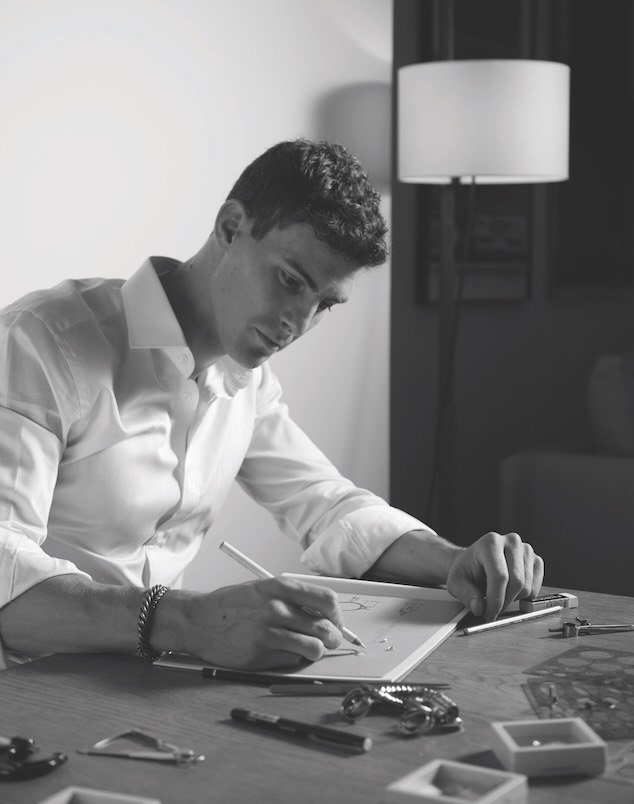
Jean-Paul Xavier, a former industrial designer and mechanical engineer, transitioned into the jewelry industry after moving from Australia to New York. His career took a significant turn when he joined David Yurman, where he worked for a decade, ascending to the research and development director role. During his tenure, Xavier honed his skills in developing innovative jewelry materials and techniques. In 2019, he established his own brand, JPX, focusing on bespoke jewelry that intertwines personal stories with exquisite craftsmanship. His unique approach involves a deep understanding of clients’ narratives, integrating cultural and emotional elements into each custom piece.
Designing Heirloom Jewelry: The Process

Robert’s Approach
Robert emphasizes a balance between traditional craftsmanship and modern technology in creating heirloom jewelry. His process begins with a thorough consultation to understand the client’s preferences regarding the type of jewelry (ring, necklace, bracelet) and their inclination towards diamonds or colored stones. “Most of my customers prefer diamonds, but we can work with a combination of colored stones and diamonds,” he explained when speaking with Worth.
If a client chooses to incorporate heirloom stones, Robert explained, “We [then] take your stones and try to create from the stones you have. It’s not just about the value of [them] but the memories and the sentimental value they hold. When we work with heirloom stones, we are preserving those memories in a new piece that can be passed down for generations.”

Robert’s Step-by-Step Process:
- Initial Consultation: Identify the type of jewelry and stone preferences.
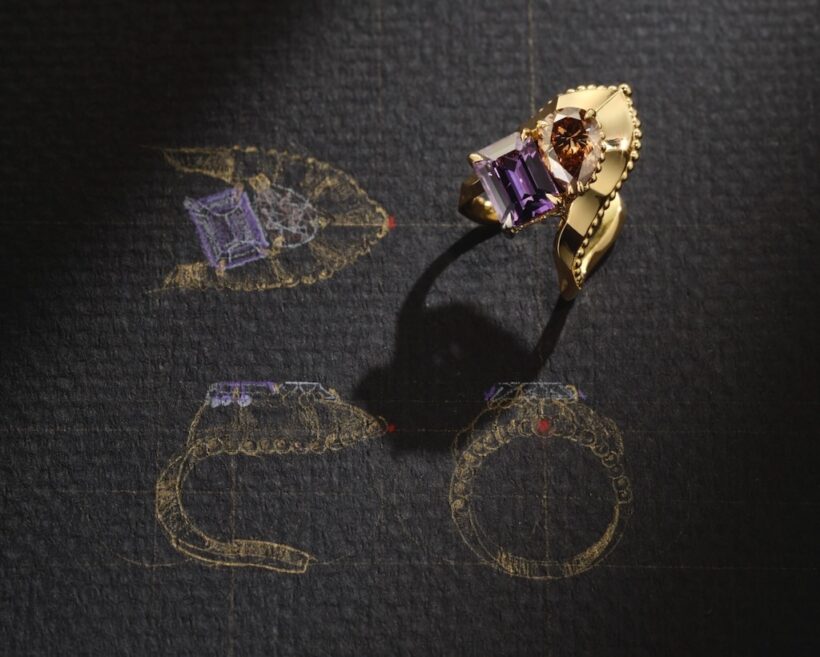
- Sketching: Create initial sketches based on client discussions.
- CAD Drawing: Develop detailed computer-aided designs (CAD) for precision.
- Stone Selection: Source and approve stones, whether natural or lab-grown, ensuring quality and matching characteristics.
- 3D Printing and Casting: Use 3D printing to create a model, then cast the piece in the chosen metal.
- Setting and Polishing: Set the stones and perform final polishing to complete the piece.
Robert is meticulous about uniformity and quality. “If a stone is visibly flawed, I recommend replacing it with something that matches better,” he noted.

Xavier’s Approach
Xavier takes a highly personalized approach, focusing on the emotional and narrative aspects of each piece. His process is deeply collaborative, involving clients in every step to ensure the final product resonates with their personal stories and cultural heritage.
Xavier’s Step-by-Step Process:
- Personal Narrative: Begin with an in-depth conversation about the client’s story, cultural background, and significant life events.
- Live Sketching: Sketch initial ideas during consultations, often on napkins or paper towels for an immediate visual representation.
- Design Integration: Integrate meaningful symbols and elements into the design, such as incorporating motifs from the couple’s favorite places or cultural heritage.
- CAD Modeling and Prototyping: Develop detailed CAD models and prototypes, ensuring every detail is meticulously planned.
- Custom Craftsmanship: Employ master jewelers to bring the design to life, using techniques suited to the specific materials and design intricacies.

Xavier believes in the power of symbolism and detail. Especially in his specialty—engagement rings. He often incorporates elements that reflect the client’s journey, such as specific cuts of stones that resonate with their personality, life experiences, or important relationship locations.
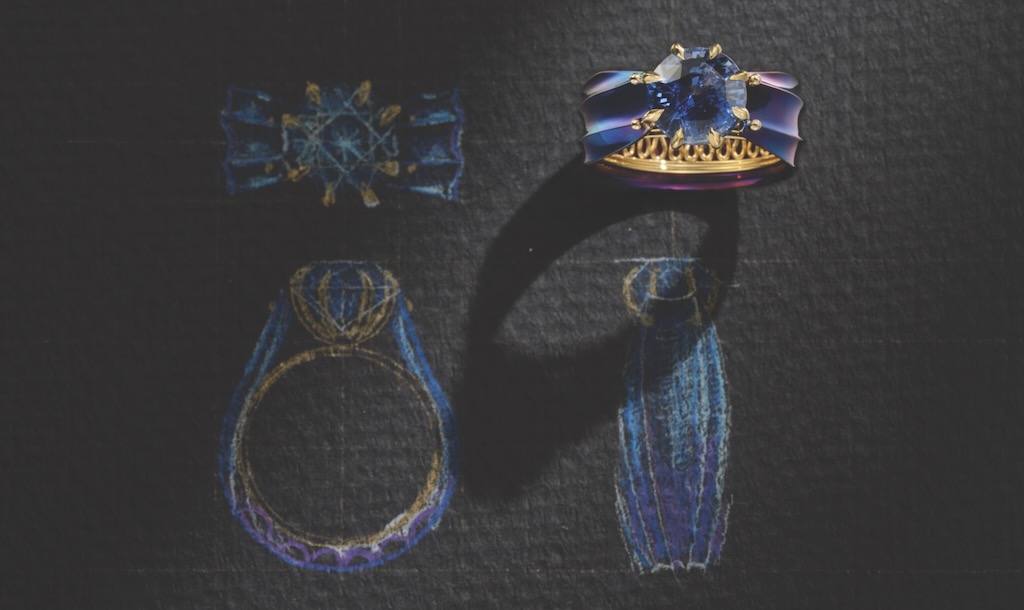
“We leverage our creativity to make each piece meaningful,” Xavier explained. “For example, one client had a waterfall splash incorporated into their [engagement] ring because they met at a waterfall in Puerto Rico, [Inspiration] comes from anywhere, and our job is just to listen and then provide guidance.”

When asked specifically about the use of heirloom stones in any of Xavier’s designs, he explained, “We do that a lot. We do a lot of heirloom pieces. I think it’s becoming a bit of a trend. People are thinking, ‘Okay, well let’s reuse mum’s diamonds,’ and that way [they] get a natural stone, and we also have this sentimental component.”
Designing jewelry with heirloom stones is a deeply personal and meticulous process, as evidenced by the approaches of Robert and Xavier. While Robert emphasizes precision, quality, and durability, Xavier focuses on the narrative, emotional, and symbolic aspects of jewelry design.
Both methods offer unique pathways to creating timeless pieces that not only preserve family history but also embody the wearer’s personal story and values ensuring each piece is cherished for generations to come.