

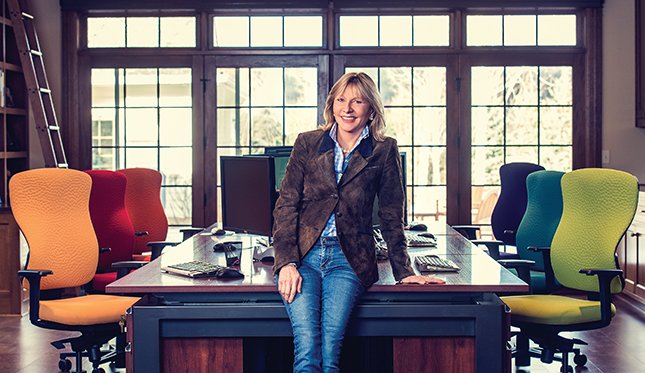
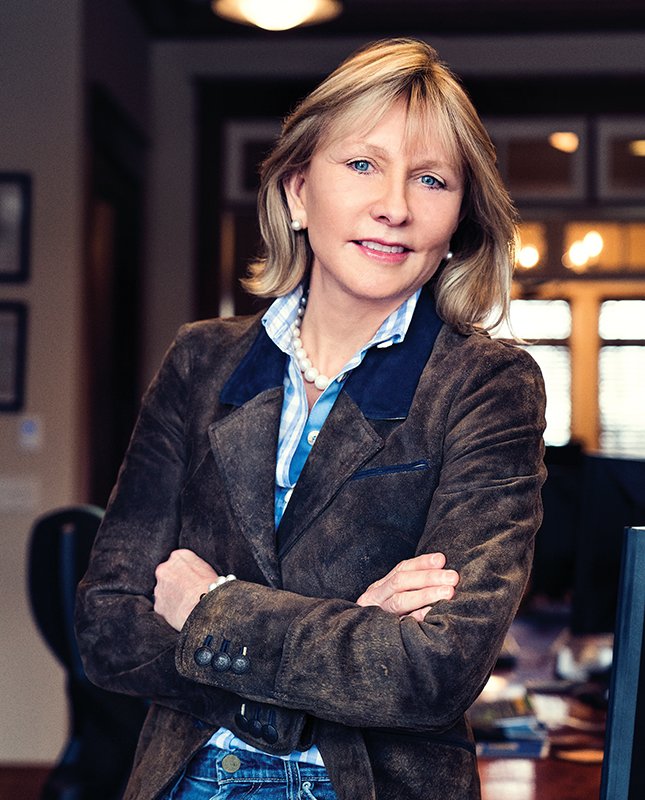
Renée Haugerud was only 5 years old when she was “bitten by the trading bug.” It happened in 1960, when her father, a county sheriff who also owned a farm outside of Preston, Minn., flew Renée, his eldest daughter, over the neighbors’ land in a Piper Cherokee. Looking down at the cornfields below, Neil Haugerud explained how he could buy or sell what he didn’t own through the futures market. It was a fascinating eye-opener for the little girl. “My dad taught me about puts and calls, about shorting, from a very early age,” she recalls.
Thirty-seven years later, in 1997, Haugerud would become one of the first women to launch her own hedge fund firm, called Galtere, a name she made up from root words that mean “pragmatic simplicity.” The firm makes global macro investments using a trading strategy Haugerud had developed while at Cargill, where she traded commodities for the privately held Minnesota grain giant. She also worked for U.S. hedge fund Genesis and Britain’s National Westminster Bank in Hong Kong prior to managing the New York trading desk for Hunter Douglas; she used her bonus money from NatWest and Hunter Douglas to start Galtere.

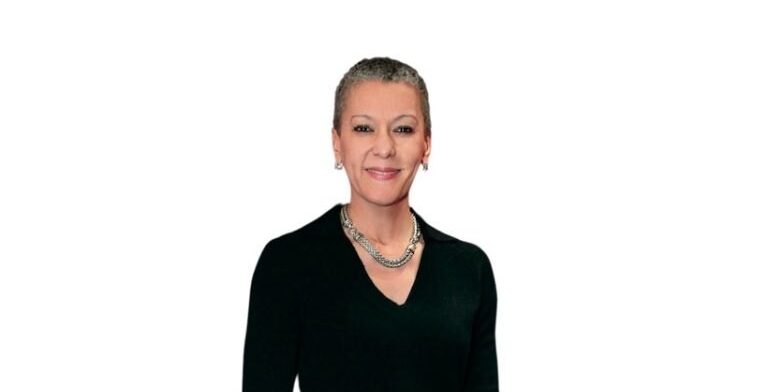
Hedge funds were on the fringes of finance in 1997, far from the $3 trillion behemoth they’ve become. But despite the massive growth of hedge funds since Haugerud launched hers, women are still vastly underrepresented in the field. Only 2.5 percent of the estimated 10,000 hedge funds are run by women—a worse showing than in any other financial category, from venture capital and private equity to chief investment officers and registered representatives, says Meredith Jones, who has tracked diversity in finance and authored Women of The Street: Why Female Money Managers Generate Higher Returns (and How You Can Too). “Hedge funds run by women are pretty rare today; it was even rarer back when Haugerud launched her fund,” Jones says. “Renée is a pioneer who is not as well-known as she should be.”
Even today’s 2.5 percent overstates the case. Only a few hundred hedge funds have at least $1 billion under management, and collectively the billion-dollar funds control about two-thirds of total hedge fund assets, according to data provider HFM Global. That elite group contains only one fund run by a woman, Brazilian-born Leda Braga of Systematica Investments in London, launched in 2015.
What’s perhaps most unusual about Haugerud, now 62, is that her hedge fund is still in business, with close to $400 million in assets under management, 20 years later. Longevity is rare among hedge funds, which are notorious for closing up shop after one or two bad years. But “women don’t tend to have the blowups,” says Haugerud. She has also used her experience and knowledge to help train other women in finance, launching the Galtere Institute: Finance for the Future of Trading at the University of Tennessee at Chattanooga in 2009.

Worth caught up with Haugerud while she was in Minnesota during autumn harvest at her family farm, which has since become the Galtere Research and Development Center. It houses an alternative energy center, a trading room and hybrid seed and GMO research on the crops it grows. “Commodities are real assets,” Haugerud says. “Commodities were the first currency of the world.”
Q: Did being a woman hold you back in the organizations you worked for before starting your own hedge fund?
A: Absolutely. Are you kidding? You never got allocated the same amount of money, but you were supposed to make the same amount of money. One time, a female boss of mine said, “Renée, it just doesn’t matter. You can do it, just put your head down and make more money than any guy with less capital”—which was the greatest training to start your own hedge fund.
In what way?
You had to be a great risk manager but actually take more risk, because you had less capital. I knew that it was going to be difficult. But you just had to go to work and not give up.

Why did you decide to start your own firm?
I had my own trading process that I developed at Cargill called the “structural department.” It was a big-picture way of trading. Several people whom I’d worked with at Cargill told me, “You will flourish on your own, because you do things differently. And you need the freedom to put your business plan and your trading style into action.” I had gone to work for NatWest Bank in Hong Kong, and I took my bonus and started my hedge fund. You know it’s going to be difficult—but you don’t know how difficult. I didn’t start trading until March of 1999 when I got my first major investor, and then I just couldn’t get above that amount at all. I couldn’t raise money even though returns were good. It was very, very difficult.
When did things improve?
In 2003 I had some money redeemed, so I went back to my old boss, Gary Jarrett, at Cargill, and said, “You can see my returns. You know what kind of trader I am, because I’ve worked for you for years. I need help.” That’s when Cargill put money in, and after that I started raising money. They owned 49 percent of the company. Two and a half years later, I bought my shares back. But without that support, I would not be here today.
What is the lesson there for other women entrepreneurs or women in finance?
Here’s the big picture: It’s complicated why there aren’t more women investing and running their own hedge funds. People say that women take less risk—that’s why their returns are better. That’s wrong. Women take equal leverage, they’re actually more concentrated, making fewer trades for the same amount of money. They’re better risk managers. And I can attest to that by the women who have traded for me. I don’t think we’re as emotionally attached to our trades.
That certainly doesn’t fit the stereotype of women, does it?
We’re emotionally attached to people, to employees. But when it comes to trading, we trade what we know. So, if you hear about something and you don’t totally understand it, you’re not going to do it. This is why women outperform men, day in, day out, year in, year out. The first time I read about women trading teams outperforming men years ago I was astounded. I was shocked. But this isn’t a new phenomenon.
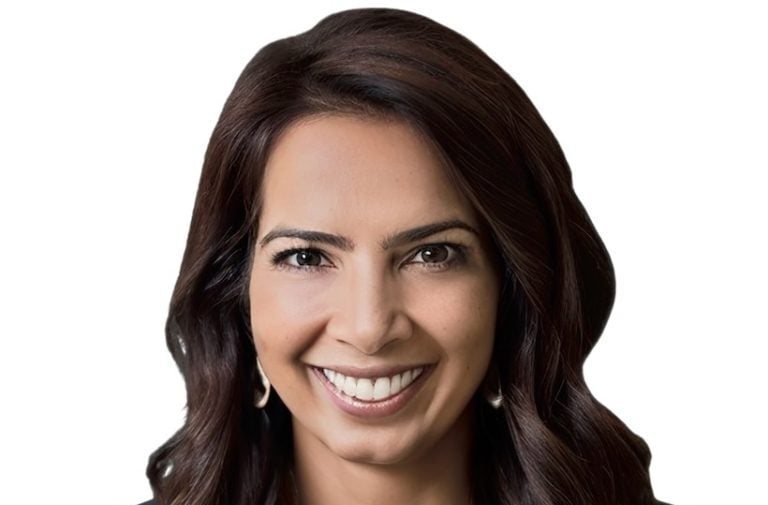
If that’s the case, why are there so few female hedge fund managers and founders?
A lot of male hedge fund managers come out of organizations where their bosses have set them up. They support each other. Both females and males have been my mentors. But, by and large, men will help each other and set each other up, and women don’t. Women will network, but they don’t set each other up in jobs.
If you look at the top hedge funds, they’re all run by men.
I know. It’s just very sad. Women are just as bad—women and men want men to manage their money. There was this classic Harvard Business School case study on Jane and Joe hedge fund managers. Jane and Joe had the exact same bio, and it was distributed to 1,000 investors. Jane only got one of 10 investors that Joe got. And even the one investor gave Joe $100 million, and Jane got $1 million. Everything was the same: returns, school, background, history, everything. Just the name was changed.
“You had to be a great risk manager but actually take more risk, because you had less capital.” —Renée Haugerud
A lot of investors in hedge funds are pension funds and endowments. you would think that they might pressure the hedge funds to allocate to women, especially if the evidence shows that the returns are better. But we don’t see that happening.
No. I had meetings with CalPERS [California Public Employees’ Retirement System] and CalSTRS [California State Teachers’ Retirement System] for years. A lot of their money is from female teachers. I tried to talk to the female teachers. Never ever got a dime. And they would continually give to male commodity managers who had lesser returns than me.
How do you explain that?
A lot of the allocators are scared to do something different. They’d rather lose with a known name than with an unknown name. In the years I have managed Galtere I have only gotten allocations from two female allocators. I know a million females who wanted to start their own hedge fund but just couldn’t get the capital. I know a ton of women who have the support of their male mentors. But they can’t get their investors’ money.
Are women investors aware of this phenomenon?
I think women are as astute as the male investors, but it’s become habit, and on the investor side, it’s become CYA. Invest with the big name. It doesn’t make sense, but the investors are the ones who have to change it. Let’s get the allocators to realize that they’re hurting themselves by not allocating to female hedge funds, and then let’s have women take care of each other, not in networking but with money, jobs, allocations and business. I actually see this starting to happen and I think this is an exciting time.

Tell me about the trading school that you financed.
In 2009 my husband, John Murphy, and I gave money to the University of Tennessee at Chattanooga for the Galtere Institute, which is part of the business school. I call it GIFFT, Galtere Institute: Finance for the Future of Trading. I thought that if you could have an institute that would combine the science of trading and the aggressive, reactive trading of males with the neuroscience, right-brain trading of females, and incorporate both the art and the science, you could end up with better traders.
That’s a provocative approach.
There have been numerous studies on male and female brains. Of course, the science brain, the logical part of the brain, is the left brain. The right brain is the creative side. These studies have found that, generally speaking, women use more right brain in solving problems and approaching markets, whereas males tend to be left-brain driven.
And that’s important because?
The science of trading ponders the past. The art of trading focuses on the future. A good investor needs a reasonable mix of both.