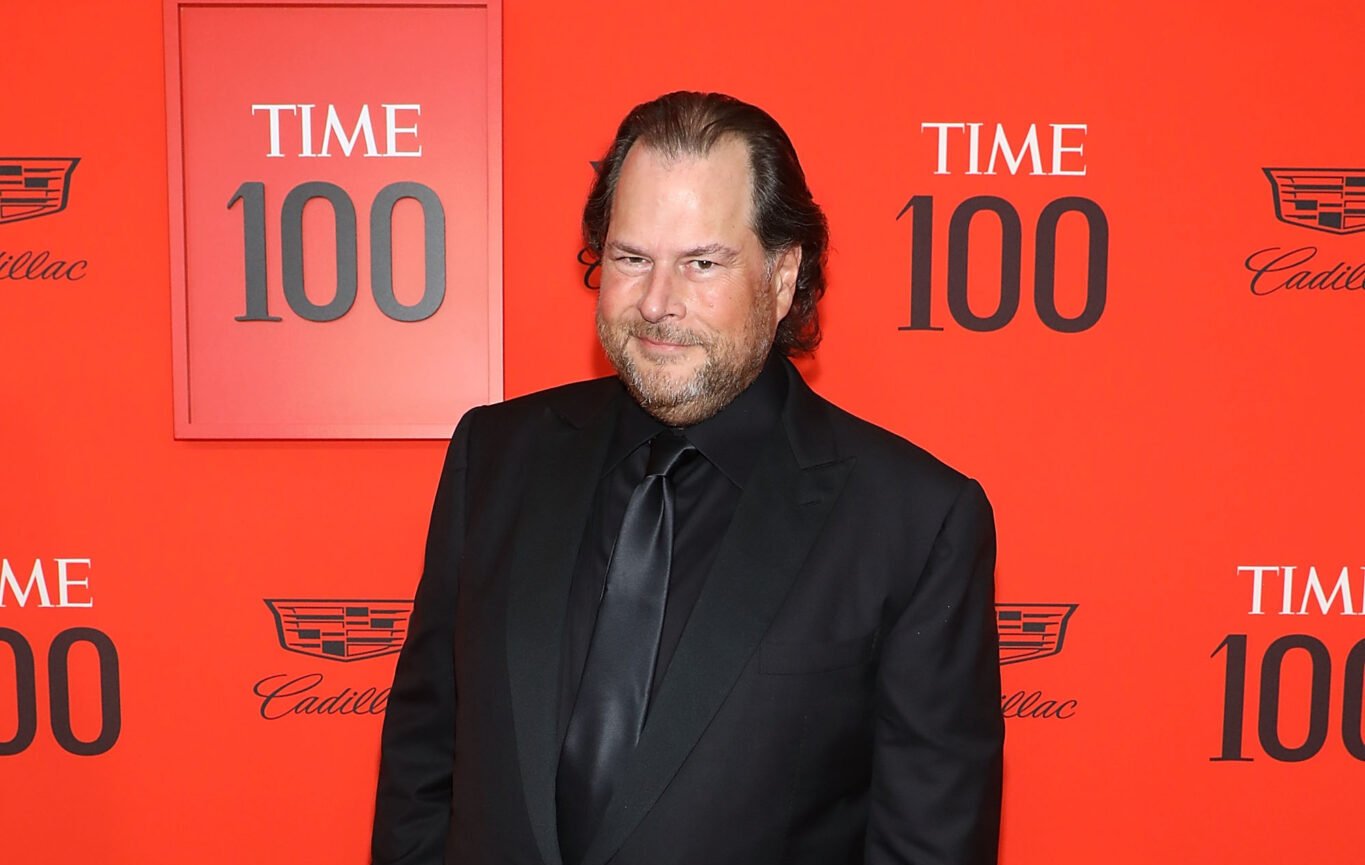
Salesforce founder and CEO Marc Benioff hardly needs an introduction. For years, he’s been one of, if not the, loudest champions for stakeholder capitalism and has wielded his wealth and corporate power to help make the world a better place, tackling challenges from homelessness and climate change to the gender pay gap, LGBTQ+ rights and the country’s gun crisis. Worth recently caught up with “the people’s billionaire” to discuss his philanthropy-centric business model, why traditional capitalism doesn’t work and how every one of us can be a platform for change.
Can you tell me more about your 1-1-1 model of integrated corporate philanthropy?
When I started Salesforce 22 years ago, I wanted to do more than make money. I wanted to start a company that could also make a difference in the world. It’s why we pioneered the 1-1-1 model—donating one percent of our equity, employees’ time and product every year. Since then, we’ve donated nearly $500 million in grants—including nearly $120 million to public schools—volunteered 6.2 million hours and helped 52,000 nonprofits and NGOs run on Salesforce, and more than 12,000 companies have joined us through Pledge 1%. We’re also serving our many stakeholders—from reducing homelessness to protecting our oceans to conserving, restoring and growing 100 million trees over the next decade as part of the global Trillion Trees movement.
What can other business leaders learn from your leadership of Salesforce?
Every CEO needs to ask themself, ‘what is my highest value?’ Our highest value is trust. It guides everything we do. We’re committed to upholding the trust of all our stakeholders, including our employees, our communities and the planet.

Why doesn’t traditional capitalism work? Why is it so important for businesses to think about all stakeholders?
When I was in business school, we were taught that the only business of business is to make money for shareholders. It hasn’t worked. It’s led us to the world we’re in today and many crises at once: a trust crisis, a pandemic crisis, a sustainability crisis, a workforce crisis and an inequality crisis. A new world demands a new capitalism—stakeholder capitalism, which is more equal, fair and sustainable. I believe that when we build trust with all stakeholders—shareholders, employees, partners, communities and the planet—business is the greatest platform for change.
What does “worth beyond wealth” mean to you?
The world has changed, and employees and customers want companies to have a purpose beyond profit. They expect CEOs to listen and stand up for basic values. Every CEO needs to listen to all their stakeholders and ask themselves: “How can I help my community, my country, the planet?” If we do that, every one of us can be a platform for change.
For me, the greatest joy in life is doing something for others. That’s why we’re here—to help others and to serve. That’s a key factor in how I approach my role as a CEO and how I started Salesforce. We can all do something to make the world a better place.