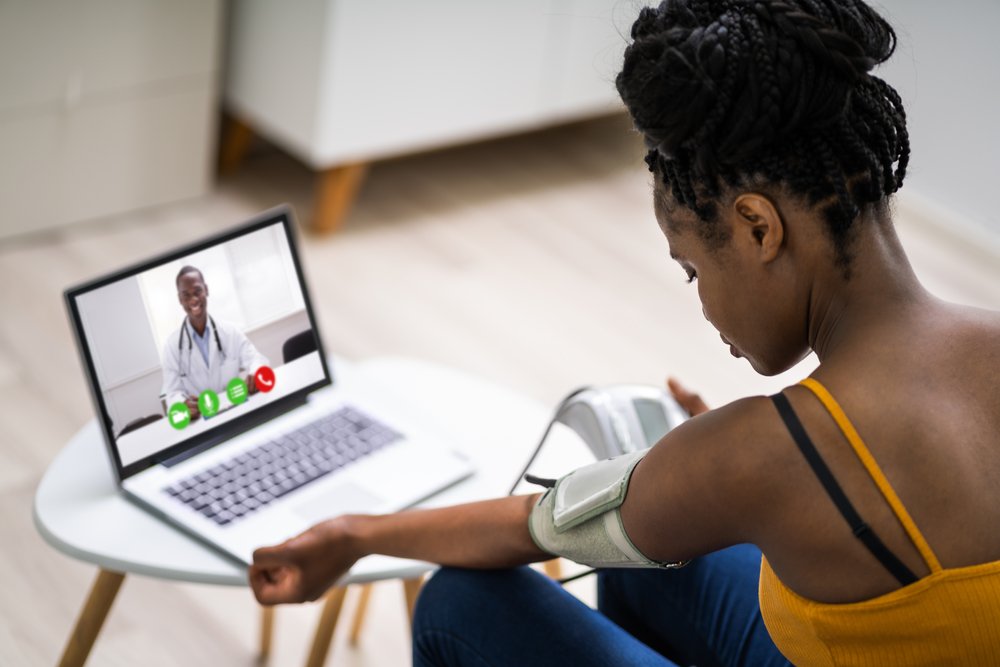
Telemedicine, also known as telehealth, encompasses a wide range of practices and products. But during the coronavirus pandemic, it has moved from the sidelines to center stage—and as with trends such as remote working and social distancing, should continue to grow in a post-coronavirus world. (At the recent Techonomy Virtual: Reset + Restore conference, Roy Schoenberg, CEO of telehealth giant Amwell was among the speakers.)
Telehealth, says the New England Journal of Medicine, has the promise to improve the customer experience of care and the health of populations, reduce the per capital cost of health care, and improve the experience of providing it. In addition to basic, routine healthcare matters, medical professionals are beginning to use the technology in advanced fields such as cardiology, dermatology, psychiatry and behavioral health, gastroenterology, infectious disease, rheumatology, oncology, and peer-to-peer mentoring.

“Telehealth is here to stay, expanding rapidly due to Covid-19,” says Andy Thompson, managing director, Health and Public Services Technology Strategy, at Accenture. “We are moving into the ‘never’ normal stage where stakeholders in the healthcare ecosystem need to be leveraging the breadth and depth of services, technologies, and capabilities to outmaneuver challenges to care access.” Telemedicine platforms, he says, can provide patients and physicians with the best experience possible.
Hospitals across the country seem to agree. The Mayo Clinic has been developing its telemedicine practice for more than a decade. Its Center for Connected Care allows doctors to communicate with patients in smaller regional hospitals who have had strokes, or where a newborn may be in distress. Instead of transporting them to its main facility, says CCC head Dr. Steve Ommen, experts use telemedicine to quickly and efficiently address an issue while keeping costs down. The system also facilitates the remote monitoring of patients so as to identify those at a high risk of readmission. “It’s like the lane detector in a smart car that corrects the driver before they swerve into another vehicle,” says Ommen.
Numerous private and public companies offer telehealth platforms, and some hospitals develop their own. Among the larger players are Teladoc, Amwell, Zipnosis, Lemonaid, HealthTap, Steadymd, and Plushcare. Teladoc patients use an app to upload their medical history and schedule an in-app, phone, or video appointment to discuss issues such as the flu, infections, anxiety, stress, skin conditions, and even some serious medical conditions. Amwell says it focuses on offering telehealth “with a commitment to not just point-to-point connectivity but clinical integration, to the full healthcare ecosystem from provider to payer to corporate and direct to consumer.” Its customer base includes 240 large health and hospital systems as well as more than 80 million covered users. Its services may be offered either by the health provider or the health insurer, often through white-labeled systems.
Physical ailments aren’t the only area telemedicine covers. A company called Sondermind, founded to help people connect with mental health practitioners, is quickly moving into telemedicine. “One of the key reasons people don’t and can’t access mental healthcare is because they can’t find a therapist who takes their insurance,” says Chief Executive Mark Frank. Telemedicine, he says, “allows patients to get access to care at the right time, when they need it. But they may also need a face-to-face session.” That’s the combination Frank says ultimately leads to the best outcomes. Before the middle of March, almost all the company’s volume was driven by in-person appointments. Now more than 85 percent of the ones it arranges are virtual. Likewise, the Mayo Clinic has seen telemedicine appointments grow a hundred-fold since Covid-19.
For all of its obvious benefits, telemedicine has limitations and drawbacks.
“On the cost side, one of the advantages of telemedicine—its convenience—can also be its Achilles heel,” says Dr. Ateev Mehrotra, associate professor of medicine and health policy at Harvard Medical School. “When something is made more convenient, people use it more, and that increased utilization can end up costing more.” For example, a patient with severe mental illness may gain a major benefit from a telemedicine visit with a specialist, but for somebody who just “feels a little down” and makes an appointment simply because a service is available, the result may not be worth the cost. Similar scenarios exist for other conditions—patients make repeated telemedicine appointments, generally for follow-up, that they would probably not bother with were if it was a matter of going to the doctor’s office.
Telemedicine may also compromise the quality of care. A study Harvard’s Mehrotra co-authored found that “At direct-to-consumer telemedicine visits, children with acute respiratory infections were more likely to receive antibiotics and less likely to receive guideline-concordant antibiotic management compared to children at primary care provider and urgent care visits.” The American Academy of Pediatrics says this issue “may be particularly important with children who may have difficulty verbalizing their symptoms.”
In a chapter he co-authored for the book Understanding Telemedicine, Mehrotra says the lack of an in-person physical exam, limited access to medical records, lack of follow-up, and barriers to diagnostic testing are among the limitations that can affect quality of care, and misdiagnosis in an initial visit could lead to the need for higher rates of follow-up.
Still, says Mehrotra, during the current pandemic the benefits of telemedicine are undeniable, and he suggests it should be used more frequently so patients can avoid going to medical facilities.
“There will always be a need for appropriate balance and interplay between physical care, digital, and telehealth,” says Accenture’s Thompson. “Increasingly the technologies to visualize and perform testing are sufficiently inexpensive or portable that they can also be deployed remotely, allowing for a greater spectrum of diagnosis and management.”
In addition, says Thompson, “The extraordinary demand for virtual care that we’ve seen over these last few months will only accelerate adoption, and that of even more advanced technologies such as artificial intelligence and connected devices.”
It will ultimately be individual patients who decide whether the growing benefits of telemedicine outweigh its potential downsides. At the moment, they are voting with their keyboards.