


San Francisco has always been a banking city,” says Michael S. Malone, a longtime Silicon Valley insider, author and investor. But the cultural romance of San Francisco is so powerful—the bridge, the Bay, the writers, musicians, hippies, gays and artists—it’s tended to overwhelm the central role of finance in San Francisco’s history. After all, the city grew out of the 1849 gold rush and by 1854 was home to a U.S. mint, which was followed by the rise of financial players like Wells Fargo (1852) and Bank of America (in its earliest form, 1904).
But the modern chapter of San Francisco’s rise as a financial center started after WWII, when federal funding and university talent created a fertile environment for science and engineering research. Beginning in the 1950s, new companies such as Hewlett-Packard needed financing to grow. “Microchip manufacturing is expensive,” Malone says, “and the East Coast banks didn’t understand what these guys were doing.” By the ’60s, Bay Area tech firms “didn’t even think about going east when they needed money.”

San Francisco is now wedded to Silicon Valley, of course. The major VC firms are strung out along Sand Hill Road in Menlo Park. Some of the most important of the Valley’s investors—Marc Andreessen, John Doerr—are well-known names from coast to coast. But many, operating largely under the radar of the East Coast financial press, are not. Here, then, are the 20 most influential men and women in Bay Area finance.
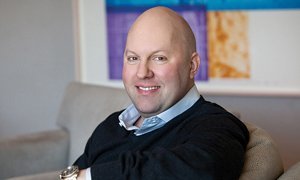
MARC ANDREESSEN
COFOUNDER AND PARTNER, ANDREESSEN HOROWITZ
Why he’s important
The cofounder of Netscape, Andreessen has a background steeped in technology. Andreessen founded software company Opsware and then sold it to HP before launching his eponymous VC firm in 2009. The firm’s capitalization exploded, and it has had major exits on investments such as Skype, which was sold to Microsoft in 2011 for $8.5 billion.
What he says
Andreessen takes a no-nonsense approach. On his blog, he has warned startups against “confusing the conference circuit—and especially the party scene—with actual work. This also creates a toxic culture on multiple fronts by encouraging alcohol/drugs and valuing so-called ‘ballers’ over other important, less ‘loud’ contributors.”
GREG BECKER
PRESIDENT AND CEO, SILICON VALLEY BANK
Why he’s important
Silicon Valley Bank is where VCs and tech firms deposit their checks, starting on day one. With 22 years at SVB, Becker knows everyone who’s anyone in the Bay Area. Becker and SVB actively seek out new entrepreneurs and startups, set them up with accounts and connect them with investors. When those companies get big, they continue banking with Becker; SVB estimates that it banks for more than 60 percent of the venture capital firms and half of the venture-backed companies in the U.S.
What he says
“The relationships are the most important thing” for success in Silicon Valley, Becker tells Worth . “Almost everyone here is involved in the technology market.”
MARC BENIOFF
FOUNDER, CHAIRMAN AND CEO, SALESFORCE
Why he’s important
Billionaire Benioff’s family has lived in San Francisco for four generations. His company, Salesforce, is best known for its customer relationship management software, but Benioff has personally invested in dozens of companies. He also wrote the “1/1/1” pledge whereby participating companies (including Salesforce) give 1 percent of their equity, profits and time to charity.
What he says
“We said we were always going to be about giving back,” Benioff told the Wall Street Journal in 2014. “Maybe that’s because I’m from San Francisco, but I know that that’s important and I think some of these new entrepreneurs need to be just reminded of that.”
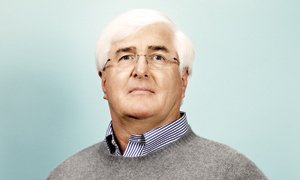
RON CONWAY
SPECIAL ADVISOR, SV ANGEL
Why he’s important
Conway has invested in and advised a who’s who of tech firms, including Facebook, Google, Square, Twitter and Dropbox. He was also a founder and managing partner of Angel Investors LP funds and SV Angel, his current home base, which works like a venture capital firm but invests in a greater volume of companies.
What he says
Conway is known to be a vociferous advocate for his investments. “I couldn’t care less who is mad at me as long as the entrepreneur comes out ahead,” he explained to Fortune in 2012.
JOHN DOERR
GENERAL PARTNER, KLEINER PERKINS CAUFIELD & BYERS
Why he’s important
Since 1980, Doerr has been the guiding hand behind one of Silicon Valley’s most lauded venture capital firms, and he backed tech giants including Google, Symantec, Amazon, Twitter and Intuit. President Obama appointed Doerr to his Economic Recovery Advisory Board in 2009.
What he says
In a 2007 TED talk about green investing, Doerr described how he tackles tough problems: “My partners at Kleiner and I were compulsive networkers, and so when we see a big problem or an opportunity like avian flu or personalized medicine, we just get together the smartest people we know.”
JACK DORSEY
COFOUNDER AND CEO, SQUARE
Why he’s important
Dorsey launched Square, the groundbreaking mobile payments company, in 2009. He was also the cofounder and CEO of Twitter. Dorsey is also one of Silicon Valley’s top angel investors, with investments in sites such as Instagram and Kickstarter.
What he says
“Yes, [Square is] naive,” Dorsey told Wired in 2012. “But that’s a strength, not a weakness. We literally have fewer than five people in a company of 250 who have worked in the financial industry. So our approach is to engineer and create and build what we want to see.”
SAMEER GANDHI
PARTNER, ACCEL PARTNERS
Why he’s important
Gandhi joined Accel Partners after almost 10 years as a partner at heavyweight firm Sequoia Capital. At Accel, he has been involved in major deals with Dropbox, StumbleUpon, Spotify and with Accel’s investments in India. He’s particularly connected through his post as a board member of the Western Association of Venture Capitalists.
What he says
Gandhi, who has taken the lead on Accel’s investment in Indian e-commerce company Flipkart, told Business Standard that he wants “to build the defining company for commerce in India. We’re comfortable if that takes a long time. We’re very comfortable with whatever the form of exit is, whenever that happens.”
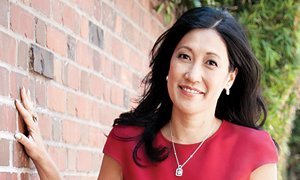
THERESIA GOUW
COFOUNDER AND PARTNER, ASPECT VENTURES
Why she’s important
After more than a decade with Accel, Gouw, who started her career as a consultant at Bain & Co., went her own way in 2014 and co-launched Aspect Ventures. The move wasn’t entirely surprising, as Gouw was named one of Time magazine’s 10 most influential women in tech in 2012.
What she says
“By being more visible and showing we can do this,” Gouw told Fortune when she launched Aspect, “maybe women will become more confident to be entrepreneurs and investors themselves.”
NEIL HENNESSY
PORTFOLIO MANAGER AND CHIEF INVESTMENT OFFICER, HENNESSY FUNDS
Why he’s important
Hennessy launched his own broker-dealer firm in 1989, and then in 1996, an asset management firm and his first mutual fund. In 2009 Hennessy led an expansion into Japan. While 70 percent of actively managed funds miss their benchmarks, Hennessy breaks the mold: Over the last five years, ending July 2014, 70 percent of his funds beat their benchmarks.
What he says
Hennessy calls himself an economic realist. “We are quantitative,” he explains. “We can’t vary at all from the formula.” Consequently, “the client always knows what’s happening.
REID HOFFMAN
PARTNER, GREYLOCK PARTNERS
Why he’s important
Hoffman, one of the top investors at Greylock, is also the chairman and cofounder of LinkedIn, making him one of the most connected people in the world. Hoffman also served as executive vice president at PayPal, leading the company’s acquisition by eBay and orchestrating partnerships with financial powerhouses like Visa, Wells Fargo and MasterCard.
What he says
“I put myself at as many key intersections in my networks as I can,” Hoffman wrote on his blog in 2014. “As a result, my network inevitably ends up connecting me with great entrepreneurs and great investments.”
AILEEN LEE
FOUNDER, COWBOY VENTURES
Why she’s important
Before launching Cowboy Ventures, Lee, like many other investors in the Bay Area, worked for Kleiner Perkins Caufield & Byers, but she began her career doing M&A work for Morgan Stanley. Lee and Cowboy Ventures focus on companies that are “reimagining the way we live and work,” such as the mail-order razor company Dollar Shave Club.
What she says
“We can basically do anything,” Lee told a Stanford class on entrepreneurship last August. “We don’t really have best practices, and we don’t have legacy kind of traditions … We really have the chance to do kind of whatever we want.”
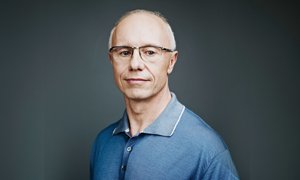
DOUG LEONE
MANAGING PARTNER, SEQUOIA CAPITAL
Why he’s important
Ever since he joined the company in 1988 after a long career at Sun Microsystems and HP, Leone has been a big reason why Sequoia is an industry giant. He has been instrumental in Sequoia’s investments in LinkedIn and WhatsApp, which Facebook recently bought for $19 billion.
What he says
“People hate to do things because they view them as risky,” Leone said at a Stanford business school “View from the Top” talk last year. “We actually think that if you’re a crystal-clear thinker, doing nothing is risky … If something is working like a dream, break it.”
ALEXANDRA “SASHA” JOHNSON
MANAGING DIRECTOR, DFJ VTB CAPITAL AURORA
Why she’s important
Johnson emigrated from the former Soviet Union and was the first student from the USSR to get an MBA from the University of California, Berkeley. She has spent her career connecting Bay Area investors with companies in the developing world (including Russia). She is also the president of the Global Technology Symposium, an annual gathering of U.S. and foreign investors and startups.
What she says
Despite the current political tensions between the U.S. and Russia, Johnson is bullish on business between the two. “Entrepreneurs will continue to do what they do and investors will continue to work with them,” she says.
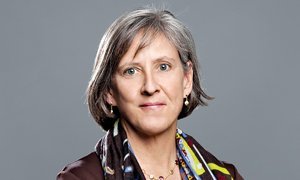
MARY MEEKER
PARTNER, KLEINER PERKINS CAUFIELD & BYERS
Why she’s important
Meeker, who’s been called the “queen” of the internet, started her career at Merrill Lynch and Salomon Brothers. Later, at Morgan Stanley, she managed the Netscape IPO. Meeker joined KPCB in 2010 and sits on the boards of emerging financial players Square and Lending Club, but is perhaps best known for her annual internet trends report.
What she says
“I’ve made my best personal investments when I’ve been a user of the product,” Meeker told Wired in 2012.
KATE MITCHELL
COFOUNDER AND PARTNER, SCALEVP
Why she’s important
Mitchell started at Bank of America and eventually, as senior vice president, launched its online banking services. Her most recent $300 million fund is focused on cloud computing, mobile and software. Extremely well connected, she is the former chairwoman of the National Venture Capital Association and is also a board member of the Silicon Valley Bank Financial Group.
What she says
Mitchell told the Wall Street Journal in 2013, “The thing that I find the smartest entrepreneurs do is, towards the end of [a meeting], they’re asking more than they’re telling.”
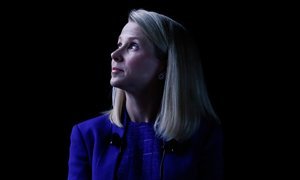
MARISSA MAYER
PRESIDENT AND CEO, YAHOO
Why she’s important
One of Google’s first employees, Mayer received enormous attention for becoming CEO of Yahoo in 2012—attention that hasn’t relented as she struggles to turn the company around. Yet Mayer is also one of the Bay Area’s top angel investors, having put her own money into mobile payments company Square and online investing platform Wealthfront.
What she says
“ If you can find something that you’re really passionate about, whether you’re a man or a woman comes a lot less into play,” Mayer told CNN a few months before joining Yahoo. “Passion is a gender-neutralizing force.”
CLAUDIA FAN MUNCE
MANAGING DIRECTOR, IBM VENTURE CAPITAL GROUP
Why she’s important
Munce is a linchpin connecting San Francisco’s finance and tech industries. At IBM, her job is to pair the computing giant’s resources with those of the venture capital firms. Most recently, Munce and IBM have been pouring $100 million into companies that use its Jeopardy -winning Watson cognitive computing platform.
What she says
“ Watson represents a new era of computing based on its ability to interact in natural language, process vast amounts of big data and learn from each interaction,” Munce told the San Jose Mercury News last year.
PEJMAN NOZAD
FOUNDING MANAGING PARTNER, PEJMAN MAR VENTURES
Why he’s important
Nozad immigrated from Iran to Palo Alto and, in 1994, began working in a rug shop owned by another Iranian immigrant, where he sold rugs to many of Silicon Valley’s new millionaires. Soon enough, he was hosting meetings with VCs, startups and angel investors in the rug shop, and his employer eventually went in with him on his first VC fund. Now Nozad has some big scores to his name, including Dropbox, Lending Club and SoundHound.
What he says
“Always be willing and eager to help others with an introduction,” Nozad advised in a Forbes piece about his networking tips. That said, “use your Rolodex wisely and only for the right person and the right time.”
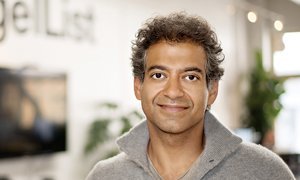
NAVAL RAVIKANT
COFOUNDER AND CEO, ANGELLIST
Why he’s important
With early investments in companies like Twitter, Foursquare and Uber, Ravikant is a fixer for angel investors and entrepreneurs. AngelList, an online marketplace for startups and angel investors, automates and accelerates the discovery process. AngelList offers options to invest in startup and enterprise funds, which allow investors to play the odds and bet on 100 companies at the same time.
What he says
“Like everything else, investing is going online. You can either be an early adopter or a late adopter,” he told Fortune last year.
ROBERT F. SMITH
FOUNDER, CHAIRMAN AND CEO,VISTA EQUITY PARTNERS
Why he’s important
With more than $14 billion invested in 30-plus enterprise software companies, Smith is perhaps the most successful African American in private equity. He joined Goldman Sachs in 1994 and became the firm’s eyes and ears in Silicon Valley, where he advised companies such as Apple, Microsoft and eBay. He founded Vista in 2000.
What he says
Smith told the New York Times last year that he is always “looking to transform the culture of [companies], transform the way they think about themselves and the industry they serve.”