

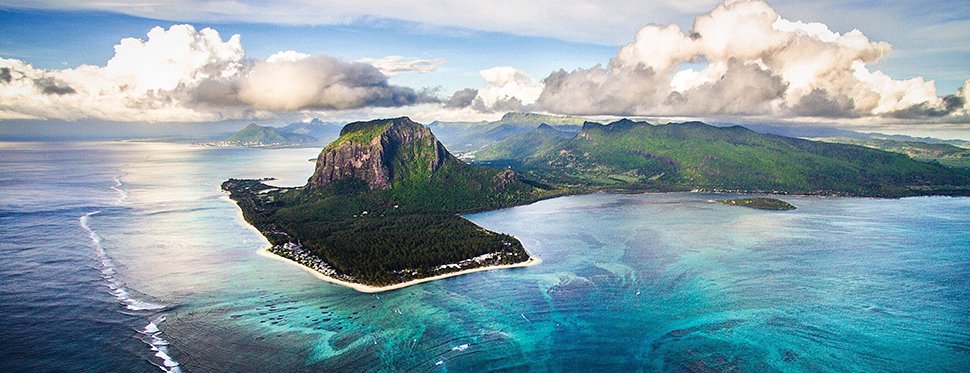
The island nation of Mauritius, located in the Indian Ocean east of Madagascar, has no exploitable resources. Thick rainforests blanket most of its mountainous terrain, and the few arable plateaus harbor primarily sugarcane farms. Tourism supports much of the economy; the water surrounding the island, featuring an intense shade of aquamarine and some of the healthiest coral reefs on the planet, has proven an irresistible draw for vacationers from Africa, the Middle East and India. So it seems strange, then, that a small factory here produced more than 50,000 carats of optimum-quality medium-sized polished diamonds in 2017. Even more surprising is the fact that Tiffany & Co., known as a retailer, is behind the operation.
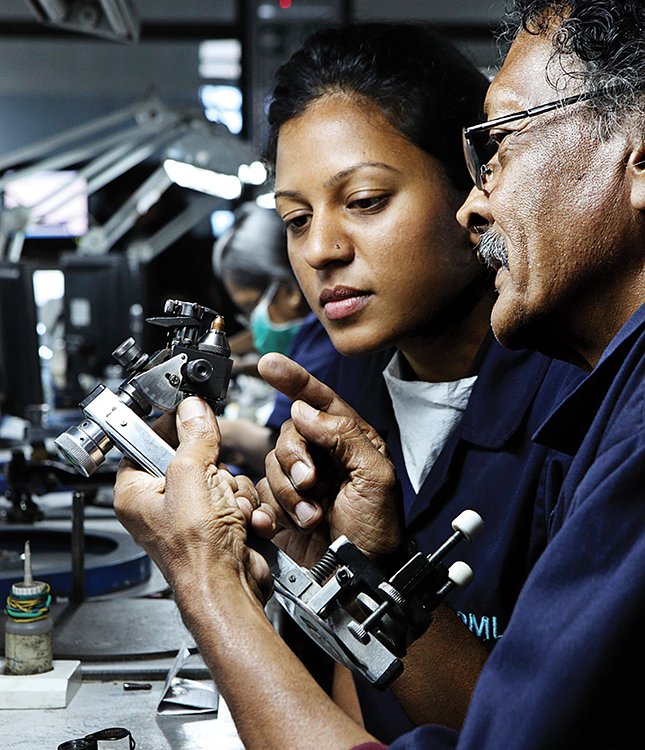
Straddling a verdant hilltop overlooking the ocean, Tiffany’s walled campus of concrete buildings offers no clues to the prized products inside. Its spartan landscaping and utilitarian blue structures could easily serve a broad range of functions in the developing world: regional government offices, secondary school, minimum-security prison. But inside, some 270 artisans, nearly all of them locals, cut and give shape to diamonds, creating their facets using a skeif—a polishing wheel impregnated with diamond powder that cuts away at the stones. Employees earn a competitive living wage and maintain a schedule that would fit in with United States work standards, with eight-hour shifts and mandated lunch and bathroom breaks. A cafeteria serves free breakfast and lunch to workers, and a shuttle bus makes sure they get to and from work safely. It’s a system as precise as the polishing tools used to refine diamonds into the cuts consumers cherish: round brilliant, emerald, princess, cushion.

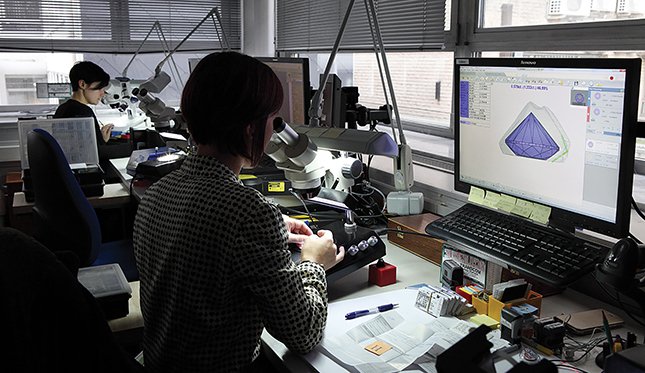
Tiffany has operated this diamond-polishing facility for the last decade as part of an ambitious effort that began in the early 1990s to control its supply chain—a daunting task in the $80 billion global diamond trade, which historically involves so many middlemen from the moment a stone leaves a mine to the point it reaches retailers that it is virtually impossible to trace a diamond’s origin. The industry’s byzantine nature made the business unnecessarily inefficient and costly as demand outpaced supply, leading Tiffany to consolidate operations. For a company that had purchased cut and polished diamonds for most of its 180-year history, it was a tremendous change. In addition to polishing its own diamonds in Mauritius and other locations around the world, Tiffany now also cuts its own painstakingly selected stones—the company rejects 99.96 percent of gem-grade diamonds—and crafts 60 percent of its jewelry in its own workshops.
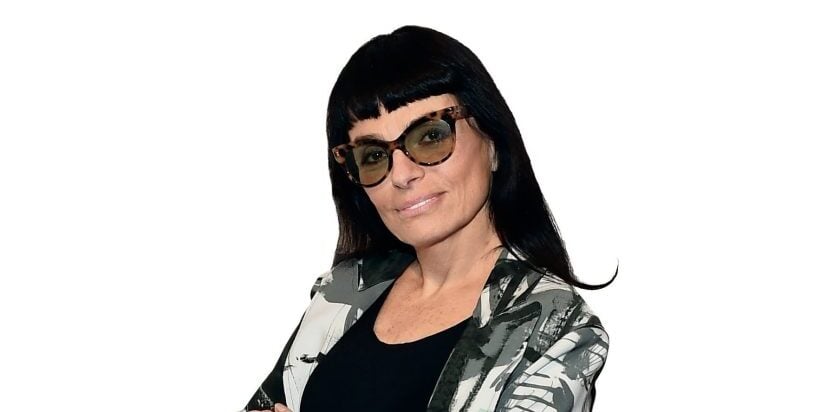
“Great houses of luxury must craft their own products. How can we claim any expertise if we don’t do this?” says Andy Hart, Tiffany’s senior vice president of diamond and jewelry supply, who arrived at the company in 1999 just as its vertical integration strategy was taking hold. At that time, Tiffany had gross profits of $822 million; in 2016, they were nearly $2.5 billion. But while greater profits and efficiencies spurred Tiffany’s decision to bring more manufacturing processes in-house, sustainability and social responsibility gradually became key objectives. “Consumers want to know the history and the provenance behind their products,” Hart explains.
The question of provenance has plagued the diamond industry for decades. In the late 1990s, human rights advocates expressed growing concerns that diamonds financed bloody revolutionary insurgencies in Africa, such as those portrayed in the Leonardo DiCaprio film Blood Diamond. For Tiffany, a fortuitous by-product of streamlining its operations was greater transparency. “Senior management wanted to know where the product came from and the environmental and social aspects,” Hart says.
Though Tiffany was among the first to consolidate its operations, it is no longer alone. “The increase in demands from customers to ensure the authenticity and ethical origin of stones have led diamond jewelry retailers to reconsider their long-term sourcing strategies,” says a 2014 industry report cowritten by consultancy Bain. And with demand for diamond jewelry at an all-time high in the U.S.—2016 sales topped $41 billion—other manufacturers have followed suit. London-based De Beers Group, primarily a diamond mining and marketing company, launched its Forevermark brand in 2008, which authenticates diamonds by creating a microscopic laser inscription in each stone, a step Tiffany took in 2004. In December, De Beers announced its investment in a blockchain platform that would enable greater transparency. CanadaMark, by mining outfit Dominion Diamonds, also provides laser inscription. “Consumers have driven the industry to evolve and be more socially conscious,” says Jean Z. Poh, CEO of Swoonery, an online luxury retailer that focuses on sustainable jewelry.
Traceability has become a primary quality of luxury purchases generally—everything from designer fashion to premium coffee to organic produce now comes with an origin narrative that proclaims ethical standards and sustainability. But it is harder to make such claims in an industry that relies on exploitation of resources and low-cost labor in developing countries such as Botswana, Namibia and Sierra Leone. “That perception causes me some frustration because diamonds do do good,” says Charles Stanley, U.S. president of Forevermark, citing the industry’s instrumental role in making Botswana one of Africa’s most stable economies. Between 1966, when mining began there, and 2014, the country’s per capita GDP grew at an average of 5.9 percent per year, the third-highest growth rate in the world during this period. “Diamonds have completely transformed the entire country of Botswana,” he says.

Complicating matters is the pervasive cloud of blood diamonds. The industry, backed by the United Nations, addressed this in 2003 by establishing the Kimberley Process Certification Scheme, a method that aims to prove that a diamond has not been used to finance rebel movements against legitimate governments. But what’s happened is “most of the conflict has resolved itself,” says Hart, “so there aren’t that many conflicts that follow the Kimberley Process’ narrow definition.” Meanwhile, the effort does nothing to ensure that fair labor practices are employed in the sourcing of a stone, nor does it prevent tainted diamonds from mixing with sustainably sourced ones or correct human rights abuses, making in-house processes such as those initiated by Tiffany critical.
A diamond’s journey when it leaves a mine is circuitous and murky. Historically, outfits such as De Beers, which controls many of the South African mines, sell rough diamonds to established purchasers called sightholders, generally based in one of the major diamond-trading centers such as Antwerp, Belgium; Tel Aviv, Israel; or Mumbai, India; they in turn sell them to a global network of cutters, polishers and wholesalers, which eventually sell the diamonds to jewelers and manufacturers. Some analysts estimate a diamond changes hands more than eight times by the time it reaches consumers—others say that number is much higher.
“Ten out of 12 diamonds are polished in India,” Hart says, often under sweatshop conditions. But because diamonds generally trade in paper packets, often with handwritten documentation that is easy to forge, the chain of custody is highly problematic to trace.

In 1999, Tiffany began to invest in the sourcing of diamonds with a stake in the Diavik mine in Canada’s Northwest Territories. As a developed country with more oversight of its mines, Canada is considered an ethical supplier of diamonds. Tiffany’s intent was purely commercial—it wanted to be closer to the source in order to secure the company’s share of the supply. Starting in 2003, Tiffany followed this by putting cutting and polishing centers under its control via Laurelton Diamonds, a wholly owned subsidiary, in Mauritius, Botswana, Cambodia, Vietnam and the Dominican Republic, as well as workshops and distribution centers in Europe and the U.S. By controlling the value chain and purchasing rough diamonds from conflict-free zones such as Canada, Australia and Russia, the company argues that it has a better idea of how its stones are sourced and cuts out the intervening steps in the process, where conflict diamonds may infiltrate the supply chain. It can also create positive changes for the local communities.
“It all comes down to local impact,” says Anisa Kamadoli Costa, Tiffany’s chief sustainability officer and chairman of the Tiffany & Co. Foundation, a nonprofit the company created in 2000 to address its sustainability and environmental concerns, “training people in a skilled craft, providing a competitive living wage and a great working environment.”
At a time when corporate social responsibility was still in its infancy, Tiffany’s establishment of a fully endowed foundation was unusual. Though the company had previously backed some environmental initiatives—in 1995 it strongly opposed the opening of a mine near Yellowstone National Park—Tiffany lacked an organized arm to guide its growing philanthropic endeavors. Not long after Kamadoli Costa joined the company in 2003, Tiffany sold its original stake in the Canadian mine, receiving a $194 million windfall. “We made a huge profit, which Wall Street wouldn’t recognize because it was a one-time earning,” she recalls. “That was the original seed funding for the endowment,” which gives the foundation the ability to devise long-term strategies. It has provided more than $70 million in strategic grants to organizations and projects focused on marine coral conservation and responsible mining—including efforts to prevent the opening of new gemstone and precious metal mines in areas such as Bristol Bay, Alaska. Even though such mines could help Tiffany’s bottom line, the company has taken the stance that “there are places where mining should not occur,” Kamadoli Costa says.
For all its good intentions, Tiffany has yet to completely resolve the traceability issue. Even with tight relationships with the mine operators, neither Tiffany nor anyone else has a guaranteed way of knowing precisely where a diamond was sourced. “It would be great if there were some sort of technological solution to this where you could scan a diamond and see which exact mine it came from,” says Andy Hart. “There’s some investment going on in that area, but we’re not there yet. But we’re still far ahead of all of our competitors because they buy polished diamonds [from third parties], and by then all the history is lost.”
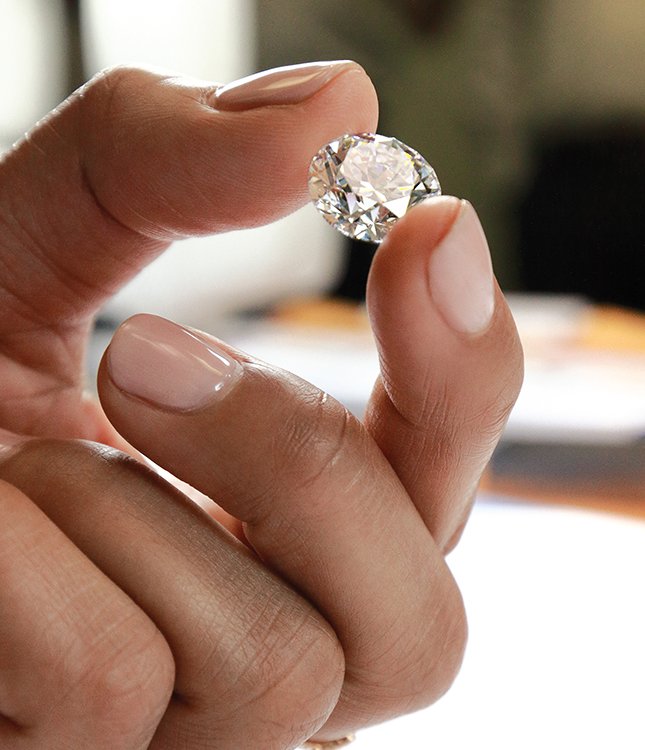
The stakes are high for Tiffany, as the market shrinks with new players entering the business. In recent years, synthetic diamonds—those made under laboratory conditions and which are atomically identical to natural diamonds—have attained popularity with a veneer of sustainability and lower prices. Leonardo DiCaprio gave the movement a boost in 2015 by investing in a Silicon Valley–based producer named Diamond Foundry. Though popular with millennial followers on social media, these products have earned derision from the diamond and luxury jewelry sectors. “Man-made diamonds being sustainable is just another marketing spin,” says Poh of Swoonery. “When you look at the amount of energy and the amount of capital required to build these massive factories that are producing diamonds, it’s really not socially conscious or sustainable at all.”
For Tiffany, which has around $4 billion in annual sales, the positive impact of sustainability can only benefit its bottom line. And the company is betting that integrating business needs with social consciousness will lead consumers to engage more with the brand’s initiatives. For instance, its Save the Wild collection donates 100 percent of profits to elephant conservation efforts. As a company, Tiffany aims to achieve net-zero greenhouse gas emissions by 2050 by implementing more renewable energy and energy efficiency across all sectors.

Sitting in a windowed boardroom at its Mauritius facility, Tiffany’s executives point to the building around them as the greatest example of this idea of achieving net-zero emissions. Streamlined processes have raised profits—and improved the livelihood of nearly 300 people.
“Change doesn’t happen overnight, but I think that we’re invested in these areas for the long haul. That makes sense for a company that’s 180 years old,” says Kamadoli Costa. “We’re playing the long game with our sustainability and our philanthropy.”