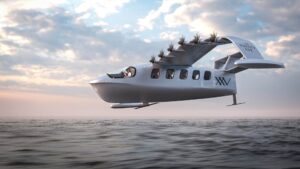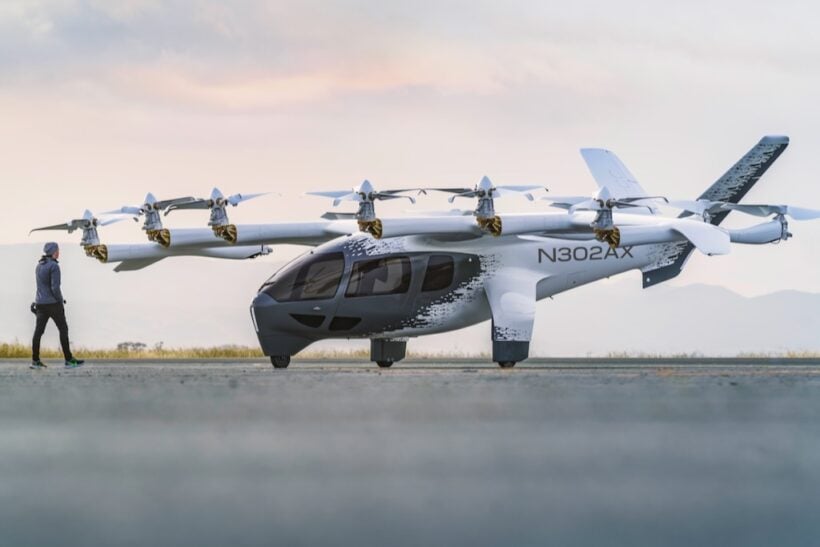
Call them air taxis, flying cars, or eVTOL (electric vertical takeoff and landing) craft. But whatever the name, these battery-powered planes have been scooping up billions of dollars of investment and purchase agreements from giants like automakers Toyota and Stellantis, Boeing, United Airlines, the U.S. military, and more over the past few years.
Now add to that list “multi-hundred-million dollar investments” in U.S.-based plane maker Archer Aviation by the state-run Abu Dhabi Investment Office (ADIO) in the United Arab Emirates. (The parties would not name a more specific amount.) The deal, announced today, is another sign that the UAE may be the leading contender to first launch commercial electric air taxi service. (Although many other locations are vying to debut this potentially more sustainable aviation tech.)

Today’s news, announced at the DRIFTx mobility conference in UAE capital Abu Dhabi, comes two months after big news from Archer’s chief U.S. rival, Joby Aviation. In February, the company announced a deal with the UAE government to launch its own service. What’s more, the arrangement gives Joby a six-year exclusive to operate in Dubai, locking Archer and others out of the Emirates’ biggest city.
Joby’s president of operations Bonny Simi told Bloomberg in March that the company expects the UAE to be its debut country for commercial service. When might that be? Joby’s press release stated, “by early 2026, with Joby targeting initial operations as early as 2025.” Archer says in its press release that it will launch “as soon as late 2025,” which might also make the UAE its debut location.
Difficulty Launching Air Taxis
Keep in mind, though, that these predicted launch dates keep slipping. In 2018, Uber said that its flying taxi division, Uber Elevate, would begin service in 2023—with Dubai as one of its debut cities. But by 2020, it gave up and sold the business off to Joby—which had been planning for its own commercial debut in 2024.
Engineering is hard, as is working with government agencies to certify the airworthiness of craft. And by its own admission, the U.S. government has been moving slowly. A 2023 Department of Transportation Office of Inspector General report found that the FAA’s “regulatory gaps and lack of consensus” had slowed down the certification of air taxis. Governments in Europe and much of Asia are moving faster, Michael Dyment, founder and managing partner at NEXA Capital Partners, told Worth last year. The FAA is also way behind on modernizing its air traffic control systems to be able to handle the high throughput of thousands of electric planes zipping around cities like ride-share cars, he added.
(Furthermore, an electric car-like battle between Joby and other eVTOL companies over competing battery-charging systems could further delay progress.)
In contrast to the United States, the United Arab Emirates seems to be moving fast. Today’s announcement also specified that ADIO will build out infrastructure, including “vertiports” where people can catch a ride. (The name comes from the fact that these planes tilt their rotors to an upright position to take off and land vertically, like a helicopter.) Archer will also be building its craft for the UAE in-country. (Other planes will be manufactured in Georgia.) The company has an agreement to sell 100 of its Midnight aircraft to UAE private heliport company Air Chateau for about $5 million each.
Big Investments in eVTOL
If you are wondering exactly how much these “multi-hundred-million dollar investments” by the UAE are, you’re not alone. That’s all Archer’s announcement said. We asked for a bit more of a ballpark range: Would it be closer to $200 million or $1 billion. But Archer did not reply by press time. Nor did it say if this would be the biggest investment in the company so far.
In August, Archer closed a $215M Investment round led by Stellantis, ARK, and United, and it ended fiscal year 2023 with 464.6M in cash and equivalents in hand. The company also has several lucrative contracts, including an agreement from United Airlines to buy $1 billion worth of planes. Joby reported holding $1 billion in cash and short-term investments at the end of the year, and it has its own roster of high-value deals. (Both companies report first-quarter results in May.)
All that funding provides a lot of “runway” for these electric plane companies, even if their takeoff ends up getting delayed another year or two.