


A few years ago, financial advisor Lynn Ballou gave a presentation to a group of Stanford University alumnae. When it was done, she had a conversation typical of many she’s had in her nearly 40-year career. A woman in her 50s approached Ballou and lamented that most of the money she and her husband had is hers from an inheritance—but their advisor only talked to her husband. “She said, ‘I have no voice,’” recalls Ballou, who is the regional director of the Lafayette, Calif., offices of EP Wealth Advisors. It wasn’t that her husband was intentionally shutting her out. “He was ‘only trying to protect her,’” Ballou says.
It’s ironic: As of 2015, women controlled more collective wealth in the U.S. than men—the result of greater longevity, inheritance and increasing participation in the workforce. But while women control more money in name, in reality many women defer to their husbands when it comes to big-picture financial planning. In a survey of 1,700 couples, UBS found that 56 percent of women leave investment decisions to their husbands. And this isn’t just a hangover from bygone years. A surprising 61 percent of millennial women rely on their husbands to call the investing shots, more so than any other generation.

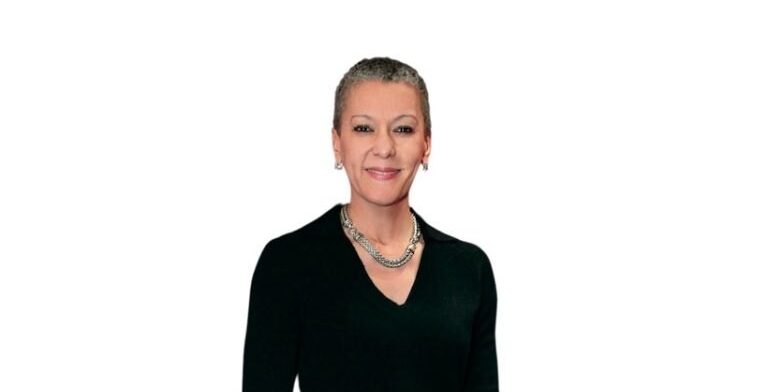
Although she cofounded a successful fashion company in her 40s, entrepreneur Jane Dailey says she fell squarely into that camp, abdicating financial decisions to her husband. After they divorced, “I kept the same financial planner and he would make the obligatory annual call and talk jargon,” says Dailey, now 60. The low point came a few years after her divorce, when she spotted her planner at an event. “I walked over and said hello, and he had absolutely no idea who I was,” she says.
Division of labor is all well and good when it comes to, say, taking out the recycling, but the stakes are too high for women to check out of financial decision-making. “You need to stay engaged so you don’t find yourself in a position 20 years from now saying, ‘I had no idea what we were saving or how we were investing,’” says Anne Marie Stonich, managing director of financial planning at Paracle in Seattle.
If anything, women need to focus more than men on building and preserving wealth. Women still earn an estimated 10 percent to 20 percent less than men who perform comparable work, and that’s before accounting for the biggest contributor to income disparity: “Women give birth and men don’t,” says Sherry Paul, a private wealth advisor for UBS Financial Services in New York, when asked why women have different investing and planning needs than men. While every family has its own dynamic, women are more likely to push pause on their careers to care for children or other family members, and this typically occurs just as they are entering their peak earning years. The cumulative effect on wealth can be profound.
Add to all this the potential for divorce, which tends to take a greater financial toll on women, and the financial impact of longer life spans, and “there is no question that women have some unique challenges,” says Paul. The good news? Women do have some unique advantages. Here’s how to put your assets—and your voice—to work at each stage of life.
In Your 20s

Make the most of your early career to earn what you’re worth, establish good money habits and harness the power of compounding returns.
When it comes to building wealth, your 20s may be the best years of your life. Your financial responsibilities are minimal, and even modest savings can go a long way toward building a substantial nest egg. Which is all the more reason to maximize your earning potential right out of the gate. “My first piece of advice for women in their 20s is ask for a raise,” UBS’ Sherry Paul says. “In my 20 years as a private wealth advisor, working with clients in all professions and watching how their income changes over time, I can tell you that women especially need to be proactive about asking for a raise.”

Even small income disparities can add up over the decades after factoring in a smaller base pay for raises and missed investing opportunities. In a hypothetical analysis by UBS, a 25-year-old woman who earns 10 percent less than her male counterpart will have 38 percent less wealth by the time she turns 85.
Just as important as optimizing how much money comes into your bank account is tracking how much goes out. “The critical part of these years is forming good financial habits,” says Molly Ward, a financial advisor with AXA Advisors in Houston.
At a minimum, set aside enough to get the full benefit of any employer 401(k) match and aim to increase your contributions with every pay increase until you reach the maximum (which is $19,000 for 2019). Your future self will thank you. A 25-year-old who saves $1,000 a month and earns a 6 percent average return can amass nearly $2 million by the time she turns 65.
It may also make sense to open and contribute to a Roth IRA if you qualify: Your modified adjusted gross income needs to be less than $137,000 if you’re single and $203,000 if you’re married filing jointly. You’ll make contributions with after-tax dollars—up to $6,000 for 2019—but gains and retirement withdrawals down the road won’t be taxed.
You don’t need a complicated approach to invest your retirement savings wisely. The most important thing to know: This is not the time to be too conservative in your approach. Women tend to be more cautious and hold more cash than men, studies show. This is admirable, but only to a point, since risk and reward go hand in hand. At this stage in life, you should aim to have anywhere from 75 to 90 percent of your retirement savings in stocks, says Ward, including a meaningful dose of international holdings. Worried about volatility? Don’t be, at least not at this stage. In the long run, markets go up.

If you benefit from family assets, such as income from a trust, developing good habits in your 20s around saving and investing is still critical. “Even if you have enough money to last two lifetimes, nobody enjoys dipping into principal,” says Emily Sanders, managing director of United Capital in Atlanta. “You need to understand where your money is going and how it’s being put to work.”
If you’re not quite ready to make nuanced investment decisions, start with a target-date fund. These funds, which are available through large mutual fund firms such as Fidelity, T. Rowe Price and Vanguard, take the guesswork out of investing retirement assets. As the name suggests, they allocate your assets based on a target date, say 2050. Over time, they gradually shift from higher-return investments, such as stocks, toward more conservative securities, such as bonds.
In Your 30s
Trade the sharing economy for ownership: Assets are key to building wealth over time. If you take a break from full-time work, step up your investing responsibilities at home.
The sharing economy is a wonderful thing when it comes to finding great vacation rentals or donning designer clothes for special events. What it isn’t good for: building wealth. “People create wealth in the U.S. in three major ways,” says Paul. “They start and monetize a business; they inherit it; or they take their earned income and invest it in real estate, the stock market or other private equity investments.”
Indeed, your 30s are a great time to think about owning assets outside of your 401(k). A house is a good place to start, but only if you plan to own it at least five to seven years. Real estate isn’t liquid, and the transaction costs of buying and selling property can eat into your returns, and then some, if you sell too soon. If you’re still at a point in your career where mobility is key, consider buying rental property in a city where you already have roots or hope to land eventually. This is another move that can pay off later in life. Unlike traditional retirement assets, real estate doesn’t require that you take minimum distributions after you turn 70.

Given the high price of real estate in many cities, it’s not uncommon for parents or grandparents to help their adult children, either with a down payment or an interest-free loan for a cash-only purchase. Whether the transaction is $50,000 or $5 million, it’s critical to spell out expectations around ownership—and use—of the property, lest this be a source of conflict later.
For many women, the third decade is prime time for getting married, starting a family and shifting gears on a career. U.S. women are nearly twice as likely as men to work part-time, and many take an extended break from work. Even a short sabbatical can take a toll. The UBS study found that the lost savings and impact on career progression from taking just one year off without pay can result in a woman having 43 percent less wealth than her hypothetical male counterpart by the time she turns 85.
The advice here is not for women—or their husbands, for that matter—to forgo taking time off from work for family or other worthy pursuits. But if you do opt to step away from a full-time career, it does make sense to step up your role in managing big-picture family finances. Because the workplace is a primary conduit for financial education, leaving a job can be a double whammy. “Becoming the CEO of the family puts you front and center to understanding all of the money operations,” says Paul. “Even if you’re not earning it, you can play a role in amplifying it.”
The upside: Multiple studies conclude that women are better long-term investors than men if given the opportunity. In an analysis of client data, Fidelity Investments found that women’s portfolios performed 0.4 percent better than their male counterparts’. Women generally trade less frequently, are less likely to try to time the market and more likely to think about investing in the context of bigger-picture goals, not the next hot stock. “They tend to think in terms of, What does my portfolio need to be to get me where I’m going? Not, Hey my portfolio’s up 8 percent or 20 percent,” says Ballou.
At this stage, financial planning doesn’t just mean getting your portfolio in order. As you accumulate assets and expand your family, be sure you think about protecting income and assets with disability and insurance, says Stonich, and putting your wishes in writing with an updated will and estate plan.
In Your 40s

If you haven’t already done so, now is a good time to start working with a financial advisor who can walk you through the transitions and opportunities that are common at this stage of life.
This decade is often a time of profound change. If you have children at home, you may be wearing the multiple hats of chauffeur, chef, tutor and counselor—while also starting to contemplate what life will look like when the nest is empty. Meanwhile, your 40s is the time when you might start getting (more) involved with your parents’ well-being, be it emotional, physical, financial or all of the above.
“Derailed is what we call this phase,” says Ward. The typical client at this stage is “taking the car keys away from her parents and giving car keys to her teenagers.” The different pressures can lead even the most competent women to neglect their finances.
If your parents have all the resources they need, that’s a huge relief. Nevertheless, this stage often raises estate planning issues—theirs and your own—that require thinking several steps ahead. Case in point: “Just this morning I was with a woman who is inheriting some money and wondering whether to put it in a joint account with her husband or keep it separate,” says United Capital’s Emily Sanders. She recommends the latter, to avoid having to split the inheritance in the event of divorce.
“Whether male or female, your advisor should be someone you trust and respect, and who does not patronize or pander.”
If you haven’t already—and, frankly, you probably should have—now is a good time to start working with a financial advisor. Good advisors won’t just help you design an appropriate portfolio, they can help you balance dueling responsibilities while keeping an eye out for obstacles and opportunities.
If you’ve been working with your family’s advisor, this may be a time to think about changing advisors. Just don’t make a hasty decision based on one year of subpar returns. Whether male or female, your advisor should be someone you trust and respect, and who does not patronize or pander. When done right, financial planning can be extremely personal, “but it can also be a fun process,” says Kathy Longo, founder and president of Flourish Wealth Management in Edina, Minn. At the very least, she says, it forces you to carve out time to focus on your finances.
For entrepreneur Jane Dailey, who hired Longo soon after the awkward encounter with her advisor, planning is no longer a cursory call. “It’s night and day,” she says of what she calls a holistic process with regular, in-person meetings with Longo. “I look at my life now when I talk about finances, instead of compartmentalizing them.”
While you’re at it, now is a good time to talk with your children about basic money management, says Longo. Even small steps, like establishing allowances and budgets or setting up a small brokerage account, can go a long way in boosting their confidence and financial discipline down the road.
In Your 50s
Make the most of your accumulated wealth and life experience to invest with confidence and purpose.
For many women, this stage brings a welcome calm after the transitions of your 40s. With your children off to college, you have time and mental space to ramp up or reboot your career, give back to the causes you care about and invest with a little more purpose.
Unfortunately, this decade can also bring significant sorrow: The average U.S. woman becomes widowed at age 59. While you shouldn’t take a fatalistic approach to planning, you should factor in the unexpected. Have a realistic conversation with your advisors about how to lessen any financial blow if either of you pass away. “The last thing you want to deal with will be finances, and planning now can help you avoid making hasty decisions,” says Ande Frazier, of myWorth, a Penn Mutual company founded to bridge the confidence gap between women and their finances.
Divorce is another possibility that requires planning. The odds of divorce are highest for couples in their 20s and 30s, but it can be a more complicated process later in life when you have children and shared assets. Meanwhile, the divorce rate among 50-somethings has more than doubled since 1990, according to Pew Research Center analysis of National Center for Health Statistics and U.S. Census Bureau data. “Divorce is a setback for men and women, but men typically recover financially within a couple of years, while some women never recover,” says Sanders.

If your nest egg isn’t quite where you want it to be, your 50s are a terrific time to dial back expenses and boost savings. At 50, take advantage of catch-up contributions to your 401(k) and IRAs. Though time is still on your side—even if you hope to retire soon, your savings need to work for you for decades—you have less room for error.
While there is no age requirement for sustainable investing, your 50s may be a great time to balance investing for returns with investing for change. ESG investing—short for environmental, social and governance—has gone from a fringe offering to an investing staple. There are now hundreds of mutual funds and exchange-traded funds that bill themselves as sustainable, and still other fund managers screen for ESG factors.
The challenge with ESG can be prioritizing the causes you most care about, since few ESG funds can do it all, while still choosing funds that deliver the investing returns you need. “We recommend that investors narrow it down to about five because other than that it gets a little bit crazy,” says Frazier.
By this point you might also have some leeway to think outside the retirement box, such as through angel investing, venture capital or other private investments. Research shows that women are more likely than men to view their investment portfolios as a source of security, not opportunity. Still, if your savings are on track, consider carving some of your assets for investments that, while risky, could offer a high payoff.
In 2015, Dailey and her business partner sold their company, Hollywood Fashion Secrets, for a significant payout. While most of Dailey’s assets are tucked away in a diversified portfolio of low-cost mutual funds and exchange-traded funds, Flourish Wealth’s Kathy Longo has helped Dailey carve out some capital to invest in other female-owned businesses. Some of Dailey’s top criteria when deciding whether to invest: “Are you fearless? Are you self-aware? What is the bigger cause you’re working on?”
In Your 60s and Beyond
Balance any desire to leave a legacy with a realistic plan for converting your savings into income.
Assuming you’ve been proactive about investing and planning from your 20s through 50s, this stage of your financial life should be largely uneventful. That’s the beauty of having a well-laid financial plan. “A lot of women in their 60s, myself included, are looking for peace of mind,” says EP Wealth’s Lynn Ballou. “This is where sticking with your knitting is hugely important.”
For most people in or near retirement, the biggest challenge is changing from accumulating wealth to turning it into a predictable stream of income. Don’t rely on rules of thumb. “We recommend within five years of retirement you do a very thorough cash flow analysis,” says AXA Advisors’ Molly Ward.
There’s no one-size-fits-all solution for managing retirement income, which makes it all the more important to establish relationships with financial and tax advisors.
Just as you looked to have a diversified portfolio in your investing years, you’ll want to make sure you have a diversified pool of income. Aim to cover as much as possible of your fixed expenses with what Ward calls “mailbox income,” such as money from Social Security, pension plans or annuities. What’s left will, ideally, be covered by required minimum distributions, which kick in at age 70½.
But there’s no one-size-fits-all solution for managing retirement income, which makes it all the more important to establish relationships with financial and tax advisors who can help you set priorities and map out a strategy that meshes with them. “This is when women start to get a lot of unsolicited input from family members and other people,” says Ballou. “It’s so much easier if you can say you’ve addressed their concerns and are confident in your plan.”

Ballou’s advice to the Stanford alumnus a few years ago was to let her husband know that she wanted to have a seat at the table. Next, she told her to go online and familiarize herself with basic investment lingo; then look at a recent statement and call her advisor for a high-level explanation. Finally, she suggested the woman join public speaking organization Toastmasters to boost her confidence. “Six months later I ran into her, and she was so excited,” says Ballou. “She said, ‘I took your advice, and I got a voice.'”
For more investing advice, see Worth’s Leading Advisors content.