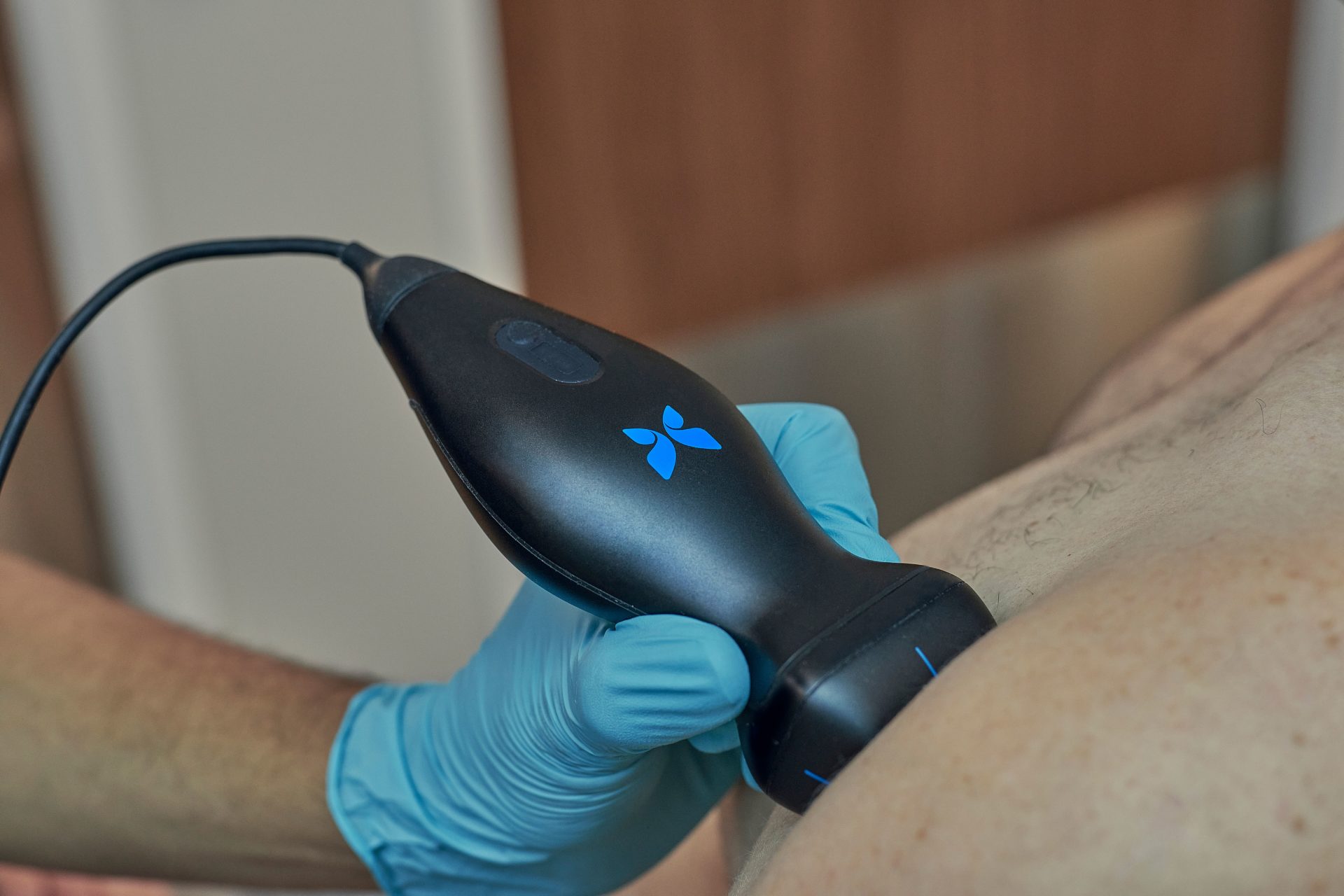
New ultrasound techniques are changing the way doctors practice medicine and could vastly improve healthcare in developing nations. The uses for traditional ultrasound machines are evolving and several companies, including General Electric, Philips, Mindray, and Butterfly Network, are developing portable and/or handheld devices to adapt to changing needs. Such mobile devices open up new possibilities for diagnosis and treatment in a wide range of clinical settings, letting doctors quickly and easily determine everything from urine quantity in a bladder to potential signs of breast cancer. Some project the devices could eventually become as common as stethoscopes, and might even be used by patients themselves to send images to doctors from home, creating new potential for the telehealth industry.
“Inspection, palpation, percussion, and auscultation—long the four pillars of clinical bedside medicine—may no longer be sufficient for today’s needs,” according to the Journal of the American Medical Association. Selective use of bedside ultrasound “could be incorporated as the fifth component of the physical examination. Seeing pathology through imaging might improve interest in physical examination among trainees, and permit appropriate downstream testing and possibly superior decision making. Current ultrasound technology makes this feasible, and further miniaturization of ultrasound devices and reduced cost will allow for routine use at the bedside.”

Based in Burlington, Massachusetts, Butterfly Network developed the Butterfly IQ+, a device about the size of an electric shaver, which the company says is “the world’s first handheld, single-probe whole-body ultrasound system to use semiconductor technology.” Its portability, ease of use, and low cost (about $2,400) make it suitable for a wide range of clinical tasks, both in well-equipped hospitals and in places where medical infrastructure may be limited or non-existent. The device connects to a smartphone app that lets users manage images on a cloud-based platform.
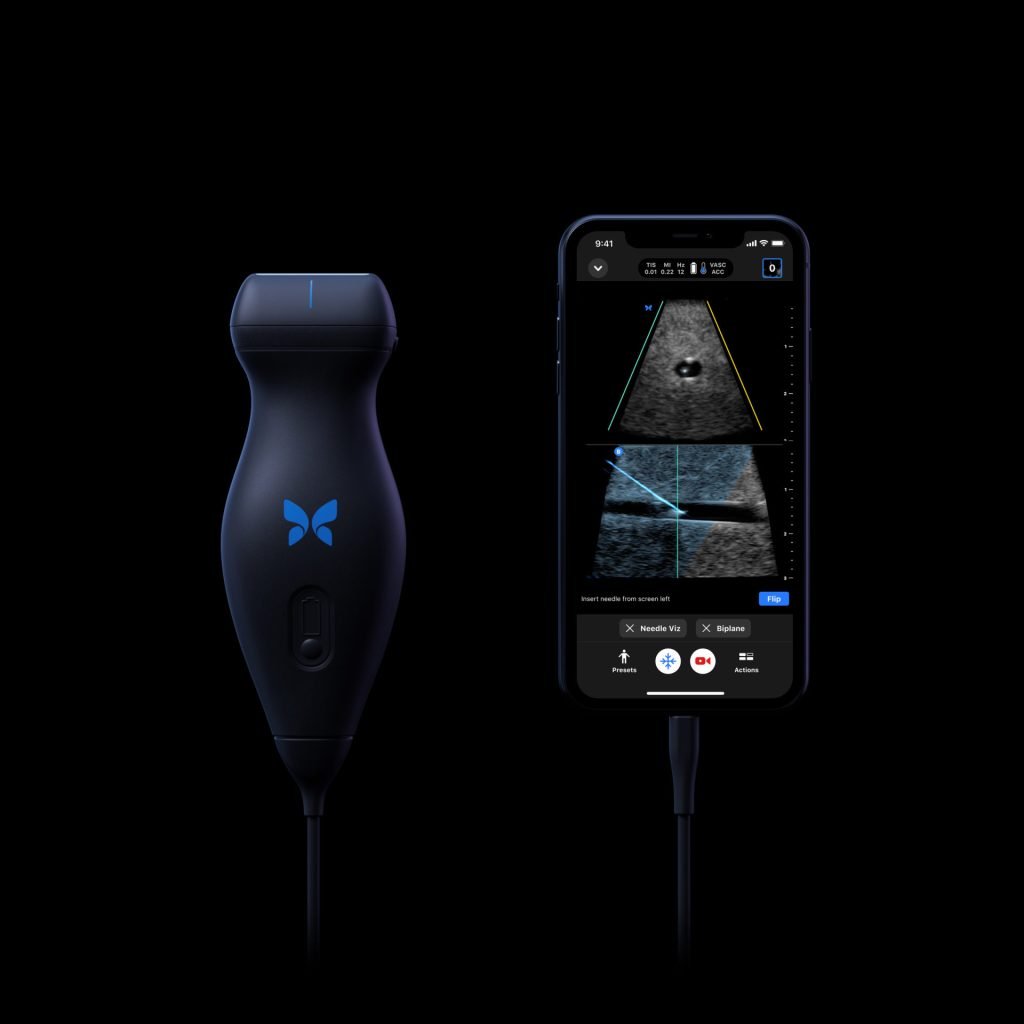
Dr. John Martin, chief medical officer at Butterfly, says “Ultrasound has been around for a long time, and is good for almost every stage of care. Among the imaging modalities, it’s the fastest growing, because there’s a greater appreciation of what you can do with it.” CT and MRI machines produce detailed images, but that level of sophistication isn’t necessary for many clinical situations, and the high cost is prohibitive. With a handheld ultrasound device, says Martin, doctors who previously had to wait for further testing to determine a course of action can prescribe next steps during a patient’s appointment. Martin suggests the IQ+ could eventually replace the stethoscope. “Why hear something when you can see it? The power of having visual information when we make judgments is a transformative change in healthcare.”
Thomas Marini, a radiologist at the University of Rochester, agrees that using the stethoscope isn’t ideal in most cases. “Let’s say a doctor needs to learn what’s happening with a patient’s lungs. They can listen and suggest an x-ray as a follow up. The Butterfly allows them to see what’s actually going on, leading to a faster and more accurate diagnosis. I think there’s an ethos about the stethoscope and a doctor using it bedside, but that’s going to change in the years ahead. The degree of accuracy from ultrasound is much greater. It can solve the vast majority of diagnostic problems.” The University of Rochester plans to provide Butterfly devices to every clinician in the hospital and train medical students to use them, says Marini.
“Residency programs, graduate medical education, training for emergency medicine, cardiology, vascular, primary care, even veterinary medicine—you pick the specialty. Learning how to use ultrasound will be part of the training in all these areas,” says Martin. “Doctors of the future will make the Butterfly part of their daily routine.”
Handheld ultrasound is also helping medical practitioners in countries that lack medical infrastructure. When Dr. Oleg Turkot, assistant professor of anesthesiology and critical care medicine at Johns Hopkins Hospital, traveled to Ukraine recently as part of his ongoing humanitarian work there, he brought 14 Butterfly devices with him. He says they “will allow medical practitioners to carry out diagnostic work in areas of the country with little or no access to equipment, or where the war has damaged healthcare facilities.” The IQ+ will vastly improve care for a wide range of patients, from soldiers hit by shrapnel, which can be hard to remove without exploratory incisions, to pregnant women with limited access to hospitals in war-torn areas.
The majority of people in the world lack access to any form of medical imaging. The Pan American Health Organization estimates that 70 to 80 percent of diagnostic problems can be solved with basic use of x-ray and/or ultrasound examinations, but many countries lack the technology. “With the advent of Butterfly,” says Marini, “we can change this paradigm completely by removing barriers to ultrasound access.”
The Bill and Melinda Gates Foundation recently awarded Butterfly Network a $5 million grant to send its scanners to Africa, in what Martin says is the largest-ever deployment of ultrasound devices in the developing world. The region faces two major concerns: A high fetal mortality rate and a lack of medical expertise. The company worked with the University of North Carolina to develop an artificial intelligence algorithm that determines the gestational age of a baby. It requires no expertise—all a nurse has to do is sweep the device across and up and down the belly.
Butterfly convened 50 practitioners at Kenyatta University and provided each with a device and obstetric ultrasound training. A thousand Butterfly devices will be deployed in sub-Saharan Africa and a Global Ultrasound Institute program will train a total of 500 practitioners by year-end, bringing ultrasound capabilities to more than 50 facilities in rural, underserved communities facing maternal health challenges.
“Future iterations of our product will likely be wearable patches that use ultrasound to monitor a condition, whether it’s blood flow in a graft, the amount of urine in a bladder, or the amount of fluid in the lungs,” says Martin. “That’s where we’re going—and it will change the world.”