


In 2011, Chicago-based entrepreneur Andrew Berlin bought the South Bend Silver Hawks, a minor league baseball team affiliated with the Arizona Diamondbacks that had been losing money for years. After rebranding the Silver Hawks as the South Bend Cubs and making operational improvements, Berlin helped triple attendance and grow annual revenue by more than 350 percent. The CEO of a packaging company with more than $1 billion in annual sales, Berlin made such an impression on the owners of the Chicago Cubs that in 2015 he was invited to become a team partner. His timing couldn’t have been better: The following year, the Cubs won the World Series, ending a 108-year championship drought.
Sports franchises attract investors in large part because of broadcast rights, which generate steady revenue. As those rights have grown more lucrative, professional teams have grown more valuable. And at the highest level, sports owners and investors increasingly think of a team as a real estate play; develop the area around an arena or stadium with hotels, shops, offices and residences, and a franchise worth hundreds of millions morphs into a multibillion-dollar package. But as ticket prices for pro football, basketball, baseball and hockey teams have soared, many consumers have turned to less costly entertainment—which means that even non-major league teams like the South Bend Cubs can turn a profit on attendance, sponsorship and merchandising.


Sports franchise ownership also comes with significant risks. It’s hard to make a bad team good, and it’s hard to make a bad team profitable. Then there’s the illiquidity of the assets. There are a limited number of potential buyers for sports teams, and selling an ownership stake is usually subject to league approval. So you’re not likely to be able to flip a sports team in three or four years. “Most investors in the ownership of sports teams expect a longer-term holding period,” says Michael Walsh, managing director and private wealth advisor at Bank of America Merrill Lynch.
In recent years, as owners increasingly syndicate ownership among groups of partners, sports investment opportunities have become available to a broader set of investors. “We’ve seen that as much more common,” Walsh says. “It’s going to continue to be an interesting asset class for the wealthy.”
The key is to look for undervalued opportunities. Here are six sports leagues with compelling stories for high net worth investors.
Canadian Football League
The Canadian Football League has come a long way since 2003, when a game between the Toronto Argonauts and Hamilton Tiger-Cats was unofficially dubbed the “Bankruptcy Bowl.” The owners of both teams had failed to pay their bills, forcing the league to take over the two franchises. More recently, though, the league has seen C$2 billion invested in new and improved stadiums, an expansion team in Ottawa and blue-chip investors in Toronto’s Maple Leaf Sports & Entertainment (MLSE), which bought the Argonauts in January for an undisclosed sum. The Winnipeg Blue Bombers, the most financially successful franchise of the league’s three publicly owned teams, posted a C$2.8 million profit in 2016 on annual revenue of C$27.1 million.
“Our teams are incredibly valuable,” says CFL commissioner Randy Ambrosie. “I don’t think MLSE would be looking for a minority owner, but it could be an interesting question posed to any one of our owners.”

Why it’s an opportunity: Attendance at the CFL’s four playoff games rose 7 percent between 2016 and 2017, reaching 106,396. Last November, the CFL confirmed it had met with an investor group to discuss adding a 10th team, in Halifax, Nova Scotia. The investor group, which includes the former president and CEO of the NHL’s Arizona Coyotes, Anthony LeBlanc, has reportedly set a goal of beginning play as early as 2020.
Cautionary notes: Not every CFL team is in the black; the Argonauts were estimated to have lost C$10 million in 2016.
Contact: CFL COO/CFO Greg Dick, [email protected], cfl.ca
Women’s National Basketball Association

The longest-running women’s professional sports league, the Women’s National Basketball Association completed its 21st season last September. Though the WNBA struggled financially for many years, seeing its first cash-flow-positive team in 2010 despite receiving millions in subsidies from the NBA, the league’s financial performance has improved in recent years. As recently as 2016, half of the WNBA’s 12 teams were profitable or breaking even.
WNBA president Lisa Borders says the game was never in a better place than in the 2017 season, which saw rule changes that increased the excitement of the game, including a single-elimination format for the first two rounds of the WNBA Finals. In investment terms, Borders likens the WNBA to a penny stock, for the tremendous upside potential.
“We punch above our weight,” Borders says.
Why it’s an opportunity: More than 1.5 million fans attended WNBA games in 2017, the highest total attendance since 2011. WNBAstore.com saw an 18 percent annual increase in regular season merchandise sales in 2017, while postseason sales rose 38 percent year-over-year.
Cautionary notes: No women’s mainstream sports league has been able to support itself financially in the U.S., and the WNBA has seen six teams fold since its founding.
Contact: wnba.com

National Premier Soccer League
Founded in 2003, the semiprofessional National Premier Soccer League operates three divisions below Major League Soccer and bills itself as “the largest and fastest-growing league in America.” The 2017 season saw 96 teams compete across the U.S., up from 84 the year before. Buying into the NPSL is a bargain compared with the big leagues, with new teams paying a one-time membership fee of $15,000 and annual dues of $5,250.
“We’re probably the most financially stable price-point league in the country,” says NPSL managing director Jef Thiffault. “We’ve consistently kept our dues low because that’s money in our owners’ pockets to reinvest locally.”
In 2016, Foursquare cofounder Dennis Crowley founded the NPSL’s Kingston Stockade Football Club in upstate New York. After two seasons, the Stockade is breaking even with a modest operating budget of around $100,000, according to Crowley.
Why it’s an opportunity: In addition to the low barriers to entry, the league offers immediate revenue opportunities for new teams, including ticketing, merchandise and sponsorship. Some owners have also added soccer-related revenue streams such as camps and clinics.
Cautionary notes: The U.S. soccer system isn’t set up to reward investors in the NPSL—teams can’t graduate to better leagues based on performance as they can in Europe and South America. Investors are essentially betting that this status quo will change.
Contact: NPSL managing director Cindy Spera, [email protected], npsl.com
Ligue de Football Professionnel
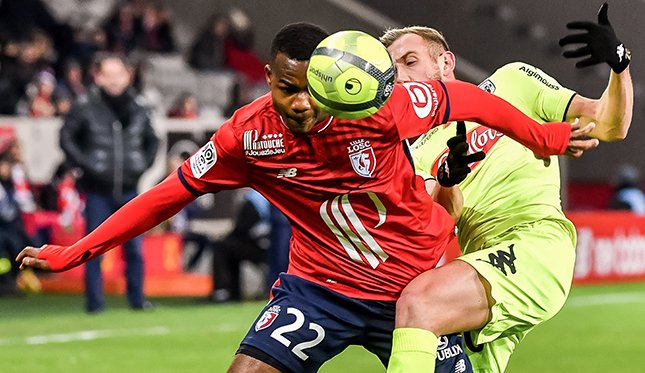
In many European countries, soccer is life, and France is no exception. The country’s Ligue de Football Professionnel (LFP) has a compelling investment profile, having grown revenue to €1.49 billion in 2015-2016 from €1.04 billion in 2010-2011. In the next 18 months, the league will renegotiate its broadcast rights, which analysts expect to increase to €1.2 billion from €780 million. Of the 40 teams in the LFP’s two-tier system, nine are owned by foreign investors.
In terms of team valuations, one LFP team owner was recently looking to sell a 20 percent stake in his club for €2 million. “We have a variety of possibilities to suit the needs of any kind of investor,” says Olivier Jaubert, LFP’s sales and marketing director. “There are opportunities at very low equity levels.” Jaubert added that some owners in the LFP are open to both passive investors as well as owner-operators who might be interested in bringing in new management teams.
Why it’s an opportunity: The LFP is actively seeking U.S. investors, and the league’s teams have modest valuations compared with those of many major European soccer clubs. Its most valuable team, Paris Saint-Germain Football Club, was most recently valued at €998 million. Compare that with the U.K.’s Manchester United FC, valued at €3.09 billion, and Germany’s Bayern Munchen FC, valued at €2.44 billion.
Cautionary notes: LFP revenue fell slightly between the 2013–2014 season and the 2014–2015 season, from €1.49 billion to €1.41 billion.
Contact: LFP sales and marketing director Olivier Jaubert, [email protected], lfp.fr

Minor League Baseball
Minor League Baseball offers more investment opportunities than almost any other sports league, with 160 teams across five divisions. Every team is affiliated with a Major League Baseball club, and the valuations for minor league teams range from around $5 million to more than $40 million for a Triple-A team. Combined gross revenue for the league grew to $833 million in 2016 from $265 million in 1993. “We’ll be a billion-dollar industry,” predicts Pat O’Conner, president and CEO of MiLB.
Of the 160 teams, the league usually welcomes five new majority owners per year, with many minority owners coming in and out every season. Some teams have 50 or more individual investors. Debt financing is allowed, but new owners must put down a minimum of 55 percent equity.
Why it’s an opportunity: Total MiLB attendance has grown in five of the past six years, reaching 41.8 million in 2017. Several MiLB teams have also added a new revenue stream in recent years by leasing their stadiums to Division II soccer leagues.
Cautionary notes: Investors who also own their team’s stadium should be prepared for substantial maintenance expenses. “Whether it’s new seats, new lights or a new roof, you need to be prepared that some of that may or may not be covered in your lease,” says Peter Freund, owner of three MiLB teams. He adds that baseball fields and their irrigation systems need to be updated every five to seven years, which can cost upwards of $1 million.
Contact: MiLB senior vice president of legal affairs and general counsel Scott Poley, [email protected], milb.com
Major League Lacrosse

Launched in 2001, Major League Lacrosse is a nine-team U.S. league that has a goal of expanding to 16 teams within the next decade. New ownership groups must have a net worth of at least $20 million, and anyone interested in buying an MLL team can do so for less than $7 million.
“We’ve got a road map for anyone who wants to buy a team, and if they follow the road map, they can have success,” says David Gross, who served as commissioner of MLL from 2004 through 2017. Gross adds that MLL is one of the only sports leagues with the best players in the world that doesn’t require investors to pay a high premium. Players earn on average between $10,000 and $20,000 per season, which runs from April to August, and many work full-time in finance.

Why it’s an opportunity: The number of people playing lacrosse in the U.S. grew 39 percent between 2011 and 2016, reaching 2.1 million, according to the Sports & Fitness Industry Association. MLL viewership is also on the rise. Last year, the league began streaming games live on Twitter, attracting an average of 300,000 unique viewers, more than double the previous viewership on ESPN2—a good example of how digital platforms are helping smaller-league teams build their fan bases and their valuations.
Cautionary notes: In 2017, the owner of the most recent expansion franchise, the Atlanta Blaze, sold the team back to the league and filed a lawsuit claiming that MLL had misrepresented its profitability when negotiating the sale of the Blaze in 2014. The lawsuit is still ongoing. MLL is now in negotiations with new investors.
Contact: MLL commissioner Alexander Brown, alexander.brown@ majorleaguelacrosse.com, majorleaguelacrosse.com