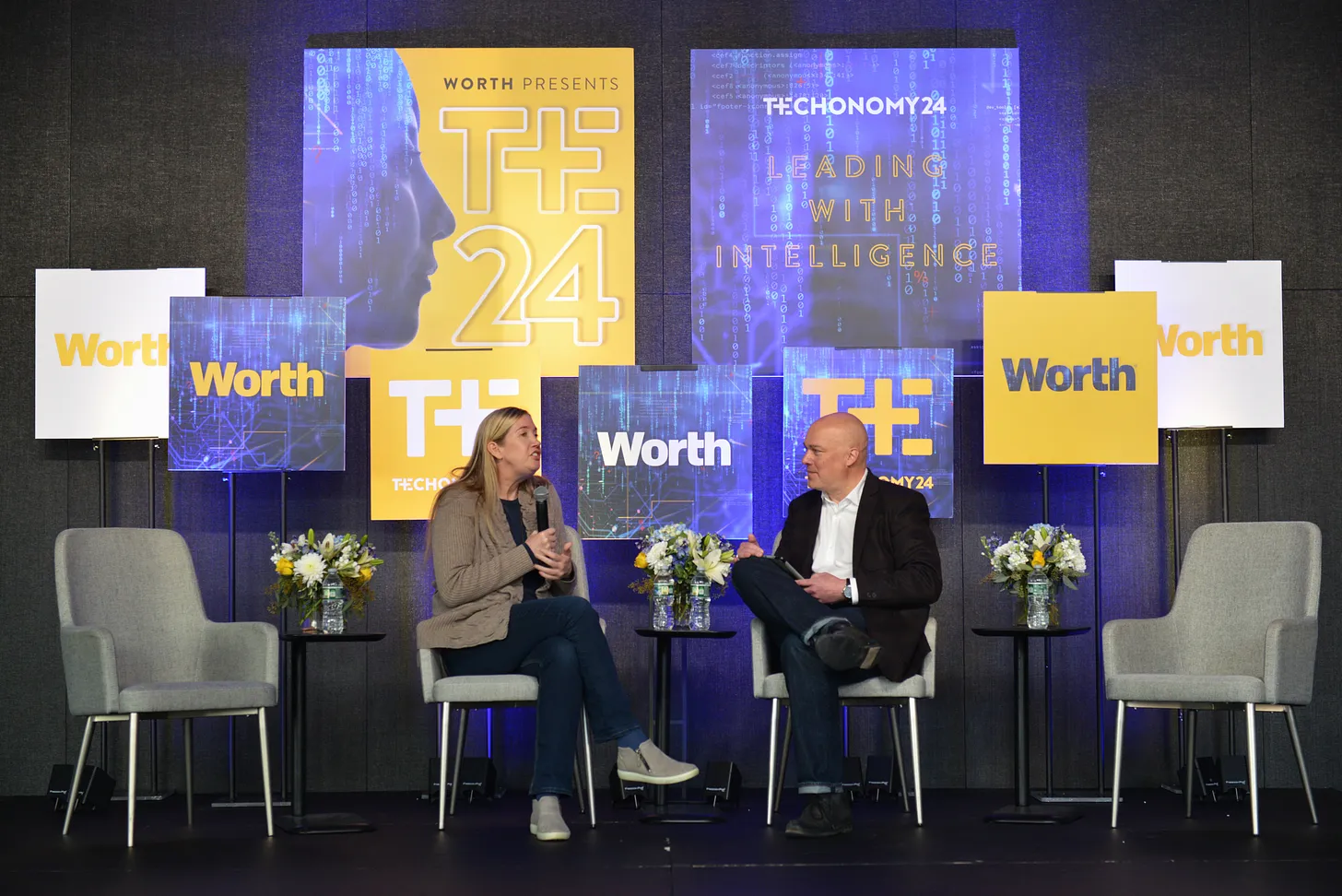
Artificial intelligence, once an experiment, has now evolved into an expectation. At the Techonomy at Davos breakfast, a collaboration between Omnicom PR Group and Mastercard, industry leaders engaged in a thought-provoking discussion on the transformative role of AI in business, marketing, and reputation management.
The off-the-record conversation, moderated by Worth CEO Josh Kampel, featured insights from Omnicom PRG CEO Chris Foster and Mastercard CMO Raja Rajamannar, among 18 other CMOs from leading brands. Throughout the discussion, it became clear that AI is no longer a futuristic novelty—it’s an essential business tool rapidly reshaping industries from communications to financial services.

The first of these conversations took place in Davos in 2024. That year, the discussion centered on potential—the promise of generative AI, the creative breakthroughs it might enable, and the risks that came with it. A year later, the tone has shifted. AI has moved from novelty to necessity, no longer a side project for innovation teams but an operational imperative embedded in marketing, communications, and corporate strategy.
What’s clear is that AI is driving speed, scale, and efficiency, but it’s also raising more profound questions about trust, authenticity, and human oversight. In an era where algorithms shape narratives, and misinformation spreads at machine speed, companies realize that reputation is more fragile and valuable than ever.

From Experimentation to Business Essential
A year ago, AI was mainly about experimentation—test-and-learn projects, cautious adoption, and selective use cases. Today, it’s fully integrated into business strategy. The early adopters have moved beyond pilot programs and now embed AI across entire organizations.
The playing field has leveled, too. What was once a tool for big-budget tech firms has become accessible to mid-sized and even smaller companies, accelerating a shift in how businesses think about AI. It’s no longer just an IT concern; it’s a C-suite priority, influencing marketing, crisis management, and operational efficiency.
The conversation around jobs has also evolved. The knee-jerk fear that AI would eliminate entire workforces has given way to a more nuanced reality. Companies aren’t simply replacing employees with AI—they’re rethinking how people work alongside AI, upskilling and reskilling employees to take advantage of automation rather than fearing it.
There’s also a shift in how businesses approach AI-driven decision-making. What started as isolated use cases is now central to business models—a move from experimentation to integration. The proactive approach now is not whether AI should be used but how to use it responsibly and strategically, instilling a sense of reassurance and confidence in the audience.
The Marketing Revolution: AI at the Speed of Business
For marketers, AI is a game-changer, not just because of automation. The ability to analyze vast datasets, personalize content, and iterate quickly has transformed everything from ad targeting to campaign strategy.
Some of the most immediate gains have come from workflow automation. Processes that once took weeks now take hours. Complex documents, like RFP responses that required multiple teams and endless revisions, can now be drafted in a day, thanks to AI’s ability to analyze past successes and failures.
But AI’s impact goes deeper than efficiency—it’s changing how brands speak, engage, and protect their identity. AI-generated messaging is becoming more accurate, aligned with brand voice, and more effective at maintaining platform consistency.
That doesn’t mean AI is without risk. The question of ownership looms large. Companies are increasingly wary of their proprietary data being used to train external AI models, and many are setting strict guidelines to prevent competitors from benefiting from their insights. AI isn’t just accelerating content creation; it’s forcing businesses to rethink how they protect their intellectual property.
More than ever, marketing leaders must balance AI’s efficiency with the human intuition needed to differentiate, strategize, and maintain authenticity. While AI can provide insights, it cannot understand nuance, anticipate cultural shifts, or make creative leaps. This underscores the importance of human intuition in the AI era, making the audience feel valued and integral to the process.

Reputation in an AI World: Risk, Trust, and Control
For all its benefits, AI is also a reputational minefield. As AI-generated content becomes more sophisticated, so do misinformation campaigns, deepfakes, and algorithm-driven distortions of reality. Companies quickly realize that trust is their most valuable asset—and it’s more complicated than ever to maintain.
A year ago, AI risk discussions focused on accuracy and hallucinations—could AI-generated content be trusted? Now, the concerns are broader and more existential. The real danger isn’t just incorrect content; it can erode brand credibility, confuse consumers, or reinforce biases in ways companies don’t fully control.
The response has been proactive monitoring, stricter data controls such as limiting access to sensitive information, and more sophisticated AI-driven crisis management like using AI to predict potential PR crises based on social media trends. Some companies are experimenting with AI-powered reputation management, using predictive analytics to spot emerging PR risks before they escalate.
At the same time, AI is creating opportunities to combat misinformation. Some organizations are leveraging AI to authenticate content, verify sources, and track the origin of information, ensuring that trusted narratives are not drowned out by AI-generated noise.
The Future: AI as a Leadership Imperative
As AI adoption accelerates, the next phase of transformation will not be about how much AI can do but how well companies use it.
The most forward-thinking businesses focus on how AI fits into their long-term strategy, complements human expertise, and helps them navigate an increasingly complex digital world. AI isn’t just a technology shift—it’s a behavioral shift that will require new leadership models, skills, and approaches to reputation management.
The biggest winners in the AI era will be those who adopt AI first and those who use it most wisely, balancing efficiency with ethics, automation with authenticity, and intelligence with intuition.