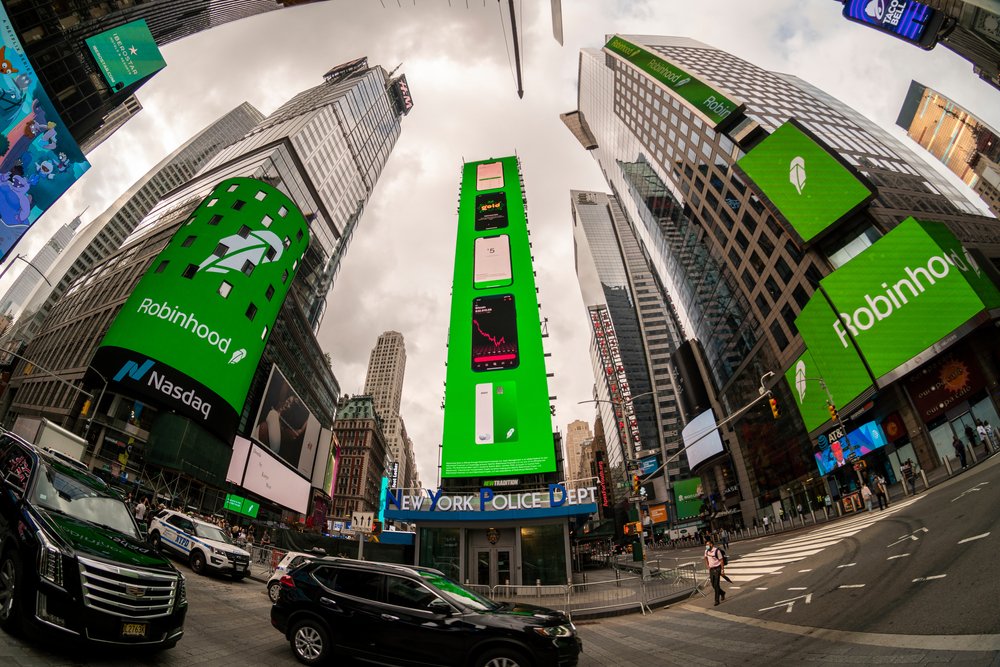
Robinhood’s performance as a public company has been less than stellar. The company went public in late July at an opening price of about $35 a share, and as of Friday’s market close the stock was below $16.
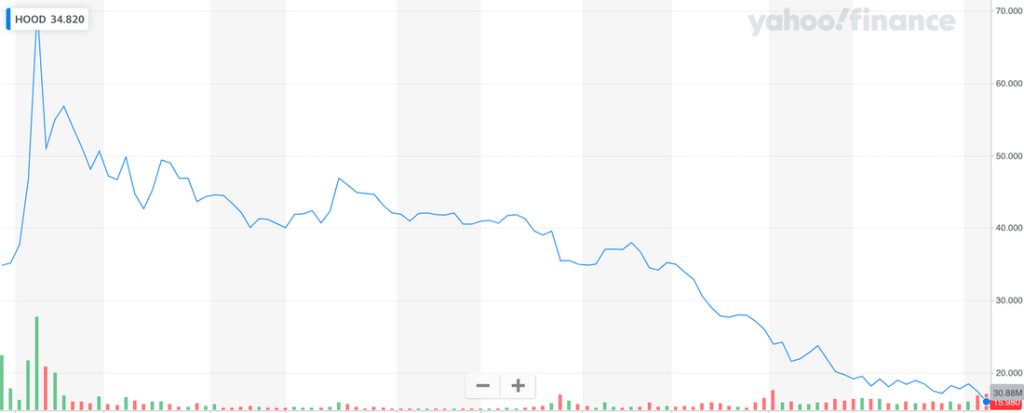
There are multiple reasons for that decline; after all, the second half of 2021 was unkind to many publicly traded fintech companies. But surely some of the crappy performance is specific to Robinhood. Investors seem increasingly aware that the unprofitable Robinhood—which jolted the brokerage world a few years ago by introducing commission-free trades—no longer has much that is unique to offer its existing and potential customers.
For example: Acorns is a well-funded fintech aimed at helping customers (including kids) bank intelligently and invest spare change. This week, the company introduced a new service that will allow customers to invest directly in stocks, as opposed to only in exchange-traded funds chosen by Acorns. This move was widely interpreted as a play for some of Robinhood’s business/customer base. Given Acorns’ claimed 8.2 million customer base—a little more than a third of Robinhood’s claimed 22 million—that’s not the longest shot. Robinhood stock (in what was a pretty tough equities market week in general) dropped more than 7% on Thursday, seemingly in reaction—although it mostly recovered. Without more innovation from Robinhood, though, threats like this will continue to crop up.

A second problem has been Robinhood’s corporate governance. There isn’t enough room in a normal-sized FIN item to include all the examples of the firm’s incompetence, but here’s a quick summary:
- In December 2020, the Securities and Exchange Commission (SEC) fined Robinhood $65 million for making “false and misleading statements” about its use of payment for order flow.
- When the GameStop Götterdämerung hit in January 2021, Robinhood CEO Vlad Tenev repeatedly said that “there was no liquidity problem” that forced the company to halt trading on its app. Within hours, it was revealed that the company couldn’t keep up with the deposit requirements of its clearinghouse—the very definition of a liquidity problem—and had to scramble to raise billions from its investors. As FIN wrote a year ago, “a CEO who can’t tell the truth is a bigger issue than the inability to meet a margin call.”
- The FINRA report (and accompanying $70 million fine) issued in late June catalogued multiple governance outrages, from technology breakdowns to a failure to report customer complaints to allowing teenagers to trade options.
Robinhood has taken some steps to provide at least the appearance of a properly run company. One thing we learned when the company went public is that the company’s highest compensated employee is chief legal officer Daniel Gallagher, a former Obama-appointed commissioner on the Securities and Exchange Commission.
But the stock’s continued illness suggests that stronger medicine is necessary. In public, venture capital firms like to tout the genius and dedication of the founders whom they fund, but behind the scenes there can be tremendous pressure on CEOs perceived as underperforming or otherwise screwing up.
Reading between the lines, that institutional discontent seems to be the impetus behind this week’s announcement that industry veteran Steve Quirk has been hired to fill a newly created Robinhood position of “chief brokerage officer.” (Curiously, as of Sunday morning, Quirk had yet to update his LinkedIn page with his Robinhood gig.) Quirk is the textbook “safe pair of hands”: he served more than 14 years at TD Ameritrade. One of Quirk’s duties was to oversee active traders, which was especially important after the Great Recession as more investors began to take up option trading—an obviously relevant credential for working at Robinhood. It will take more than an adult-in-the-room hire for Robinhood to turn itself around, but at least in the short run it may slow the stock’s downward slide.
The Digital Yuan Preps For Its Closeup
The world has been hearing more and more lately about “sportswashing,” in which unsavory regimes try to burnish their reputations by sponsoring prominent athletic teams or hosting prestigious tournaments. The upcoming Beijing Winter Olympics is a prime example, but FIN wonders if part of China’s attempt to deflect from its human rights violations and aggressive territorial will involve showing off the progress of the digital yuan, which is by almost any yardstick already the world’s most established central bank digital currency (CBDC).
The mainstreaming of the digital yuan has been underreported in the West. Consider that JD.com already offers digital yuan payment options, and this week WeChat Pay said it would add the same. For Americans this would be roughly the equivalent of PayPal, Amazon and Walmart all offering payment via CBDC. This week, the Chinese government made the digital yuan wallet available in the Apple and Android stores for users in 10 Chinese cities. It remains to be seen how the People’s Bank of China will handle its relationship with big players like Tencent, but for now the digital yuan looks like it is going for the gold.
This piece originally appeared in FIN, James Ledbetter’s fintech newsletter. Ledbetter is Chief Content Officer of Clarim Media, which owns Techonomy.