

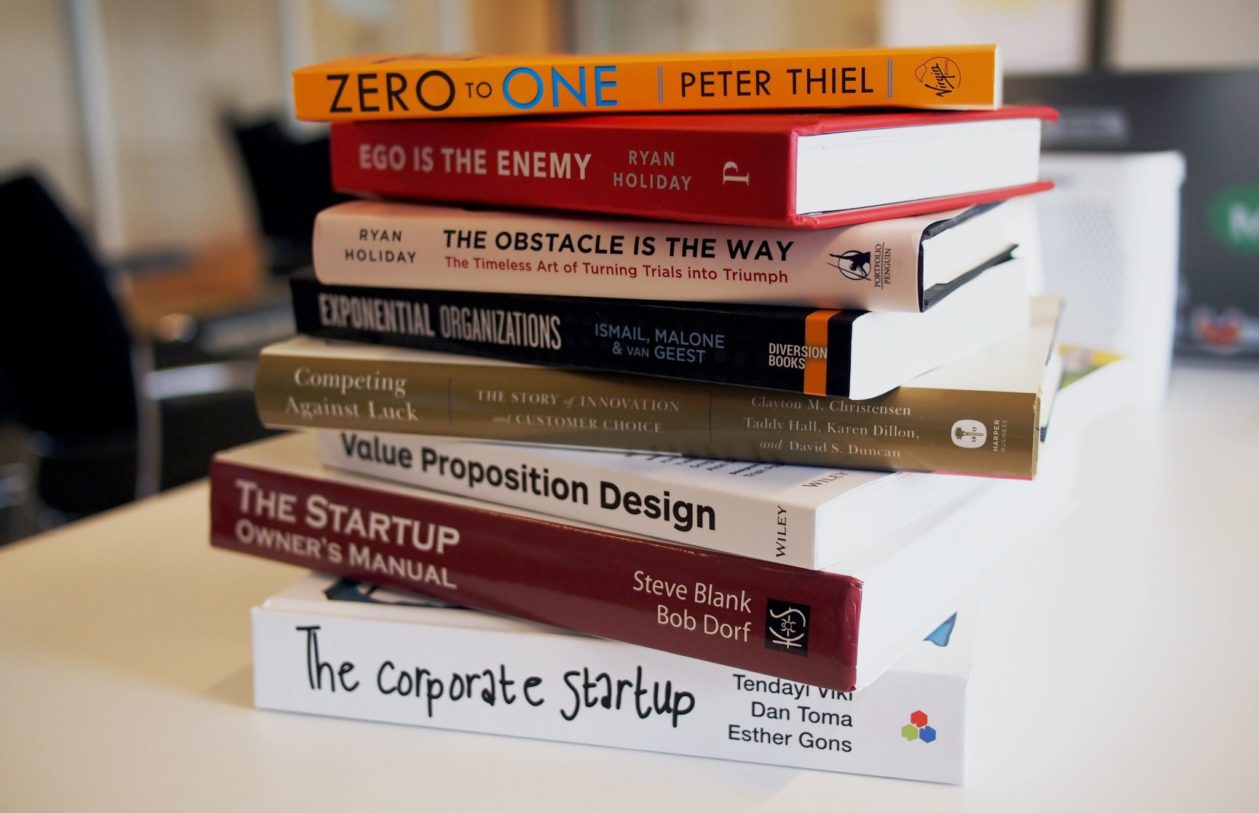
Go into any good-sized bookstore, and you’ll find that section. You know the one I’m talking about. It might be called ‘Business’ or ‘Management’ or ‘Self-Improvement’; it probably has a stack of Bezonomics by Brian Dumaine and copies of 50 Cent’s Hustle Harder, Hustle Smarter prominently displayed, or something by Malcolm Gladwell. They are, of course, the “books you should be reading.”
I’m not against this kind of literature. At its best, it’s fascinating—that blend of biography, analysis and self-revelation can be gripping, and it can certainly teach you lessons. It’s also a great thing, in my view, that the business world has so completely grasped the notion that it can learn lessons about leadership, development and strategy from many other sectors (although spare me another wannabe corner-office CEO who is engrossed in Sun Tzu’s The Art of War). Reading widely is always a valuable learning experience. As Thomas Aquinas said, I fear the man of only one book.

Success in business, however, is about much more than sucking in lessons from the printed page. We’re told endlessly how much Bill Gates and Warren Buffett read, but that’s not the only reason they’re game-changingly successful. It may not even be the main reason. It’s necessary but not sufficient.
Most entrepreneurs want to be really successful. Not many people reading Worth will set out on their trajectory in life thinking, “I really hope one day that I’m moderately well remunerated and comfortably off.” Children play Top Trumps, not Upper Management Trumps. The problem is that it’s very difficult to flourish and succeed in a big way if you try to do the same as everyone else, but better (or even as well). As my friend Rory Sutherland of Ogilvy says, “A problem arises when lots of businesses in the same sector all optimize the same damned things…competing companies rapidly become more or less indistinguishable from each other.” And that’s what happens if you rely on Managing Through Interpretive Dance or Make Your Fortune in Your Pyjamas or whatever the latest nostrum is. Other people’s ideas, other people’s inspiration, other people’s limitations.
Standout success comes from innovation. Think of a huge business name. Steve Jobs famously didn’t ever code. He wasn’t an engineer or a designer. What he did was bring a distinctive and utterly bewitching aesthetic, both physically and emotionally, to Apple. Apple products were devices you wanted to have, not ones you needed. They made—still make—you feel special, a connoisseur, part of a knowing community. Is an iPhone the best smartphone on the market? Probably not. Does it have the best battery life? Certainly not. Does it have the best functionality? Arguable. But it still outsells everything else, by a country mile in many markets. I’ve got one. You probably have too.
If Jobs is too high-profile for you, look at Petr Kellner. The Czech investment banker started his career selling office furniture; he is now worth around $11 billion, and he’s made that fortune not by trimming margins on safe investments but by going for high-stakes transactions and taking shareholdings in companies that have exploded into success. He identified opportunities in the post-communism privatization of the Czech Republic and has ridden high on clever decision-making. He’s also kept his company almost entirely in his own hands—again, a concentration of risk when it could be spread but an equal concentration of the rewards.
It would be great to think that management books or courses or mentoring were the silver bullet: Do this one thing, read this one thing, and success is only a matter of time. But they’re not, and they can’t be. If it was that easy, everyone would be doing it. The history and culture of your industry, and of others, will always offer lessons, and there is great skill in distilling them and using them for your own purposes. But it’s not enough. You need genius.
Genius, remember, is not just an exceptional and innate skill in something. For the Romans, a genius was a guiding spirit, a kind of attendant guardian angel, that followed the individual. That’s what you need to recognize and foster. What is your genius like? What does it help you do? Where will it guide you? By all means read voraciously to help you identify it. But that’s just the first step.
Eliot Wilson is the cofounder of Pivot Point, a change management, strategy and PR consultancy based in London.