
Around the country, cities are recovering from a devastating year for business travel and tourism. Perhaps the biggest change? They’re finally showcasing the history of all the people who built them.
In early March 2020, Van Johnson, the mayor of Savannah, Ga., decided to cancel the city’s annual St. Patrick’s Day celebration because of the threat of coronavirus. St. Patrick’s Day is a big deal in Savannah, a weekend festival that brings in millions of dollars of revenue for the city’s bars, restaurants, hotels and tourist attractions. For Joe Marinelli, the president of Visit Savannah, the city’s convention and visitors bureau (CVB), the cancellation was not just a huge economic hit, but a warning sign of things to come. Visit Savannah’s mission—like that of similar organizations in every state and big city around the country—is to drive visitation to its city through tourism, business travel and conventions. There isn’t a city in the country that doesn’t depend on visitation for revenue, tax dollars and jobs, so these organizations are important. And in Savannah, a beautiful city with an inviting blend of history, character and culture, tourism is the single biggest industry. But how could Marinelli promote visitation to a city in lockdown?
“I remember sitting down with my team and saying, ‘Gang, I don’t know how to lead in this situation,’” Marinelli recalls now. “’None of us ever have been though anything like this.’ We had no idea what we were heading into, and I had to show my vulnerability a little bit and say, ‘Look, I’m not sure how to do this, but we’re going to have to figure it out together.’”

That philosophy characterized the American travel industry last year. After a decade in which visitation around the United States rose like an endless bull market, 2020 set the wrong kind of records. The coronavirus, of course, had the biggest impact; few wanted to be in densely populated areas, or planes, or hotels, during a pandemic. And in a number of cities, the protests—and, sometimes, violence—around the Black Lives Matter movement for social justice fostered the perception that cities had become places of chaos, disease and death. International travel disappeared, the convention business shut down, leisure travelers stayed away and many city residents who could go elsewhere left—if you could work remotely, why not work somewhere safe and scenic? Those who could afford to headed for more outdoor-oriented options—second homes, resort communities, mountains, anything on the water. Savannah’s Tybee Island, where the 2017 film version of Baywatch was shot, had a near-record year, according to Marinelli. Further north, “Cape Cod, the Vineyard, Nantucket, the Berkshires—they all did well,” says Martha Sheridan, the president and CEO of the Greater Boston CVB. But for Boston, 2020 was “devastating. I can’t overstate how badly the industry in Boston has suffered.”
No one’s popping corks yet, but as millions of Americans get vaccinated and cities reopen, 2021 is looking vastly better. The challenge now for people like Marinelli and Sheridan is not just to encourage the return of visitors and conventions, but to compete for that business. It’s a balancing act: While cities don’t want to send the message that they’re not taking COVID-19 seriously, they do want to send the message that the virus, in terms of travel, is a non-issue. And there’s another important trend: People who market cities—their culture, their history, their attractions—have taken the social justice movement of 2020 to heart as both a social responsibility and an economic opportunity. Cities nationwide have begun not only promoting attractions, such as festivals, neighborhoods and restaurants, that are minority-owned or minority-centric, they’ve also begun reaching out to travelers of color in ways that simply weren’t happening before 2020.
The sine qua non for travel now is safety. Even though Americans are getting more comfortable traveling again, every city is trying to strike the balance of communicating safety and responsibility, without being a downer. One example: Savannah tweaked some of its ads to show people—a restaurant server, for example—wearing masks. The message, Marinelli says: “Life’s normal here, but your server’s probably going to have a mask on.”
Probably nowhere is that messaging more important than in Orlando, the home of theme parks such as Walt Disney World, Universal Studios and SeaWorld. “The pandemic shutdown caused unimaginable lows, from hotel occupancy being the lowest we ever recorded to more than 150,000 jobs lost in the hospitality sector alone,” says Casandra Matej, president and CEO at Visit Orlando. Her organization launched a safety campaign called, “Safer, Stronger, Together,” to encourage both customers and businesses to follow health guidelines. Those safety protocols, Matej says, “are a key factor for travelers when choosing a destination, so this was—and still is—an important part of our efforts to market the destination.”
The most famous part of Orlando, Walt Disney World Resort, quickly moved to reduce attendance in its parks, make masks mandatory and introduce a new reservation system, which meant that guests needed both a theme park ticket and reservation, according to Jason Kirk, senior vice president of operations at Disney World. And Disney embraced technology as a means of facilitating safety protocols; it launched a “Disney MagicMobile Service” that allowed visitors to enter the parks contactless, simply by using their phone. (Visitors didn’t actually need to unlock or wake the phone for it to work.) It also enlarged its MobileOrder program, allowing guests to order and prepay for food from throughout the resort, then go to a restaurant and pick it up. For Disney, the stakes are especially high this year. On October 1, the resort kicks off “The World’s Most Magical Celebration,” an 18-month long 50th anniversary party. Disney wants a smooth runway to the celebration; it’s being cautious about easing safety protocols.
Much of the groundwork for the promotion of travel in 2021 actually began last year, even as many CVBs slashed their budgets and laid off or furloughed employees. In Nashville, one of the great recent success stories of American tourism, visitation revenue declined by about 75 percent for 2020, “and that’s only because January and February were pretty good,” says Butch Spyridon, president and CEO of the Nashville Convention and Visitors Corp. For Nashville, the coronavirus and BLM protests weren’t the only challenge in 2020. “We started March with a tornado, then the pandemic, then 90-mile-an-hour winds and power outages for a week, then social unrest, then a bombing”—a bomb decimated a city block in Nashville on Christmas morning—“and a flood,” in March of this year. “The impact was devastating on every level,” says Spyridon. “It became survival mode for all of us.”
But the growth that Nashville has experienced during the last decade didn’t stop in 2020, as the city opened some 2,500 new hotel rooms and a number of new restaurants. So Spyridon and his now-diminished team developed an ad campaign with the theme: “Come on Back.” As the NCVC website explains, “The world may have paused, but Nashville continued crafting new music, new designs, new attractions…” During the Grammy Awards broadcast on March 14 of this year, the NCVC aired an ad featuring Nashville artists, cooks and designers playing music, cooking and designing, against a backdrop of local singer Keb’ Mo’ performing a song called “Come on Back.”
“We had cut [spending] everywhere we could, and we cobbled together dollars from every pot imaginable and held together with Elmer’s glue and toothpicks,” Spyridon says. “But we never stopped selling, and that’ll pay off in our recovery. But that was a gamble. We were burning cash without knowing where relief would come from.”
It seems to be working. Nashville’s hotel occupancy rate, at least on weekends, is back around 40 to 50 percent—still low, but headed in the right direction—the city is planning a Fourth of July concert headlined by Brad Paisley, and the well-known Bonnaroo music festival, held in nearby Manchester, is greenlit for early September. Bonnaroo, which was canceled in 2020, had about 80,000 attendees in 2019. With performers such as Megan Thee Stallion, Tame Impala and Foo Fighters, it’s already sold out.
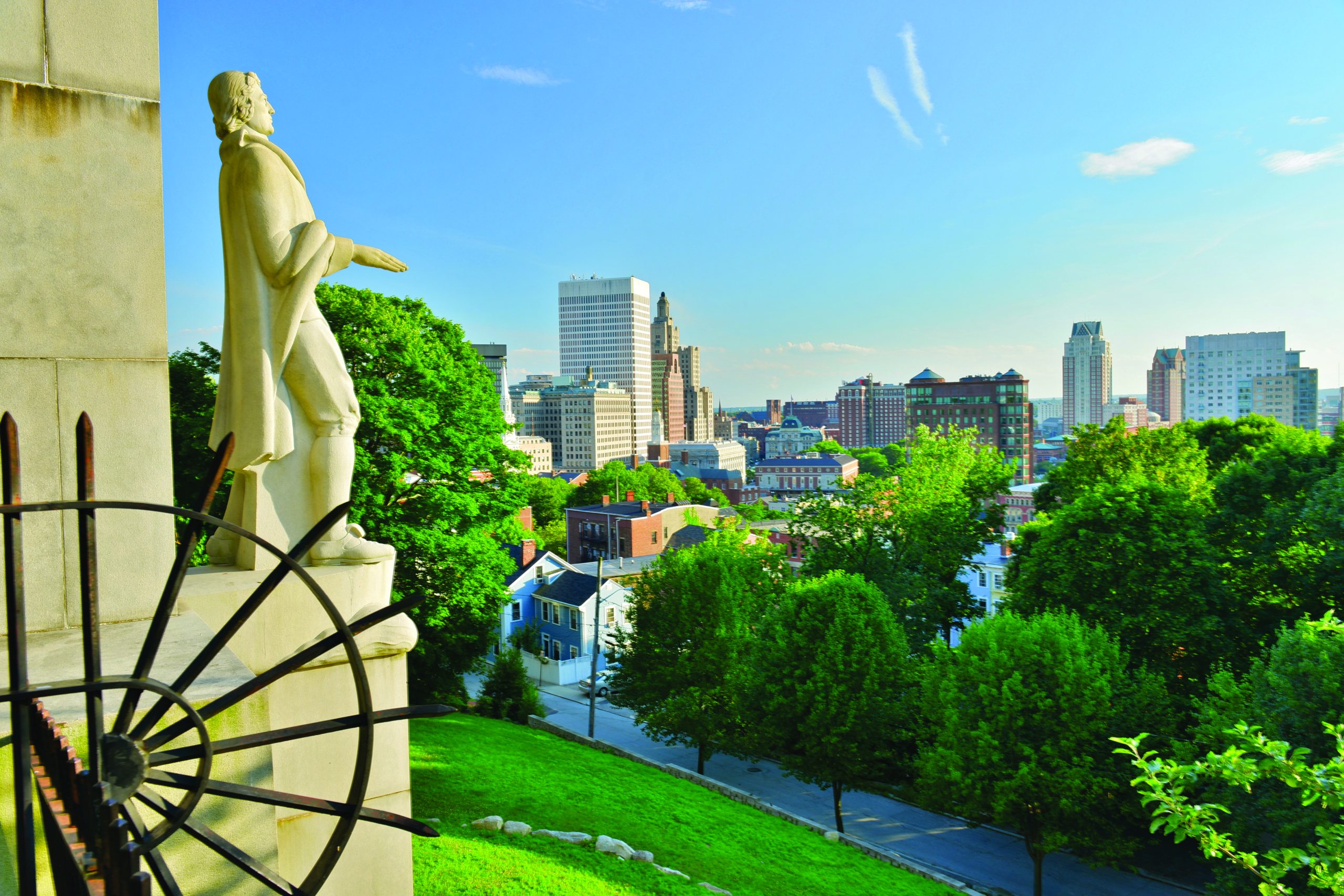
For smaller cities without the wealth of tourist attractions that Nashville and Orlando have—and with correspondingly smaller marketing budgets—2020 hit even harder and prompted a creativity born of desperation. While in Rhode Island, tourism is back—or never really left—in Newport, Narragansett and Block Island, the state capital of Providence is struggling to emerge from a painful year. “Downtown Providence makes its bread and butter off two things,” says Kristen Adamo, who heads the Providence and Warwick CVB. “Students and conventions.” Both disappeared in 2020. It didn’t help when a June BLM protest was hijacked by hooligans—many of whom weren’t even from Providence—who looted stores in the Providence Place Mall, a downtown anchor, and burned a police cruiser.
So the CVB, struggling with layoffs and furloughs, launched a buy local ad campaign, largely donated by local newspapers, on the theory that “if you love these things, you need to support them,” Adamo says. For 2021 and beyond, Adamo’s organization developed a “Meet in Rhode Island” plan that asked local businesses, such as Hasbro toy company and Johnson & Wales University, to commit to hosting a trade show or meeting in Providence between 2022 and 2024. The idea, Adamo says, is “helping the place where you built your company.” This summer, Adamo has helped launch a campaign in which visitors who book a two-night hotel stay will receive a $100 Visa gift card. But there’s a catch; the card is geo-fenced and can only be used in Providence. Adamo emphasizes that all the promotional materials for the card are appearing in both English and Spanish—an attempt, she says, “to introduce new businesses to what tourism can do,” while introducing new clients to minority-owned stores, restaurants and shops they might not otherwise have patronized.
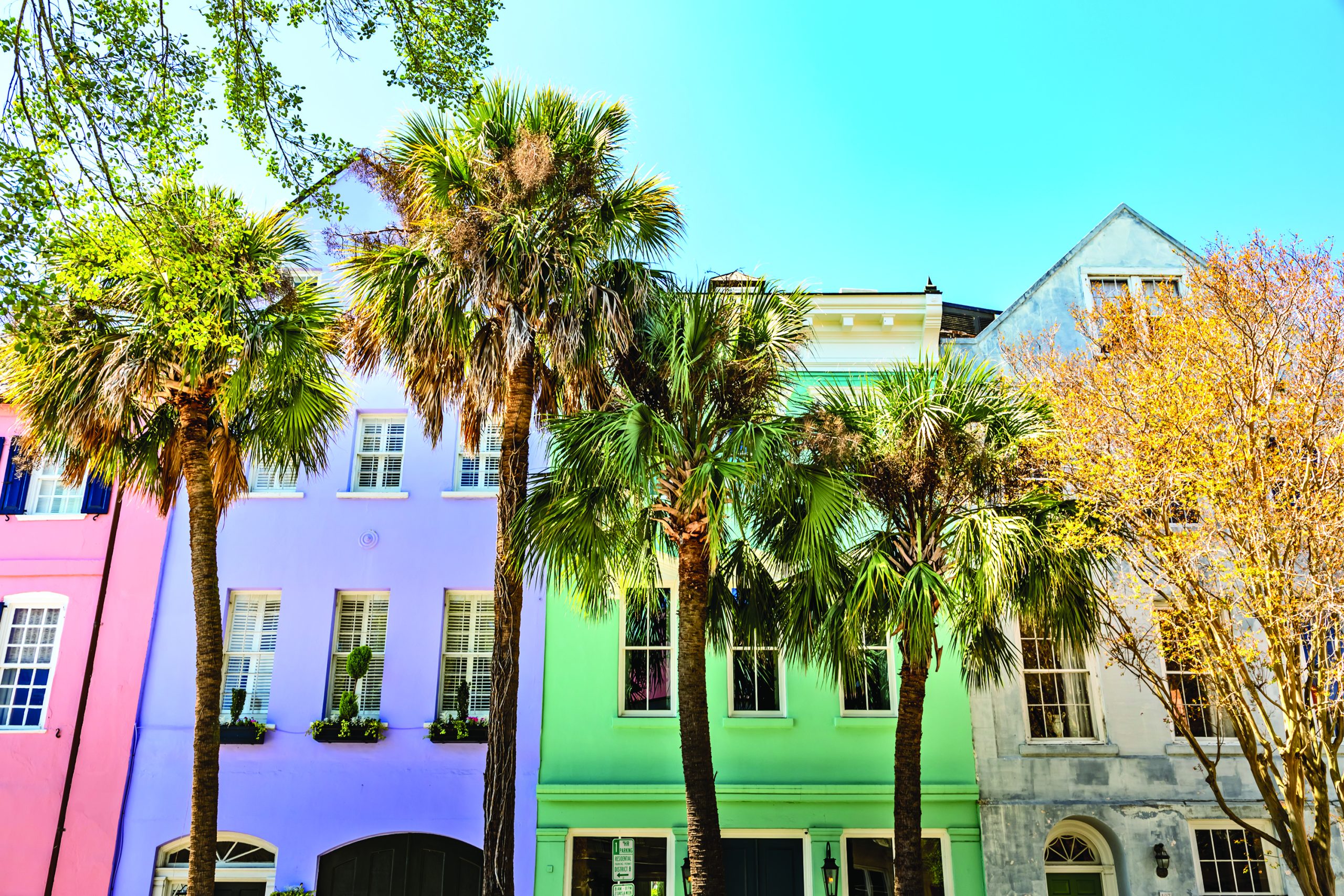
One outlier to this pattern of budget-cutting is Charleston, S.C., a city known for crafting an excellent visitor experience. Like the rest of the industry, “we got hammered,” says Doug Warner, vice president of media and innovation development at Charleston’s CVB. But thanks to its climate, outdoor space and political agility, Charleston “was never a ghost town.” The city moved quickly to launch outdoor dining, for example, by saying to restaurant owners, “we’ve got all these rules and regulations about sidewalk dining, but instead of asking permission, do what you’ve got to do, and we’ll come check it out later,” Warner explains.
Hotel bookings in Charleston are now back to 2019 levels or better, at least during weekends. (The slow return of business travel is hurting hotel bookings Sunday through Wednesday in Charleston and everywhere else.) But Charleston, which typically hosts smaller conventions that are likely to return faster than the 10,000-plus giants hosted by cities such as Las Vegas and Orlando, feels that its ability to maintain its staff gives it a competitive edge. “This goes back to the reason we wanted to keep our people,” Warner explains. “People are ready to start planning a fall meeting, but their Rolodex doesn’t work anymore because [CVB employees in other cities] are all gone.” Now, Warner says, the second half of 2021 and the beginning of 2022 “look like they’re going to be incredibly busy.”
Cities such as Charleston and Savannah have benefited in another way: an exodus of residents from places like New York and Boston who’ve learned that they can work remotely while paying lower taxes, enjoying better weather and getting more for their real estate dollar. And for anyone who might want to go to New York for a meeting, it’s easy enough to hop on a plane from these small city airports—a far more pleasant experience than LaGuardia or JFK—and be in the city by nine in the morning. The result is a real estate boom. The Charleston residential real estate market has less than a 15-day supply, Warner says. “In the 33 years that I’ve lived here, that has never been the case.”
A final opportunity for many cities is to embrace the message of last summer’s social justice movement and integrate it into their visitation offerings. Some cities were already moving in this direction. In 2019, California’s Visit Sacramento created the position of chief of diversity, equity and inclusion and appointed longtime staffer Sonya Bradley, a Black woman, to the post. Though the title might sound like an HR role, it’s actually a job to highlight minority-owned attractions and market them with a focus on (but certainly not limited to) travelers of color. While continuing to stress Sacramento’s brand as “America’s Farm to Fork Capital,” Bradley is working to include “more cultural and diverse attractions and itineraries,” she explains, mentioning the city’s African American, Chinese American and Latino communities. Nashville recently opened its National Museum of African American Music, which complements the city’s lineup of musical attractions yet also feels culturally important in a qualitatively different way. Next year, Charleston will open the International African American Museum, a landmark event for a city making real efforts to come to grips with its horrific history of slavery.
In Boston, the CVB had been conducting market research into perceptions of the city well before last summer’s BLM protests. Their findings? Many travelers, and particularly travelers of color, perceived Boston as a racist city. “One of the questions we asked was, ‘If we told you that Boston had all these festivals, Black history assets, would you visit them?’” says CVB president Martha Sheridan. “Respondents said absolutely—they just didn’t know they existed.” So, the CVB has launched a new campaign to integrate its “traditional” tourism assets, like the Red Sox and its “Duck Tour” boats, with so-called non-traditional assets. A new section of its website highlights “All-Inclusive Boston”—get it?—and encourages visitors to “experience a side of Boston you’ve never seen before…A Boston that’s multi-cultural…”
For the cities most divided by police violence, such as Louisville, Ky., the imperative is even greater. For a decade, tourism had been growing steadily in Louisville due to the Louisville CVB’s branding of the city as the “Gateway to Bourbon Country.” But the shooting of Breonna Taylor in a misguided police raid, and the subsequent murder of George Floyd in Minnesota, brought Louisville’s racial and economic divisions into painful view. “Downtown was largely boarded up throughout the summer” as the city experienced near-daily protests, says Stacey Yates, vice president of marketing and communications at Louisville Tourism. “We really couldn’t market the city—we just needed to take a pause and remain quiet for a while. To be out there with marketing messages wouldn’t have been respectful to the social justice movement.” Nor, frankly, would they have worked. What message would have persuaded people to come to a city with boarded-up stores and street protests every night?
But hotels began to open again in February, and weekend occupancy rose to about 40 percent in March. In early May, Louisville successfully hosted an in-person Kentucky Derby. Attendance was much reduced, but the event was one of the country’s first big annual sporting events to take place in a post-vaccine world. The race went off without incident and garnered national media attention. “It’s starting to feel more like normal,” Yates says. Also in the spring, Louisville launched a leisure travel campaign, playing up the bourbon references, called “The Old Fashioned Road Trip.” It features two multi-racial couples driving into Louisville and doing various bourbon-related things. The ad is part of a new focus on marketing Black cultural heritage, Yates explains, “telling Louisville and Kentucky’s authentic and unique cultural heritage stories around the Black people who have contributed so much to the culture we enjoy today.”
One thing is clear: Even as the economic damage of 2020 recedes, the psychological toll it took on the travel industry isn’t going away anytime soon. As Yates says, “I think we’re through the worst of it, but we’re a heartbeat away from the next thing. The entire world just seems to be waiting for the next shoe to drop.”
Savannah, Georgia, USA
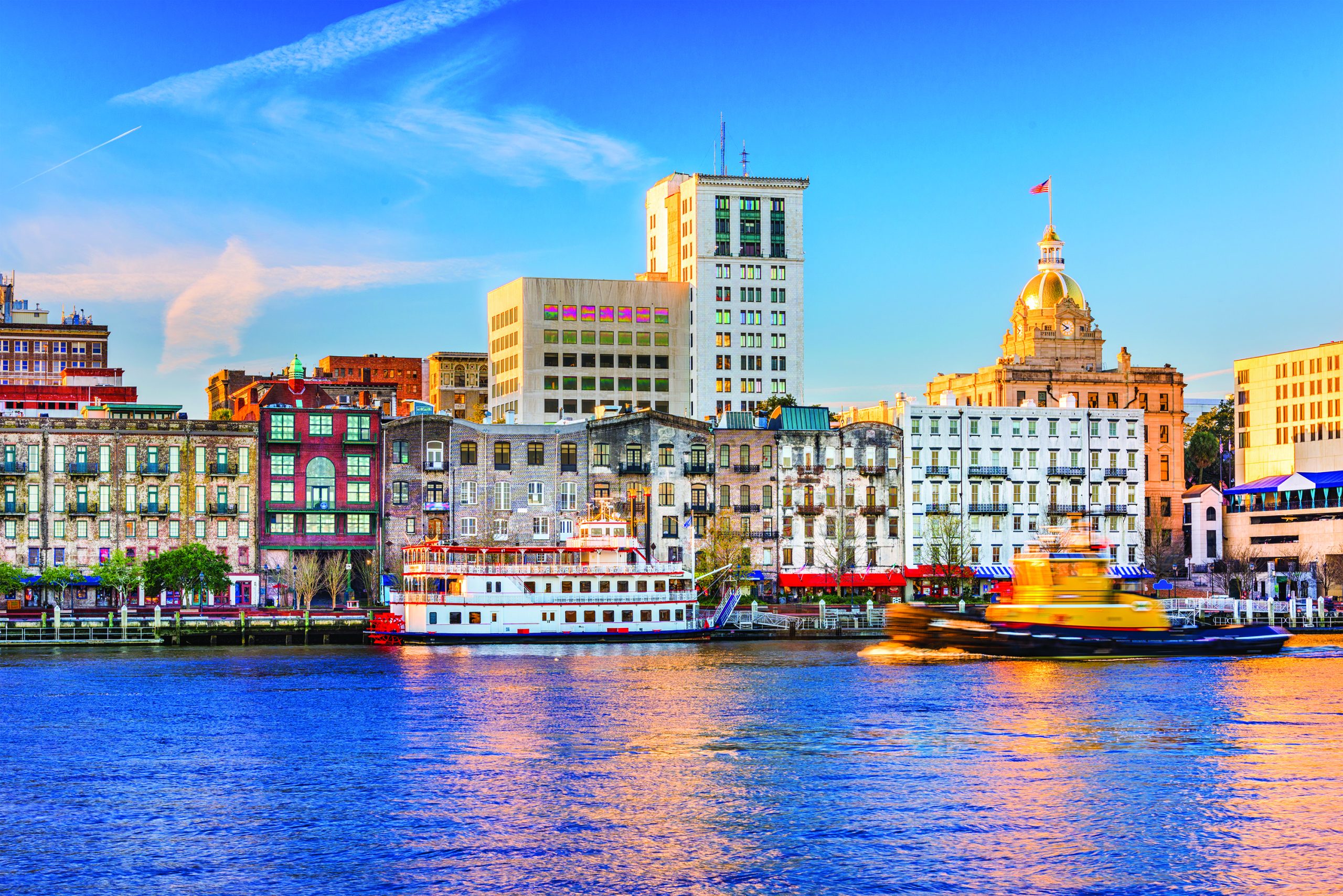
Q&A with Mashama Bailey, chef/partner of The Grey & The Grey Market
Best thing about Savannah: Being on the water.
Best people-watching: Tybee Island, for a cast of characters different from any other beach town I’ve ever seen, and Forsyth Park to see tourists and locals intermingle.
Favorite neighborhood: Baldwin Park.
I don’t want tourists to know about: Picker Joe’s, the antique mall that has basically furnished my entire house.
Dream meal: Narobia’s Grits and Gravy.
Favorite local institution: SCAD. To have the campus spread through downtown adds so much youthful and artistic energy to this often-sleepy town.
Best movie based in Savannah: Midnight in the Garden of Good and Evil. Classic.
In the city escape: I take a walk through the neighborhoods downtown. It’s easy to find space while admiring the architecture and greenery.
Nearby escape: Beaufort, South Carolina, a beautiful city with good food and loads of Geechee Gullah culture.
No trip to Savannah is complete without: A trip to Mrs. Wilkes’ Dining Room for the food and atmosphere.
Excerpted with permission from Travel North America: (and Avoid Being a Tourist) by Pavia Rosati and Jeralyn Gerba, published by Hardie Grant Books, June 2021
Nashville, Tennessee, USA
A laidback, unpretentious, deep-fried, honky-tonk of a good time.
There’s a reason why the biggest names in country music have called this Southern city home: it’s a hotbed and a launchpad for live music—and the whiskey and BBQ that accompany it so well.
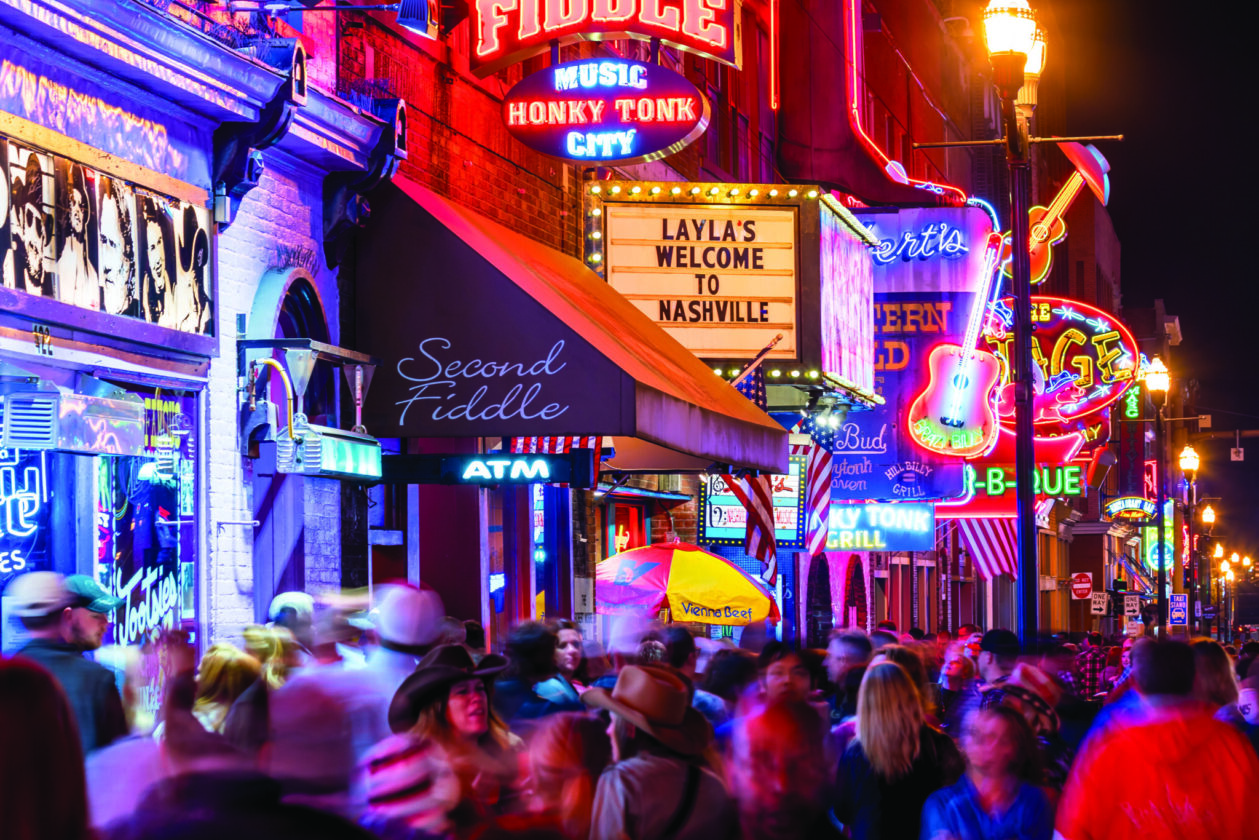
Where would country music be without the Honky Tonk Highway, a four-block stretch along Broadway that runs down to the river, an area that’s been launching musicians since the 1930s? Today, the historic buildings are packed with bars and clubs where a steady stream of performers are putting on their best shows all day. The scene is informal, inexpensive and fun, and you never know which big-name act might jump on stage for an impromptu set. The spots to know are Robert’s Western World (robertswesternworld.com), for live music every night; Ernest Tubb Record Shop (etrecordshop.com), for the Midnite Jamboree on Saturdays; and Station Inn (stationinn.com), an old stone hut that hosts bluegrass and American roots music.
Nashville has good reason to be mighty proud of its culinary scene, thanks in no small part to chefs who both preserve Southern culinary traditions and push it in new directions, like award-winning chef Sean Brock, who oversees both Husk (husknashville.com), located in a Victorian mansion in Rutledge Hill (it’s an outpost of his original Charleston location), and Joyland (eatjoyland.com), a burger and biscuit joint in East Nashville. Rolf & Daughters (rolfanddaughters.com) features chef Philip Krajeck’s inventive take on small plates (and is a tough reservation to score, so plan accordingly). Peg Leg Porker (peglegporker.com) may serve the best pulled-pork sandwich you’ll ever eat. Ever.
The 10 rooms at Germantown Inn (germantowninn.com), a homey, off-the-radar boutique hotel in a Civil War–era home, are dedicated to different U.S. presidents and historical female figures like Rosa Parks, Thomas Jefferson and Susan B. Anthony. The decor, a mix of new and vintage, includes patriotic pops of red, white and blue alongside funky portraits commissioned for the hotel by local designer Caitlin Mello.
Excerpted with permission from Travel North America: (and Avoid Being a Tourist) by Pavia Rosati and Jeralyn Gerba, published by Hardie Grant Books, June 2021.
For more stories from our recent travel issue, check out the digital magazine here.