
One of America’s most popular tourist destinations has emerged from the pandemic with its shops and restaurants generally intact. But underneath its bucolic surface, change is coming fast.
For a few minutes there on the 18th hole at Ocean Course on Kiawah Island, things got seriously out of wack. Golf’s elder statesman, Phil Mickelson, 50, was up by two strokes against Brooks Koepka, 20 years younger and stronger than Mickelson, a relentless terminator of a player. Yet Mickelson was about to win the PGA Championship, which would make him the oldest golfer ever to win a major tournament. The crowd—white, male, unmasked, universally clad in sneakers, shorts, golf shirts and caps—was feisty after a long, hot day of drinking $14 Michelob Ultra Lights. They’d been vociferously cheering Mickelson, whose roller-coaster career has made him a very human and relatable figure. History was in the making, and they were feeling it.
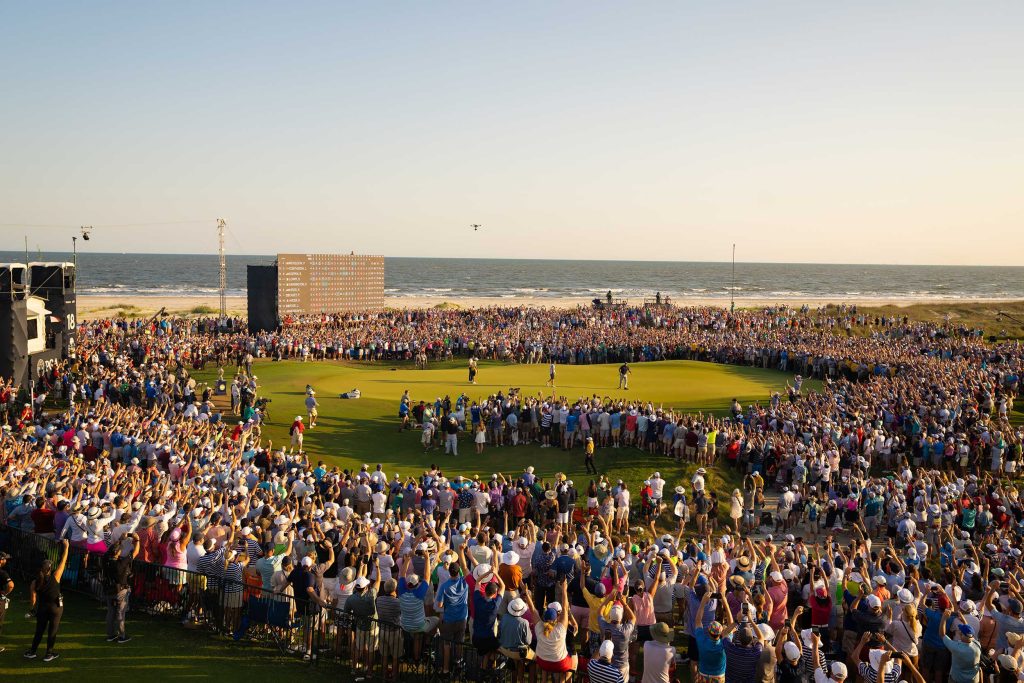
So when Mickelson landed his second shot comfortably on the green, maybe 15 feet from the hole, the crowd erupted into raucous applause and surged forward, hundreds, perhaps thousands, of men pouring onto the fairway, some actually sprinting toward the green, quickly enveloping Mickelson and Koepka. Perhaps this shouldn’t have been a surprise: The PGA had announced that it would sell only 10,000 tickets to the tournament, but in the days before, quietly bumped that number up closer to 20,000. Many of the PGA personnel on hand, however, consisted of senior citizen “volunteers” who actually paid $210 for the privilege. “Get away! Get away!” one pleaded as chants of “Lefty! Lefty!”—Mickelson is left-handed—short and guttural, drowned him out. While Mickelson fended off one fan who tried to touch him, Koepka simply disappeared. “They’ve lost control of the scene,” CBS announcer Jim Nantz fretted. “Where is Brooks?” Seth Waugh, the PGA CEO, would later call the chaos “a moment of high elation and pent-up emotion,” which, while probably true, was less than fully descriptive. Those images of fans surrounding the players, that sense of a crowd morphing, taking on a darker timbre—in conversations afterward, I wasn’t the only one who flashed back to January 6. Things could easily have gone very wrong.

But the PGA got lucky. A visibly angry Koepka finally reappeared and two-putted without incident. And as the crowd hovered at the edge of the green, Mickelson knocked the ball close, then tapped in a putt for victory. The resulting feel-good aura helped obscure the fact that, on a very big stage, the PGA had badly miscalculated.
In fairness, that episode was an unpleasant exception to four days of televised golf and beautiful weather on one of the country’s most scenic courses, flanked by the beach on one side and marsh on the other. And for Charleston and Kiawah, which is part of Charleston County, the tournament—one of the first major American sports events in this 2021, leaving-COVID-behind moment—was a powerful advertisement; some 6.5 million people watched the final round on TV. But for me, at the end of a visit to Charleston and Kiawah Island, that tension between progress and chaos felt like a microcosm of the state of the country. As we put COVID behind us, what are we moving toward? Are we changed by the experience, or are we desperately reverting to “normal”?
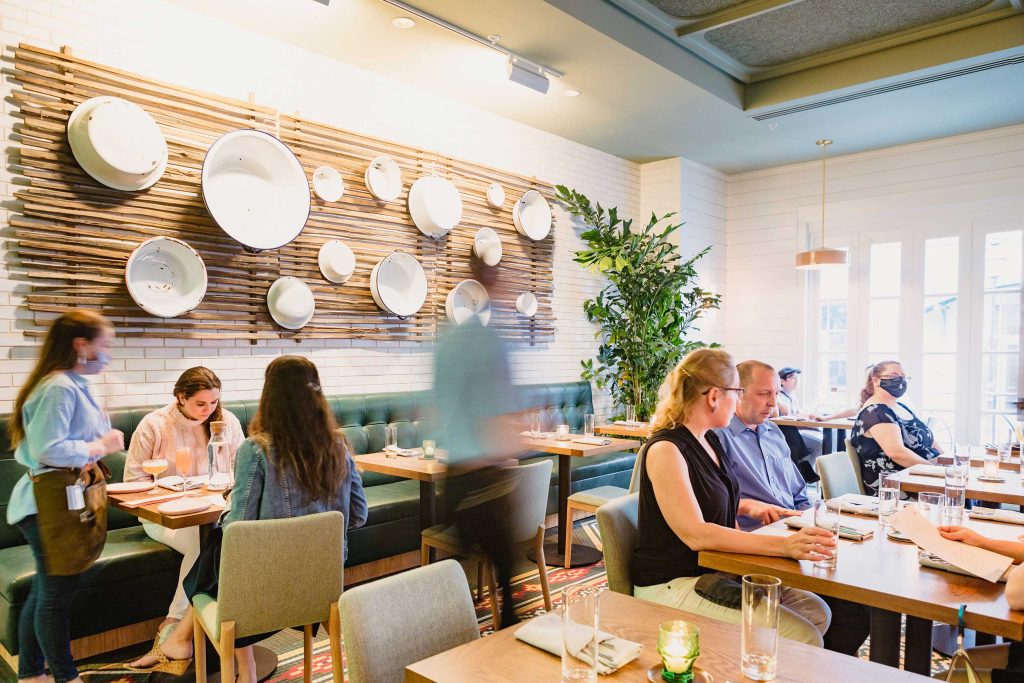
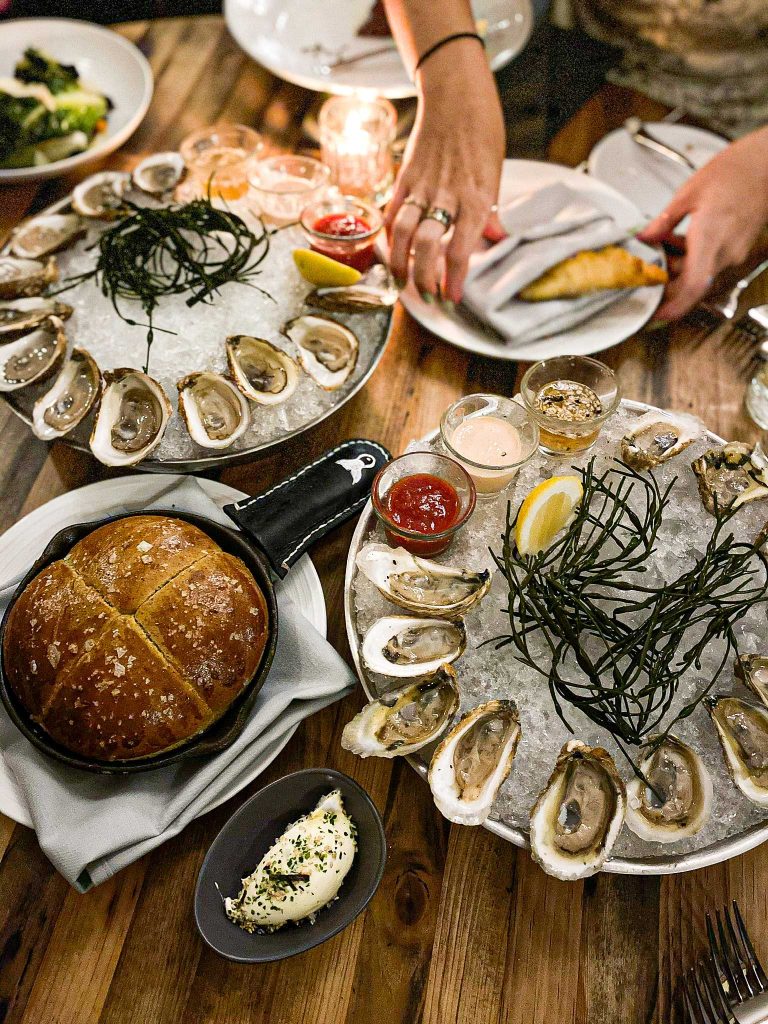
Charleston suggested some of the answers. Though far from unscathed by the epidemic, Charleston emerged in better shape than many other American cities. Though its hospitality industry and service sector were hit hard, the city pivoted quickly to outdoor dining, which sustained its crucial restaurant industry through its mild winter. Easy access to the outdoors also helped. Charleston lost some restaurants and shops, but the hit was small compared to cities with fewer resources, greater density and worse weather. In fact, there’ve been some significant restaurant openings in the past few months. I ate at two restaurants that opened recently, Tempest, an excellent seafood place serving umami tuna “bombs” for $19 and local grouper with fiddlehead ferns for $36, and Lenoir, new Southern, with blueberry barbecue chicken wings, a $12 starter, and cornmeal dusted catfish with miso and celery relish ($23). Both reinforced Charleston’s reputation as one of the country’s finest culinary scenes.
Charleston’s hospitality sector is not only resilient, it’s actually growing. On April 21, Breeze Airways, a budget startup launched by Jet Blue founder David Neeleman, announced that that it was commencing service to Charleston from 11 cities—including Tampa (Fla.), Louisville (Ky.), Hartford (Ct.) and Providence (R.I.)—most of which previously lacked direct flights to Charleston. That’s a huge win for the city, as direct flights have an enormous influence on traveler choices, and tourism dollars not only support Charleston’s service sector, they also bring in potential relocators, second-home buyers and startup founders. Charleston International Airport, meanwhile, recently announced a $300 million expansion. The added traffic comes on top of a surge of home buyers coming from New York, Boston and other colder, more expensive places. Not all locals approve, pointing out the bad manners of the newly arrived, such as actually using your car horn. I couldn’t help but think of that when, while walking down King Street early on a Sunday morning, I was nearly flattened by a woman walking towards me, wearing a Red Sox cap and holding her iPhone at eye level.
Though it sounds insensitive to say so, Kiawah Island had a great 2020. Kiawah is a gated resort community which may have more golf courses than hotels—it’s really dominated by the second homes of wealthy people. According to Zillow, the average price of a home on Kiawah is $1.1 million; in the post-pandemic real estate boom, I’d guess that’s lowballing it. Homeowners flocked to Kiawah in 2020 and, able to work remotely, stayed there far longer than they typically would. If you have to ride out a pandemic, Kiawah’s a lovely place in which to do so, and the island’s service sector flourished. That flight to the second home was one example of how COVID exacerbated the country’s starkest inequities. If you lived in a city and you couldn’t retreat to Kiawah, or Nantucket, or the Hamptons, you were more likely to get sick. Charleston’s ability to navigate the pandemic with relative success also showed how the pandemic exacerbated larger social and economic trends of population and economic growth in the Southeast, much of it at the expense of the Northeast.
On the weekend of the PGA Championship, downtown Charleston was humming. Hotels were sold out, restaurants hard to get into. Pedestrians packed the sidewalks of Charleston’s renowned shopping district, King Street. Few shoppers—almost none, really—were wearing masks outside. Indoors wasn’t much different. Mask-wearing policy varied from store to store. At a Sperry shoe store I ventured into, a sign on the door said that masks were mandatory. Inside, only the staff were wearing masks. I asked one salesperson how business was. During the winter, “terrible,” he said. But “ever since April, we’ve been incredibly busy.” Candlefish, a candle store a few blocks away, was requiring masks and limiting the number of customers to eight at a time. But Candlefish was a singular exception. In almost every store on King Street, no one was wearing a mask and no one seemed to care.
That absence of a life-saving device to which we’d all (well, maybe not in South Carolina, where Donald Trump is hugely popular) grown accustomed is a strange and powerful thing; I live in Westchester County, New York, and masks remain ubiquitous here, especially in shops, restaurants and schools. CDC guidelines notwithstanding, folks will frown at you if you stroll unmasked into the local grocery store. I recently paid a visit to the Bronx Botanical Garden, where masks were required even to walk outdoors, which seemed, frankly, anti-scientific and slightly absurd, an emotional surrender to irrationality.
In Charleston, the peer pressure goes the other way. At the hotel where I stayed, the luxurious Charleston Place, a handful of guests wore masks—in the elevator. In the bar, the lobby, the restaurant, the gym—no. The staff was masked, although really, their interaction with the guests was no more intimate than the guests’ interaction with other guests. It feels liberating to walk through a hotel lobby without a mask on, but there’s an undercurrent of stress. Is this really responsible behavior? On the one hand, the number of COVID cases in the state has been steadily declining to around 100 a day. On the other hand, South Carolina has had a relatively high death rate from COVID—at about 188 out of 100,000 citizens, 20th among U.S. states—and it has one of the lowest vaccination rates in the country, currently about 45 percent of adults. Not too long ago, you would have looked at that crowd around Ocean Course’s 18th green and thought: super spreader. Now, the fear is less insistent. But—for me, anyway—it’s still there.
Of course, COVID wasn’t the only transformational event of 2020; the other was the Black Lives Matter protests and the social justice movement. If you care about these things, it’s impossible not to notice how overwhelmingly white Kiawah and Charleston are—at least, the parts of Charleston tourists tend to visit—particularly in a state that’s 27 percent Black. At the PGA Championship, I saw exactly two people of color—they were of Asian descent—who were fans, and a handful of Black people working for the PGA, operating cash registers, driving shuttle buses and directing pedestrian traffic. I’m not saying there were zero Black fans in attendance, but I didn’t see any.
This unbearable whiteness of being isn’t entirely Kiawah’s fault—golf’s fan base is white, and these fans came from all over the country—but the island could hardly be less diverse. Of its year-round population of about 1600, only 1.3 percent is Black, and that percentage probably decreases if you include second-home owners. The same phenomenon is true of the Peninsula in Charleston, the city’s downtown and historic district. The numbers there aren’t as stark, but they’re headed that way. Forty years ago, about two-thirds of the population of the Peninsula was Black, about one-third white. (The percentage of other ethnic groups was negligible.) Today, that statistic has flip-flopped. As the Peninsula has become gentrified and real estate prices soared, tens of thousands of Black residents have either chosen to leave or have been pushed out.
The political, business and tourism leaders in Charleston, most of whom are white, know that they need to do more to promote economic and social inclusion, and they felt this way well before the events of last summer. In my meetings with representatives of the Charleston Convention and Visitors Bureau (CVB) over the past five years, they’ve proactively raised the subject and encouraged articles around difficult issues. (Nonetheless, an unusually personal article in the New York Times last August accused CVB leadership of being “tone deaf” and “whitewashing” Charleston’s painful racial history.) Certainly the assassination, in 2015, of nine Black members of Charleston’s Mother Emmanuel church by a white supremacist teenager was one motivator; while Charleston’s citizens rallied around a spirit of healing, city leaders knew that, if church members and victims’ families hadn’t made a brave and powerful display of forgiving the shooter, the situation could have deteriorated.
Last summer, pushed by BLM protests, the city finally took down the statue of slavemonger John C. Calhoun that had loomed ominously over Marion Square downtown for almost 125 years. The statue rested on a pedestal 115 feet high and took a city work crew 17 hours to remove. “Like racism, he was deeply rooted in there,” Mayor John Tecklenburg, a Democrat, said. There was talk that Calhoun would be relocated to the Charleston Museum, which memorializes Charleston’s history, but its board voted unanimously against accepting the statue, largely on the grounds that Calhoun was “not a Charleston figure.” (Calhoun came from western South Carolina.) One suspects that had Calhoun lived down the block, the board members would have pivoted to their other objection: their elevator wasn’t large enough for the statue to fit in.
There are also signs of change in the tourism industry. The CVB website features tabs for “Special Offers,” “Beaches,” Weddings,” and, more recently, “African American Voices.” An introduction to that section reads, “While the tortured circumstances of human bondage and enslavement will never be erased, more attention has turned to the valuable retention of African cultural extension.” That’s true. The first entry on the website’s “Tours and Attractions” section: African American walking tours, spotlighting Charleston’s Black history. There are nine of them, and they are increasingly popular. The CVB is also launching a program to foster greater diversity in the hospitality industry, where higher-paid “front of house” workers are overwhelmingly white, while greater numbers of people of color work behind the scenes. So the CVB has created an internship program in conjunction with a number of historically Black colleges and universities, offering paid front-of-house roles for Black students. A next step: translating those internships into post-graduation jobs. In conjunction with the College of Charleston, the CVB is paying for summer housing for the students and hosting weekly gatherings to promote networking and the development of business skills.
One of the restaurants I went to, Tempest, is going a step further. Diners at Tempest, which is owned by a company called the 5th Street Group, now see a line on their bill that reads “Tip for Kitchen.” There’s no recommended percentage—diners can add anything they want, and the restaurant will match kitchen tips up to $500 a night. (Tempest hosted me because the manager knew I was a travel writer; I tipped the waitress $40 and added a $10 kitchen tip.)
Although Tempest already pays its workers at least $15 an hour, the restaurant wants to boost the wages of invisible but essential kitchen staff. 5th Street Group co-owner Alejandro Torio recently tweeted that the lowest-paid employee, a dishwasher at sister restaurant 5Church Charleston made an average of $23.83 an hour, thanks to the boost from kitchen tips. “That’s almost $50K pace for our lowest paid employees there!” Torio said. I’ll admit, I found the kitchen tip a little stressful—how much should I pay? How do I know what I’m tipping for? Why can’t the restaurant just raise the hourly wage of its employees if it wants them to earn more?—and it’s hard to escape the suspicion that its primary goal is to help Tempest attract employees in Charleston’s extremely competitive labor market. On the other hand, so what if it is? If dishwashers can make $50,000 a year and enjoy a decent standard of living, isn’t that a win for everyone?
But perhaps Charleston’s most far-reaching attempt to address its history of racism will come in early 2022, with the opening of the International African American Museum (IAAM) on Gadsden’s Wharf, which is where an estimated 40 percent of Africans brought to this country as slaves were disembarked—the largest point of entry for enslaved Africans in the United States. The IAAM follows the opening around the country of several important new institutions devoted to African American history—Washington’s National Museum of African American History and Culture, the National Memorial for Peace and Justice in Montgomery, Al., Nashville’s National Museum of African American Music—and it will instantly join that roster of essential memorials. Much of its urgency comes from the powerful sense of place at the museum site; a recorded 882 slave ships landed in Charleston, many of them at the 840-foot-long Gadsden’s Wharf. The museum was first proposed by Joe Riley, the white Democrat who was mayor of Charleston for 40 years, 20 years ago. Under Riley, Charleston developed the concept, bought the land, hired architects, raised money and commenced construction. The building, Riley has said, is “unrhetorical”—not intended to draw attention to itself. “It’s a very quiet building,” he explained last year to an interviewer for the website Common Edge. “It’s the site that is extraordinarily powerful.”
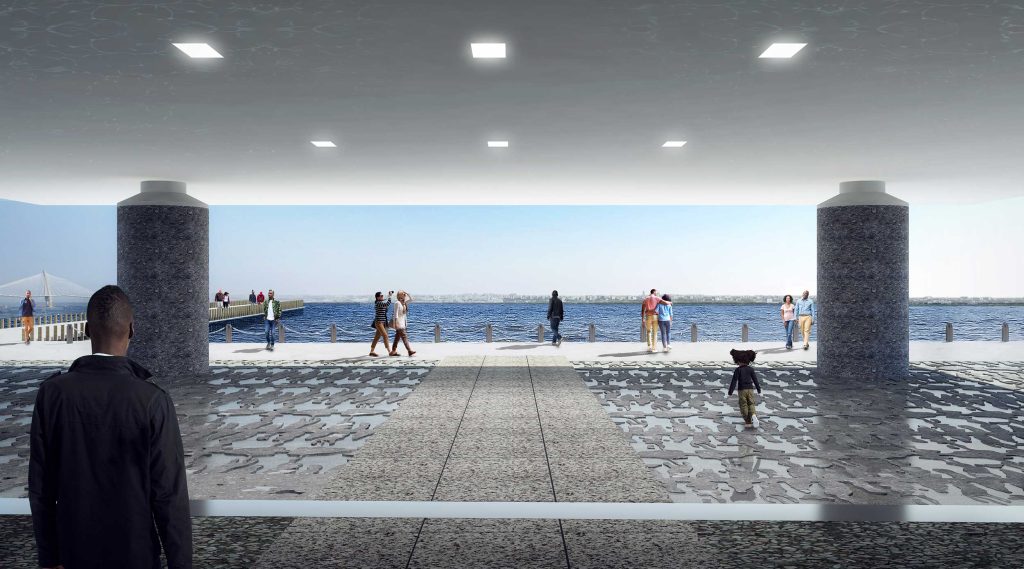
Riley added that the museum was “the most important work of my life.” It’s also a sign that Charleston’s work of honestly, often painfully, coming to grips with its past is helping the city move toward a far better future.
Read more about Kiawah Island, HERE.