


Alternative investments have historically been out of reach to the typical investor. These asset types were the near-exclusive domain of institutional investors and the mega-rich. Why? Because alternatives were often too expensive to consider, rarely publicized outside of the financial industry and often considered to be too risky.
Yet, things are changing. Due to recent SEC rule changes, the qualifications to be an accredited investor are broader than prior rules that centered primarily on a person’s yearly income. These new rules factor in other considerations, such as professional certifications, working for a private-fund issuer and the kind of investment involved, among other qualifiers.

This has enabled more investors to access many out-of-reach asset classes for the first time. Beyond shifts in policy, however, there are a host of factors fueling the growth of alternative investments.
Market Swings
The stock market has shown early signs of a fast bounce back after COVID-19 instability led to sharp market declines. A record shattering bull market came to an abrupt end when the gears of the global economy ground to a halt. Days later, the markets hit a record high.
Despite the signs of a quick recovery, we’re far from being out of the woods. The Federal Reserve signaled it would rein in its monthly bond purchasing by the end of the year, which could indicate that the Fed expects the economy to need help at least through December. The July 2021 Fed minutes didn’t indicate a rise in interest rates either, which are still near zero, and COVID variants might force portions of the global economy back into lockdown mode. Many individual investors are looking for the exits—even if only for a portion of their portfolio.
In an interview with the Wall Street Journal, Vanda Research’s Viraj Patel said that “like any investor, you’re not going to add fresh money to a market that doesn’t have a clear catalyst to drive stocks 5 percent to 10 percent higher.”
These market swings show no signs of slowing down. The S&P 500 finished September down 4.8 percent for its worst month since March 2020, when the pandemic caused a major market sell-off, while the Dow dropped more than 500 points for its worst month in 2021.
The Expense of Stocks
Another reason investors are gravitating toward alts has to do with how expensive most blue-chip stocks are. In September 2021, the S&P 500 was trading at more than 21 times the forecasted earnings of the companies in its index. Granted, some of this is due to blockbuster stocks like Facebook, Amazon, Netflix, Alphabet and Microsoft, but the point remains that the markets are expensive—especially for individual investors looking for value stocks.
The price-to-earnings ratio of most stocks is comparable to the dot-com bubble burst 21 years ago, which means it’s likely that investors getting into the markets now are paying more for equities and getting less in terms of upside. There may even be a market pullback, according to some, which could have disastrous effects for newcomers to big-ticket equities.
In other words, it’s tough to find a bargain on Wall Street right now. Value investing is harder to pursue than ever, and opportunities outside the market might hold better prospects for larger returns. This is particularly true for real estate assets, whose long hold periods align with value investing’s central tenets.
Low Rates, Low Returns
Bonds, long the refuge of investors looking to hedge against market volatility, aren’t the kind of investment they used to be. Interest rates were only beginning to creep upward in 2018. By 2020, the Federal Reserve lowered rates to pump liquidity into the market, and unveiled a quantitative easing program consisting of $700 billion of asset purchases.
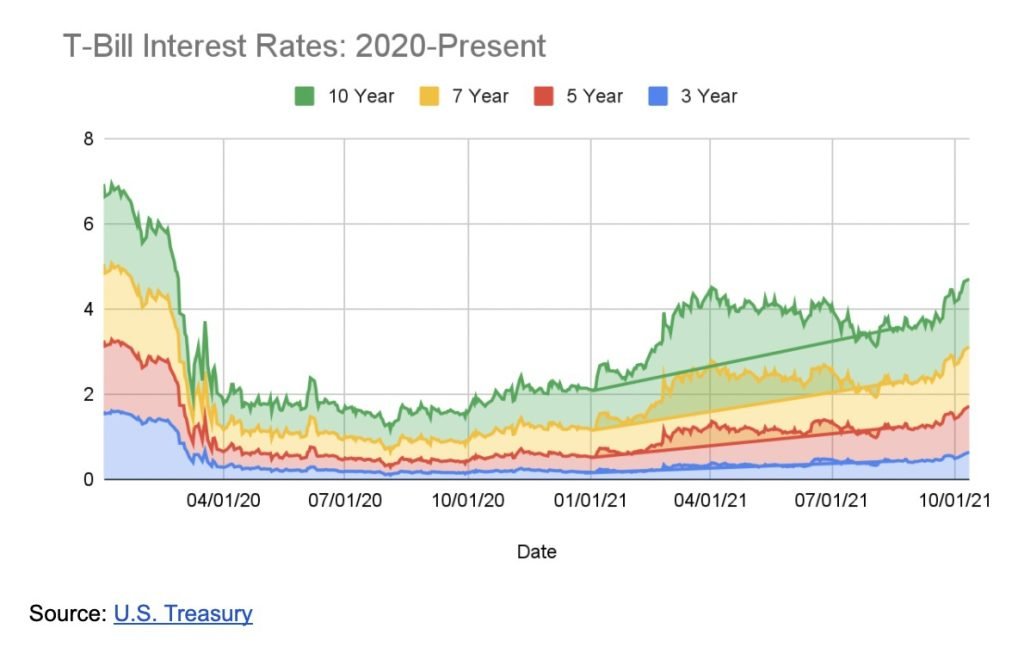
Even though interest rates have increased to 0.10 percent in July 2021 from their April 2020 low of 0.05 percent, they’re still delivering value if they’re on the longer end of the spectrum. Short-term bonds, long the haven of hedging investors, come with mediocre returns—even for an investment as conservative as T-bills.
It’s not just the bond market offering mediocre returns. Even stocks are underperforming in terms of returns. JPMorgan’s Global Alternatives Outlook 2021 forecasts a 4.2 percent return during the next 10 to 15 years for portfolios that adhere to the 60/40 rule. The report goes on to say that “public markets are challenged by yields at all-time lows and stretched valuations—a highly unusual occurrence.”
This phenomenon makes alternative investments much more attractive for investors that want to go beyond the 4 percent return benchmark. In the same report, global head of alternatives Antol Pil writes: “Alternatives, perhaps once considered optional in investors’ portfolios, have indeed become essential. Facing stretched valuations in traditional markets, limited correlation benefits between fixed income and equities and persistently low bond yields with asymmetric risk, investors have made a decided turn to alternatives in the pursuit of alpha, income and diversification.”
When Wall Street giants talk about alternative investments going mainstream you know that the landscape is changing and that alternatives are too important to ignore.
Fears of Incoming Inflation
Pundits are mixed on whether or not we’re headed for massive inflation as a result of the financial measures taken to stabilize the global economy. Low interest rates mean that the market’s flooded with cheap capital, which means your money doesn’t go as far as it used to. In the last week of September, the Federal Open Market Committee raised its projection for 2021 core inflation to 3.7 percent, up from the 3 percent forecast in June. While Federal Reserve chairman Jerome Powell expects inflation to ease eventually, he sees the current pressures running into 2022.
Inflation drags down most equities if it impacts consumer spending or makes raw materials more expensive. Investors usually seek refuge from rising inflation in the bond market or through commodities. Bond rates are in the basement, however, which makes them a less appealing place to park assets. Commodities such as gold—long the staple of the hedging investor—are so expensive that there’s little room for value generation.
Some alternatives offer a hedge against inflation stronger than stalwart inflation-sensitive products. Bitcoin surged in value alongside gold when the market plummeted in the early spring of 2020.
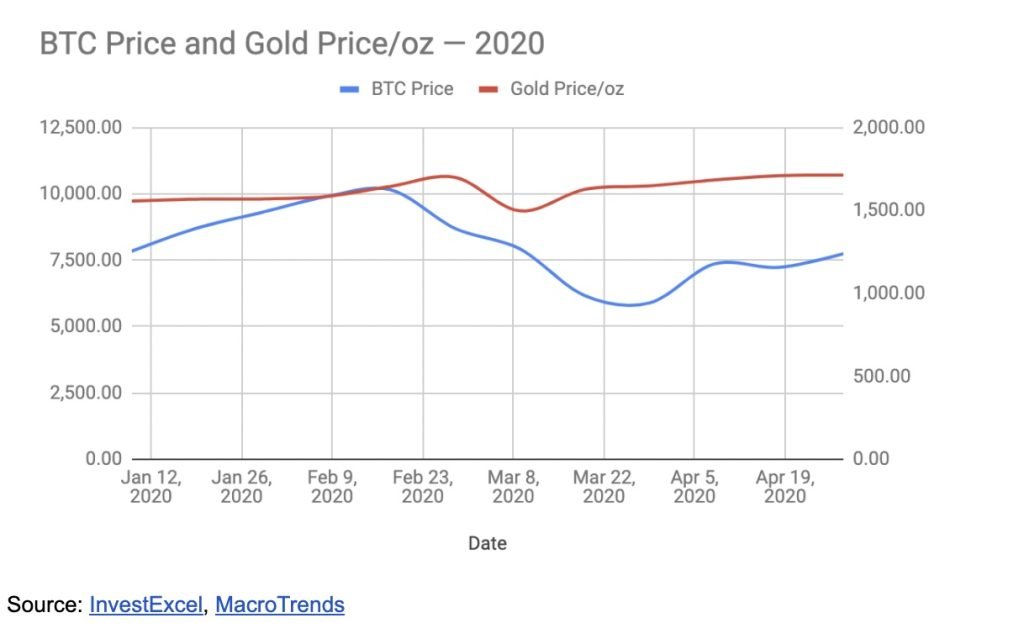
Real assets offer a much more secure and proven hedge than cryptocurrency, and without the sky-high price tag of gold. Any inflation-resistant alternative is enough for investors unafraid of new investment opportunities—especially when the tried-and-true isn’t what it used to be.
Technology’s Making Alternatives Easier
Alternative investments have been historically expensive and difficult to access for the average investor. New fintech platforms and startups have removed these barriers for accredited investors for the first time. Whether it’s a breakthrough investing app or an entirely new spin on a conventional asset, the world of tech has supercharged investor participation in alternative investments.
On the extreme end of the spectrum is cryptocurrency, which only came into existence in 2008, and only received mainstream investor attention eight years after. Technology is directly responsible for crypto existing in the first place, which is perhaps the best-known way in which new tech disrupted investing.
On the other end, you have the democratization of long-standing assets. Take farmland for example: farmland investing is one of the oldest practices in human history and became a Wall Street staple for institutional investors in the 1970s. It took another 40 years for mainstream individual investors to get direct opportunities to participate, however.
The Future of Alternative Investments
In today’s environment, smart investing means seeking out investments beyond stocks and bonds. As we continue to experience heightened market swings, long periods of high inflation and mediocre yields, alternative investments offer a strong option to hedge against risk. Thankfully, new alternative investment opportunities are being created every day.