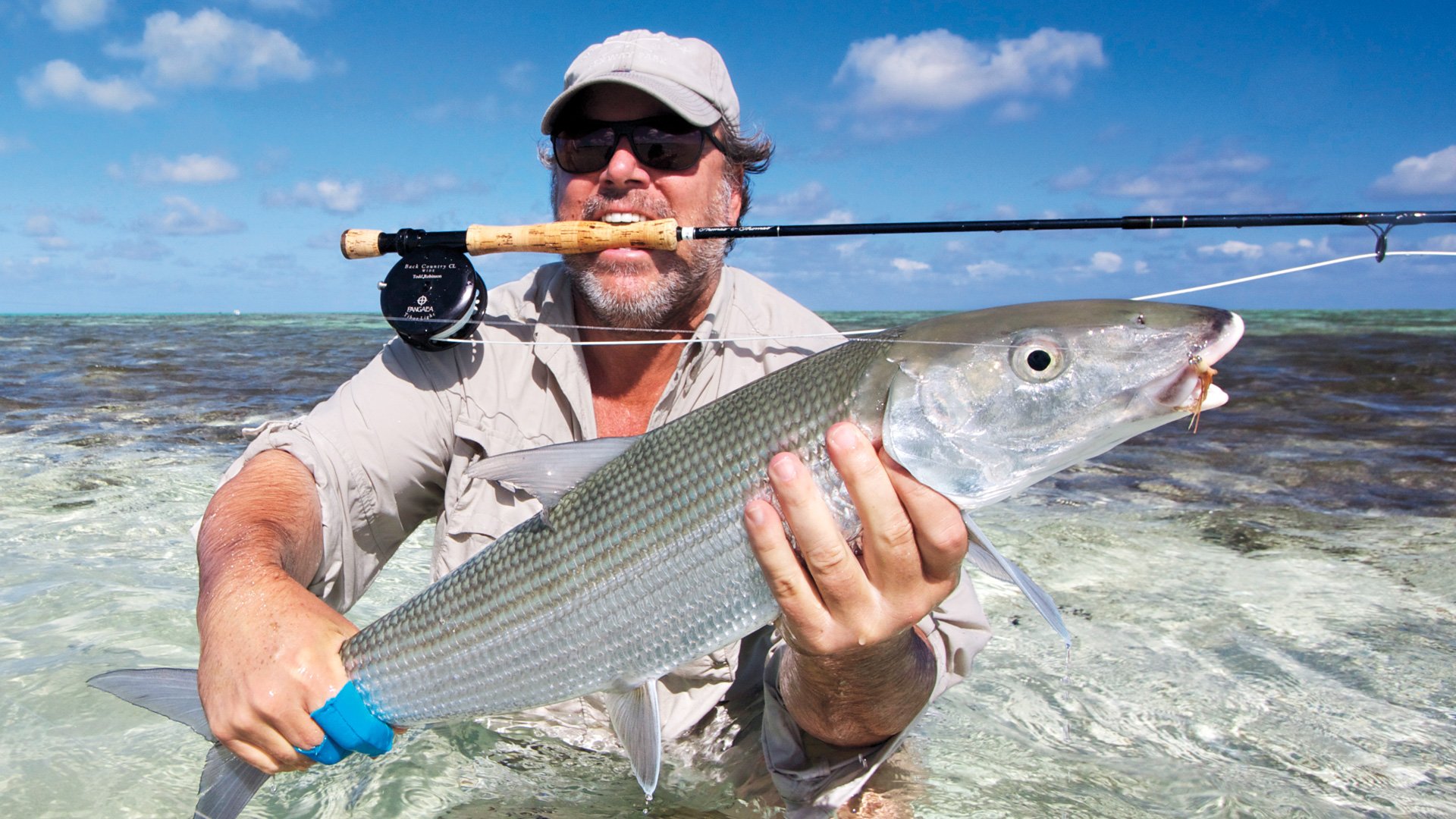
In late 2008, Todd Robinson decided to take his 191-foot yacht, Pangaea , on a trans-Pacific trip. Robinson is a lifelong fisherman who’d spent some $35 million buying and refitting Pangaea. He loved the idea of taking the boat across the ocean, seeking remote sites to fish for bonefish, trevally, barracuda and other shallow water species. This trip wouldn’t be about trophies; Robinson is a catch-and-release fisherman. He just loves to fish, especially far from civilization.
But as they searched the Solomon Islands, the Gilberts and the Marshalls, Robinson and his fishing guides didn’t uncover any pristine marine oases. Instead, they found devastation. Islands that until 30 or 40 years ago were tropical paradises had, thanks to misguided foreign aid, become modernized in ways that corrupted the locals’ traditional lifestyles. “You think you’re going to a remote island, and it turns out it’s full of empty cans of Spam,” Robinson says. The water was fouled by garbage and human effluvia, the reefs gray and lifeless. The reef fish were gone, either netted by international long-liner fishermen to use as bait for catching billfish and tuna elsewhere or fished out by the locals, because international donors gave them motorboats and gillnets which let them catch far too many fish, far too quickly, for reef populations to survive.

“The island would be completely dead of fish, the motorboats and gillnets washed up on the beach,” Robinson recalls. “It was wiped out.”
An ocean was dying. Robinson wanted to do something about it.
Most people don’t want to just sit at home and watch TV,” Todd Robinson was insisting. “They want to do something. And if you’re past the point in your life when you have a 40 to 60 hour a week job…”
We were having breakfast on Pangaea ; Robinson was explaining the origins of his interest in environmental philanthropy. The boat was cruising south in the Sea of Cortez toward San Jose del Cabo, Mexico. Crew members were quietly serving coffee, oatmeal, fresh berries and melon, bagels and lox, omelets, pancakes, yogurt and granola for the two of us and several friends of Robinson’s. As the sunrise flickered over the boat’s wake, dolphins leapt out of the water, twisting and turning in the air.
“Whether it’s shrimps or crabs or jellyfish, 100 different species float by you twice a day.”
Todd Robinson was born in Florida in 1957. His family lived in Tampa and then Lakeland, on the west coast. Robinson’s father, a member of the Air Force, loved to fish, and on weekends he would take his son fishing in the Gulf of Mexico. “In 1963, you could go all the way from Tampa to Fort Meyers and camp on empty beaches,” Robinson remembers. “We had a small boat, a tent, sleeping bags. My dad would catch the big sport fish—kingfish and tarpon—and I would catch the little stuff.” For a 6-year-old boy, “it was paradise.” Today, Robinson says, “if I fly into South Florida I can’t even look out the window—I have to close my eyes.”
The Robinsons moved to Maine, and Todd attended Bates College in Lewiston. After college, he took a job as a broker at Smith Barney. “I was raised under pretty modest circumstances,” he says. “I had to make some money.
Robinson had a knack for finding wealth to manage from previously untapped sources, like credit unions and small businesses. At “23 or 24,” he recalls, he became one of the youngest vice presidents in the firm’s history. In 1985, he left to head Boston-based brokerage Linsco; four years later, he merged Linsco with Private Ledger, a San Diego firm, to create LPL Financial.
Over the next 16 years, Robinson built LPL into the country’s largest independent broker/dealer by establishing a culture of principled financial advice: LPL gave its advisors welcome autonomy, never created proprietary products for them to push and emphasized long-term financial planning. In 2005, Robinson sold 60 percent of LPL—the firm was valued at $2.5 billion— to a private equity partnership. But well before the sale, he’d been thinking about what he calls “entrepreneurial philanthropy.”
“LPL was running nicely, and my son had graduated from high school so I was an empty nester. I said, ‘I’m ready to do something else.’”
He was thinking in particular about one place in the world’s oceans that is pristine—maybe, he says, the last place: the atolls of the Seychelles Islands in the Indian Ocean.
Robinson had fished there on vacations, and the experience had moved him profoundly. Hundreds of miles southeast of Mahé, the country’s largest island, the atolls were formed by the gradual sinking of oceanic volcanoes thousands of years ago. Typically a ring of coral enclosing blue water, they can be huge; the country’s Aldabra atoll is about 60 square miles. Over time, cuts and breaks form in the reefs; a carefully navigated boat can maneuver its way into the atoll and suddenly find itself in a salt-water lake 20 feet deep—that becomes ankle deep when the tide goes out.
The Seychelles atolls have been protected for several reasons. One is their remoteness; on a map, they are tiny specks in a massive sea of blue. Another is that the Seychelles government and the UN have vigilantly protected them. And a third is far-ranging Somali pirates; the threat of AK-47-toting kidnappers has prompted fishing boats to steer clear of the Seychelles.
The result: The atolls teem with life. When the tide goes out on the sand flats, Robinson says, you can walk through the water and see the spines of countless fish break the surface as they seize the opportunity to feed safe from larger predators. And it’s not just fish that surround you: “Whether it’s shrimps or crabs or jellyfish, a hundred different species float by you twice a day.” On the edge of the flats, sharks prowl for food—tigers, silkies, lemon and reef sharks, hundreds of them. In the Seychelles, says Richard Schumann, one of Robinson’s guides, “you get a true idea of how productive the oceans can be. It is a wonderland.”
I first met Todd Robinson over the telephone last year while reporting a story for Worth about Belcampo, the sustainable agribusiness Robinson has launched on some 20,000 acres he owns in Uruguay, Belize and California. During the call, Robinson emphasized that, as far as he was concerned, he was retired; Anya Fernald, the green agriculture expert he’d hired to run Belcampo, was doing the heavy lifting. “She knows 10 times more about this business than I do,” he said.
Then Robinson digressed, talking about a new project he was increasingly fired up about: studying reef fish in the Indian Ocean. There was plenty of funding for studying deep water fish, Robinson told me, because that research has both commercial and miltary value. But there was virtually no money to study the shallow water fish that make up a vital part of the oceans’ food chain and are essential to the health of reefs. Robinson wanted to study the migration patterns, breeding habits and population densities of reef fish, information scientists need to figure out how to help those populations survive. And the best way to conduct that research? By fishing—catching the fish with barbless hooks, taking a small DNA sample from their fins, tagging them and releasing them unharmed. The other ways of catching the fish— netting, basically—were likely to scare them off, kill them or get them eaten by opportunistic sharks.
“There are no boats you can compare to the way Pangaea runs,” says Todd Calitri. “They do not exist.”
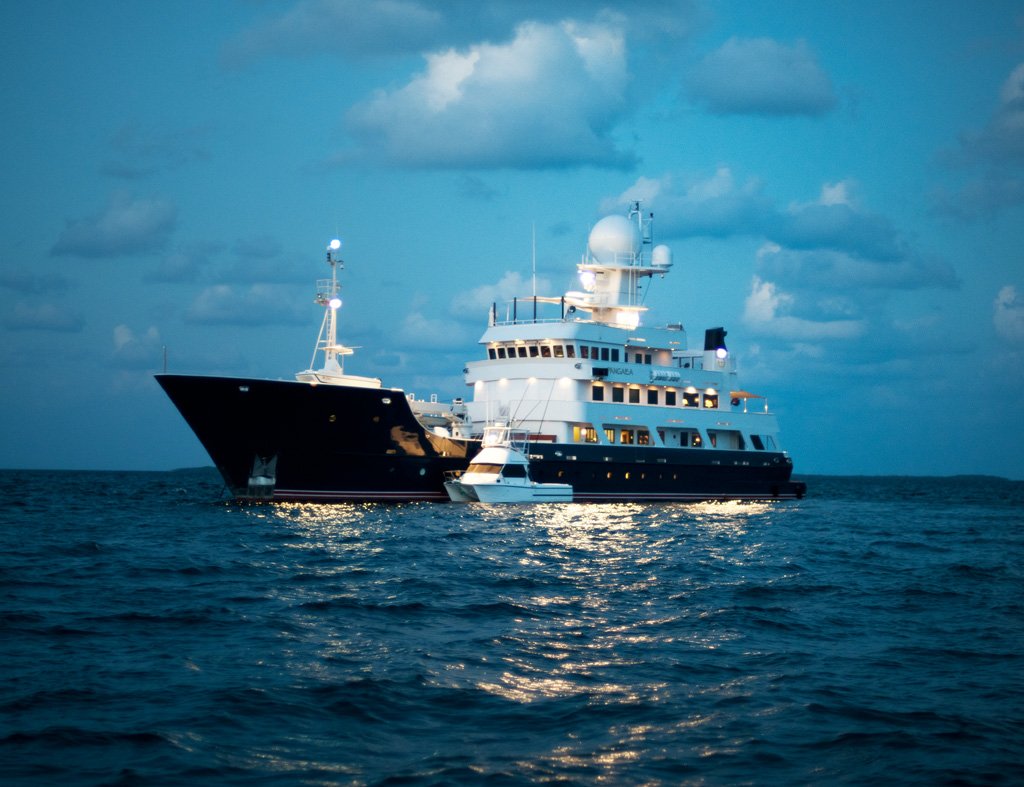
Robinson invited me to join him onboard Pangaea , and a few weeks ago, I did. Getting to the boat, however, wasn’t easy. His assistant had told me to meet Pangaea in San Jose del Cabo, Mexico. Flying there from New York, I was met at the airport by a driver who informed me in broken English that the boat “has moved.” We drove north for three hours through desert and mountain terrain to the town of La Paz, which has a marina. But Pangaea wasn’t there either. Instead, two of its crew members— tanned, 20-something South Africans— were waiting with an 18-foot skiff. They explained that Kynan McDonald, Pangaea’s captain, had moved the boat because of strong winds in San Jose del Cabo. So we headed into the Sea of Cortez and followed the coastline south for about 40 minutes. Pangaea, it turned out, wasn’t moored in any marina, but anchored a few hundred yards from the shoreline’s rocky cliffs and red clay hills. There wasn’t another human being, much less another boat, in sight.
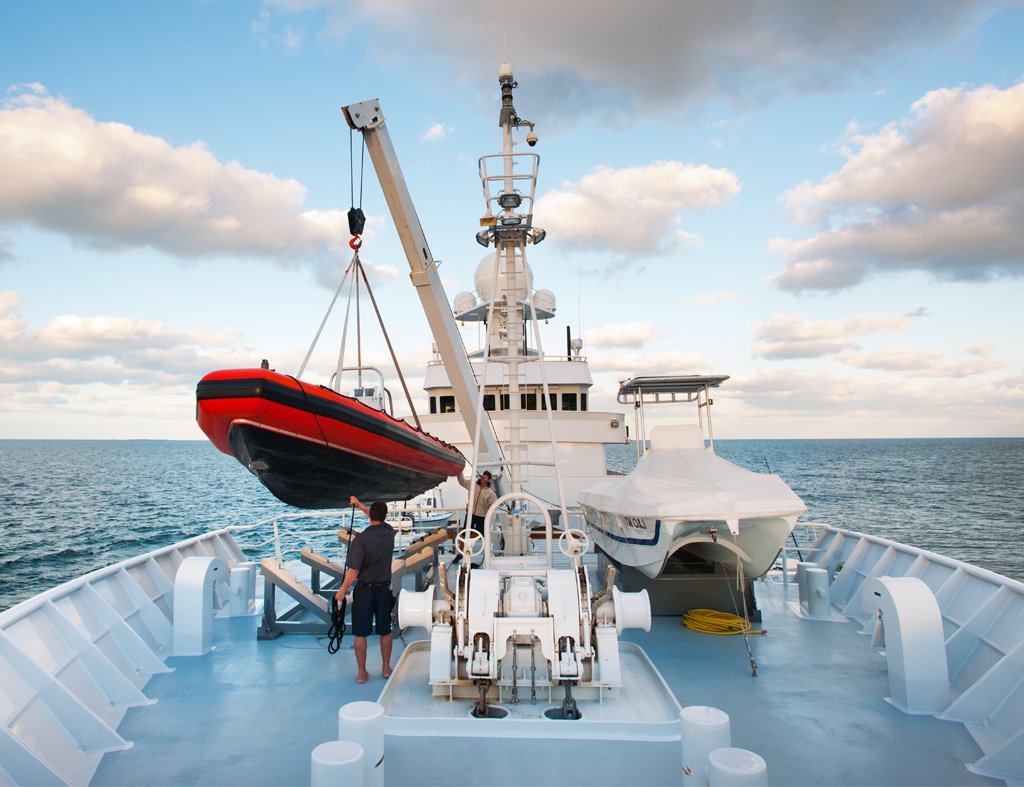
Pangaea didn’t look like the sleek luxury yacht I had assumed a wealthy man would buy. With its high hull and aft superstructure, Pangaea looks like a commercial vessel. But as I stepped onboard and got a tour, I realized that Pangaea is a hybrid, the particular vision of a man used to building things his way.

First, it is an expedition boat, capable of carrying 58,000 gallons of diesel that give it a range of 10,000 miles. “I can fuel it up in Hawaii and don’t even have to look at the fuel tank until I get to Singapore,” says Kynan McDonald.
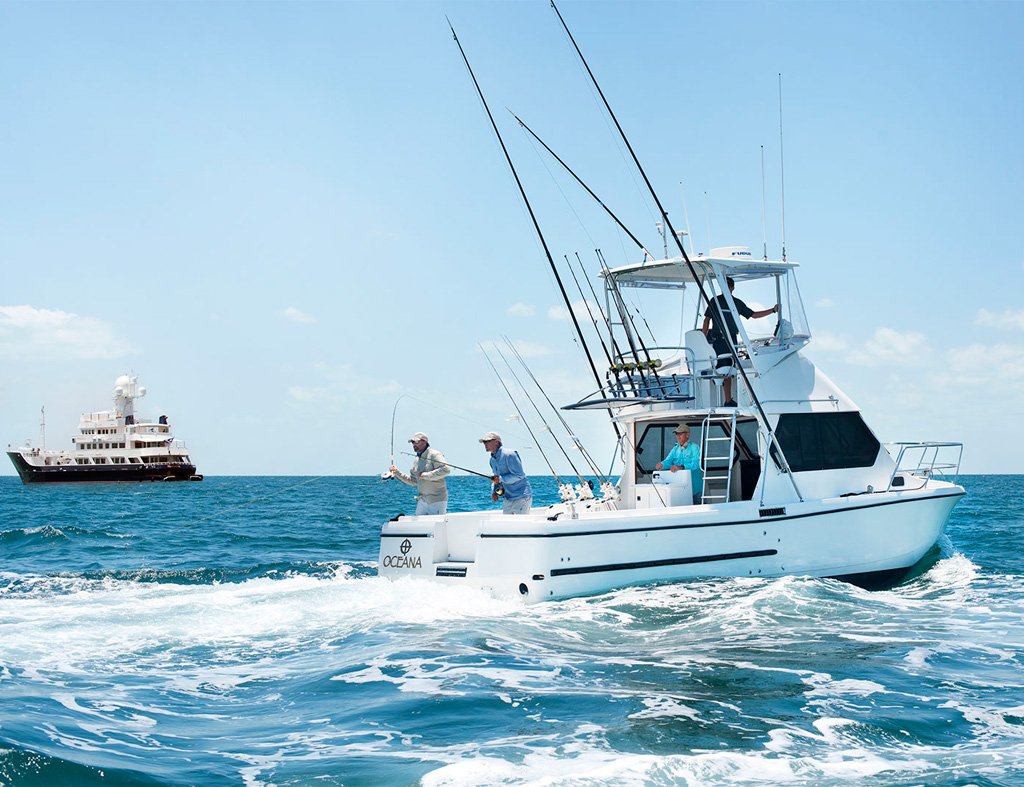
With a draft of just 10 feet, several less than typical for a vessel its size, Pangaea is also a shallow water boat; that 10-foot draft, McDonald says, “can mean the difference between getting three miles from shore or 300 yards from shore.” Pangaea also carries seven tenders, including shallow water skiffs and a 34-foot sportfishing boat. To use on those tenders, Robinson has stocked Pangaea with an array of flyfishing gear that he thinks unmatched. “There are no boats you can compare to the way we run,” says Todd Calitri, a fishing guide who is the owner’s representative on board. “They do not exist.”
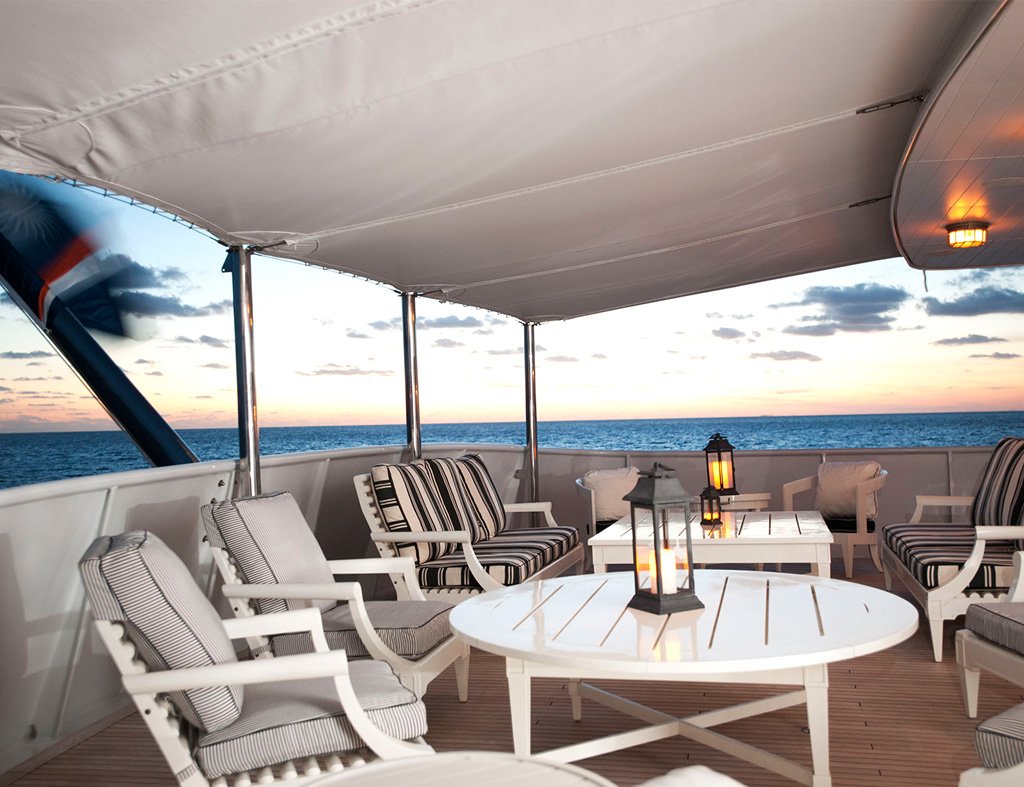
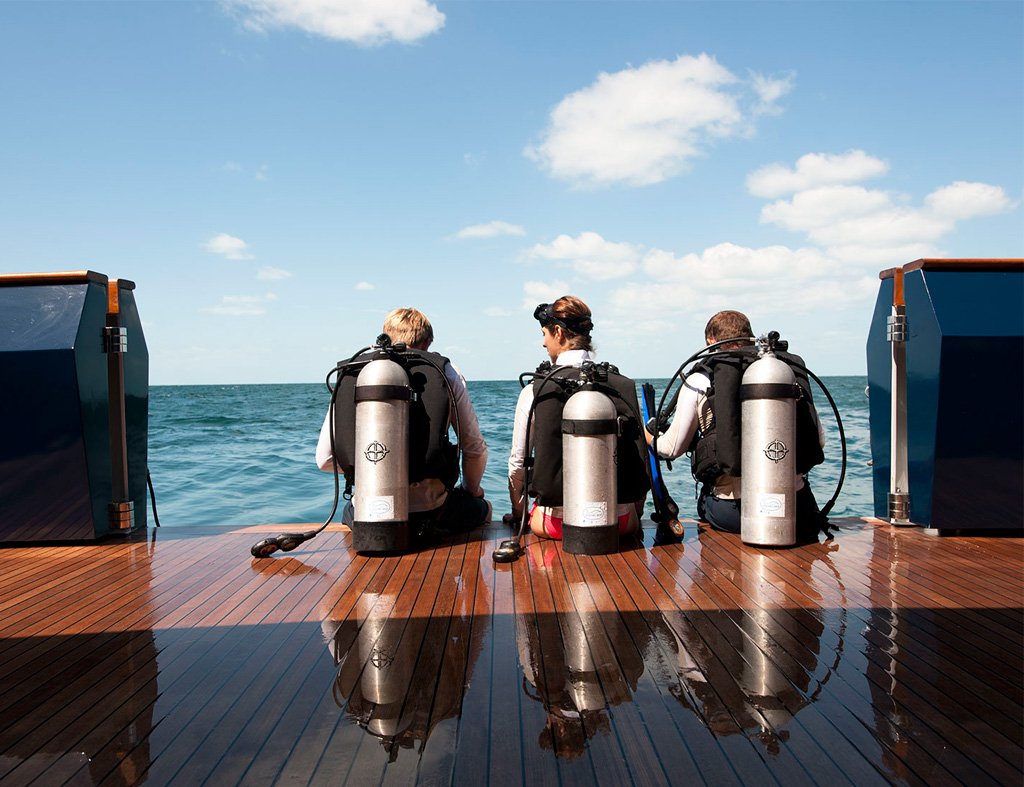
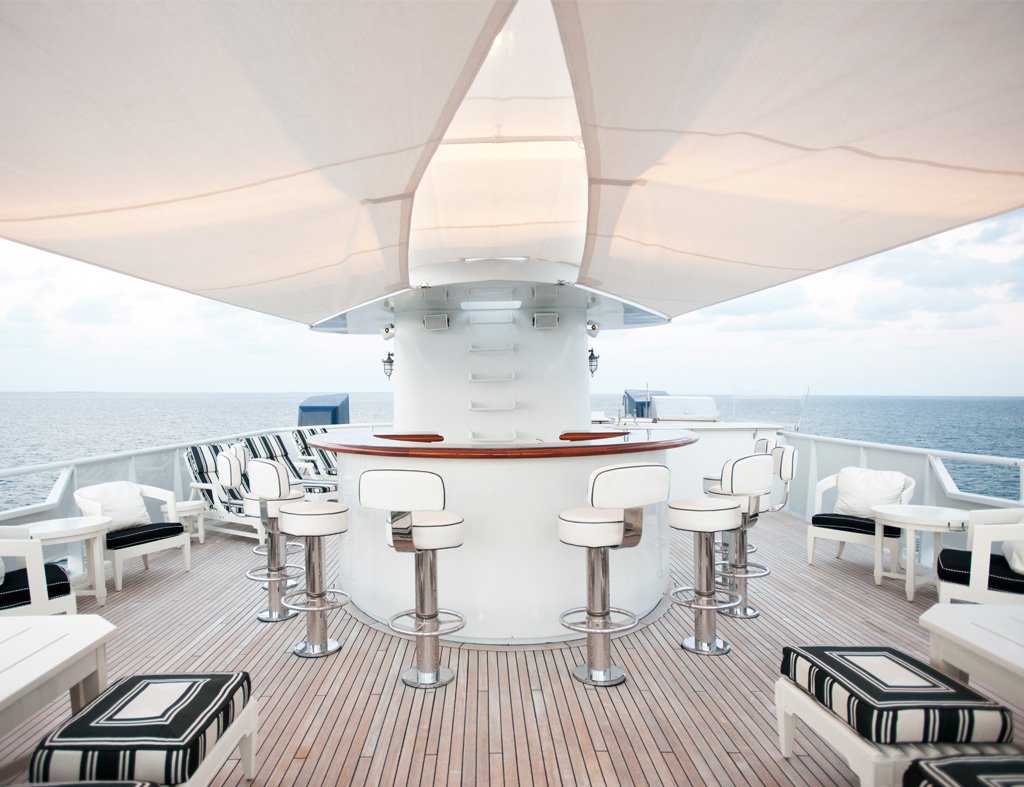
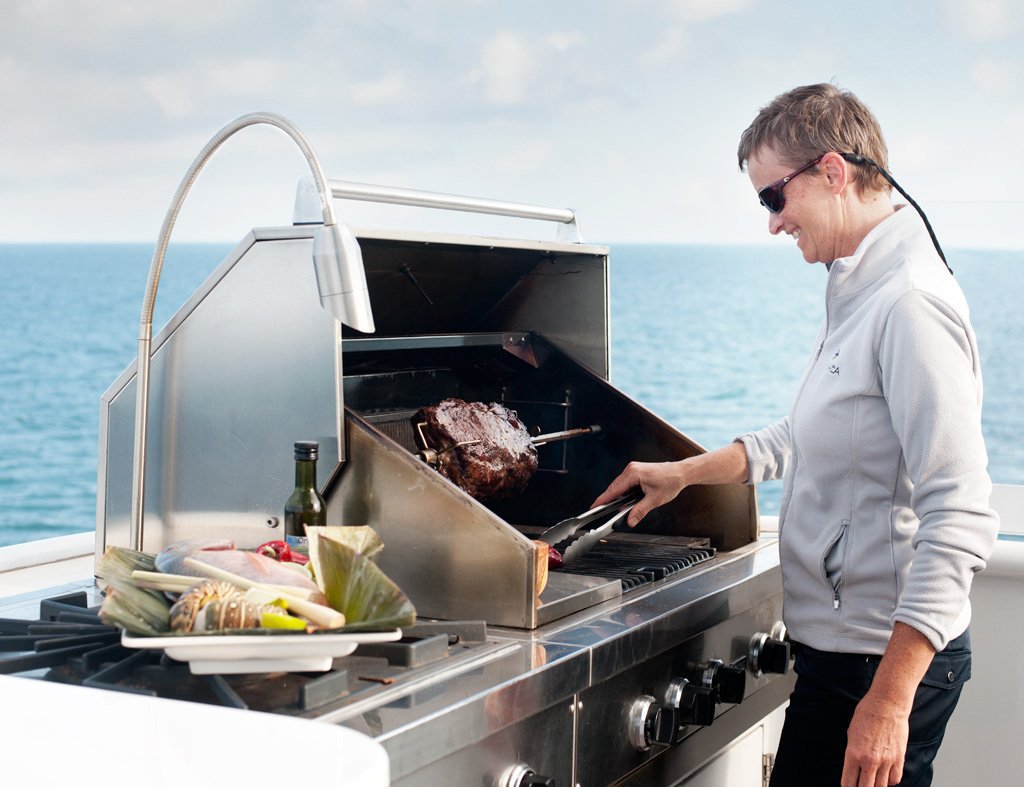
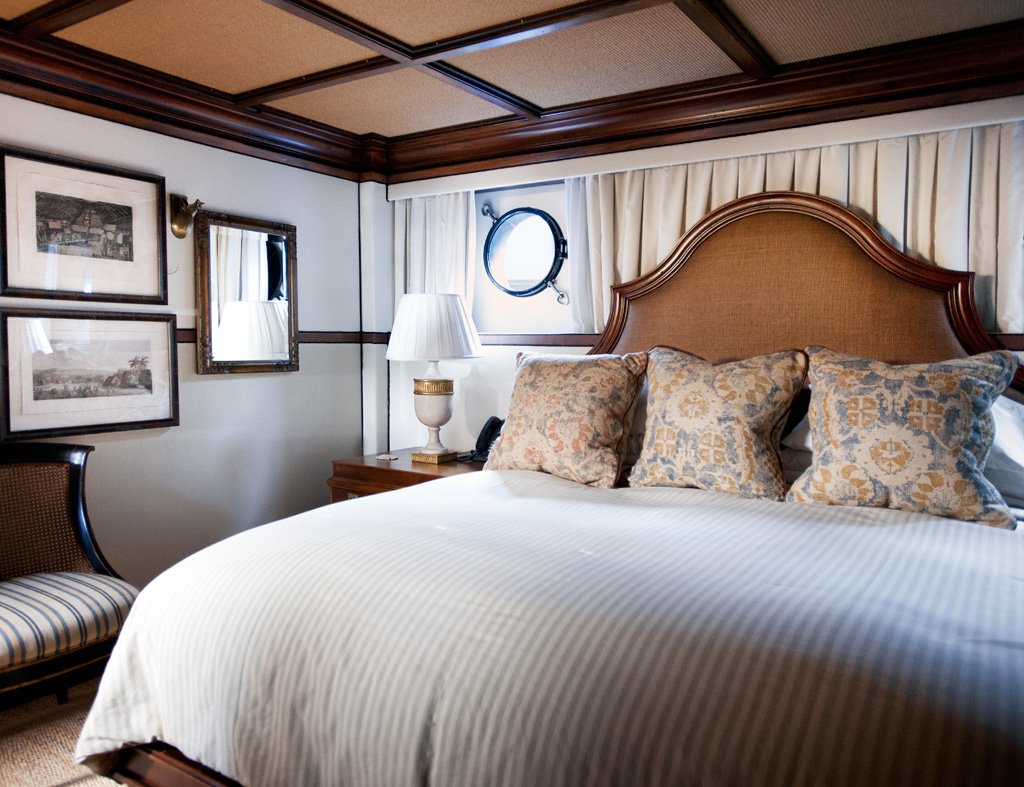
Pangaea combines these practical elements with the comfort of a luxury yacht. It has a crew of 13, two master cabins and four guest staterooms as plush and enticing as a room at a four-star hotel. Its four hydraulically controlled stabilizer fins work constantly to keep the boat level. “Very few sea states intimidate the boat,” McDonald says. The food is impressively fresh and ambitious, and Robinson, who has lately developed a taste for rum, keeps his bars—Pangaea has four of them— well stocked.
As he planned his post-LPL life, Robinson had intended to build his own boat, but couldn’t find a design that could easily incorporate everything he needed. “There wasn’t anyone who could efficiently build a boat that was recreational but also had scientific purposes.” Boat makers, Robinson adds, “were happy to build it, but it was a custom boat, which meant, ‘If you’re stupid enough to write us a blank check, we’ll build whatever you want.’”
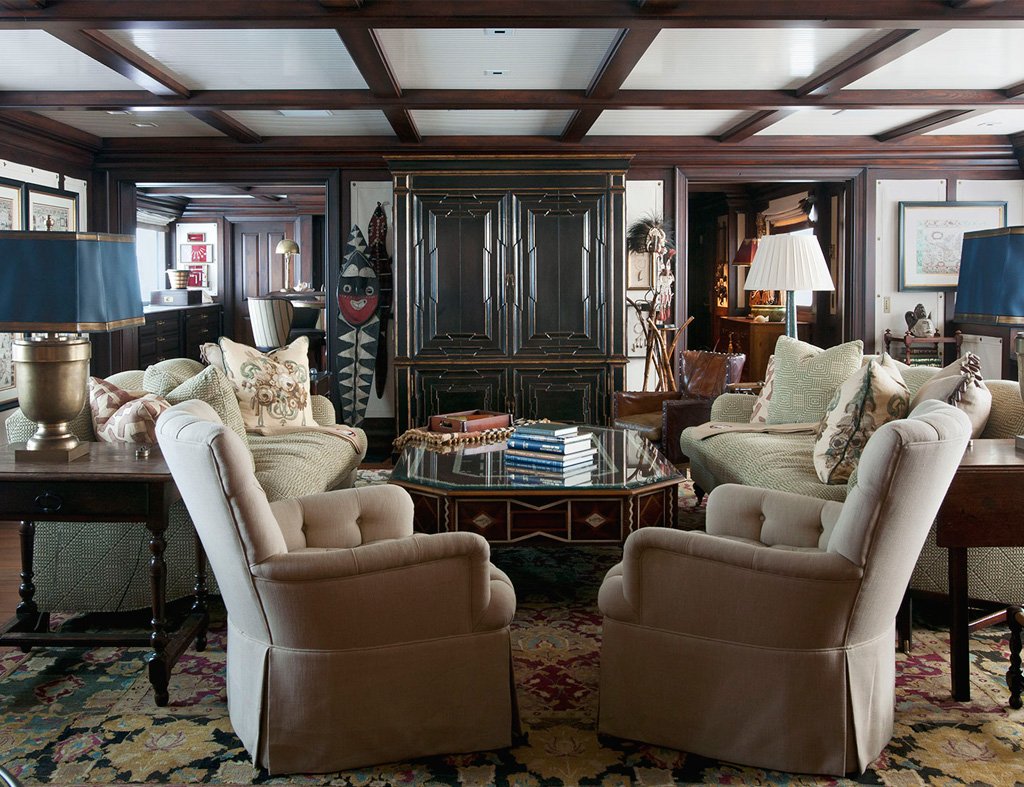
Instead, he found Pangaea, built in 1999 by an entrepreneur who hoped to tap into a niche market of wealthy adventurers, only to find out that it’s a very small niche. The décor may not have helped: Pangaea’s interior, Robinson says, was like a “bad Vegas hotel—white carpets, Roman column pillars….” He replaced that faux-opulence with comfortable furniture, dark wood paneling and indigenous art collected in his travels.
While refitting Pangaea, Robinson was already talking to American marine research institutes and environmental groups about working with them. “If you’re going to buy a boat like this, it ought to make some contribution,” he says. “It’s a big asset and it’s valuable, and not just monetarily.”
For four months a year he would donate the Pangaea along with crew, guides and all expenses—an amount Robinson estimates would cost him $1 million a year above Pangaea’s standard running costs. He would also pay $200,000 a year for five years to cover the nonprofit’s expenses. And he would pay for security personnel, veterans of Iraq and Afghanistan, to provide 24/7 protection from pirates, a fading threat but still something to take seriously. The scientists would live onboard Pangaea , and Robinson and his all-star team of guides would catch fish for them to tag.
And Robinson had another idea for creating stakeholders in the project. At a starting price of about $500,000, he would auction places on the boat to other wealthy and experienced fishermen. For 10 days, they could join the Pangaea and fish in sites that are extremely difficult to get to even if you’d somehow managed to get permission to fish there. Half a million dollars is about what it costs to charter a luxury boat to sit on a dock in Monaco. For the same price, Robinson would offer his passengers a chance to fish in paradise. The only catch was that they wouldn’t pay the money to him, but to the nonprofits.
And then a strange thing happened: The nonprofits weren’t interested. It wasn’t that they didn’t think the research was important—they knew it was. But they were uncomfortable participating in a project that could be seen as condoning recreational fishing.
“We went to one well known research group that was actually going to some of the islands we wanted to go to,” Robinson says. (He won’t name the organizations in question, mostly because he doesn’t see the point.) “They weren’t even subtle about it. They said, ‘We philosophically believe in creating no-go, no-take, 100 percent off limits parts of the ocean, and we’re not going to do any studies that show that recreational fishing doesn’t hurt.’”
Robinson has a different philosophy. While the idea of making large swaths of the ocean off limits to human activity might sound nice, he considers it deeply unrealistic, dependent upon the largesse of western governments that might one day decide they can no longer afford to subsidize such human-free zones. Moreover, it simply doesn’t work: If people have to fish to survive, they will.
Robinson would rather give indigenous people an economic stake in the waters around them. He cites a 2010 study conducted by the University of Miami which found that, over the course of its life, a single bonefish in Florida waters generates $75,000 in fishing-related activity. If people recognize the economic value of preserving fish, Robinson argues, they’ll watch over their fish like shepherds.
In the end, Robinson had to go abroad to find a nonprofit that didn’t take ideological exception to his plan: Scientists at the South African Institute for Aquatic Biodiversity (SAIAB), a research organization affiliated with the South African government, couldn’t believe their good fortune.
“The opportunity that presents itself through the Pangaea is unbelievable,” says conservation biologist Dr. Paul Cowley, one of the researchers who’ll be working with Robinson. “Five years of a super yacht with all the facilities…it’s an absolutely ideal platform. And the information that we’re going to collect will contribute hugely to the conservation of fishery resources in these remote areas.”
Thirty-six hours after I arrived on Pangaea, Robinson left to fly by private jet to his farm in Shasta, Calif. Pangaea would head to San Diego for maintenance, then cross the Pacific to Singapore. In November, the boat will head to the Seychelles, where Robinson and researchers from SAIAB and several Seychelles-based nonprofits will join it.
Talking with Robinson in mid-September, I asked him to compare the work that he’s doing now with founding and building LPL. “The logistics— figuring out what your goal is and how to achieve it—are similar,” he answered. “The fundamental difference is that I’m not doing this for money.”
LPL, Robinson pointed out, had helped a lot of people find economic security, and that mattered very much. “But there were a lot of Todd Robinsons creating economic opportunities in the stock market,” he said. “And there aren’t enough people applying that same kind of acumen to creating more efficient ways to do good philanthropic things.
Readers interested in becoming citizen-scientists aboard Pangaea should contact owner’s representative Todd (T.C.) Calitri, tc@yachtpangaea.com, 970.376.2157, yachtpangaea.com