
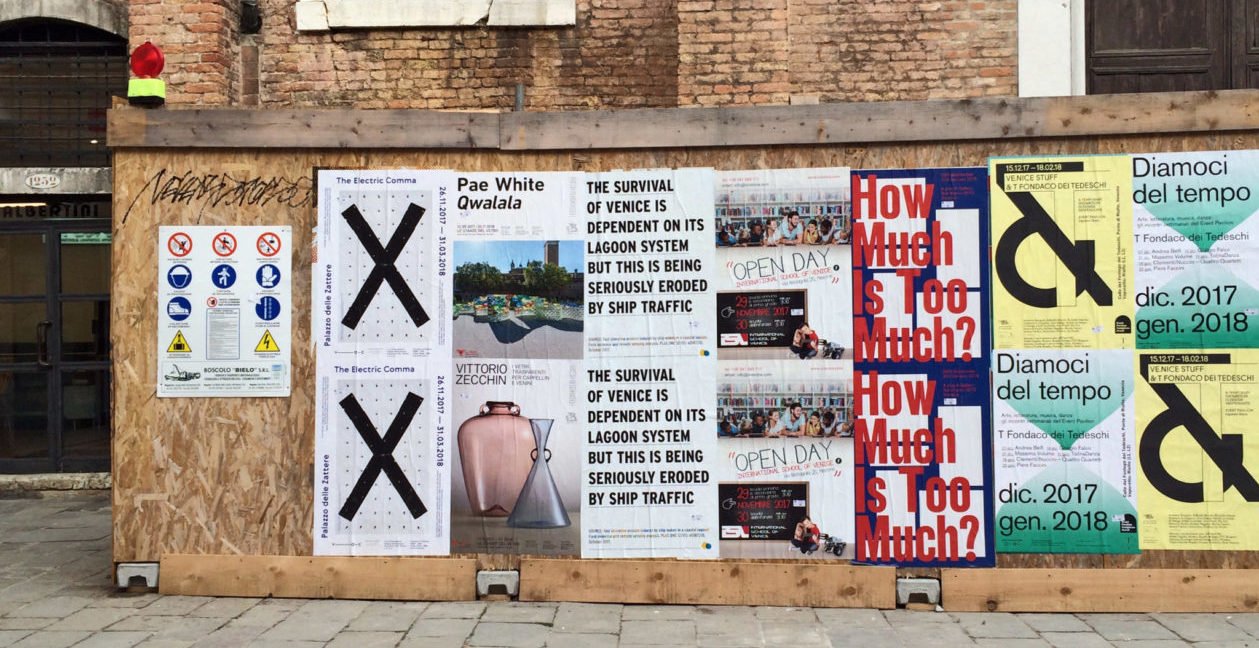
Beautiful and damned, mysterious and challenging: Venice, in the popular imagination, is all of these things. Almost since its founding in 421, the city’s been a magnet for entrepreneurs, traders and aesthetes, but its more recent renown comes from massive cruise ships, rising water levels and the approximately 30 million annual tourists clogging the city’s storied canals and bridges.
“Venice has changed a lot since I left it,” says Alberto Vitturi, 37, an Oslo-based consultant who grew up in Venice, and whose family’s aristocratic roots in the city date back to at least 1260. “Massive tourism has always been a big issue, but in the last four to five years it has escalated, and it seems nobody can really do anything to regulate it.”

Twice last summer, on June 2 and July 7, two cruise ships lost control in the city’s canals, with one crashing dramatically onto the San Basilio docks. Fortunately, the incidents resulted in few physical injuries. Still, the videos, quickly posted on YouTube, showed panicked Venetians trying to escape, and crystalized many Venetians’ sense that the city is sacrificing its authenticity, ceding its singular beauty to the forces of mass tourism. Freak storms in October 2018 flooded 70 percent of the city, with waters rising more than 58.5 inches above sea level, exacerbating residents’ anxiety. There’s also the dramatic population decline. In 1960, Venice had more than 170,000 residents; today there are fewer than 50,000, and many longtime residents have left for the mainland, using their city properties as lucrative short-term rentals for Airbnb and the like.
But a growing number of Venetians say they’re fighting back.
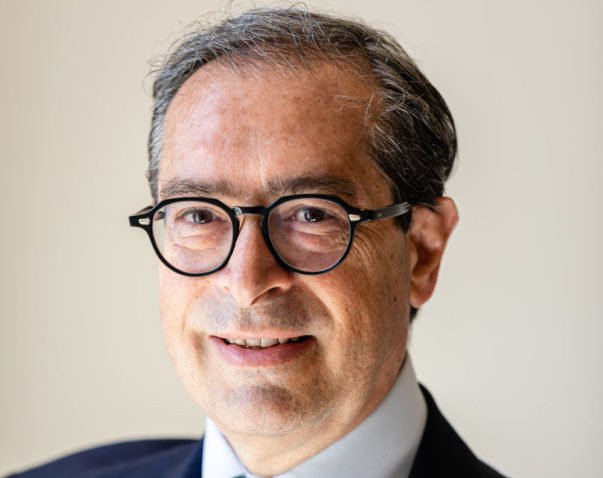
Antonello de Medici, general manager of the newly opened St. Regis Venice and a delegate to city, regional and national tourism consortiums, says luxury travel remains critical to the city’s identity. To keep discerning guests happy, he says, his hotel and his colleagues at similarly lofty properties are promoting the city’s off-season and lesser known charms.
“As a city, Venice is attempting to spread out the flow of tourist traffic by expanding the events calendar outside of the historical high season,” he says. Working with the bespoke tour planners IF Unique Art Experiences, De Medici offers his guests glimpses of authentic Venetian treasures: visits with artisans or private after-hours tours of usually crowded sites like San Marco. “We’re catering to connoisseurs who would like to discover more about the city’s rich history as a vanguard in art, culture and fashion.”
Indeed, Venice’s contemporary champions cite the city’s origins as an innovative republic and reject the idea that its best days are over.
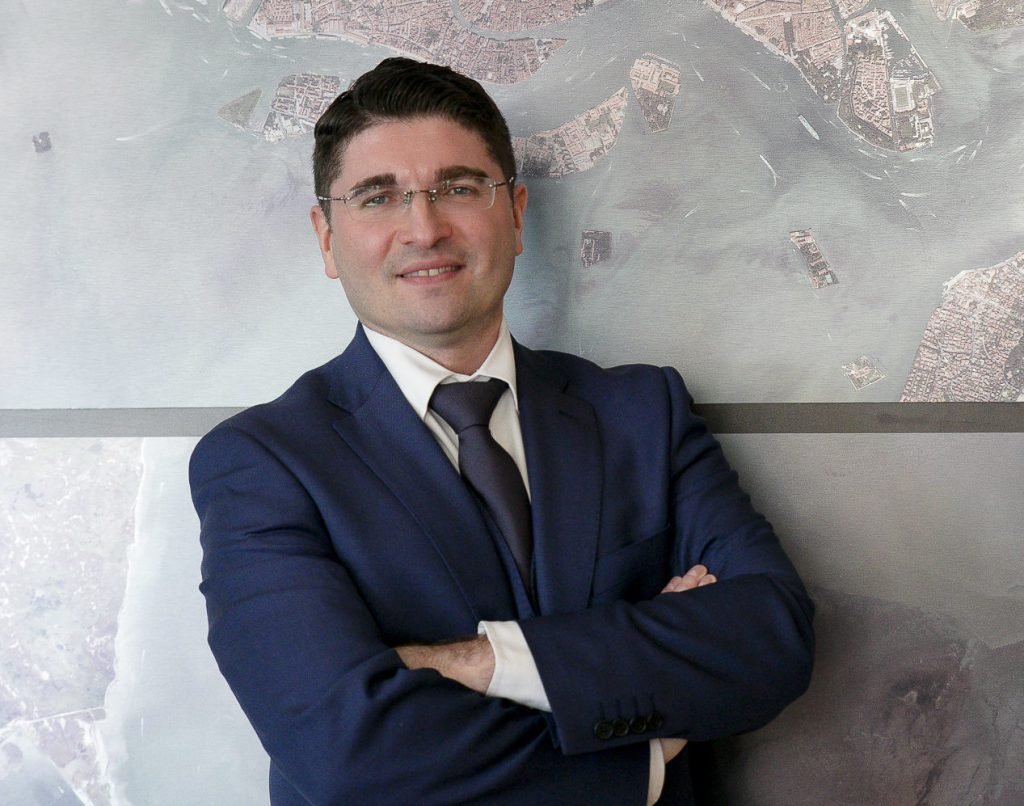
“I find it patronizing. There’s an economy of doom, represented by charities and NGOs that need to represent Venice in peril, a Venice that’s dying, a Thomas Mann-Venice. Otherwise they can’t do fundraising in the United States,” says Pino Musolino, the ambitious 41-year-old, Anglo-educated president of the North Atlantic Sea Port Authority.
We built the most unique city in the world. It’s part of our history and heritage to be innovators.
“We’ve got 1,600 years of history. We’ve been one of the centers of innovation. In the 15th century, there were more books published and issued in Venice than in the rest of Europe all together. Galileo Galilei did experiments on lenses in the towers of Saint Mark and Saint George,” he says. “We have built a city in the most inhospitable, improbable, unlikely place in the planet, in a lagoon of swamps and shallow waters. Out of that, in the most enlightened way, we built the most unique city in the world. It’s part of our history and heritage to be innovators.”
A 10th-generation Venetian on his mother’s side, Musolino is a crusader for free market ports, quick with a press release and eager with data. He’s working with other European cities to rein in the behemoth cruise ships that have become such a pronounced mixed blessing, bringing in millions of tourist dollars while flooding his city with an unsustainable quantity of day trippers.
“For the last 20 years, the cruise industry was totally focused on the economy of scale generated for the ship owners,” says Musolino. “They kept saying: ‘I’ll make the ship bigger; you adapt your structures.’ But it’s not just the port, it’s the land connectivity: roads, railways, buses, water buses, airports. You increase the airports for the increasing tourists and then you need hotels and need to use land to build them.” Instead, he urges, “Can we see whether the whole equation—mobility, pollution, healthcare costs, soil consumption, efficient use of energy—if we put all the factors together, is it a plus? If not, we need to rethink it. It’s very market-oriented.”
In October, Musolino, who said that last summer’s two cruise ship incidents aged him “a decade in a month,” convened Cruise 2030: Call for Action. A working group of eight Mediterranean cruise destinations, it is planning to lobby for EU legislation reducing pollution and congestion.
“We would like to see a flourishing industry for the next 20 years, but we have to say that the business model that has served us in the last 20 cannot be the one that will serve us in the next 20,” he says.
Among Musolino’s proposals: spreading cruise arrivals throughout the whole week instead of concentrating eight to nine vessels on Friday, Saturday and Sunday. Many Venetians, like Jane Da Mosto, cofounder and executive director of We Are Here Venice, advocate for banning cruise ships all together, complain that Musolino and the city’s mayor are too soft on the industry. Musolino calls a complete ban unrealistic and takes a pragmatist’s view.
“A tourist will say, ‘I came here for my wedding, honeymoon, graduation. I want the real thing. I want to arrive in Venice on the Grand Canal.’ So we’ve got the leverage [over the cruise industry],” he says.
“I talk repeatedly to their leaders. I say, ‘You’re selling dreams, so if you become the guys who are raping the most beautiful city in the world, don’t you think that will affect your reputation and the way that the dreams you are supposed to sell are becoming nightmares for your very own customers?’” says Musolino. “We need to devise a workable plan not just for the cruise industry, but the port shipping industry all together.”
In fact, though cruise ships make the most obvious use of Venice’s ports, the shipping industry is really the economic driver, Musolino says, noting that Venice hosts 3,700 ships a year, of which 570 are cruise vessels. The port has 2,200 hectares of industrial port areas, employing nearly 20,000 workers in 1,269 businesses. It is also, he says, a fertile area for developing sustainable public-private initiatives.
“It’s a huge, living, productive site. We have a biorefinery, and we’re going to make the largest liquified natural gas coastal deposit on the Adriatic. We’ve received 30 million euros in grants from the European Union,” he says. “We’re on the leading edge of innovation and green. You can’t decouple production and sustainability.”
Sustainability—and the rise of both cruise ships and water levels—are personal and professional issues for Dominic Standish, a British journalist who’s lived in the region since 1997.
“I am in favor of constructing a new cruise ship terminal outside the lagoon on the north Lido. I am also in favor of the much-debated plan to construct a subway train tube through the lagoon alongside the city, connected to a new cruise ship terminal on the Lido and Marco Polo airport. This would transform tourism, travel for residents, students, commuters, businesspeople and cargo, and greatly reduce pollution from other boat journeys around the lagoon,” says Standish, author of the 2012 book Venice in Environmental Peril? Myth and Reality.
Still, he cautions, “I would not describe the cruise ship issue as a crisis. They bring income and work for many Venetians and compared with other boat traffic around the city and the lagoon, they cause fewer accidents and are less polluting than the tens of thousands of other boat trips made every day.”
As for the city’s plans to combat water level rise, Standish says he is “hopeful but not optimistic.”
He argues that climate change is only partly responsible for the rising water levels, and that the main culprit was the extraction of groundwater from aquifers under the lagoon, which was used for agriculture, industry and the municipal water supply.
“After this was halted during the 1970s, the rate of land subsidence reduced. But Venice had sunk significantly during that century and continues to flood frequently as a result,” he says, adding that measures like better drainage and the installation of jetties and breakwaters have helped reduce low-level flooding.
“Hopefully, the completion of the mobile flood barriers will reduce the impact of high-level flooding soon so that the city will be much better protected from rising sea levels.”
The high-level flooding plan Standish is referring to is the Mose Project, a $7 billion initiative using a series of retractable dikes to protect the lagoon from the sea. Initially planned in the early 1970s, the dikes began being built in 2003. A corruption scandal, environmental objections and changes in government administrations hampered the work, which is now expected to be completed in 2022.
These are the issues weighing on Venetians as they contemplate voting in the December 1 referendum to separate the lagoon from the mainland area of Mestre. For Standish, the referendum—the fifth since 2012—misses the point.
“Decisions on Venice separating from the mainland have repeatedly resurfaced since Venice joined Italy in 1866,” he says. “Given that Venice, Mestre and the nearby mainland are now so intertwined in terms of transport, tourism and population, I am in favor of not separating but working together.”
But Da Mosto, of the activist group We Are Here Venice, says it’s the only way forward.
“The historic city of Venice and its associated islands in the lagoon on one side, and Mestre and Marghera on the Italian mainland on the other, face very different issues,” she says. “We believe that these can only be addressed with different leaderships, each of which have their city’s interests at heart. We have this one opportunity to fight for our beloved city. It is vital that we win.”
If what precisely constitutes a win remains uncertain, all Venetians seem to agree that the current situation is untenable.
Musolino, while clearly proud of his empirical, somewhat technocratic approach, confesses that his decisions are also intrinsically personal. From the window of his offices, he shows me the Giudecca Island, where he grew up and where he brings his kids for weekend lunches with their grandmother.
We need to rethink what sort of Venice, in what sort of Veneto region, in what sort of Italy, in what sort of Europe, we want in 50 years’ time.
“I left for 10 years, by choice and also by necessity, and I’d like my son and his classmates not to have the need to do that. We need to rethink what sort of Venice, in what sort of Veneto region, in what sort of Italy, in what sort of Europe, we want in 50 years’ time. We need to implement that and move on with all the science, innovation, research, development, public funding and private enterprises,” he says.
“Why don’t you see so many 12th century buildings in Venice? Because the Venetians of the 13th century wiped them out and built the city again. Venice was an enormously lively place, being remade continuously, which is what any living city will do. Why can’t we Venetians build the city of today and the city of tomorrow together with the city of yesterday?”