In the watch industry, certain brand names printed across the dial have become synonymous with value and influence. However, beyond the dial and behind the curtain, there are other brand names that are quietly and more subtly pushing the needle and propelling the industry forward. Citizen Watch Group is one of those brands, producing roughly 200 million watches and movements annually—not only its own timepieces but also calibers supplied to thousands of other watch brands around the globe to power their timepieces.
Today, Citizen Watch Group is one of the largest global brands in the industry, operating in over 130 countries worldwide. Closing out its fiscal year in March 2026, Citizen notched over $1 billion in sales, doubling its output since the 2020-2021 fiscal year and dramatically outperforming many of its Swiss competitors. The company’s portfolio spans beyond the flagship Citizen brand to names like Bulova, Frederique Constant, and Alpina, plus additional divisions producing machine tools, devices, and components, including both Miyota and La Joux-Perret movements.

While domestic demand in the local market of Japan accounts for a notable portion of the company’s sustained growth, revenue in overseas markets also continues to increase, particularly in Europe and North America.
Despite being such a massive powerhouse in the watch industry, Citizen remains deeply grounded in the principles on which the modest business was founded back in 1918 by Japanese jeweler Kamekichi Yamazaki. It started as an experiment: expanding jewelry-making skills into creating Japanese pocket watches, one of which he gifted to the young Emperor of Japan, Hirohito. At the time, the Japanese watch market was dominated by foreign imports, primarily Swiss brands as well as American companies like Waltham and Elgin.
Citizen formed on the coattails of its neighboring competitor Seiko, who established just three years prior in 1913. Both companies were united in an effort to perpetuate the traditions of Japanese watchmaking and increase manufacturing domestically, but Citizen had a unique mission. “Many people think it’s curious that a Japanese man would choose an English word to name his brand back in the early 1900s,” confesses Eric Horowitz, Managing Director of Citizen North America. “Even though he wanted to carry on the history of Japanese watchmaking, he was very forward-thinking on a global level,” he continues. “Despite the fact that international travel was not widespread at the time, he knew he wanted to create watches for citizens of the world.”

Aside from the founder, Kamekichi Yamazaki, there have been a few key players shaping the brand’s hundred-plus year trajectory. Eiichi Yamada served as the company’s president beginning in 1946 and steered Citizen for the next 35 years, notably ushering it through international expansion following WWII and the creation of the proprietary technology that really put Citizen on the map, Eco-Drive—but more on that later. Another key figure in leadership was Rokuya Yamazaki, who assumed the presidency in 1981 and led the company through the quartz revolution that originated in Japan.
Altogether, Citizen has seen 11 different brand presidents in its first century of business, with the most recent, Yoshitaka Oji, being appointed in 2025 and proving instrumental in bringing some of the brand’s most high-end lines that were once exclusive to the Asian market to North America and other regions around the globe. “I think it is really the sum of all these leaders that have made Citizen what it is today, not just any single one,” asserts Yoshihisa Yajima, Brand Manager of Citizen Watch Group.
Today, Citizen’s watchmaking philosophy remains deeply rooted in Japanese diligence and innovation. The company emphasizes precision, accuracy, and customer service, reflected in their brand philosophy “better starts now.” “Our goal every day is to do something just a bit better than the day before,” explains Yajima. “We are always seeking to raise the bar on quality and standards, not just for ourselves, not just for Japanese watchmaking, but for the industry as a whole—we want to set this example,” he emphasizes. “We must be evolving and improving ourselves day by day—this has been part of our essence since the beginning. We do this by simply listening,” Yajima continues. “We listen to our customers—what do they need and what do they really want—this is what we have done from the start, and this has shaped the products we produce. We also listen to our employees, many of whom have worked here for numerous years, about how we can make better jobs, and we create our production processes around this. This is how we have shaped ourselves, and this is what we mean by better starts now.”
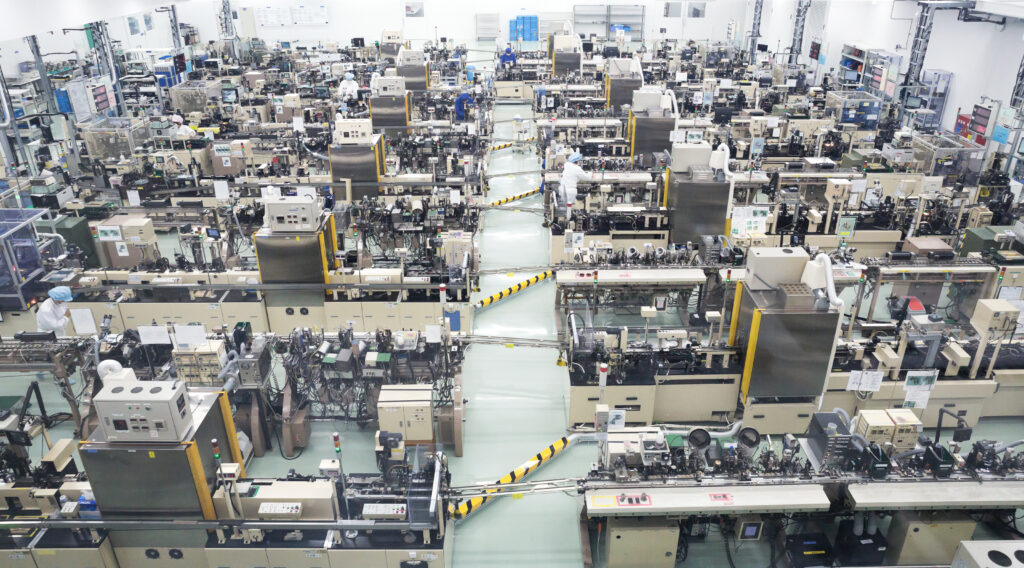
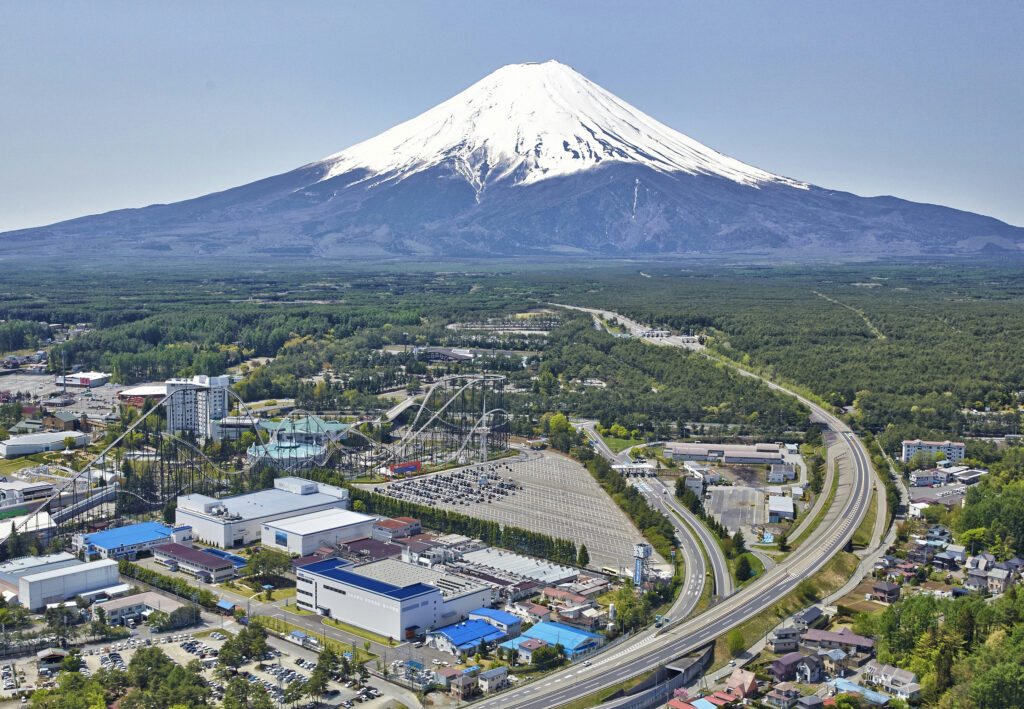
After having the opportunity to visit two of Citizen’s whopping 17 production facilities spread all across the islands of Japan, I got to experience first-hand the carefully curated infrastructure Mr. Yajima refers to, combining its own customized machinery, designed from the ground up, with highly skilled artisans keeping the element of human touch alive and well in each of Citizen’s timepieces. This was perhaps one of the most astounding aspects I witnessed in my time visiting Citizen’s Kawaguchiko Factory, its dial factory, which is scenically located near the base of Mount Fuji, and the Saku Factory, its movement factory, situated in Nagano, Japan.
While Citizen is that influential force working in the background as a supplier to thousands of other watch brands in the industry, there is one core focus that remains exclusive to its own catalog: Eco-Drive. This year, Eco-Drive celebrates its monumental 50th anniversary and notches sales in excess of approximately 4 million Eco-Drive models annually. The development of Eco-Drive has been instrumental in fostering Citizen’s growth as a company and solidifying its reputation in the watch industry. In response to the energy crisis of 1970, Citizen set forth an internal initiative to work toward developing a more sustainable and eco-friendly power source or movement for its timepieces. The brand looked to solar cell technology, which had seen significant breakthroughs and advancements throughout the mid-1950s and 60s.
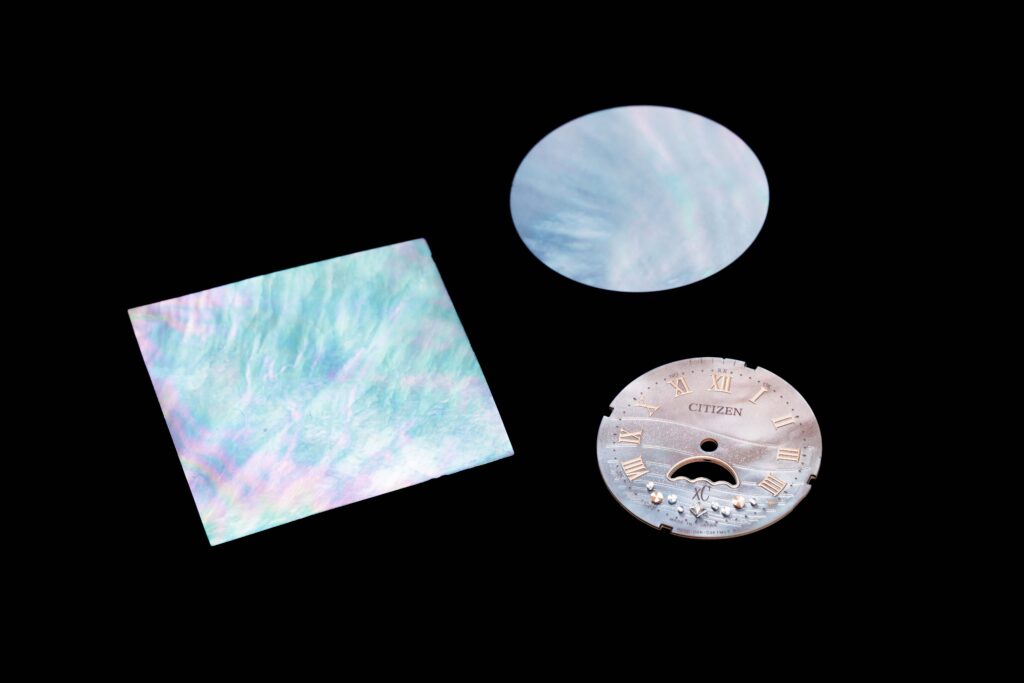
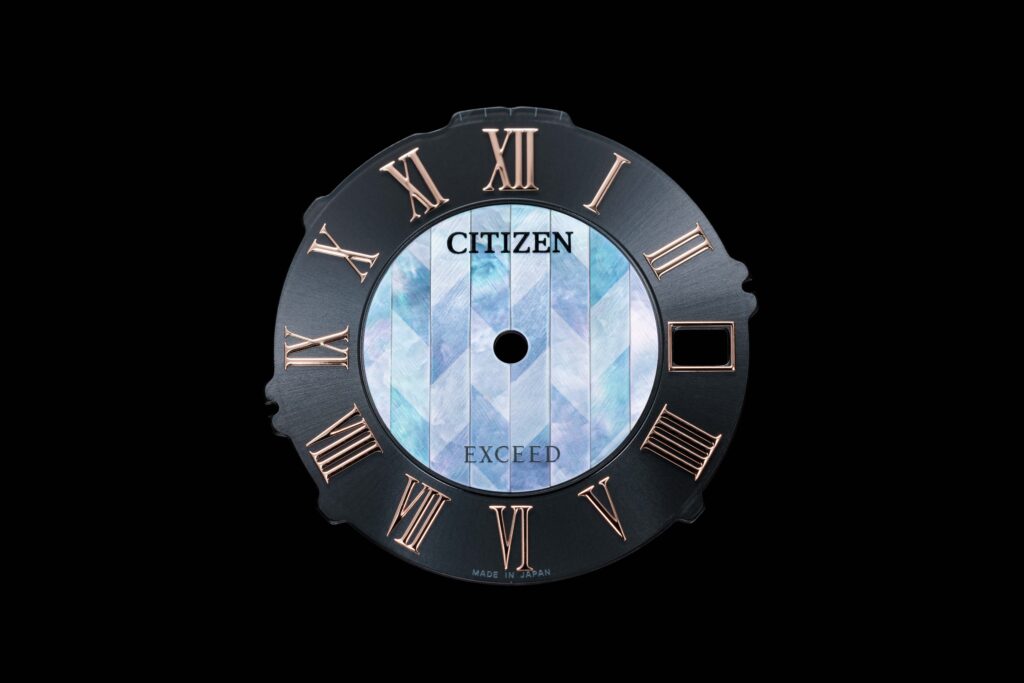
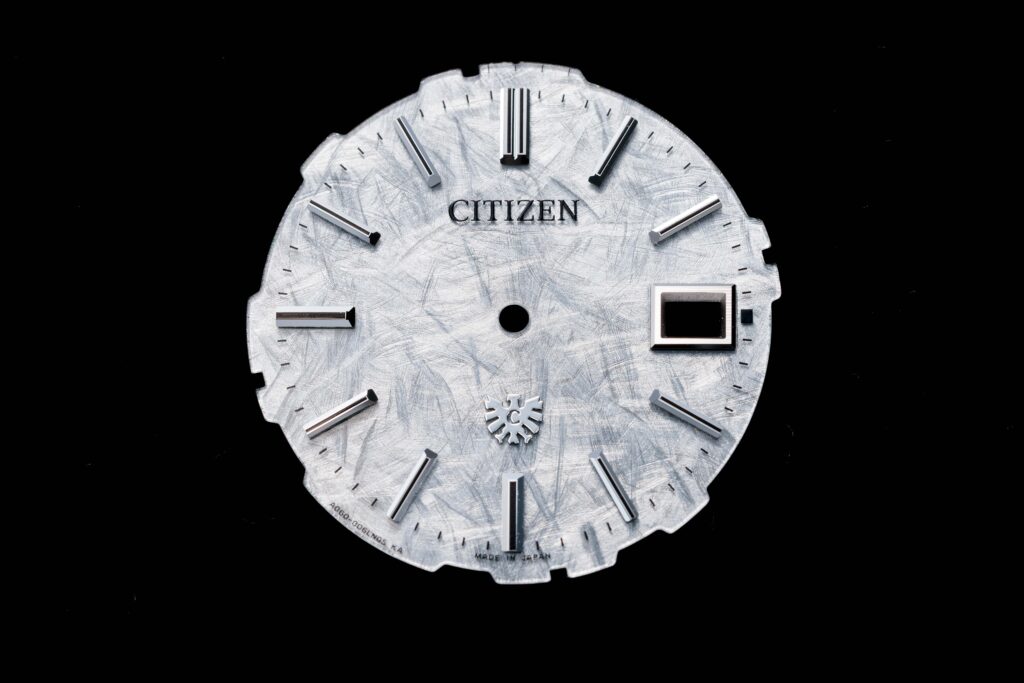
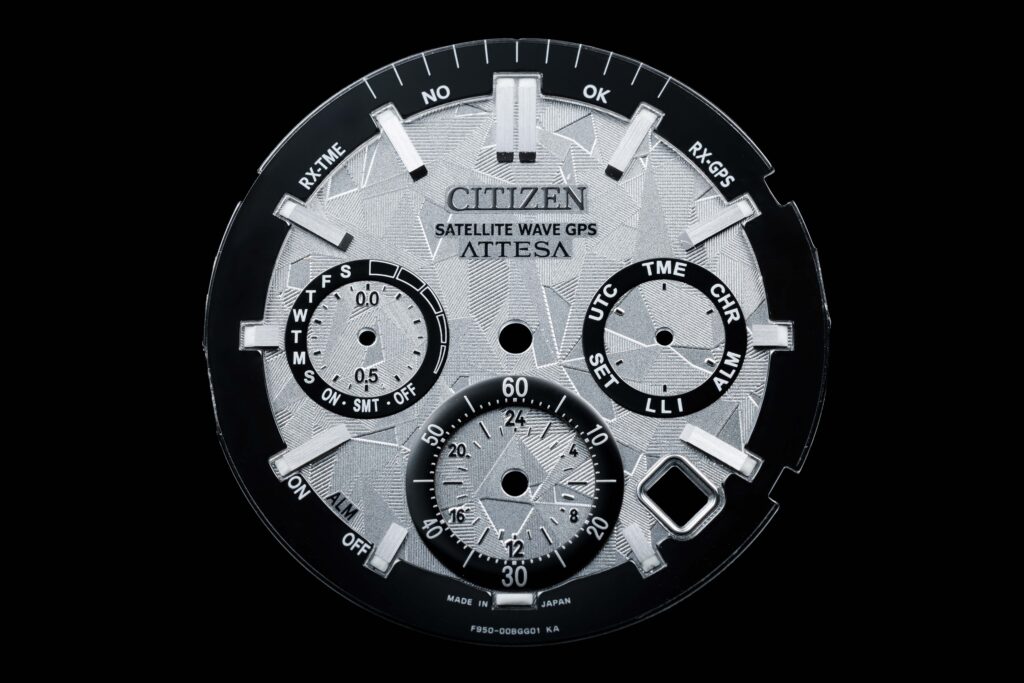
The key challenge was miniaturizing the technology, as it had primarily been used in large scale, industrial operations with the goal of optimizing efficiency for consistent, stable, maximum power generation. Citizen was able to master the use of solar cells for its watch movements not only through the design of its calibers but also through the design of its dials, which play a crucial role in distributing light to the cells to generate power. Despite the vital technical elements each Eco-Drive dial must possess, Citizen has not compromised on the aesthetics of its dials, even forging exclusive partnerships with other global Japanese brands like Fujifilm, who helped create the brand’s innovative structural color watch dials that use a pigment-free ink developed by Fujifilm, which employ microscopic structures to refract light, similar to a butterfly’s wings.
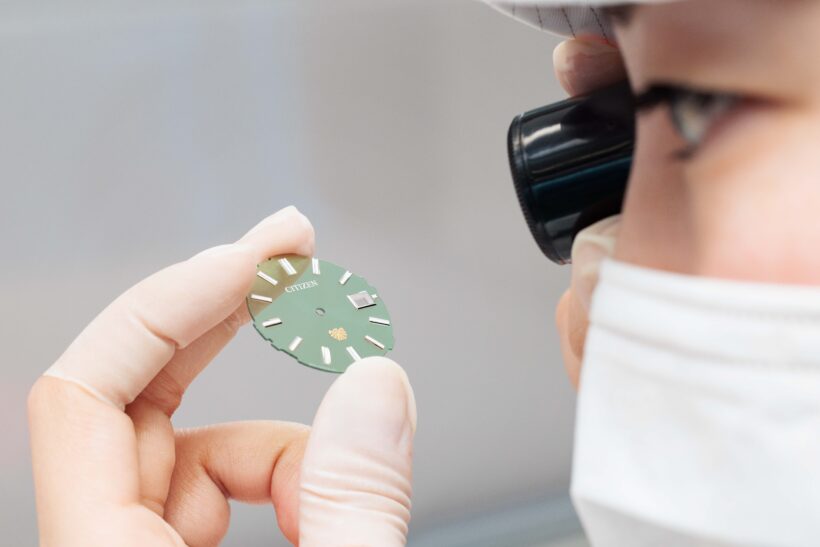
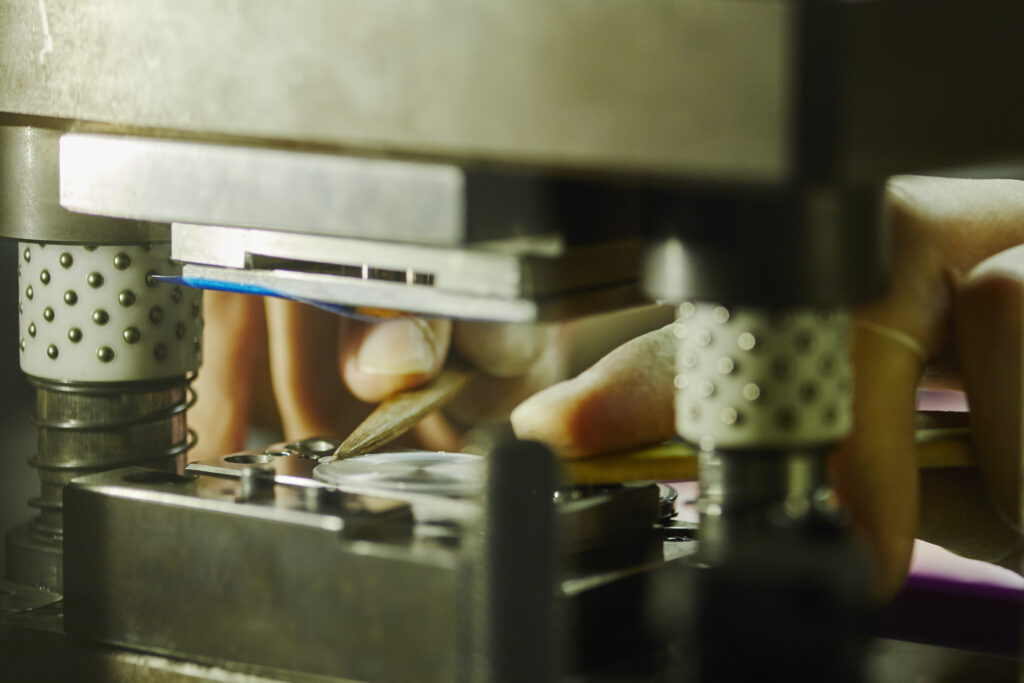
Today, every Eco-Drive dial requires an elaborate 15-step process to execute, each of which is carried out by one of the brand’s highly skilled artisans. Yes, even at Citizen’s production scale, it is a combination of its own custom-built machinery and production lines in tandem with expert craftspeople who must complete a minimum of a three-month training program before entering the brand’s workforce. “It comes back to the idea of improving day in and day out,” reiterates Yajima. “We have both the machining we have developed and the elements done by hand. We also have a history and a know-how to optimize both, and this allows us to reduce our fail rates and keep our costs low to offer products at affordable prices.” “There is more to our pricing strategy than just streamlining our production for efficiency,” Horowitz interjects. “This is part of our brand philosophy and ethos set forth by our founder,” he emphasizes. “In the watch industry, we see how prices escalate dramatically and how the market is willing to pay those prices, but at Citizen, we are never asking how much we think our customers are willing to pay for something and how far we can push those limits. Our strategy is the opposite, asking ourselves how little we can charge and still make an acceptable margin to run our business. This goes back to our core belief of delivering watches with a high value proposition for all types of citizens of the world.”