
I met Avi Telyas more than 20 years ago, when his manufacturing business, Bayside Controls, was a client of my advertising agency. We were a consumer agency—I had no idea what electromechanical automation subsystems were. To be honest, I never really understood it, but was able to fake it to make it. There was something pure and incendiary about Avi’s entrepreneurial energy that I felt would eventually transcend precision manufacturing.
Years later, I was proved right. Avi and I reconnected, and I’m now advising Makerhoods, his wildly bold yet inarguably intuitive approach to urban transformation.
Q: Some of us remember that President George H.W. Bush famously said he wasn’t into the “vision thing.” It’s fair to say you’re deep into its thingness. How would you describe what you are trying to accomplish with Makerhoods?
A: My goal is to make it far easier for urban entrepreneurs to start and operate a business. It’s that simple. I want them to be able to steadily climb up the economic ladder, build wealth for their families and join the middle class.

Sounds noble. But we’ve heard that before. What’s different?
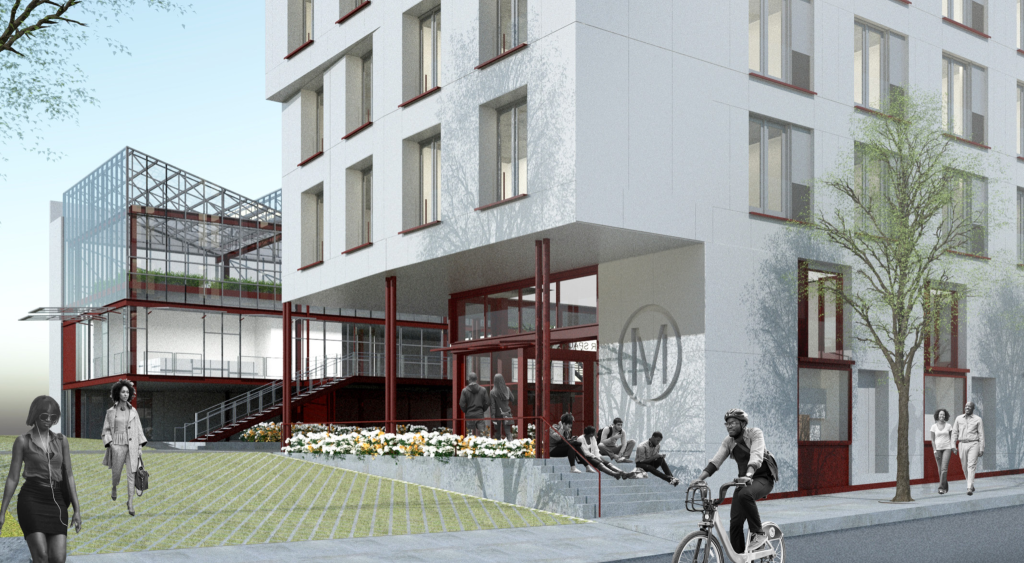
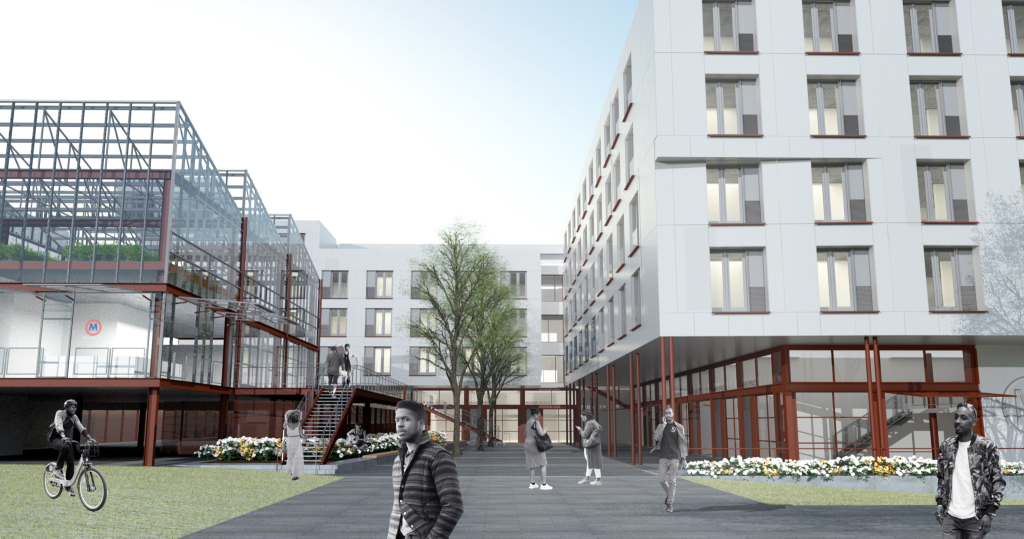
Makerhoods is an innovative concept based on the historically validated “live above the store” model, which served to lift so many families into the middle class from the late 19th century into mid-20th century America. I like to say that Makerhoods is a pre-industrial solution to post-industrial misery. We’re bringing it back with some new layers for a new era. For around $1,800 a month, a family can rent an apartment—as well as the shop below. It’s a complete work-life ecosystem. We’re also supporting these microbusinesses with online tools and hands-on training, so they can acquire basic business skills. We also offer spaces for light manufacturing. Plus, we’ve built an ecommerce marketplace to expand their reach. It’s all part of driving revenue and success.
Do people have trouble grasping this? You’re weaving together a number of parallel economic development threads into a single strand of yarn, correct?
It takes more than a single soundbite to get to the famous aha moment! But once people get it, they are blown away. And you’re right, Makerhoods straddles many worlds: real estate and economic development; urban planning and design; microenterprise; and digital systems and tools. It’s a mouthful, not exactly the “single focus” mantra taught at business schools. But when you are trying to impact people’s lives, you must think of the whole person—and then devise broadly effective solutions that amplify positive impact. To be blunt, what’s the use of a single-point focus on creating a terrific school, if a child must navigate dangerous streets to get there?
Is a “maker” just another word for entrepreneur, in your lexicon?
Not at all. We are not interested in those starting digital businesses, or those raising money from traditional venture capital, or those who graduated from a fancy-pants MBA program. There’s enough support for them. For us, anyone who manufactures the products they sell is a maker. She may design a dress, or a greeting card, or make ceramic tableware—and then sell the merchandise online or in their shops.
The direct connection between the maker and their production is central, then.
Absolutely. Modern software and machinery—which I know about from a previous business I ran—have reduced the scale that makes such endeavors economically feasible and has given rise to a tremendous growth in these small-scale manufacturers or makers. The affordability of 3D printing is just one example of an enabler of the maker economy, but there are many others.
So, all makers are entrepreneurs, but not all entrepreneurs are makers.
I’ll remember that one!
Did you call it it Makerhoods because it’s a new kind of “neighborhood”?
I want to converge the best of then and now. Nostalgic it is, but the mentoring technology and the ability of the internet to make even the tiniest of businesses scale rapidly is amazing. The chance to see your shoes being manufactured, or your cabinets being built next-door, might be nostalgic, but in the age of virtual, no-contact commerce, it’s a welcome touch of human closeness
I want to dig in some more about how Makerhoods is different than traditional approaches to fixing intractable issues of economic mobility, but first I want our readers to hear about the mountains you’ve moved in Newark, New Jersey.
Oy. You are forcing me to relive an arduous path.
Does it get less painful every time you tell it?
Not yet. But let me start at the beginning. About 10 years ago—having sold my business—I was at a crossroads and casting about for my next venture. I had always been an entrepreneur, so getting a “job” was out of the question. I was categorically un-hirable. So I decided to pursue a path that could also affect the lives of others in a meaningful way, while still being lucrative.
Doing well by doing good.
Yes, but how? I wanted something that would involve manufacturing, which I love. I bought my first business while still in my dorm room at Harvard. It was a small-scale manufacturing company. I was also drawn to the relationship between the urban environment and creating prosperity, based on my life experience. My family didn’t come here in the early part of the last century, as millions did, but in the late 1960s, from Israel. But I knew the history of immigrants, and I wondered why it had become so difficult for people to replicate their path to middle class status. Pictures of the pushcarts and shops on the Lower East Side were swimming in my head, and I asked myself: “Can we capture that intimacy between working and living that created so many ladders of opportunity?” From those musings, came Makerhoods—a 21st century, affordable live work community.
There’s your business-school pitch right there! So, what happened after those musings?
Edison was right, the inspiration was the easy part. Given that I had no experience in urban transformation, I had to establish some personal credibility. I networked, made some speeches and gave a TEDx talk. Much to my surprise, I started getting calls from various mayors inviting me to talk. But it was a long road from initial intrigue. I had to convince city mayors to let me build, and that ran up against conventional zoning, which was designed to do the opposite of our mission; they separated living and working. I had to explain what a “maker” is, I was literally taking city planners back 100 years
What about the capital side?
I had to convince lenders to fund an “unproven” concept. It was a painful Catch-22. Lenders wanted approval; cities wanted to know I had the money. My first project was in Newark—with a vision to transform the historic Krueger-Scott Mansion into our first living, breathing Makerhoods.
You chose a building with a rich history, but like many once-grand urban landmarks, it had slid into entropic decline.
The mansion is on the National Register, it had been built for a beer magnate, sold to Louise Scott, who was said to be New Jersey’s first black, female millionaire. She ran a beauty school on the first floor and lived above it. Fun fact: It is said that the building had the first private elevator in the state.
You’ve closed the live-above-the-store loop with brilliant symmetry.
Karma! Louise died in 1982, and ownership passed to the city of Newark. Where it remained until Makerhoods liberated it. And it was a long process to bring it back to live, five years from the first meeting to groundbreaking. You can imagine the layers of bureaucracy! Mayor Ras Baraka and the people in government were great, it’s just that the process did not contemplate something as innovative as Makerhoods. I had to work with them to rewrite zoning laws. But we made it and are planning to open in December of 2021.
Going to back to funding side, how did you raise the money?
It’s better to ask where didn’t I raise money? I looked into every possible pocket—municipalities, for-profit companies and NGOs. Beyond the bank of Avi, I secured funding from HUD, the State of New Jersey, the City of Newark, the Local Initiative Support Corporation (LISC), New Jersey Community Capital (NJCC), Wells Fargo and Prudential Life Insurance Company. Our closing calls may have been a record; 31 lawyers were involved (and you know how hard it is to put a lawyer on mute). Building this capital stack was one of the most difficult things I ever did—and credit goes to all these bankers and community lenders. They stayed the course for two-plus years, even during COVID, as we fought to close the transaction in the face of terrific uncertainty. Even as all investors were reassessing their exposure, they recognized the long overdue obligation of fulfilling our mission.
Let’s going back to our earlier conversations about well-intentioned but failed programs of the past.
We’ve been trying to fix social messes [like] this since Johnson’s war on poverty in the ‘60s. By some accounts, we poured over $23 trillion dollars into the effort, and the poverty rate has not budged until just this year, in any meaningful way. There are still 45 million Americans living at or below the poverty level. Not acceptable.
The “war” metaphor presumes a single enemy. When I think of your approach, versus the top-down, destroy-the-villain model, I would describe it more holistically, as putting the individual at the center of the solution—a personal, intimate, one-to-one solution.
That’s a good description. These are first-generation entrepreneurs who have no experience, no business training, no personal networks and no social capital. They need a lot. Here’s an example: Back in February, our VP of growth, Kristen Lopez, sat down with one of our makers who creates lovely gift cards. She was selling $2,000 a month. As part of our hands-on mentoring, Kristen worked out a plan to more than triple her business. Our maker gasped at the outrageousness of the dream. Well, guess what? She is now selling $20,000 worth of merchandise a month—and growing.
That’s through a combination of her retail operation and your Makerhoods ecommerce platform. Is that platform similar to Etsy?
Yes and no. It’s true that we have an online marketplace to showcase our makers’ products and tell their stories. But the similarities end there. We work personally with each maker to create a plan with measurable outcomes, and a proprietary mentoring methodology we call the Business Bullseye. It integrates the key functional areas of a business, like finance, marketing and operations. Equally important is the training in-personal initiative. Many first-time makers were never exposed to an entrepreneurial lifestyle, had no relevant dinner table conversation to absorb, and must learn the mindsets of resiliency, of proactive and persistent behaviors that are crucial to success as actual business skills. Learn to earn, we say.
And you believe this approach can enable Makerhoods to make rapid and profound changes, not baby steps…fair to say?
Yes, we can make dramatic changes in the lives of our maker clients, but not always in the most obvious way. Not every business will succeed, but I believe every person will succeed. Many of our makers are first-time entrepreneurs, this is their first foray into self-employment and whether this business works or not, they will learn, they will acquire skills and, most important, they will be role models for those in the community. Especially the young people.
What are your thoughts on the gentrification debate and where Makerhoods fits?
Think you can have both—new residents and success for original residents. It is the basic essence of employment-oriented development, or EOD.
EOD puts less of a focus on affordable housing?
There are better ways to positively impact a community. Take for example the Mott Haven renewal project in the South Bronx. Developers are being awarded variances for height and density in exchange for 20 percent affordable housing. I get it, we need affordable housing. However, imagine if NYC mandated that developers offer all of the commercial spaces within their buildings—and some more beyond that—at affordable rates to local micro-entrepreneurs. That would create a true win-win situation. The extra dollars brought into the community would be earned by Maria’s Espresso Bar and not Starbucks, by Eddie’s sandwich shop and not Subway and, most poignantly, by Lucy’s general store and not Dollar General. These income flows would go to local residents, so they can live in the very buildings which they initially feared. Cities have focused on housing for too long. It’s time to focus on jobs.
Let’s turn to the impact of COVID-19. You’ve seen the data about hundreds of thousands of people fleeing cities, COVID refugees. Long-term, or even mid-term, are you optimistic or pessimistic about the future of cities?
It depends on whose future you are referring to. Aristotle said, “The city-state comes into being for the sake of living, but it exists for the sake of living ‘well.’”
The well-to-do will continue to enjoy the many layered cultural treasures of cities; the current COVID reassessment can inspire us to rethink who the city is for. We must rebuild with the least fortunate in mind, not by forcing affordability alone—or zoning neighborhoods into a slow death—but by re-designing cities to offer opportunity for self-employment through affordable living and affordable commercial space. I want working families to live among the affluent in a symbiotic economic and social relationship that fosters social cohesion. So yes, I am optimistic because we have a chance to not just respond to the coronavirus, but to the inequality virus as well.
You want a new generation of urban fertility.
I love engineered ferment. Local government must create a much larger inventory of affordable commercial space for aspiring entrepreneurs. It is only by nurturing this primordial soup of hustlers that new companies and a new generation of wealth can be birthed.
Were you influenced or inspired by any individuals—say Jane Jacobs or Lewis Mumford?
Neither. Without casting aspersions on those who were focused on the human scale of cities, my urban planning hero is Patrick Geddes. He was the designer/planner of my hometown of Tel Aviv, a world heritage city with over 4,000 original Bauhaus buildings. He created a walkable, though highly dense, city with dynamic opportunities for commerce, civic pride, green spaces on every block and, above all, a priority on the health and happiness of all residents.
Tell me about the specific neighborhood you grew up in. Are you trying to replicate it or reinvent it or run from it?
I grew up in one of the poorest slums of Tel Aviv. We lived above a cabinet maker’s shop. We had sawdust in our laundry and, many nights, in our dinners. I was literally in the middle of a tiny industrial park, filled with random, small sale artisans from metal-working shop to a potato chip factory. So no, I am not running away from it. I am embracing it, just with better plumbing.
Do you think the next generation of urban mayors and municipal leadership will be more open to your ideas?
I get calls constantly from local leaders who want us to create Makerhoods in their towns. They finally recognize we can use urban land in the true service of their residents and boost employment and incomes at the same time. I saw a study that said 15 percent of the developed land in America is either vacant or abandoned. Just think of Detroit, Baltimore, North Philadelphia. There are so many assets there not being used properly. Think of the underutilization of our workforce.
What cities do you have in mind for the next few Makerhoods?
Our next project is in Paterson, New Jersey, America’s first maker community, and we have a few more in the pipeline.
Any last words to close us out?
Cities are infinitely flexible organisms. We just have to push hard enough to make them bend toward the future.