It would take more energy than all the world’s houses will consume in 2100 to power a fledgling technology that captures enough carbon dioxide from the air to limit global heating at 1.5°C, according to British multinational oil company Shell.
In a Shell scenario where the world limits global warming in line with the Paris climate agreement, energy demand for direct air capture (DAC) technology rises “from about nothing today to almost 66 exajoules in 2100,” reports Bloomberg.
“That would be more than the energy needed to heat and power all the world’s homes by then,” the news agency adds. [It isn’t clear how much energy efficiency or fuel switching is built into that comparison, but 66 exajoules is still a huge amount of energy—Ed.]

Bloomberg cites Sky 2050, the more optimistic of Shell’s two latest energy security scenarios [pdf], in which long-term climate security is the priority embraced by all. In this pathway, DAC with carbon storage (DACCS) deployment is in full swing by 2040, absorbing more than five billion tonnes of carbon dioxide per year. The united efforts of politicians, the public, and the private sector achieve net-zero by 2050, and although 1.5°C is breached sometime mid-century, collective action brings temperatures back down to 1.24°C by the century’s end.
In Shell’s bleaker Archipelagos pathway, energy security fears trump climate concerns, with no apparent reference to the potential of less expensive solar and wind to meet both objectives. Efforts at collective action fall by the wayside, and DACCS is virtually abandoned until 2080. “The global average surface temperature is still rising in 2100 but is leveling off at around 2.2°C as emissions close in on net zero,” Shell projects.
That’s after years of hearing that 1.5°C is the guardrail for averting the worst effects of climate change, and that every 0.1° between 1.5 and 2.0°C will be measured in lives saved or lost.
These models come nearly four years after researchers at Imperial College London’s Grantham Institute for Climate Change wrote in a Nature Communications study that in 2100, DAC machines could needed 300 exajoules of energy annually, or 25% of total global energy demand.
“To put it another way, it would be equivalent to the current annual energy demand of China, the United States, the European Union, and Japan combined,” Carbon Brief wrote at the time.
According to the Grantham Institute researchers, DAC—still at an experimental stage but generally involving an energy-intensive process where the greenhouse gas is “captured” using chemical “sorbents”—could “allow a reduction in near-term mitigation effort in some energy-intensive sectors that are difficult to decarbonize, such as transport and industry.”
Work by the Intergovernmental Panel on Climate Change (IPCC) maintained that negative emissions technologies like DAC willbe required to keep global heating below 1.5°C, but warned that such technologies must never be deployed as an alternative to emissions reductions. The IPCC’s Summary for Policymakers issued last month made no mention of DAC as a realistic element of a decarbonization plan; it identified solar, wind, and methane capture from the fossil industry as the quickest, most cost-effective ways to drive down emissions.
At the time of their study, the Grantham researchers did conclude that DACCS “reduces the marginal abatement costs to achieve the climate target by between 60 to more than 90%.” But there remained uncertainty about whether it is possible to scale DAC technology fast enough to capture the necessary target of 30 gigatonnes of carbon dioxide per year. A 2019 study found that this would require building 30,000 large-scale DAC factories. “For comparison, there are fewer than 10,000 coal-fired power stations in the world today,” Carbon Brief said.
“The risk of assuming that DACCS can be deployed at scale, and finding it to be subsequently unavailable, leads to a global temperature overshoot of up to 0.8°C,” the study authors warned.
Shell’s scenarios do not address the problems of scaling DACCS, nor the danger of overshoot.
And such dangers should not be discounted, Carbon Brief deputy editor and climate and energy policy editor Dr. Simon Evans told The Energy Mix in an email: “The evidence suggests it would be risky to assume we will be able to deploy lots of direct capture at low cost.”
That risk could be minimized by cutting emissions more quickly and reducing the need for carbon removals, Evans added. “For example, by tackling energy demand as well as supply.”
Despite the unknowns, there’s major interest in DAC, Bloomberg reports, with governments as well as the private sector heavily invested in its success. The Biden administration has a new US$3.5-billion DAC program, and fossil mammoth Occidental Petroleum is planning a 2024 launch of the world’s first million-tonne DAC plant, known as DAC1, in the Permian Basin, the massive U.S. fracking fields in Texas and New Mexico.
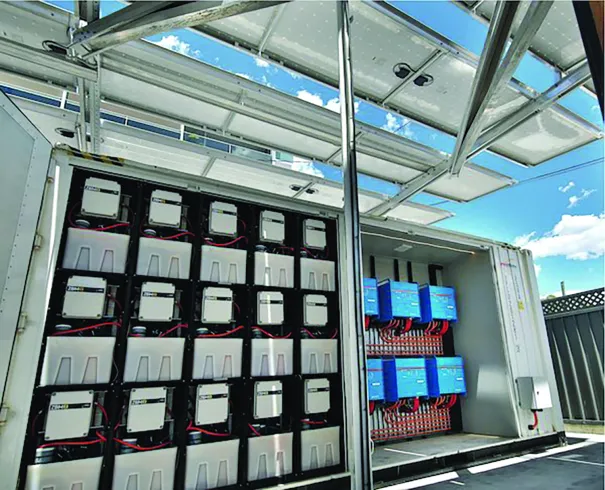
1PointFive, the Occidental subsidiary developing DAC1, has pledged that all its DAC plants “will be powered by zero-emission energy sources, such as wind, solar, or NET power.”
According to Net Power (another Occidental subsidiary), “NET power” is produced by burning natural gas in the presence of oxygen, then using the resultant carbon dioxide in a “turbo-expander” to produce electricity. It is then either pressurized for export or recirculated. Located as it is in the Permian Basin, DAC1 will have plenty of natural gas close at hand.