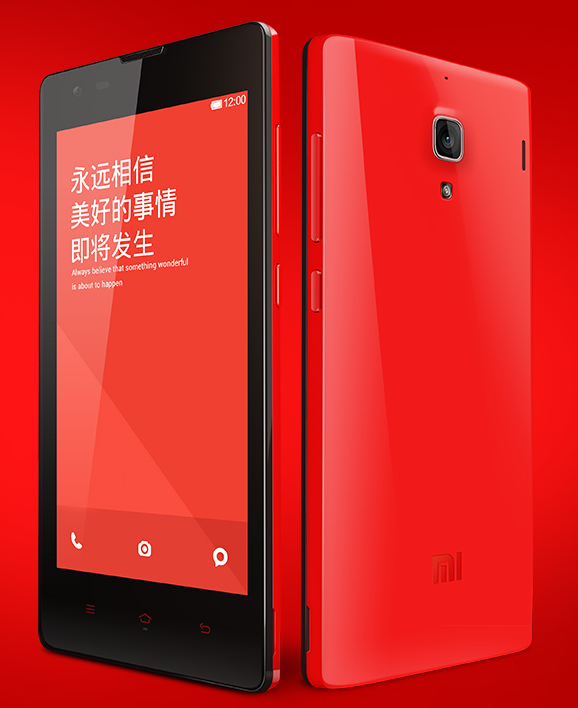
 There’s an interesting report out saying that up-and-coming smartphone maker Xiaomi is developing its own mobile operating system (OS), becoming the latest Chinese player to try to muscle in on a market now dominated by three U.S. companies—Apple, Google, and Microsoft. I’ll admit there have been so many similar initiatives by both Chinese hardware and Internet companies these days that it’s hard to know which of the campaigns are genuinely new systems and which are just variants of Google’s popular and free Android OS.
But at last one expert is saying that telecoms equipment giant Huawei and Taiwanese smartphone maker HTC are the two Chinese firms best positioned to succeed in creating a successful and completely new OS for smartphones. I would add my own view that this new Xiaomi initiative also looks like a possible contender if it’s really happening, since the company is quickly showing itself to be a strong innovator. Such an OS could be a central plank to Xiaomi’s future vision of diversifying beyond smartphones to create a broader ecosystem of products like tablet PCs and Internet TVs.
All of that said, let’s take a look at the latest news bits that include a microblog post on the Xiaomi OS as well as predictions in another separate post from a top official at the China Mobile Internet Industry Alliance. According to media reports, Xiaomi, whose smartphones now all use Android, has established an internal team that has been developing its own unique OS for the last five months. The report admits that sourcing for the news is relatively shaky, coming from a microblog post by a person who claims to have gotten the news from a Xiaomi employee.
While that kind of sourcing isn’t exactly very solid by journalistic standards, the rumor does seem consistent with Xiaomi’s broader strategy of moving beyond its core line of mid-range smartphones. The company recently launched an Internet TV product, and is rumored to also be exploring initiatives in tablet PCs and gaming consoles.
The addition of its own OS would help to differentiate Xiaomi’s products from the rest of the crowd, and could also be better suited to the product ecosystem that the company is hoping to create. Given its relatively strong record for execution in its first two years as a consumer brand, combined with its strong financial resources after recently raising $2 billion in new funds, I would say this new initiative has a reasonable chance for success if it’s really happening.
Meantime, let’s look at another blog post from Li Yi, executive vice president of the China Mobile Internet Industry Alliance. In the recent post, Li says that Asia’s most promising homegrown mobile OS initiatives are coming from Greater China and Korea. He gives specific mention to Huawei founder Ren Zhengfei and and HTC’s Chairwoman Cher Wang. One major caveat to this is that the microblog post I saw was actually a repost from Richard Yu, the talkative chairman of Huawei’s devices division.
As I’ve said above, customized mobile operating systems and smartphones have been in the Chinese headlines quite a bit this past year, with names like Alibaba, Baidu, and China Unicom all announcing their own major initiatives in the area. But I do suspect that most of those systems are variants of Android, and that the Huawei and perhaps this new Xiaomi initiative could represent truly new products. Whether the world is ready for a fourth major mobile OS is another question; but if I had to place bets, Huawei and Xiaomi certainly seem like strong contenders to create such an OS due to their strong bets on the mobile sector and focus on product development.
Doug Young lives in Shanghai and writes opinion pieces about tech investment in China for Techonomy and at www.youngchinabiz.com. He is the author of a new book about the media in China, “The Party Line: How the Media Dictates Public Opinion in Modern China.”
Media + Marketing
Xiaomi Joins Mobile OS Field
There’s an interesting report out saying that up-and-coming smartphone maker Xiaomi is developing its own mobile operating system (OS), becoming the latest Chinese player to try to muscle in on a market now dominated by three U.S. companies—Apple, Google, and Microsoft. I’ll admit there have been so many similar initiatives by both Chinese hardware and Internet companies these days that it’s hard to know which of the campaigns are genuinely new systems and which are just variants of Google’s popular and free Android OS.