

A year ago, luxury travel ground to a halt, forcing the industry to a distressing stop. Against the background of a global pandemic and an American reckoning around issues of racism and inequality, leaders emerged as advocates not only for specific destinations, but also for a reimagined kind of travel, one combining sustainability and social consciousness with the pampering expected at the world’s best hotels and resorts. From Rwanda to the Galapagos, in villas and spas, Worth spoke with the women remaking travel for a post-COVID era.
The Galapagos’ Fiercest Protector
In 1969, 16-year-old Quito native Dolores Gangotena de Diez, three friends and their biology teacher boarded a cargo ship bound for the Galapagos. After several dull days crossing the ocean amid sacks of sugar, rice and flour, they were dispatched into a hard wooden dinghy, gasping when a sea lion jumped right in with them.

“We were so scared, but the sailors said, ‘don’t’ worry, they’re tame.’ That was love at first sight for me,” says Gangotena de Diez, speaking with an enthusiastic, clipped pace during a Zoom call from her native Quito, Ecuador.
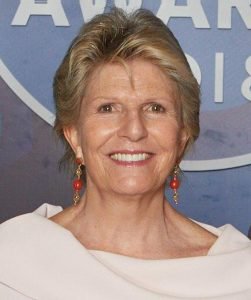 The encounter changed Gangotena de Diez’s life and influenced the course of luxury tourism in the volcanic archipelago. As a young woman, she returned several more times to the remote islands, which were then hardly traveled and had a total population of about 2,300. On a voyage with her new husband Eduardo, the couple hatched a plan to offer the naturalist adventuring they loved, but with the sorts of amenities—private bathrooms, trained chefs—that small boats weren’t offering. Their company, Quasar Expeditions, debuted three intimate yachts between 1986 and 1994, later selling them to focus on the 32-passenger, 200-foot-long Evolution, and the 16-passenger Grace, an elegant 1928 ship on which Princess Grace Kelly once honeymooned. Quasar is a family affair: Gangotena de Diez’s three sons Francisco, Fernando and Eduardo are all deeply involved.
All along, Gangotena de Diez, a member of the Charles Darwin Foundation, has championed sustainability, not only in nature, but in commerce. She buys as much as possible of her ship’s materials locally, is working to create a hospitality training school in the islands and introduces her clients to local craftspeople throughout Ecuador.
“Once you see the Galapagos, you see how badly we’ve treated so much of the planet. We need to learn to live better, to travel better, and it’s our responsibility to start teaching our clients that they need to change the way they travel. They need to become less disposed to creating waste,” she says.
As she and her family come out of the “nightmare year” of the pandemic, during which they had to furlough their staff, Gangotena de Diez remains hopeful. Ecuador has committed to vaccinating all of its tourism workers by the end of May, vaccinated Americans are booking trips again, and Gangotena de Diez has rehired her beloved staff.
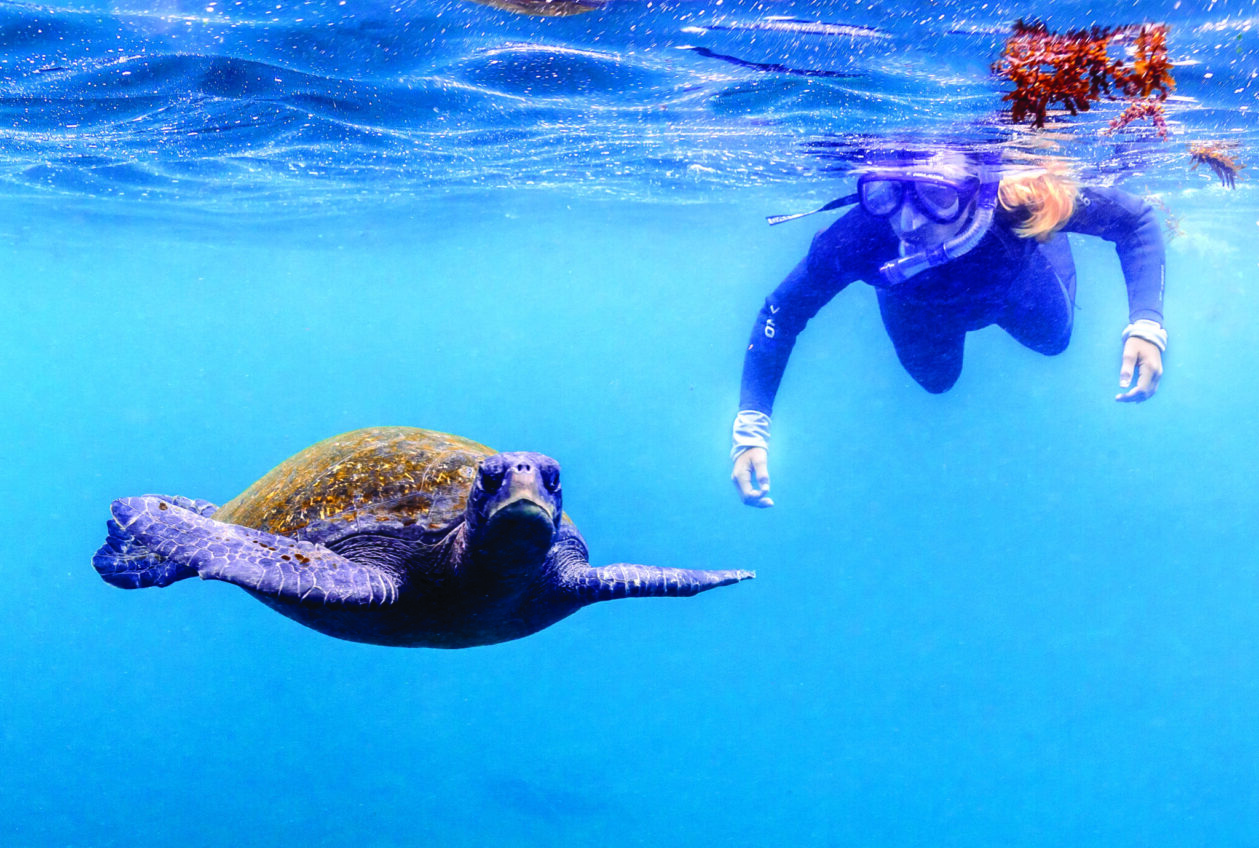
“For the Galapagos islands, it’s a been a blessing to have a break from the visitors. There’s underwater life now like you wouldn’t believe,” she says, sounding like the excited 16-year-old who fell in love with a sea lion. “Whale sharks were seen in the northern part of Santa Cruz! Before, they were only on the islands of Wolf and Darwin.”
The Humboldt Current, which runs south to north, is filling the waters with squid and shrimp, a bounty richer than Gangotena de Diez has ever seen.
“Instead of feeding 280,000 people that typically enter the Galapagos every year, they’re now feeding about 200,” she says.
The company’s third boat, the nine-cabin Conservation, is set to debut in 2022. Gangotena de Diez has vowed to reserve one cabin, free of charge, for scientists from the Charles Darwin Foundation.
“We want to allow the scientists to go anywhere in the Galapagos at no cost, and it’s mutually beneficial; without protecting this gorgeous nature, we’ll have no business and no Galapagos,” she says.
The Industry Changemaker
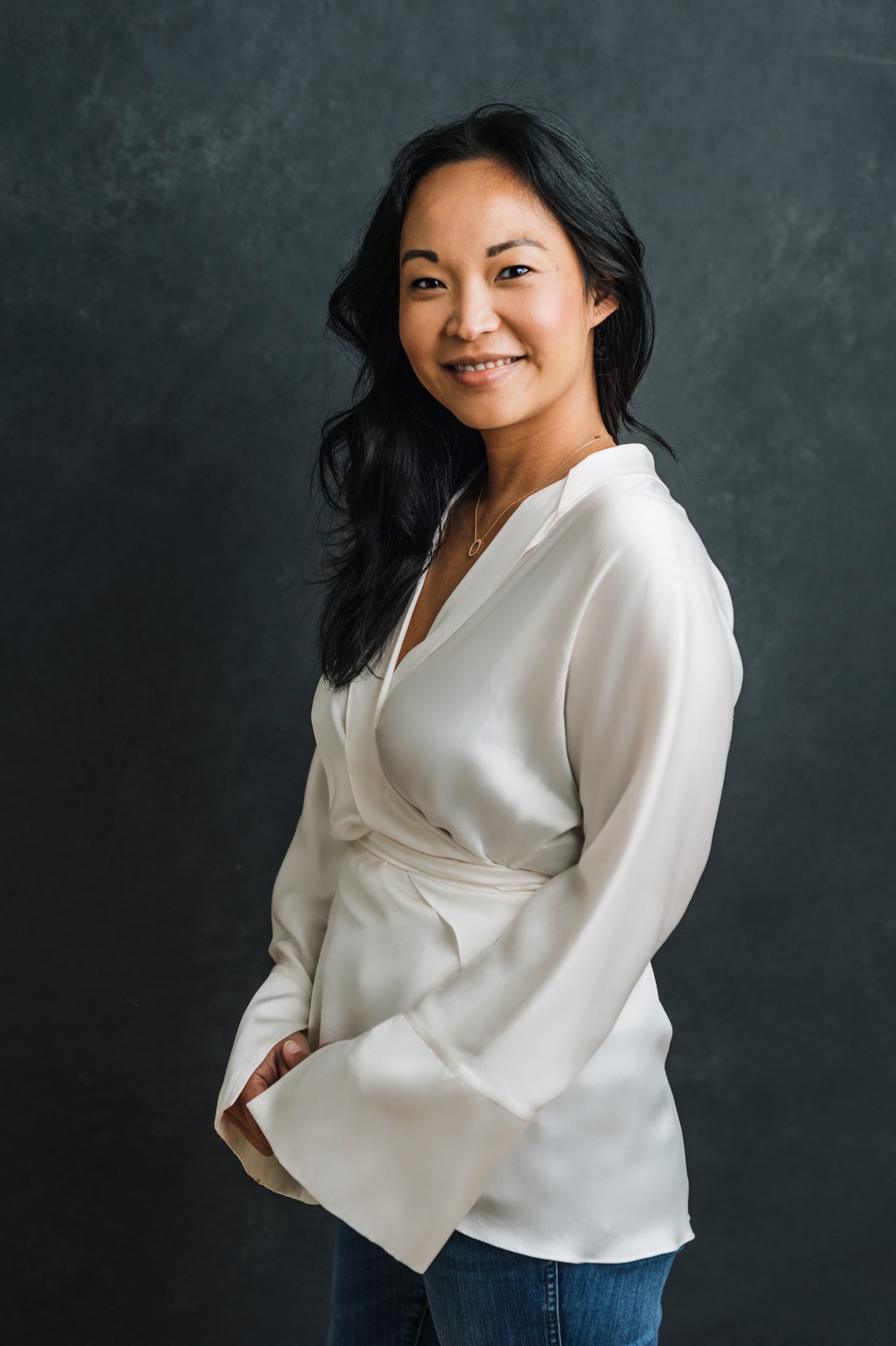
Erina Pindar, 36, a youthful veteran of high-end hospitality, wants her gilded profession to look very different, and the sooner, the better.
“The luxury travel space is overwhelmingly white. I sit on several boards where every time I look around the table, I’m either the only person of color, the youngest person, the only woman, and sometimes all three,” says Pindar, the Asian-American managing director of boutique travel agency SmartFlyer.
Spurred by last May’s murder of George Floyd and the social turmoil that followed, Pindar created EQTR: Equity in Travel, a yearlong program matching BIPOC college juniors and seniors with executives at companies like JetBlue, the Four Seasons, COMO Hotels and Resorts and Marriott International, as well as in public relations and media.
“We’re opening up our ‘black book’ to students and saying, ‘we see you’re talented, what do you want to do and how can we get you there?’” says Pindar, who’s currently recruiting applicants for the first class, which begins this September.
Among the skills Pindar hopes to impart: networking, storytelling and the importance of pitching business and making compelling presentations. Unlike many programs for aspiring college students, EQTR includes a fully paid summer internship.
“We work so hard to build talents, and we want to make sure they have places to rise,” she says.
The Woman Lifting Women in Africa
Zimbabwe-born, New York-based Deborah Calmeyer carries the weight of the African continent on her shoulders.
“I’m trying to use luxury travel as a medium to help African women in tourism and, consequently, upping the conservation that’s going hand in hand with it,” says Calmeyer, whose tour company ROAR offers some of the most luxurious and thoughtful trips to Africa, all the while empowering local women and supporting animal and environmental conservation. “I live by that African saying ‘if you educate a man, you educate an individual. If you educate a woman, you educate a nation.’”
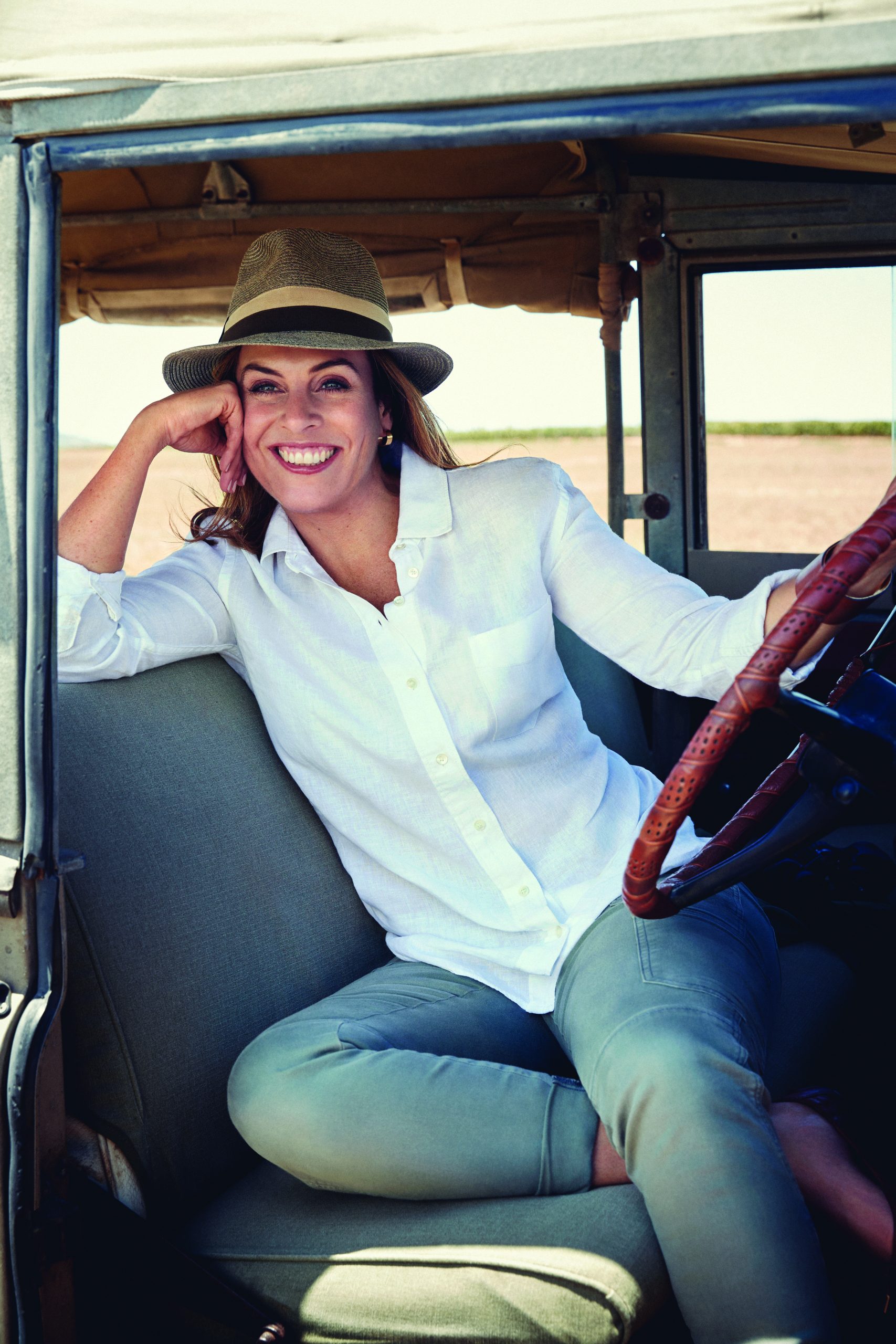 Through her 16-year-old company, Calmeyer supports the South African College for Tourism, a women’s college, and Kenya’s only all-female anti-poaching team. She also partners with Proof of Impact to calculate carbon offsets for all of her clients and to fund freshwater projects in Kenya and rhino protection in Botswana. This past year, as travel came to a halt, Calmeyer kept her 25 Africa-based employees on the payroll, knowing that if she didn’t, their families would face disaster.
And, as more Americans—the bulk of her clientele—become vaccinated, bookings are back up, and Calmeyer’s hopeful. In March, she led her annual Women’s Empowerment Retreat, or what she calls “TEDWomen goes on safari.”
“We have women bush pilots, women trackers, women anti-poachers, women leading the lodge, women as sommeliers, executive chefs,” she says. “It’s important to show that they can do these jobs and to listen to the women working in conservation. They never get to tell their story, they’re kind of invisible, but they’re doing incredible things.”
Among those sharing their stories: women from the City of Joy, a program to support rape survivors in Congo, and conservationist Dr. Lucy King, who has devised a method to stop villagers from killing the elephants who used to eat their crops. By circling farms with beehives, King keeps bee-averse elephants away and helps villagers generate income from the honey.
“We engage our women travelers. We never ask for money, but these women have become major donors and are supporting African women’s education,” Calmeyer says. “The impact is exponential.”
COVID forced Calmeyer to come up with new ways of exploring her beloved Africa, and she launched ROAR Villas and ROAR Privé, which provides private jet and private lodge travel.
Her greatest coup, though, will be in August, when she inaugurates “the greatest and safest safari on earth.” Using an A319 Emirates plane that’s been reconfigured from carrying 150 passengers to hold just 10 first class cabins, ROAR’s Emirates Executive Private Jet trip will take five couples to four iconic destinations: Victoria Falls, Botswana Okavango Delta, the Great Migration in Kenya and the gorillas in Rwanda.
“Everyone’s vaccinated. We’re in a bubble, we have exclusive use of each camp. At airports, we have complete privacy coming in and out of countries,” says Calmeyer. “People are going to be traveling by private jet more than ever, so we are showing how to do it safely and how to have a positive impact.”
The 12-day trip costs $125,000 per person, and carbon offsets will be directed towards a variety of philanthropic initiatives, including the installation of 69 solar panels in Rwandan villages and the funding of freshwater access for 3,000 Kenyans.
For Calmeyer, every trip advances her goal: promoting and growing a network of sophisticated travelers who will sustain African women’s livelihood and the health of the African ecosystem, even when it’s an admitted struggle.
In March, as ROAR marked a year of the pandemic with its women’s empowerment trip, Calmeyer found herself navigating not only her usual responsibilities—giving interviews with anti-poachers, coordinating luggage pick-ups, rescheduling flights—but also the powerful reactions of her clients.
“Africa makes you feel so vulnerable and so free. You’ve got the emotions of women who haven’t traveled in a year, and there’s tears day and night. I am the central point for everyone, and it was tough to deliver,” she says. “But then you get amazing texts from the men and women on the ground: ‘Thank you for this. I’m going to keep my job.’ ‘Thank you for giving us hope.’ ‘I’m going to keep being an anti-poacher.’ Then it’s like: Yeah, I’m going to do this for the rest of my life.”
The Wellness Whisperer
What will the future of wellness look like? Likely a hybrid of technology and touch, says Anna Bjurstam, who oversees the Six Senses Hotels’ wellness for its resorts and spas in 19 countries. In the past year, Bjurstam and her team have played a kind of spa whack-a-mole, monitoring COVID-dictated closings, reopenings and sometimes closings again of properties as far flung as Bhutan, Fiji and Portugal.
Bjurstam, who has worked in the wellness industry for decades, quickly adapted to the shutdowns, creating online content with experts in longevity, brain health and meditation, and investing in the advanced biohacking technologies her guests are craving.
“Where our spas are open, they’ve never been so busy. People are longing for touch, and we’ve also seen a huge uptick in interest for our integrative screening and biomarker tests,” she says.
Six Senses spas are now testing for 35 biomarkers ranging from oxidative stress to heart function and tissue oxidation. When it opens in July, Six Senses Ibiza will have a longevity clinic, where a doctor will use blood and saliva-based tests to gauge guests’ “real age” and “pace of aging” and make a plan for how they can slow that pace down.
The Marketing Strategist
Tina Edmundson, global brand and marketing officer for Marriott International’s 7,600 properties, possesses the daunting role of selling global gallivanting in an unprecedented pandemic—and she does so unflappably.
“Our industry has been disproportionately impacted by COVID and the effects will be long lasting. It’s also unpredictable, because the virus and vaccination situation vary within parts of the world and within countries,” she says. “Still, we are optimistic because we can see the light at the end of the tunnel. Our focus is really on inspiring travel.”
To do that, Edmundson says, Marriott’s luxury brands are creating the kind of private spaces sophisticated travelers want right now, whether it’s a family renting an entire floor at the Ritz-Carlton Naples, making the hotel’s club lounge into their exclusive living room or booking out 10-bedroom buildings at the St. Regis Bahia Beach. The company is also increasing its sustainability practices.
In a year of “breaking paradigms,” Edmundson says she and her colleagues embraced the volatility. Marriott’s high-end clients, she says, are “much more living in the now” and no longer relegating long-desired trips to far-off bucket lists.
For more stories from our recent travel issue, check out the digital magazine here.