
 The second year of the Power 100, the editors at Worth created a sidebar feature to our list of the most powerful men and women in global finance. We called it Power Outage, which you can probably figure out: If we
In 2017, for example, we reported on Preet Bharara, the U.S. attorney ousted by Donald Trump for not kissing the ring. And we looked at Anthony Scaramucci, the White House communications director

But this year, we’re taking someone
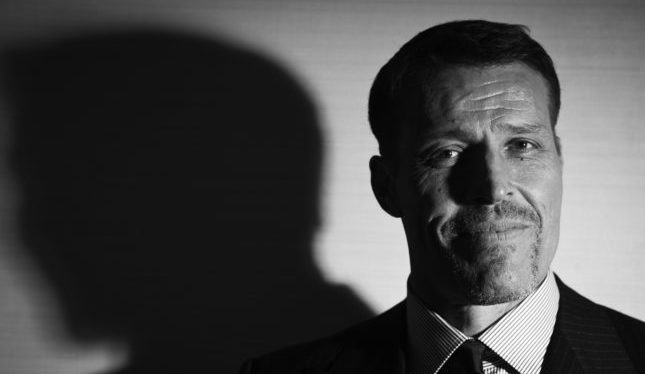
Life coach and entrepreneur Tony Robbins has been on our Power 100 since 2015. If you don’t know Robbins well, you might find him an odd choice, but we had our reasons. Financial empowerment has always been a part of Robbins’ mantra, and in 2014, he came out with Money: Master the Game—7 Simple Steps to Financial Freedom.
Over the next four years, Robbins stayed on the list as he expanded his foothold in the financial community. He forged partnerships with Peter Mallouk, president and CIO of the huge wealth management firm Creative Planning, and Tom
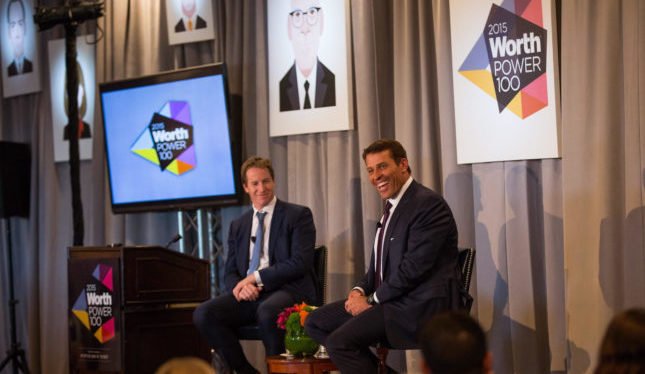
Worth too had a relationship with Tony Robbins. He and I held an onstage conversation at our Power 100 summit in 2015; in 2018, Robbins was our guest at
I wasn’t sure what to expect from Robbins before we met; I’m old enough to remember him from the days of his infomercials, and I was skeptical. But I found him warm, passionate and real; in my admittedly limited experience, Tony Robbins in private was consistent with Tony Robbins in public, and that’s not something you can say about a lot of powerful people. So

This year, though, we are taking Robbins off the Power 100. And,
Beginning in May, the website BuzzFeed has published five (so far) investigative articles alleging that Robbins has committed sexual misdeeds and mistreated some people who’ve attended his seminars and conferences. BuzzFeed has also reported that he used
Some of what BuzzFeed reported reads more like clickbait journalism than a serious examination of Robbins’ record. The allegation about Robbins using the n-word, for example, is true but misleading; it’s based on a video in which Robbins is
BuzzFeed also makes a big deal about the fact that Robbins has expensive lawyers (given his wealth and fame, he’d be an idiot if he didn’t) and that he doesn’t let participants at his events film them. But there’s no need for a sinister innuendo here. Would you want to be at a self-help conference and have the person next to you livestreaming?
Still, much of what BuzzFeed reported deserves serious consideration. Reporters Katie J.M. Baker and Jane Bradley (no relation to me) found nine “former staffers and followers” who “recounted incidents in which Robbins made sexual advances or was naked in front of them.”
I wish Baker and Bradley had used the word “alleged” instead of “recounted,” and note the bogus implication of that word “followers”—that Robbins is a cult leader. (He isn’t.)
Still, nine is not a trivial number, and the accusations are ugly: that Robbins touched women’s breasts without the women’s permission, that he exposed himself to staffers, that he pressured women at his events to have a sexual relationship with him. If it means anything—and I recognize that,
So
There’s no question: Robbins has taken some hits.
Others have acted. In May, Peter Mallouk announced the severance of his partnership with Robbins, though he claimed the break had been in the works well before BuzzFeed published. Simon & Schuster cancelled a book that Robbins and Mallouk were
There’s no question: Robbins has taken some hits. And in my
But personally
How should we balance the pain Robbins allegedly inflicted against the good he has done? And what actions should we take once we arrive at our own personal Jesus on the matter?
So let’s work with the possibility. How, as individuals, should we address these allegations? Robbins has helped countless people—if you don’t believe me, just mention his name to a group of strangers, you’ll invariably find one who swears that his or her life
In this case, that’s a problem for me personally. But whether the debate involves Tony Robbins or Al Franken or Aziz Ansari or any other men who may have acted inappropriately but not monstrously (no one is comparing Robbins to Harvey Weinstein or Jeffrey Epstein), the questions of what we believe, how we judge, how we react and when or whether we forgive—well, that’s everyone’s problem.