

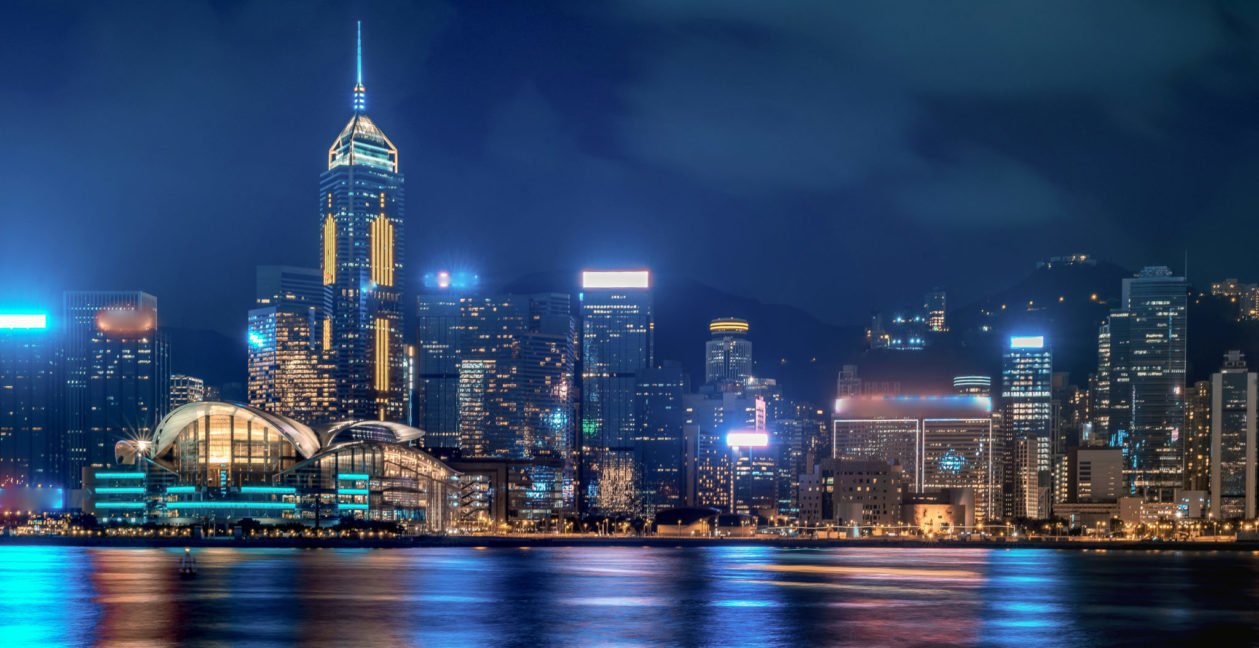
NEW YORK – Three of the world’s more affluent cities have erupted in protests and unrest this year. Paris has faced waves of protests and rioting since November 2018, soon after French President Emmanuel Macron raised fuel taxes. Hong Kong has been in upheaval since March, after Chief Executive Carrie Lam proposed a law to allow extradition to the Chinese mainland. And Santiago exploded in rioting this month after President Sebastian Piñera ordered an increase in metro prices. Each protest has its distinct local factors, but, taken together, they tell a larger story of what can happen when a sense of unfairness combines with a widespread perception of low social mobility.
By the traditional metric of GDP per capita, the three cities are paragons of economic success. Per capita income is around $40,000 in Hong Kong, more than $60,000 in Paris, and around $18,000 in Santiago, one of the wealthiest cities in Latin America. In the 2019 Global Competitiveness Report issued by the World Economic Forum, Hong Kong ranks third, France 15th, and Chile 33rd (the best in Latin America by a wide margin).

Yet, while these countries are quite rich and competitive by conventional standards, their populations are dissatisfied with key aspects of their lives. According to the 2019 World Happiness Report, the citizens of Hong Kong, France, and Chile feel that their lives are stuck in important ways.
Each year, the Gallup Poll asks people all over the world, “Are you satisfied or dissatisfied with your freedom to choose what you do with your life?” While Hong Kong ranks ninth globally in GDP per capita, it ranks far lower, in 66th place, in terms of the public’s perception of personal freedom to choose a life course. The same discrepancy is apparent in France (25th in GDP per capita but 69th in freedom to choose) and Chile (48th and 98th, respectively).
Ironically, both the Heritage Foundation and the Fraser Institute rank Hong Kong as having the most economic freedom in the entire world, yet Hong Kong residents despair of their freedom to choose what to do with their lives. In all three countries, urban young people not born into wealth despair of their chances of finding affordable housing and a decent job. In Hong Kong, property prices relative to average salaries are among the highest in the world. Chile has the highest income inequality in the OECD, the club of high-income countries. In France, children of elite families have vast advantages in their life course.
Because of very high housing prices, most people are pushed away from the central business districts and typically depend on personal vehicles or public transport to get to work. Much of the public may thus be especially sensitive to changes in transportation prices, as shown by the explosion of protests in Paris and Santiago.
Hong Kong, France, and Chile are hardly alone in facing a crisis of social mobility and grievances over inequality. The United States is experiencing soaring suicide rates and other signs of social distress, such as mass shootings, at a time of unprecedented inequality and a collapse in public trust in government. The U.S. will certainly see more social explosions ahead if we continue with politics and economics as usual.
If we are to head off that outcome, we must draw some lessons from the three recent cases. All three governments were blindsided by the protests. Having lost touch with public sentiment, they failed to anticipate that a seemingly modest policy action (Hong Kong’s extradition bill, France’s fuel-tax increase, and higher metro prices in Chile) would trigger a massive social explosion.
Perhaps most important, and least surprising, traditional economic measures of wellbeing are wholly insufficient to gauge the public’s real sentiments. GDP per capita measures an economy’s average income, but says nothing about its distribution, people’s perceptions of fairness or injustice, the public’s sense of financial vulnerability, or other conditions (such as trust in the government) that weigh heavily on the overall quality of life. And rankings like the World Economic Forum’s Global Competitive Index, the Heritage Foundation’s Index of Economic Freedom, and the Fraser Institute’s measure of Economic Freedom of the World also capture far too little about the public’s subjective sense of fairness, freedom to make life choices, the government’s honesty, and the perceived trustworthiness of fellow citizens.
To learn about such sentiments, it is necessary to ask the public directly about their life satisfaction, sense of personal freedom, trust in government and compatriots, and about other dimensions of social life that bear heavily on life quality and therefore on the prospects of social upheaval. That’s the approach taken by Gallup’s annual surveys on wellbeing, which my colleagues and I report on each year in the World Happiness Report.
The idea of sustainable development, reflected in the 17 Sustainable Development Goals (SDGs) adopted by the world’s governments in 2015, is to move beyond traditional indicators such as GDP growth and per capita income, to a much richer set of objectives, including social fairness, trust, and environmental sustainability. The SDGs, for example, draw specific attention not only to income inequality (SDG 10), but also to broader measures of wellbeing (SDG 3).
It behooves every society to take the pulse of its population and heed well the sources of social unhappiness and distrust. Economic growth without fairness and environmental sustainability is a recipe for disorder, not for wellbeing. We will need far greater provision of public services, more redistribution of income from rich to poor, and more public investment to achieve environmental sustainability. Even apparently sensible policies such as ending fuel subsidies or raising metro prices to cover costs will lead to massive upheavals if carried out under conditions of low social trust, high inequality, and a widely shared sense of unfairness.
Jeffrey D. Sachs, Professor of Sustainable Development and Professor of Health Policy and Management at Columbia University, is Director of Columbia’s Center for Sustainable Development and of the UN Sustainable Development Solutions Network. His books include The End of Poverty, Common Wealth, The Age of Sustainable Development, Building the New American Economy, and most recently, A New Foreign Policy: Beyond American Exceptionalism.