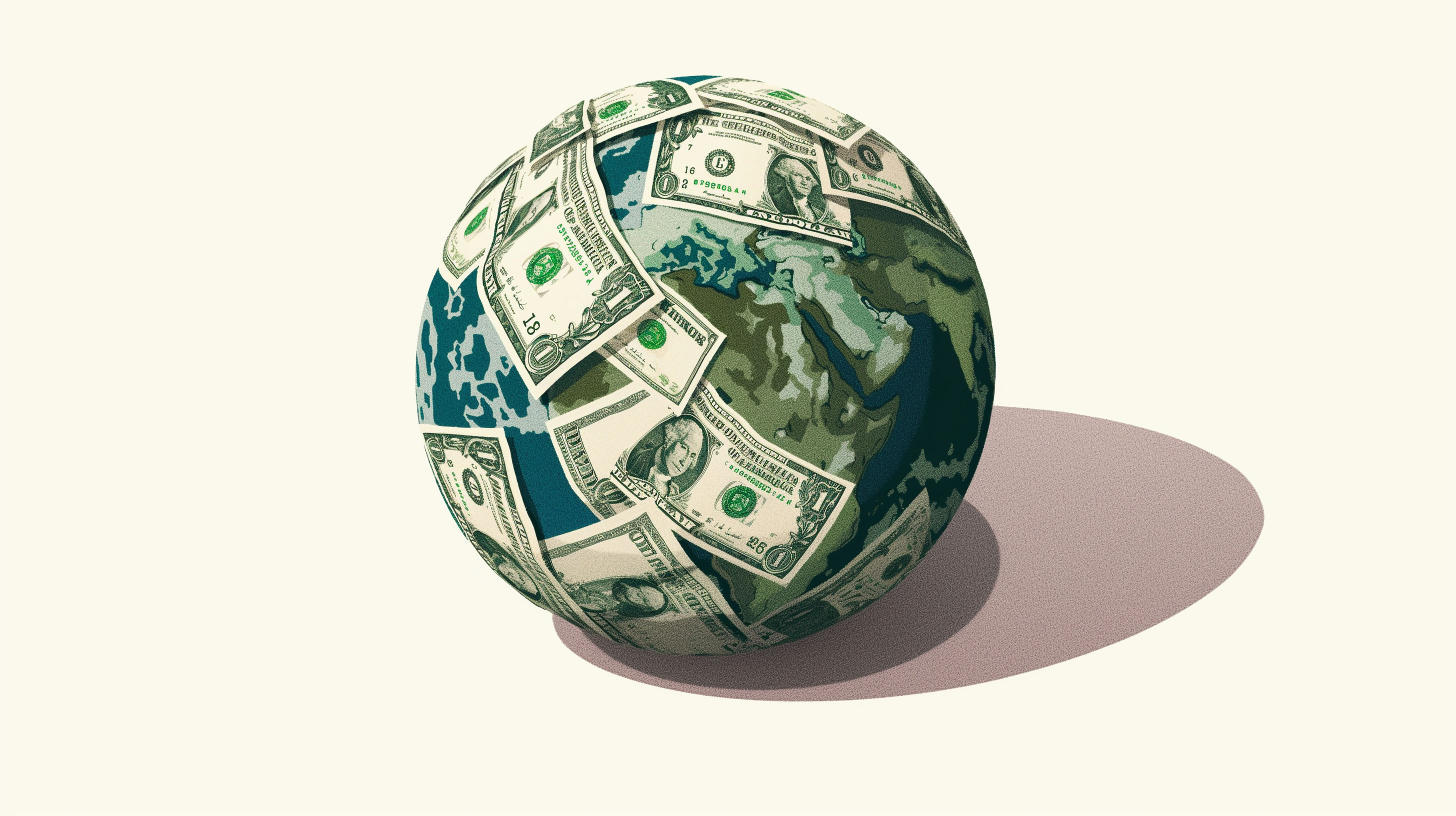


The coronavirus has brought markets through the deepest correction since 2008. Investors are beginning to speculate what is Berkshire Hathaway CEO Warren Buffett going to buy. And this makes a lot of sense. After all, it is Buffett who said “…be greedy only when others are fearful.”
Over the past few weeks, the markets fell very severely, very fast. Market commentators turned bleaker every day, while the S&P 500 kept tumbling lower and lower, apart from brief periods of brutal volatility. It was a grim picture—as any market correction should be—and given that the economy is on a near complete lockdown, there are not many signs that things will soon get better, apart from one: Famous investors are beginning to look greedy.

Howard Marks, one of the most careful and celebrated investors, hinted in a recent Bloomberg interview that he is out in the market buying. Marks seemed rather optimistic; indeed, he has been complaining about how dear the market has become for some time now.
Carl Icahn said similar things during a recent appearance on CNBC, as did some other investors, like Mark Cuban. While Icahn thinks the markets may still have a long way to go down, he is buying. These moves by professional investors might seem like good news.
The problem is, this time, they are not alone. Every day, over the past three weeks, market news reporters have been asking the same question: “Should you buy the dip?”
This may be a cultural thing. The 2008 financial crisis was a deep crisis. It triggered a hatred for bankers, and a lot of interest in finance and Wall Street. The proliferation of low-level education on YouTube, blogs and other social media triggered a lot of self-education by people outside of the finance industry.
Jason Zweig of the Wall Street Journal thinks that this time is different—this time, large fund managers must sell over fears of losing their jobs, while the small investors can afford to wait it out.
This all may seem like borderline madness when you look at the markets: The S&P 500 and Nasdaq have fallen by more than 30 percent from their all-time highs just a few weeks back. Major exchanges have seen circuit breakers go off amid systematic selling. March 12 was the worst day for stock markets since 1987.
But however painful it felt, it could have been much, much worse.
With the ETFs total size reported to be $4 trillion at the peak of the market in July 2019, there were still many more mom-and-pop investors that weren’t out there selling. And given that ETFs allow their investors to get their money back very quickly, we could have seen indiscriminate sell-off of a completely different magnitude.
Vanguard, the second largest provider of ETFs, reported that despite the market tumble, it’s seeing massive inflows back into its equity ETFs. Even on March 9, when markets fell on the oil shock, Vanguard’s S&P 500 ETF had net inflows.
Vanguard’s data is at odds with its competitors BlackRock and State Street. They have both seen outflows on the bad days in recent weeks, which may also be because their products are more popular with traders rather than long-term investors, who often prefer Vanguard. State Street’s S&P 500 ETF (SPY), for example, is used by short-term traders.
Matt Sommer of Janus Henderson says that respondents in their survey, which was conducted on retail investors and savers, are, in fact, still calm and very bullish on the market.
So, there is something to it: People really seem to think the market will come back strong—soon.
And if retail investors are waiting it out, then hedge funds are certainly doing so too. Mandy Xu of Credit Suisse says that “if you look at the equity long short, the long-only institution community, we’re not seeing widespread de-leveraging from that community yet.”
What she means is that despite the selling, large investment funds are still very bullish on equities—many of them are repositioning and changing their hedges, but they are still in the market, many of them with large long equity positions with borrowed money.
This was echoed by several other traders and analysts commenting on the market on Bloomberg and CNBC over the recent week. This is not something that we can easily check, unless we do it ex-post (i.e. through 13F filings), but since traders see their clients’ moves in real time, these comments should be taken into account.
And the whales—the pension and sovereign funds of this world—can’t move on short-term blips anyway. Callan, one of the largest consultancies to pension funds, and other large institutional investors are giving their clients clear advice: Wait it out, don’t sell.
The expensive markets have kept Buffett on the sideline for some time now. Aside from the $10 billion Occidental Petroleum deal, both Buffett and Charlie Munger, Berkshire Hathaway’s vice chairman and Buffett’s right-hand man, remained passive, growing their $125 billion war chest. Indeed, many have wondered if Buffett will ever get a chance to act again. There lies the difference between Buffett and others—he thinks in decades, not years.
Here it is: The market fall has finally come, and it has taken a form that no one could have expected. The world was certainly not prepared for this, and the markets are hurting. So, are they finally cheap enough for Buffett to act?
Maybe not.
In contrast to some other famous investors, Warren Buffett doesn’t seem as bullish.
The ETF flows and high volatility show that people are waiting to buy the dip. It’s clear why. For more than a decade now, we’ve lived in a world where every single market correction has been quickly pushed back up to another all-time high.
This idea that the markets tend to recover quickly is in our muscle memory.
The conviction seems strong. Michael Hartnett of Bank of America expects that once the current panic starts to fade it will “induce [a] major rotation” into growth stocks and bond proxies, such as high-dividend payers, FAANG stocks, software, mortgage REITs, utilities and inflation-sensitive sectors, like Asian equities, emerging market stocks and oil. In other words, the expectation is that when the panic stops, we’ll all pile right back into the same trades.
That widespread, if invisible, optimism might be precisely the reason why we have not reached the bottom yet.
If we know anything, it is that Warren Buffett doesn’t rush things. He is not interested in buying a short-term market dip but making a strategic move.
The widespread panic from coronavirus sent markets everywhere sharply down, and some more traditional sectors were hit particularly hard. Buffett is hurting, too—estimates vary, but it could be as much as $70 billion, given his large portfolio in U.S. equities.
It has also been reported that Buffett sold a large part of his positions in Delta Air Lines and about 4 percent in Southwest Airlines Co. As soon as the news broke, people began speculating about what it could mean. A loss of faith in the airlines’ ability to ever recover? Buffett still owns around 9 percent in Delta, as well as a large position in American Airlines and United Airlines. It is unlikely that he is planning to sell more later, as the price is most likely to drop further still. And yet, he didn’t sell all of his positions, which means he wants to keep a stake. His divestment may have also been part of a larger government restructuring plan currently being negotiated.
It is unlikely that Buffett will start buying anytime soon. The markets may still have some room to go down, but that is not what drives Buffett’s decisions anyway. Instead, he will try to reassess how good some businesses are and whether or not the coronavirus pandemic changed anything fundamentally in consumer sentiment.
His large equity positions in many companies give him the unique benefit of understanding what is happening inside those companies and how consumer sentiment is turning.
One thing is clear: He will go big. Making large investments in one of the badly hit industries post-coronavirus would be a typical Buffett move. He invested in JPMorgan Chase and Bank of America when people shunned bankers after 2008.
Indeed, for Buffett the only thing that matters is the quality of the business, since, as he said in his 1988 letter to shareholders: “…[his] favorite holding period is forever.”
George Salapa is a co-founder of bardicredit GmbH, a Swiss advisory. Before that, he was in consulting (PwC), banking (Sberbank) and technology (Braintribe). His writing has been featured in VentureBeat, CCN, Forbes and other magazines.