
This article was originally published by Yale Climate Connections and is part of Covering Climate Now, a global journalism collaboration strengthening coverage of the climate story.
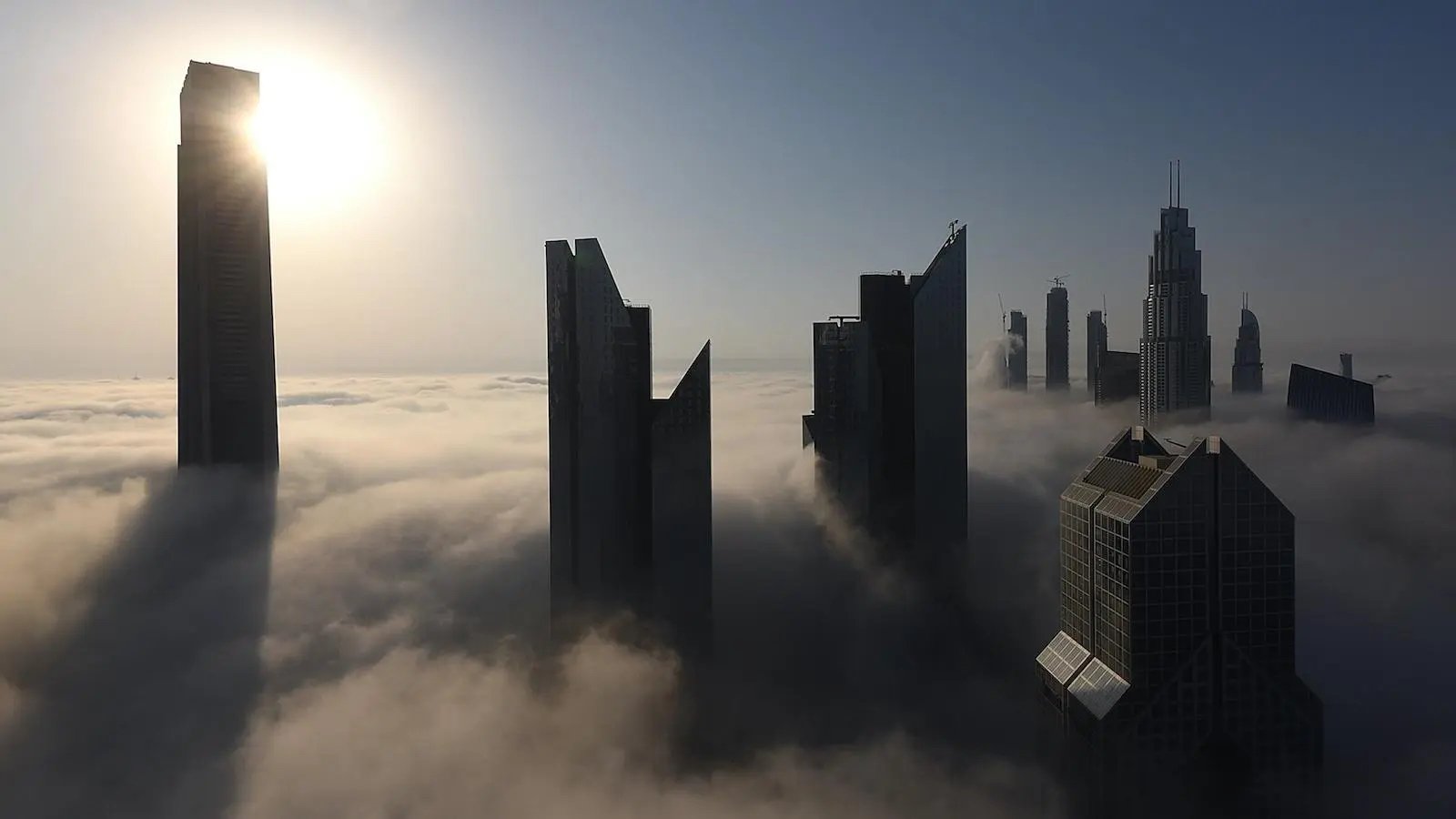
Between a record-smashing year of global heat and extremes, a surge in green energy, and the relentless juggernaut of fossil fuel production, there’s a lot for attendees to consider as they head to Dubai, United Arab Emirates, for the 28th annual Conference of Parties (COP28) of the UN’s Framework Convention on Climate Change.
These massive COP meetings have taken place every year but one since 1995. Each COP now draws tens of thousands of diplomats, scientists, activists, and journalists. During the two weeks of each conference, the signatories to the 1992 framework convention—including every member state of the United Nations, plus the Cook Islands, Niue, and Palestine—review and refine their plans for cutting heat-trapping pollution and adapting to the climate change already underway.

The 2023 COP takes place from November 30 to December 12 in Dubai. This will be only the second time that a COP has been held in a major oil-producing Middle Eastern country, and the hosts are working hard to recast the fossil fuel industry as a major force in emissions reduction. Whether the outcomes from Dubai can live up to that seemingly paradoxical goal remains to be seen.
What’s Special About This Year’s COP in Dubai?
Among other things, this year is the first “stocktake” COP. The Paris agreement—so named because it took shape in that city during COP21 in 2015—hinges on an entirely voluntary system of nation-by-nation emission goals, buttressed by international peer pressure. The system includes a reset process that’s meant to help ratchet up the world’s emission-cutting ambition every five years. This includes a formal stocktake, which examines national and global progress against the pledges submitted five years earlier—in this case, 2018. Over the following two years (in this case, by 2025), each country then updates its pledge, or “nationally determined contribution.”
This year’s stocktake report, released in September ahead of the Dubai meeting, sounded distinct notes of alarm. One of the main conclusions—more of a reminder than a surprise—was that the collective national pledges, even if all are met, aren’t anywhere near enough to limit global warming to 1.5°C above preindustrial levels, the goal enshrined in the Paris agreement and reinforced in subsequent years as a global target. What’s more, many countries with ambitions to reduce their carbon pollution to net zero by midcentury have emission-reduction goals that are still too lukewarm for that feat.
Although the next national pledges won’t be submitted until COP30, in 2025, Dubai will still be an important launchpad for the effort to bulk up those pledges over the next two years.
“Ultimately, the success of the first Global Stocktake hinges on whether governments adequately respond to its findings by the conclusion of COP28—not with vague platitudes but with commitments to real action,” wrote Jamal Srouji and Deirdre Cogan of the World Resources Institute.

How Many People Are Expected at COP28 in Dubai?
Organizers have been projecting more than 70,000 attendees at COPY28. That would smash the record of around 40,000 registered participants from last year’s COP27 in Sharm el-Sheikh, Egypt. Many world leaders, including presidents and prime ministers, typically attend the meetings. U.S. President Joe Biden was at COP26 and COP27, but he is not expected to be in Dubai.
Pope Francis, who’s long been a vocal proponent of addressing climate change, plans to be on hand, which would mark the first time any pope has attended a COP meeting. In October 2023, Francis released “Laudate Deum,” an exhortation on the climate crisis. It included a section focused on the Dubai meeting:
“If we are confident in the capacity of human beings to transcend their petty interests and to think in bigger terms, we can keep hoping that COP28 will allow for a decisive acceleration of energy transition, with effective commitments subject to ongoing monitoring. This Conference can represent a change of direction, showing that everything done since 1992 was in fact serious and worth the effort, or else it will be a great disappointment and jeopardize whatever good has been achieved thus far,” the Pope wrote.
How Might the Presence of a Fossil Fuel Magnate as COP Leader Affect the Proceedings?
As agreed to by the Asia-Pacific countries in their role as host region for this year’s conference, the COP28 president is Sultan Al Jaber, a chemical engineer and business leader who also happens to be head of Abu Dhabi National Oil Company. It’s the first time any COP meeting has been helmed by a CEO, much less one from the fossil fuel industry. The appointment has held firm despite protests from many climate activists as well as more than 130 U.S. and European lawmakers.
“It is obvious … that his dual role is a glaring conflict of interest,” said Marta Schaaf, Amnesty International’s program director for climate, economic and social justice, and corporate accountability.
As summarized by climate journalist Bob Berwyn at Inside Climate News: “It’s going to be hard for some countries to trust and believe anything regarding a commitment to reduce fossil fuel use from a company in a country that depends on that fossil fuel production for its economy.”
Against the undertow of opposition, a major public relations push has attempted to burnish Al Jaber’s credentials, stressing that he served for three years as the UAE’s special envoy for climate change. When he addressed a pre-COP meeting on October 30, Al Jaber sounded much like a traditional COP president, proclaiming, “We are heading in the right direction, but nowhere near fast enough,” and “We must end deforestation and preserve natural carbon sinks.”
The COP28 planned by Al Jaber and colleagues will stress the role of the private sector in climate action. For example, companies that sign on to an agreement called the “Net-Zero Transition Charter,” which launched Nov. 1, will be expected to produce a net-zero transition plan and transparent emission-reduction targets aligned with the 1.5°C goal.
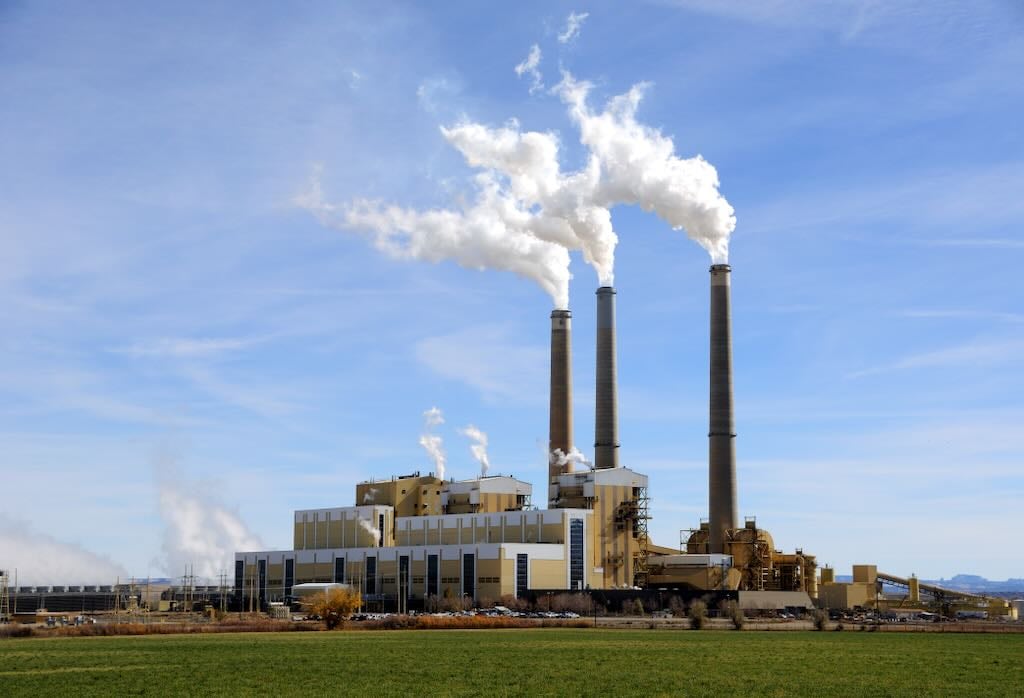
Fossil fuel companies leery of a future without oil, gas, and coal are increasingly operating on parallel tracks, supporting renewable energy while maintaining or even boosting their supply lines of fossil fuel.
This more-of-everything approach can be seen on the national level as well.

Consider the two biggest emitters of recent decades. China is running far ahead of its ambitious 10-year goals for clean energy even as it leads the world in the development of coal-driven power plants. And the U.S., now the world’s largest oil producer by far—as well as the world’s largest exporter of liquefied natural gas—churned out more than twice as much oil in 2022 as in 2011, even as U.S. wind and solar energy more than quadrupled during that period.
Such crosscurrents may rise to the surface in Dubai in something as simple as wording choices. The COP26 meeting in 2021 ended with a call to “phase down” coal-fired power, a last-minute switch from “phase out.” That wording was reiterated at COP27, despite calls from the European Union and India to recommend a phasedown of all fossil fuels.
At a June climate meeting, Al Jabar said that “the phase down of fossil fuels is inevitable.”
What Is the Proposed Loss-and-Damage Fund, and Will It Make Headway in Dubai?
One of the biggest outcomes of last year’s COP27 meeting was the creation of a Loss and Damage Fund to compensate those nations most affected by climate change. A transitional committee has scrambled in recent months to hammer out the fund’s operational guidelines, which are to be approved in Dubai.
One huge challenge is determining exactly how much would be owed to which nations for recent events, much less future ones. A 2023 report from the World Meteorological Organization found that weather, climate, and water extremes caused more than 2 million deaths and $4.3 trillion USD in losses from 1970 to 2021. However, the report didn’t break out what fraction may have arisen from human-caused climate change. Attribution of specific events to climate change, as carried out by individual research teams as well as groups like World Weather Attribution, is a growing but still-piecemeal endeavor.
Another question has been whether the Loss and Damage Fund should be placed within the World Bank to take advantage of its existing structure and processes, as the United States and several other rich nations have insisted, or whether it should operate as an independent body within the COP framework, as argued by many countries and activists who see the World Bank as a problematic, high-overhead force in developing nations.

At a meeting on November 4, 2023, the transitional committee voted to recommend—pending COP28 approval—that the World Bank serve for the next four years as the fund’s interim trustee and host. After the committee meeting, Harjeet Singh, head of global political strategy at the nonprofit Climate Action Network International, told Reuters that it was “a somber day for climate justice, as rich countries turn their backs on vulnerable communities.”
The committee punted on the question of whether developed nations should be required to contribute to the fund—though they also rejected a U.S.-submitted footnote specifying that any such contributions would be voluntary. This and other aspects of the Loss and Damage Fund could end up among the hottest topics under discussion in Dubai.
The Loss and Damage Fund comes on the heels of an Adaptation Fund agreed to at COP 15 (Copenhagen, 2009) and established in 2010. Participants agreed in Copenhagen that developing countries would commit $100 billion USD per year by 2020 to help less prosperous economies deal with the evolving consequences of climate change, which are driven largely by emissions already put out mostly by rich nations. As of late 2020, a paltry $1 billion had been raised toward the Adaptation Fund, including nothing from the United States. The original goal expires in 2025, so a process is now underway to set a “new collective quantified goal”—at least $100 billion a year—toward what’s now being characterized more broadly as climate finance, still centered around developing nations.
Is the World Making Progress on Deforestation?
At the COP26 meeting, held in Glasgow in 2021, participants set an ambitious goal to eliminate human-caused deforestation by 2030. There’s been only one annual data point since then, and it wasn’t encouraging. According to the latest Global Forest Review from the World Resources Institute, tropical forest loss unrelated to fires grew by 13% from 2021 to 2022, the largest such increase in six years.

Progress in some nations does give reason for hope. Malaysia and Indonesia, two of the 10 nations with the greatest loss of tropical primary forest in 2022, have both seen marked improvement since the mid-2010s, in part due to restrictions on massive palm oil plantations.
Trending the other way are several African nations, particularly the Democratic Republic of the Congo, where deforestation has risen since the mid-2010s amid growing populations and resultant pressure to carve out farmland and ranchland. Deforestation is also expanding in Bolivia, where primary forest loss hit a record high in 2022.
The pendulum may be swinging back toward forest protection in Brazil, which is the world’s single leading tropical deforester—responsible for more than 40% of 2022’s global primary forest loss. Deforestation unrelated to fire (which is typically clear-cutting) rose in Brazil by more than 50% during the 2010s. However, Brazil’s new president, Luiz Inácio Lula da Silva, was also president during the 2000s when deforestation dropped by roughly half, and he supports the COP goal of ending deforestation by 2030. Brazilian satellite data for the first half of 2023 showed that deforestation dropped by 34% as compared to the first half of 2022 when climate-change-dismissive Jair Bolsonaro was still in power.
One complication over the next few months is the potent El Niño event now underway. Drought across the tropics is typically most intense and extensive during El Niño, including the Amazon as well as parts of Southeast Asia. Intense drought in northern Brazil has already pulled the Amazon’s second-largest tributary, the Negro River, to its lowest level in 121 years of data.
The last strong El Niño event, which peaked in 2015-16, led in 2016 to what was by far the biggest yearly deforestation on record (see figure above). This was largely due to a spike in drought-fueled fires. Human-caused warming tends to intensify the effects of periodic drought, as higher temperatures further parch the landscape and stress ecosystems.
Are Protests Expected at the COP28 Meeting in Dubai?
As in past COPs, a section of Expo City Dubai called the Green Zone will be a dedicated space for activists and nongovernmental organizations to hold forth and engage with journalists, delegates, and the general public.
In a joint statement with the United Nations in August, the United Arab Emirates proclaimed that “in line with UNFCCC guidelines and adherence to international human rights norms and principles, there will be space available for climate activists to assemble peacefully and make their voices heard.”
Any direct action outside the expo hall is likely to be muted by both legal and cultural constraints on public protest within Dubai and the Emirates. Authorities can effectively quash any protests they consider disruptive. Human Rights Watch noted that speakers at a climate and health summit last March in Abu Dhabi were reportedly advised not to criticize “Islam, the government, corporations or individuals.”
At last year’s COP27 in Sharm el-Sheik, Egypt, all demonstrations outside the Green Zone were limited to approved events with heavy security in a predesignated area.
Where will COP29 Take Place?
That’s still an open question, one that participants aim to resolve in Dubai. The COP meetings rotate through the UN’s five regions, and the 2024 meeting is designated for Eastern Europe. That region’s 27 member countries must unanimously agree on the venue, and Bulgaria has offered to host.
However, in the wake of the Ukraine conflict, Russia has flatly rejected any location in the European Union. The non-EU countries Armenia and Azerbaijan have also expressed interest in hosting, but given those two nations’ recent history of conflict, it’s unlikely that either one could get the unanimous vote needed.
“There is no solution at the moment,” Bulgaria’s Environment minister, Julian Popov, told Reuters in mid-October. If no consensus can be attained on an Eastern European host country, the standard default option specified under COP rules would be Bonn, Germany, where the United Nations’ climate-related activities are based.