

Nicolas Berggruen leads an unusual life. The part that grabs most people’s attention, at least at first, is that he is a very wealthy man, reportedly worth over $2 billion, but he doesn’t own a home and has very few material possessions. What may be more unusual about Berggruen is what he has decided to do with his life and his wealth: undertake a global campaign to reform democracy and promote economic prosperity.
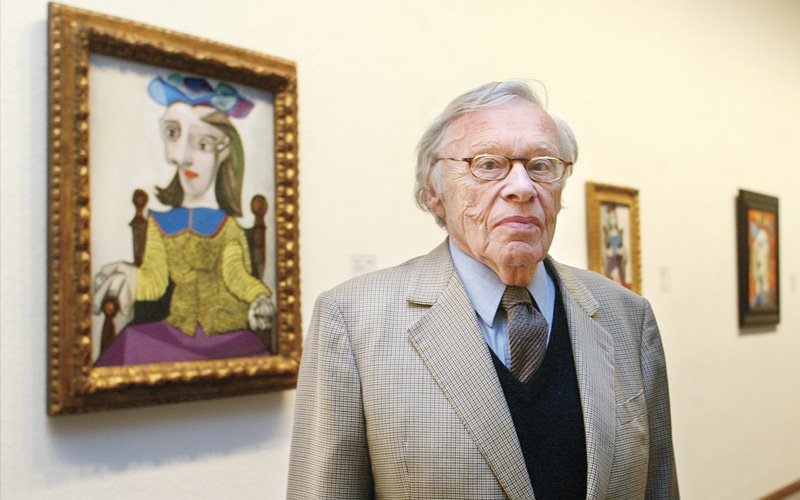
Interesting people often have interesting parents, and Berggruen’s were fascinating. His father was a journalist who fled Germany in 1936 when his editor informed him that, due to his Jewish surname, he could no longer use his byline. Settling in San Francisco, Heinz Berggruen started writing art criticism for the San Francisco Chronicle, then enlisted in the American military and was stationed in Europe. When the war was over, he opened an art gallery in Paris, became close friends with Picasso and ultimately donated an astonishing collection of modern art to found the Berggruen Museum in Berlin. Nicolas’ mother was the German actress Bettina Moissi, who in 1948 starred in Long is the Road, the first German film to deal with the Holocaust; she married Heinz in 1960, and Nicolas was born in 1961.


Raised in Paris, Berggruen was sent to a Swiss boarding school, but was expelled for reasons he won’t get into. He shortly made his way to New York and studied finance and international business at NYU. With his own savings and a modest trust fund—modest, at least, compared to what it could have been—he began investing in real estate, stocks and bonds. Berggruen did well, and in 1984 he founded Berggruen Holdings, which invests internationally in real estate, media and retail. In 1988 he co-founded a fund of hedge funds which also did well; he sold it to Safra Bank. Among his largest holdings today are hefty stakes in the German department store Karstadt and Burger King. And he lived well; Berggruen acquired a reputation for squiring beautiful women all over the globe—but assuring them that he was not the marrying type.
As Berggruen grew wealthier, though, he came to believe that his material things had become more imprisoning than liberating. Starting in the year 2000, he sold his home on Fifth Avenue in Manhattan as well as a private island off Miami and most of his other possessions, with the significant exceptions of his art collection and his private jet. Now Berggruen hopscotches around the world carrying a small bag of clothing, toiletries, books and his iPhone, staying entirely in hotels: The Peninsula in Beverly Hills, Claridge’s in London, Hotel Cipriani in Venice…
As he left possessions behind, Berggruen began pursuing a longtime interest, the study of philosophy and political theory, and eventually decided to try to translate those interests into practical efforts. So in 2010, Berggruen founded the Nicolas Berggruen Institute, a Santa Monica based thinktank devoted to the pursuit of good governance. Its efforts include the Think Long Committee for California, a council of high-profile political veterans studying ways to reform California’s dysfunctional political system. Other projects include work on the European debt and political crises. A fourth arm, the Vision for Africa, is trying to promote economic growth on that continent. Berggruen is funding all of this to the tune of tens of millions of dollars.
I met Berggruen recently at his upper-floor suite in the Carlyle hotel on Manhattan’s Upper East Side. He is slender and youthful and wears expensive clothes—bespoke suits, monogrammed shirts made in London—but with an absentminded air. Berggruen was hungry, so we walked to the restaurant Daniel a few blocks away, where we sat outside.
Every five or 10 minutes, Berggruen was hailed by a passerby who knew him; a man of impeccable manners, he greeted them all with genuine warmth, speaking with the faint German accent he retains, but seemed to relax slightly when they moved on. One sensed that, whether it involves homes, relationships or social small talk, Berggruen is not easily pinned down. After all, there are more important things to think about.
Q: Let me start by asking about your lifestyle. You’ve gotten a lot of attention for the fact that you don’t have a home. How long do you ever stay in one place?
A: I don’t mind staying in one place for a while—I like to spend a lot of time in Los Angeles. It’s a place where nobody goes out, where people will leave you alone. People in Los Angeles love themselves and they love what they do and they leave you alone. If you’re isolated, you have a real advantage. You can work.
Tell me about when you decided to jettison your homes and other material possessions to focus on civic works. I understand this was in about the year 2000.
Let me start earlier. In my teens I was interested in photography. Then I decided that I should learn something about the world of commerce. And I came to America at age 17 to escape Europe. I went to NYU—nothing better than being 17 years old and coming to New York.
Which is where you started buying real estate and other investments?
I did a lot of things that were practical but maybe not that thoughtful. After a while, I wanted to get back to my real interests—politics and philosophy. I regret I didn’t get back to them earlier.
Was there anything specific that prompted this shift?
It was gradual. But the change you asked about—it came actually when I was spending more time in California. I think people on the East Coast don’t respect the West Coast, but there’s a creativity and openness that you can have on the West Coast. If you think of anything in business, anything that is creative in the last 20 years—it’s all from the West Coast. Think of everything in Seattle— Microsoft, Amazon, Starbucks. Then you go down to Silicon Valley—Intel, Apple, Google, Facebook, Twitter. What does New York produce?
Financial innovation.
Finance? You can almost argue against that as productive. The financial industry produces financial weapons of mass destruction.
Did you ever speak with your parents about the choices you made to become a reformer of democracy?
We had a close relationship, but I never asked their advice, and they never gave me advice.
Your father once said that he considered himself neither French nor German, but European. Are there parallels between that idea and your status, in a sense, as a citizen of the world, with no specific home?
There may be a connection there. My father was definitely European. He grew up in Germany and then he lived in Paris; we spoke German at home. But my father was sort of at home everywhere. I feel at home everywhere. You’re at home in your mind, and if you’re at home with whatever you do, then you’re quite relaxed any place.
Any place?
Well, you don’t want to spend the rest of your life in Brussels.
Let’s talk about the work of the Nicolas Berggruen Institute. How did that come into being?
Well, I started meeting with two professors at UCLA, Brian Copenhaver in philosophy and Brian Walker in political theory. And that’s how the whole thing started.
You were taking courses?
No, they weren’t courses. The professors gave me a reading list, I read it, and then we discussed it.
How did you find these teachers?
Happenstance. But we spent a lot of time talking about this concept of governance, and then I thought, “Let’s take some of these concepts and apply them to the real world.”
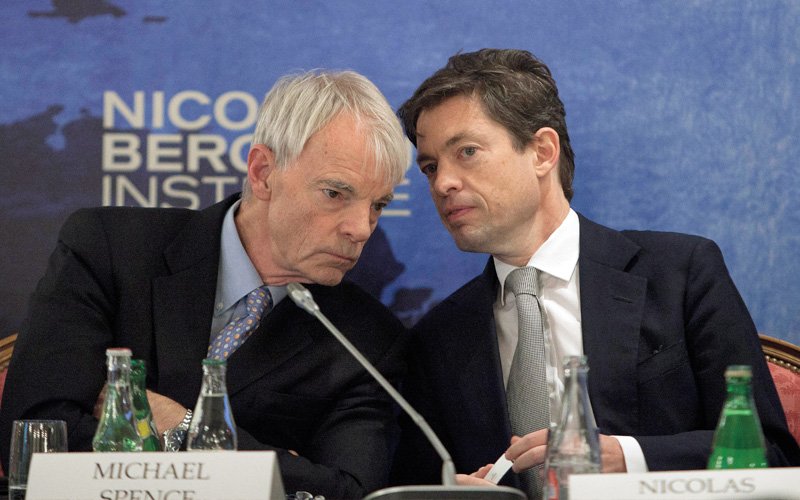
Several members of your Think Long group are political figures with mixed track records, such as former California governor Gray Davis and former secretary of state Condoleezza Rice. Do they really count as reformers?
In California the people who are involved with us are very experienced and very committed to this— they’re not getting paid. You could have argued, “Shouldn’t you take much younger people who have a different perspective?” But we wanted people who know the system. Sometimes, in a strange way, people who are in the system realize how bad it is and are the most creative about reforming it.
You must be aware of the irony that you’re not a very democratic figure—a private citizen and billionaire— who’s spending millions pushing democratic reform.
There’s no question that we have tried to put together a group far away from the day to day political debates, of people who may have constituencies but no longer have to get elected. They are able to discuss things privately and come up with solutions. It is very undemocratic in a classic sense in that it is elitist. But it’s not like our group suddenly has superpowers and we can do whatever we want. All we can do is have the power to suggest. That’s all we have.
So it takes an outsider to help find a solution?
We are trying.
Tell me about your effort in Europe.
We’ve got a group of people who really understand political process in government and then a few thinkers. We started this group when the crisis began with the idea that Europe will not work unless you change its structure—you’ve got a currency but no fiscal center. Certain things need to be federated at the center, like fiscal policy. Over time a center will only work if it’s legitimate, which means that you have to institute a Europe-wide parliamentary system.
And what are you doing in Africa?
Africa is a very separate and very different effort. Most of the African countries have gained what I would call independence 50 years ago on average, so they’re fairly young nations, and they started from a very troubled past. There we have a very different view, which is, the best way to be helpful is to actually invest in the real economy, and where do you invest so that you can make a difference? We chose agriculture. It employs people, it’s important and its potential is enormous.
So you’re investing in agriculture?
Right now we are in the process of working on establishing commodity exchanges. Starting in Rwanda, the idea is to go to four countries in east Africa. The exchanges are nonpolitical institutions that can produce a wave of financing for farmers.
You work a lot, you travel a lot and you have no permanent home. Does this life ever get lonely?
I don’t feel lonely or isolated. Sometimes it just feels frustrating. You don’t know what results you’re going to get. The mountains are big. Humanity has a way of progressing, but not in a linear way. If I don’t get results, at some point I may get exhausted.
And if you do?
I’d be happy to be doing more reading, writing and studying philosophy. At the end, the key thing is you’ve got to live with yourself. That’s the real test. Everything else is fleeting.