
Sitting at a conference table while her dog, a rescue named Desa, naps happily at her feet, Tampa mayor Jane Castor is explaining why she ran for office back in 2018 and 2019. Like the city she leads, Castor is not easy to define. Tall and plain-spoken, she grew up in Tampa and played basketball and volleyball at the University of Tampa. After college, she served as a city cop for three decades, including six years as Tampa’s chief of police. Once a Republican—she switched, she says, because the Tea Party movement was “just too conservative” for her—she’s now a Democrat who maintains that being mayor is a non-partisan job. She is also the first gay woman to be mayor of Tampa, which is a complicated convergence of identity and politics given the culturally divisive reign of the state’s strongman governor, Ron DeSantis.

“I’ve been here for 62 years now, almost 63,” Castor says. In deciding to run for mayor, “my thought was that the city’s going to change more in the next decade than it has in my entire life. So to be a part of that change, to be able to guide it in a thoughtful and intentional way, was just an honor of a lifetime.”

If there’s a little bit of campaign rhetoric in the line; she’s a good politician, and she ran for reelection this year. (When I asked her a few months ago if she’d like to announce her campaign in the pages of Worth, Castor says bluntly, “No,” then hastened to soften the remark. “Well, everybody knows that I’m running.”)
She was right on both counts: Everybody knew she’s running, and Tampa, the largest city in the greater metropolitan area of Tampa Bay, which includes St. Petersburg and Clearwater, is changing—fast. (Tampa, locals will point out for clarity, is populated by humans; Tampa Bay is a body of water containing fish, sharks, and other sea creatures.) The city is enjoying a post-COVID population influx, as Americans from colder climates and higher tax states have flocked there. (It’s a cliché, but ask an Uber driver—time and again, you’ll hear that they arrived within the past couple of years.) Tourism to Tampa, which dropped substantially during the pandemic, is surging in its aftermath. When businesspeople and travel planners, and politicians talk about rising American cities, they often mention places like Charleston, Phoenix and Nashville. In the last few years, Tampa has become part of that admiring conversation.
It wasn’t always this way. Tampa has long been a secondary city, even within its state. It doesn’t have the business community, vibrant art scene, or international flavor of Miami. It lacks the theme parks of Orlando (though it does contain the rollercoaster-centric Busch Gardens, and Tampa tourism officials are quick to point out that Walt Disney World is an easy 65-mile drive away). It has some fine restaurants, but no one would visit Tampa for its culinary scene. And it’s on Florida’s west coast, which, perhaps because it’s farther away for travelers from the Northeast, typically attracts less media buzz than the cities and beach towns of Florida’s Atlantic coast. East Coast Florida has South Beach and West Palm and Delray; West Coast Clearwater has the Church of Scientology headquarters.
I can say that individuals, families, and businesses still value Tampa Bay for what it is, and that is a very friendly, welcoming, inclusive place.”
Tampa does have wonderful neighborhoods; Ybor City, the home of the cigar business that sparked Tampa’s growth in the late 19th century, has a charming Cuban feel, along with Spanish and Italian influences. Hyde Park is what you might call Tampa’s old-money neighborhood, but old money in Florida is a relative term, and the area feels far more welcoming than, say, Boston’s Beacon Hill or San Francisco’s Pacific Heights. Driving through Tampa sometimes feels like driving through L.A.—it’s everywhere and nowhere simultaneously, all sprawl and no center.
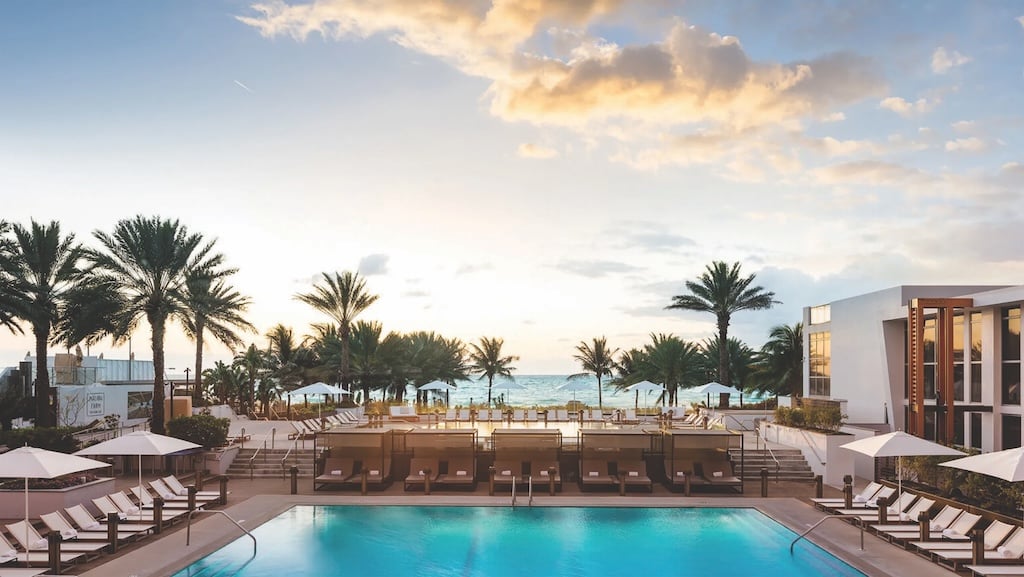
For a couple of reasons, that’s changing. One is an ambitious downtown development project known as Water Street. Funded by a partnership between Jeff Vinik, the owner of the Tampa Bay Lightning, and Bill Gates’ Cascade Ventures, the 56-acre, $3.5 billion project is replacing a largely vacant area adjacent to the waterfront. Tampa had 56 acres of mostly undeveloped land flanking its waterfront—with apartment buildings, retail, office space, and hotels, all intended to be pedestrian-centric and wellness-oriented. Recent months saw the opening of The Tampa Edition hotel, which the city describes as its first five-star hotel. The opening of an Edition would mark a typical day in Miami. In Tampa, it’s a watershed event that Vinik marked by buying a penthouse apartment within the building. At $8 million, it was the most expensive apartment in Tampa’s history. Water Street is attracting young people and filling downtown with new energy. It is, according to Santiago Corrada, president and CEO of Visit Tampa Bay, “a game-changer.”

Another factor in Tampa’s rise is the success of its professional sports teams. The Buccaneers both hosted and won the Super Bowl in 2021. The Lightning won the Stanley Cup in 2020 and 2021. The Rays, though they play in St. Petersburg’s Tropicana Field, a domed stadium widely considered one of baseball’s dreariest ballparks, consistently field an exciting team that outperforms its meager payroll. “It’s amazing, the exposure you get from sports,” Corrada says. Winning teams bring national TV, conferences, businesspeople, tourists, and maybe most important, a bit of mojo—some local pride.
Like any city, Tampa has its challenges. Its public transportation is nearly nonexistent; Castor jokes that “public transportation in the South is two people in an SUV.” It faces rapidly rising housing prices. The Rays are threatening to pick up and leave when their lease expires in 2027. Climate change and rising sea levels are a huge threat; Hurricane Ian missed Tampa last fall but would have caused massive devastation had it not taken a late turn to the south. And then there’s DeSantis, whose polarizing rhetoric and culture war-driven policies strike at the heart of Tampa’s inclusive identity while doing little to address—and perhaps exacerbating—problems such as a chronic, statewide teacher shortage. Indeed, DeSantis’ recently proposed budget mandates that Tampa spend a court-mandated transportation tax refund on roads and bridges but explicitly forbids the city from spending the money on public transportation. That doesn’t help.
Castor has no interest in picking a fight with a powerful and popular governor; it’s hard to see how that would help her city. “No one’s ignorant about what’s going on in our state,” she says. “I can say that individuals, families, and businesses still value Tampa Bay for what it is, and that is a very friendly, welcoming, inclusive place.”
That friendliness is a common refrain around Tampa, and it’s certainly something I experienced during a recent visit to the city—maybe it’s the weather, the water, or the quality of life in general, but folks in Tampa just don’t have that edge you find in cities like New York or Philadelphia or Chicago. When people visit Tampa, Castor says, “consistently what you hear is that this is the friendliest city they’ve ever been to. Friendliest, welcoming and clean—that’s what we get.”
Who would want more?