


Sustainability is one of those amorphous words that seemingly gets tossed around with much abandon in today’s post-woke corporate lexicon–short-hand for showcasing a moral compass attuned to the modern progressive groupthink. One need not look far to find the term cropping up all over corporate webpages and media listicles touting which companies are doing the most to save the planet.
But behind all the fanfare, there is a real problem at hand. With each passing year, the evidence of climate change has become overwhelming. Whether due to streaming sensations like Don’t Look Up, an endless feed of viral videos showing a planet in distress or simply whacky weather that has no historical comparison, we have all become much more aware of the enormous toll that modern humans’ way of life is having not only on the planet, but on each other.

Although there are near-endless riffs on the definition of sustainability, it largely all boils down to three interconnected concepts: the environment, ethical behavior and economics. For so much of human history, we as a species were concerned with little else beyond basic survival. But in the last century things changed dramatically, as the pursuit of material goods and conspicuous consumption became the province of industrialized societies. This modus vivendi has created a world that has become increasingly less habitable, less equitable and inherently more unstable. A world that is forcing scientists to consider the probability of the otherwise unfathomable: the human-driven extinction of mankind.
Code Red
Our planet is nearing the tipping point of near-irreversible runaway global warming. Last year, the UN issued yet another status report that Secretary-General António Guterres described as a “code red for humanity.” The incessant warnings from the scientific community have had a profound effect on nearly every major global industry, each grappling with its own respective environmental footprint. Yet, of all the endeavors that mankind has dreamt up, perhaps none is as detrimental to the planet and its people–both in absolute and relative terms–as fashion. Whether it’s a $2 pair of flip flops, a faux leather Members Only bomber jacket or a Birkin bag, its cumulative toll on the Earth and humanity is extreme and unmistakable.
Fashion is responsible for 10 percent of all human-caused carbon emissions and 20 percent of global wastewater; the apparel and footwear industry uses more energy than the aviation and shipping sectors combined. And here’s the really bad news: fashion is showing no signs of slowing. Since the early 2000s, production has doubled and it is currently on course to triple by 2050. And because clothing is getting cheaper to produce, it’s also becoming easier to discard. One recent survey found that 20 percent of clothing purchased in the US is never worn; in the UK, it’s an astounding 50 percent.
Is ‘Sustainable Fashion’ an Oxymoron?
Casual followers of haute couture have likely read about Stella McCartney’s luxury handbags made from mushroom root leather or the new Louis Vuitton sneakers made with field corn and recycled rubber in the soles. From reclaimed ocean plastics to plant-based substitutes (Karl Lagerfeld recently unveiled accessories made from cactus leather) high-end fashion has begun experimenting with alternative inputs; not since the Space Race of the 1960s has fashion been so keen on R&D. But unfortunately, much of this tepid experimentation is relegated to the rarified air of ultra-high-end luxury fashion where brands enjoy the equally ultra-high margins necessary to test the waters. Meanwhile, back on planet earth, time is the one thing climatologists agree we don’t have much of at all.
But whether using bio-based and recycled materials will move the needle is still an open question. Writing for the Harvard Business Review, Kenneth Pucker posits in his essay “The Myth of Sustainable Fashion” that the use of so-called “green” inputs is pointless: “Less unsustainable is not sustainable.” Pucker argues that the only solution is increased government intervention that would forcibly and dramatically alter modern consumption habits.
Like other embattled industries at odds with climate change and sensing strong regulatory headwinds, fashion executives have been eagerly jumping on the sustainability bandwagon hoping that a modicum of self-policing will keep regulators at bay–but that milk has already spilt. New York State’s proposed Fashion Sustainability and Social Accountability Act is a sui generis piece of legislation seeking to impose austere sustainability-related obligations on the industry, forcing fashion’s largest companies to comply with a battery of social and environmental requirements. Other fashion hubs across the globe are likely to follow suit.
The New Guard
Yet, amid all this tumult in the fashion space is a new emergent class of entrepreneurs, influencers and disruptors who understand that changes in the industry must be as bold as they are swift. Chief among them are former Dolce & Gabbana CEO Tina Bhojwani, actress and activist Maggie Q and Silvia Machado, the head of the fashion arm of Magalu, Latin America’s largest retail ecosystem. Although acting in their own spheres of influence, these three leaders are charting a course for an industry that will become not only decidedly more environmentally conscious, but one that is inclusive and led by women. Together, these innovators are establishing the new color palette for the future of fashion: green, brown and pink.
“The global fashion retail industry is in the midst of a radical transformation, requiring new approaches,” remarked Shelley Kohan, a professor of retail management at New York City’s Fashion Institute of Technology. “Fortunately, one of the outcomes of all this upheaval is a more dynamic and diverse set of C-suite leaders calling the shots–change-agents that embody the value set of younger consumers, namely a steadfast dedication to sustainability, ethical sourcing and diversity.”
Tina Bhojwani, From Insider to Fashion Revolutionary
No one in New York fashion circles knows the business inside and out like Tina Bhojwani. Her impeccable résumé spans four decades and includes prominent posts at Donna Karan, Theory and finally Dolce & Gabbana, where she served as president and CEO for North America. But as she rose through the ranks, Bhojwani became increasingly–oftentimes painfully–aware of the impact that the industry was having on the planet and its people.
In 2019 Bhojwani switched gears and launched Aera, the world’s first certified carbon negative footwear company where every shoe produced has a hydrocarbon offset of 110 percent. Her approach towards sustainability made Aera the first luxury footwear company to attain B Corps status–the gold standard for rigorous, verified social and environmental performance, transparency and accountability.

Fern Mallis, the creator of New York Fashion Week and one of the most respected voices in the global fashion industry, is a big believer in Bhojwani and her mission: “There is no question that historically, fashion has been a vector for change and social good, but we can still do better,” remarked Mallis. “Today its strong women leaders and industry veterans like Tina Bhojwani who are laying track for an industry that is poised to become even more diverse and inclusive, increasingly sustainable and ethically sourced–and women led.”
The real impact of Bhojwani’s shoes, which retail in the $400 price range, isn’t in their modest environmental offset, but in the ripple effects of having A-list celebrities gush over sustainable footwear–which doesn’t go unnoticed by larger brands. Aera pumps, sandals and boots have gained a loyal following among celebrities like Katie Holmes, who chronicled her love for her pair of Aera Charli boots during the pandemic. Emma Roberts, Meryl Streep, Kristen Stewart and Rosario Dawson are also huge fans. “It is exciting to be a pioneer in this space and Aera is setting an example for more mainstream brands,” observed Bhojwani. “We need the larger players to think differently if we are going to solve this existential crisis we are facing.”
Maggie Q, Hollywood Agent of Change
After starring opposite Tom Cruise in Mission Impossible III, Maggie Q has become one of the most sought-after names in Hollywood. From leading roles in the Die Hard and Divergent franchises on the big screen to starring in TV series like Nikita and Designated Survivor to her current role on the Fox primetime comedy Pivoting, Maggie Q has created a powerful platform, enabling her to leverage her celebrity to drive awareness about social and environmental issues.

For Q, it all started with a chance encounter with a PETA advocate years ago at a music concert in Hong Kong. The two would have a conversation that changed Q’s life. Today she leverages her celebrity to promote sustainability, workers’ rights and ethical manufacturing. “Before I was ‘famous’ I used to push things on people, but nobody cared too much about what I said–but they paid attention to how I lived. Now that I have this ‘celebrity’ status I am always thinking about how to maximize its impact for social and environmental good. And that all starts with living the life that I talk about,” Q explained.
Today, Q is engaged in several entrepreneurial endeavors including her fast-growing athleisure and swimwear brand Qeep Up, which furthers her goal of cleaning up ocean plastics and preserving wildlife. Each Qeep Up piece is made of 100 percent recycled materials with a portion of each sale donated to the Blue Sphere Foundation, an organization fighting to save marine habitats around the world.
The power of Q’s activism in fashion was on full display during the pandemic when she lent an influential voice to the 45,000 garment workers in Los Angeles–almost all women of color–who had suffered stolen wages as global demand for clothing receded. The result of her work, together with labor organizers, pressured state lawmakers to pass the California Garment Worker Protection Act which, among other achievements, bans piecework, a practice that compensates workers on a per garment basis, effectively paying them less than $6 an hour. “The U.S. tends to point the finger at other countries to highlight human rights abuses, but we also need to know when they happen in our own backyard,” said Q. “The challenges around ethical sourcing in this industry go hand in hand with environmental issues.”
Silvia Machado, Reinventing Fashion For The Masses
As a Harvard-educated former management consultant, Silvia Machado is an unlikely protagonist in the transformation of the global fashion industry. But by joining one of the world’s largest and most socially progressive companies, Magazine Luiza–or ‘Magalu’ as it is known in Brazil–Machado was handed the keys to an opportunity to effect seismic environmental and ethical change in one of the world’s most populous nations.
Although she began her career at McKinsey & Company, Machado eventually made the jump to retail where she led the fashion divisions for several large retailers. But when Magalu CEO Frederico Trajano offered her the chance to build a fashion business from scratch, it was an historic opportunity to redefine the sector–and one she couldn’t refuse.
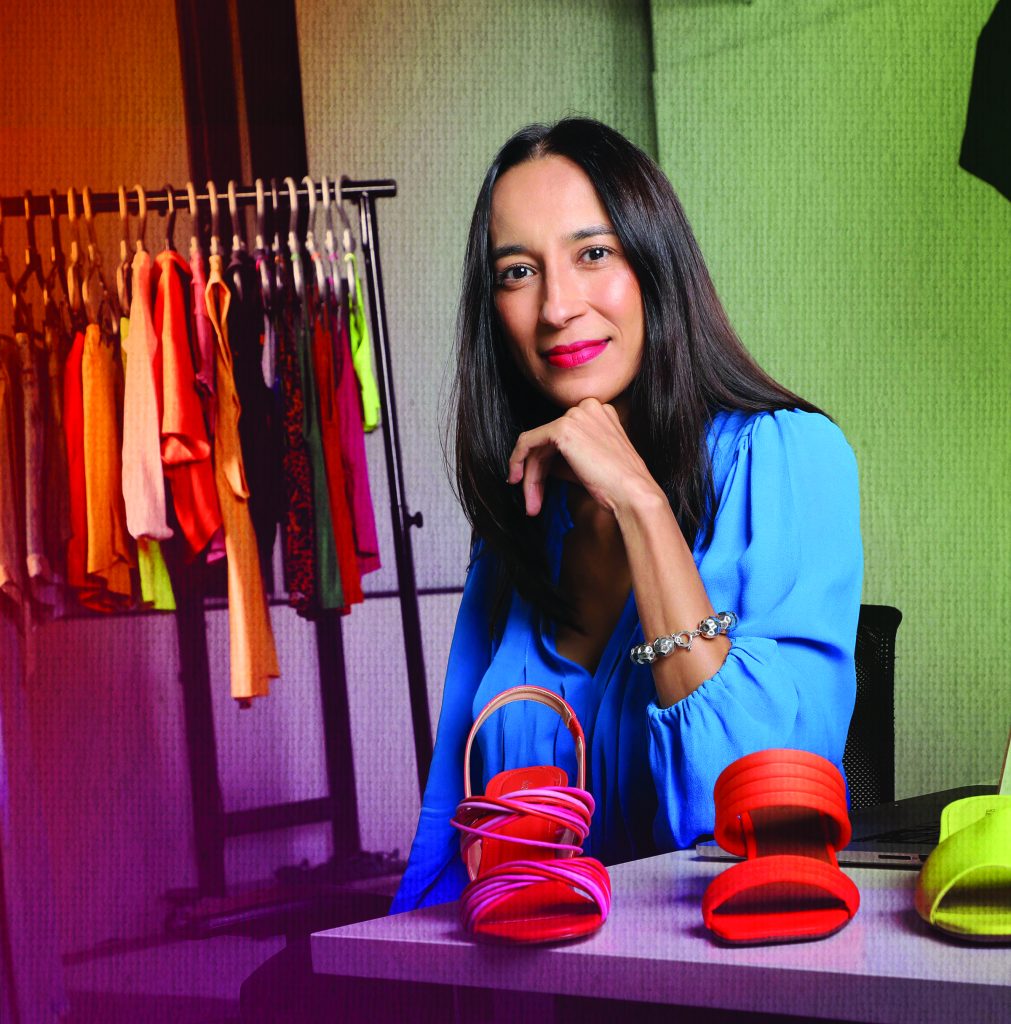
Magalu is a storied, family-owned retailer, having grown over the past 65 years from a small town gift shop outside of São Paulo to a publicly traded behemoth. With over 1,400 physical locations and a massive e-commerce presence selling electronics, appliances and home goods to middle class Brazilians, Magalu has also become a standard-bearer for responsible social governance, women’s rights, racial equality and equity in the workplace. Frederico Trajano and his mother, Luiza Helena Trajano–one of the “Time 100” in 2021 for her efforts championing social change in Brazil–had transformed Magalu into the country’s most socially progressive company.
“Magalu has always been on the vanguard of social justice and women’s rights in Brazil, and in recent years, we have dived head-first into diversity and inclusion–leading the national conversation on both fronts,” remarked Luiza Helena Trajano, who now chairs the company board. “As we aggressively expand into fashion and apparel, we have the advantage of starting with a blank slate, absent the legacy issues that stymie change at so many other traditional fashion brands.”
The elder Trajano added, “Magalu’s foray into fashion marks a remarkable opportunity to recast the sector in a new light, proving that it can be profitable yet sustainable and ethical at the same time. And there is no one more qualified to lead this revolution than Silvia Machado.”
Machado oversees not only Magalu’s vast third-party platform that connects tens of thousands of fashion sellers with consumers, but she just launched Magalu’s first proprietary brand–Vista–an affordable line that tears down decades of antiquated thinking about what fashion should look like, who it should serve and how it should be made.
For example, every Vista clothing label includes a reminder of the 1-8-0 number, the Brazilian government’s dedicated hotline for reporting domestic violence. Models for Vista mark a stark departure from the Gisele Bündchen-type faces and bodies that still dominate most of Brazilian fashion advertising, and instead mirror the true diversity of Brazil’s consumer base. From an ethical sourcing and environmental perspective, Machado is investing heavily in compliance to ensure that the manufacturing of each piece of clothing is traceable and adheres to fair workplace standards while using inputs such as BCI cotton on at least 50 percent of all items produced.
“We aren’t held back by legacy issues that prevent us from really rethinking how fashion can work for everyone at scale–from garment worker to retail employee to end consumer,” said Machado. “And that includes being very intentional about our sourcing while mitigating our environmental footprint.”
Critical Phase Ahead
From mega Hollywood influencer to fashion insider turned pioneer to progressive mass retailer, Maggie Q, Tina Bhojwani, and Silvia Machado are at the forefront of a global movement that is pulling at the seams of the fashion industry as we know it, each taking a cut out of the same swatch. These three women also realize that time is of the essence, or as Maggie Q remarked, “We don’t have decades to get this right. We need to move now.”