

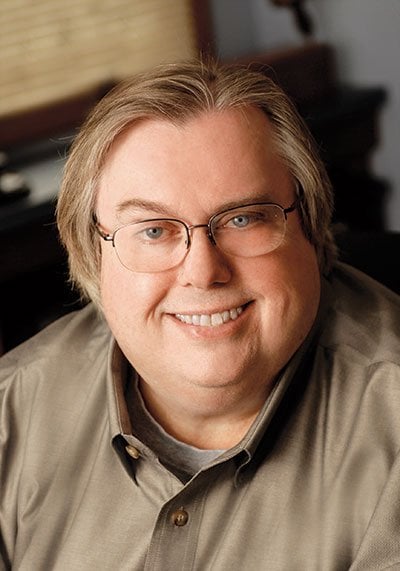
For over a decade, Robert Frey was a managing director at Renaissance Technologies, the phenomenally successful hedge fund company—its Medallion fund has averaged 35 percent annual returns after fees since 1988—led by legendary investor James Simons. But in 2004, Frey walked away. Now he’s started his own hedge fund, Frey Quantitative Strategies.
Q: You’re a quant?
I have a PhD in applied mathematics from Stony Brook University. I’m also a professor there.
What was your dissertation about?
You know what a matroid is? Matroid theory?
Maybe you should tell me about your family instead.
I grew up in Brooklyn. My father was a building inspector, my mother a homemaker. My siblings and I were the first generation in my family to go to high school. Then I went to the Polytechnic Institute of Brooklyn for a year, but I didn’t know what I wanted to do. So I dropped out and took a test to work for the IRS. I met someone there, we got married, wanted to have kids—well, I’ve got to start earning a living. So I went back to school at Stony Brook—school at night and work during the day. I took about 14 years to finish.

How’d you start in finance?
[In the mid-1980s] Morgan Stanley had started doing pairs trading, one of the first [quant] trading strategies, and they were looking for someone to help with the math… They kept offering more money until I said yes.
Which led to Renaissance?
I left in 1988 to start my own company, Kepler Financial Management. One of my investors was Jim Simons, who was running Renaissance, which then had about $100 million under management…I [joined] Renaissance and exchanged my KFM stock for Renaissance stock—smartest thing I ever did.
So why leave?
I was turning 50. I wanted something different out of life. What was I going to do, make more money I’m not going to spend? So I started a program in quantitative finance at Stony Brook and set up a family foundation.
Then why launch FQS?
I had to start a family office to keep track of things, and I realized: What is a family office? It’s an investment management company—there’s a business here helping people invest in hedge funds. Even a wealthy investor needs to subcontract that out for it to be done effectively.
What’s different about your fund of funds?
We do the traditional things people do when you look at a hedge fund. But we also built what I think is the most successful factor model for hedge fund returns. It’s a microscope that allows us to decompose funds’ performance and identify the source of their returns.
How big is your family’s stake?
About $50 million.
And the fund’s AUM?
Only about $110 million.
How big would you like it to be?
There’s plenty of room for a billion dollars in the fund.
How goes it?
In 2011, we looked a lot better than the hedge fund industry in general. Not having S&P exposure, we didn’t get sucked down by the S&P. In 2012, we were worse—because we didn’t have S&P exposure. We still beat the averages, but only by a couple percent. That’s all I’m trying to do, though—beat the averages by a couple percent.
Aren’t hedge funds supposed to shoot for sky-high returns?
My objective is not to start a high-risk business. It is to make steady returns to hand on to the next generations. And if there’s anyone else out there who wants to come along for the ride, I’m offering you a seat at that table.
For more information: Robert Frey, [email protected], fqscapital.com