


On an early February morning, Rahm Emanuel, the Second City’s blusterous mayor, was holding court in the spacious back room at Lafayette New York in Manhattan. At 59, Emanuel, who studied dance at Sarah Lawrence College, still has the slight figure of a ballet dancer, but Carl Sandburg’s depiction of Chicago as “stormy, husky, brawling” is a more apt description of his demeanor. Over the past 25 years Emanuel has been a major player in Democratic Party politics, including a stint in Congress and as chief of staff to President Obama. He took office as mayor of Chicago in 2011.

Emanuel’s term, of course, has not been conflict-free. During his tenure, Chicago was riven by a contentious teachers’ strike in 2012 and a contract dispute a few years later, and the 2015 shooting of Laquan McDonald by police brought Emanuel’s approval ratings into the 20s, a slump that he has never fully recovered from and that put an end to any plans to run for a third term. Donald Trump’s campaign drumbeat about the murder rate in Chicago, although an abuse of statistics, didn’t help the national perception of the city. But two of Emanuel’s final initiatives as mayor seek to highlight Chicago’s strengths. The Year of Chicago Theater and Chicago Architecture Biennial speak to the city’s power as a cultural center, as well as his own early love of the arts.

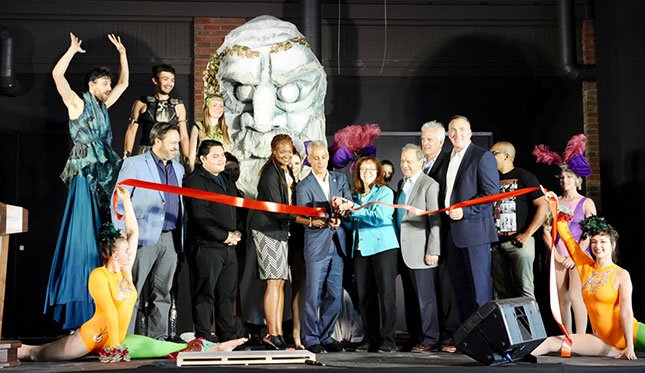
The Year of Chicago Theater will include promotion of performances at hundreds of theaters around the city, city-funded theater grants, a film series and a major marketing campaign. The Architecture Biennial is a celebration of one of Chicago’s greatest cultural assets. Worth caught up with Emanuel to get his take on the role of theater in Chicago, the recent attack on actor Jussie Smollett and what he sees as the state of the city today.
[UPDATE: Jussie Smollett has turned himself in to police in Chicago after being charged with disorderly conduct for allegedly staging the attack.]
Q: Why highlight theater in Chicago?
A: Chicago stands out. Obviously, New York has Broadway. But we have storefront theater. It’s storefront theater that led to Steppenwolf. The storefront theater that really was the genesis of what became the Shakespeare Theater. The Lookingglass Storefront Theater became Lookingglass. So when you look at Chicago theater, the pillars have a genesis that goes back to storefront theaters. We’ve lost count, but there’s like 200 of them. For the city that is always reinventing itself, the storefront theater is always reinventing itself.
Do storefront theaters create a different culture around them than you might get in New York?
There’s an unbelievable storefront theater on the second floor of a building in a park in the Edgewater community that’s an old armory, and you don’t get that [type of setting] anywhere else. And there are writers today who are writing really important social work and political work in a time where it holds up a mirror to the city. There’s a pure cultural part of it.
There’s also a commercial part of it, which is that you can come to our city and have the same hotel and, I believe, better culinary than New York, and save yourself $2,000 for the weekend. We’ve grown our tourism from 39 million to 58 million people [annually]. And I want to make that not so dependent on me, but part of the permanency of the cultural, economic and commercial enrichment of the city.
Did Donald Trump’s criticisms of Chicago’s murder rate, although baseless in many aspects, affect the national perception of the city?
As you know, it’s—for the last two years, the murder rate has almost been down 30 percent. We’ve just recorded January, the lowest January in 20 years.
So how do you handle it…
He hasn’t talked about it. Facts do actually matter.
But how do you as mayor and how does the city handle the “brand” of Chicago?
Here’s the thing. We’ve gone from 39 million to 58 million. Condé Nast Traveler two years in a row has rated Chicago the number one city to visit in America. Bon Appetit picked it as the number one culinary city in the United States. Just yesterday we announced that we surpassed Atlanta as the busiest airport. So people are coming in and out of the city all the time. So I would say to you, if we have a critic, I’d welcome Donald Trump.
Right.
I’d call Chicago a Trump-free zone because we actually are an inclusive city. And the good news is, we don’t have a problem and run away from it. We run towards it and solve it. And now we’re nowhere near where we need to be, but we just had the lowest January murder rate in 20 years, and we’ve had two consecutive years of double-digit decline. And so he hasn’t said squat in a long time for a reason.
Still the recent attack and alleged hate crime against actor Jussie Smollett has been all over the headlines. Of course this can happen anywhere, but where do you sit, as the face of Chicago, in dealing with something like this when it does happen? Because it does play to people’s worst impressions.
My position is, in the city, hate has no home. I take that very, very seriously. We don’t have a person to waste as we build this great city. There is no place for hatred.
But in terms of representing the face of the city…
Here’s my thing. New York’s a great city. Your public housing just got taken over by the federal government [NB: this is not true]. Your MTA can’t deliver a person from one block to another. So every city has challenges. My point to you is, every city. Here’s what I think: We are a world-class city given our universities, given our cultural attractions, given the people from all spectrums of the world. And we are also a global player economically, culturally. And we are going to also solve problems that any big city has. Five years ago, I created the Chicago Star Scholarship. If you get a B average in high school, we make community college free. The sixth largest economy in the world, the largest most populous state in the United States [California], just replicated Chicago.

When you look at what great cities can do and then you look at challenges, the biggest challenge is inclusive economic growth. You cannot have singular, major, major economic growth that only a fraction of your city participates in. It’s not a sustainable model.
A final question: What are your plans after your term ends?
No. Don’t worry about that. When I’m ready to announce, I’ll announce them.
OK.
Here’s what my attitude is. The people of the city of Chicago elected me to be a mayor for four years, not three years and nine months. So I’m going to be mayor for all four years. I’ll run right through the tape. And my goal is not to worry about my future. It’ll be good.
New York looks to Europe. LA, and I can say this about my brother [Endeavor head Ari Emanuel], looks to itself. Chicago is the most American of American cities. It’s in the heartland. It’s the capital of the heartland. And when you think of the singular American character and cred, that’s Chicago.