
St. Patrick’s Day is one of the year’s defining days in Savannah, Georgia. The famously hospitable city of about 150,000 hosts a celebration and a parade that is second in size only to that of New York City. It’s a big party, an Irish mecca; some 15,000 people march in the parade alone. It’s also a major economic stimulus, estimated in the tens of millions of dollars, for Savannah’s tourism-based economy. Like the Christmas season, March in Savannah can determine whether local hotels, shops and restaurants turn a profit for the year.
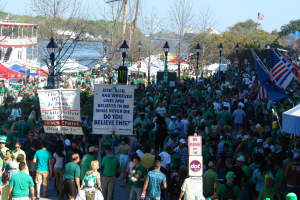
But as March 17 approached this year, Savannah’s mayor, Van Johnson, faced an agonizing choice. The country was just starting to confront the emergence of COVID-19, and reactions to the virus varied from state to state, city to city. Should Johnson allow the St. Patrick’s Day celebration to proceed and risk the spread of a disease? Or should he cancel St. Patrick’s Day and risk incurring the wrath of everyone in town who would lose money from the cancellation?
Complicating the situation was the fact Johnson had only been mayor for two months. A four-term Savannah alderman, Johnson, who is African American, beat incumbent mayor Eddie DeLoach—a white man with close ties to Savannah’s white-dominated business community—last November. Johnson was sworn into office on January 1—60 days isn’t a lot of time to settle into a job before you face your first major challenge.
“I was brand new,” Johnson tells me during an interview over Zoom. “I had not even fully moved into my office here in City Hall. I knew about hurricanes, I knew about people acting badly, about economic challenges. But nobody told me anything about a pandemic.” But as he spent sleepless nights considering his decision, Johnson realized that he’d rather take an economic hit than risk loss of life. When he swore the oath of office, he explains, “I raised my hand and committed to protect and serve the citizens of Savannah, and if that meant protecting them from the citizens of Savannah, I thought that was absolutely appropriate.” On March 11, he cancelled St. Patrick’s Day.
“It was not a popular decision with the Savannah Irish community nor area businesses that depend on a busy weekend to make big sales,” recalls Joe Marinelli, the CEO of Visit Savannah. “But he made the call. And looking back, he absolutely made the right call. We didn’t—and couldn’t—know it then, but we sure do now.”
As of this writing, Savannah has had fewer than 400 cases of the virus and just 14 deaths. “The decision to cancel really weighed on Van’s heart and mind,” says Trip Tollison, CEO of the Savannah Economic Development Authority. “But his leadership was decisive. Nobody knew what the next day was going to look like, and Van made them feel like here was a guy in charge, and the health of the city was at the forefront.”
In mid-April, Georgia governor Brian Kemp announced that the state would be the first in the country to reopen. Johnson, who knew nothing of the plan before Kemp announced it, went on CNN and other national broadcasts to decry the move, calling it “reckless” and “dangerous.” Some locals worried that Savannah might pay a price for Johnson’s criticism of the governor. But Johnson says that he was merely fulfilling his mandate. “The reality is, I was given by the voters of this community a sacred platform to communicate,” he says. “People want to come to cities where the city cares enough to take care of people. We should not be in the position of dollar-chasing. We are for people, not profits.”
Johnson’s far-ranging collection of experiences and influences helped shape the leadership skills Johnson has displayed since taking office—decisiveness, empathy, a willingness to build bridges, a willingness to listen. After just six months on the job, the Savannah mayor is helping lead his city through a tense and difficult period in the nation’s life—and becoming a figure of national importance in the process.
Born in 1968, Johnson grew up in Brooklyn in a civil rights and union family, and his parents showed him the challenges that African Americans faced just to build a stable, middle-class existence.
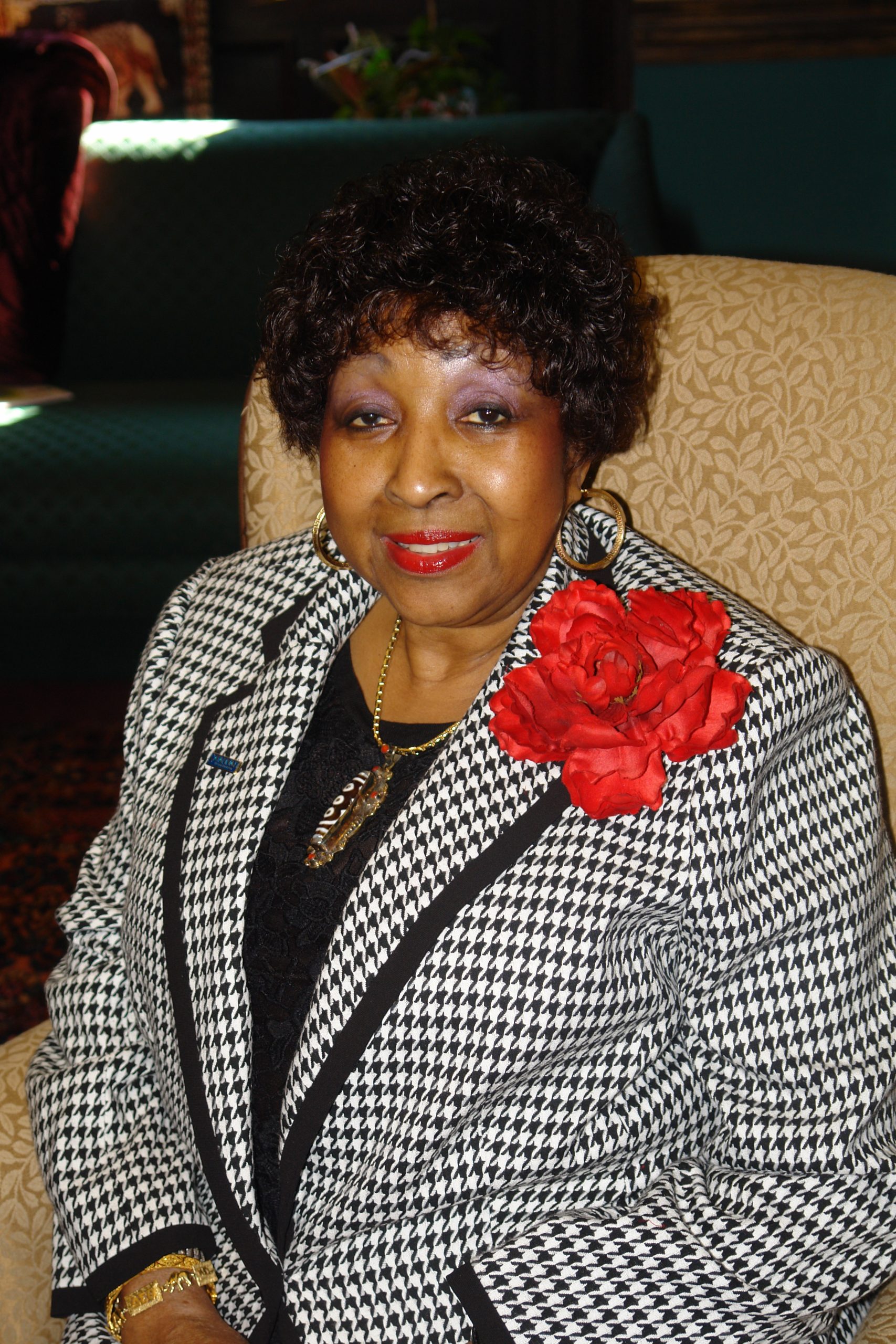
Graduating high school at 16, Johnson headed south to attend Savannah State University, the oldest public African American university in the state. At college, Johnson came to know and learn from two professors: Otis Johnson (no relation), who would serve as Savannah mayor from 2004 to 2012, and Edna Jackson, would be mayor from 2012 to 2016. Both took notice of the young man from Brooklyn.
“When I first met him,” says Otis Johnson, “the thing that stood out was that he was smart and, in the language of the old folks, he was mannerable”—meaning polite and respectful. Adds Edna Jackson, “He was one of the most mannerable young men I’ve ever met in my life.”
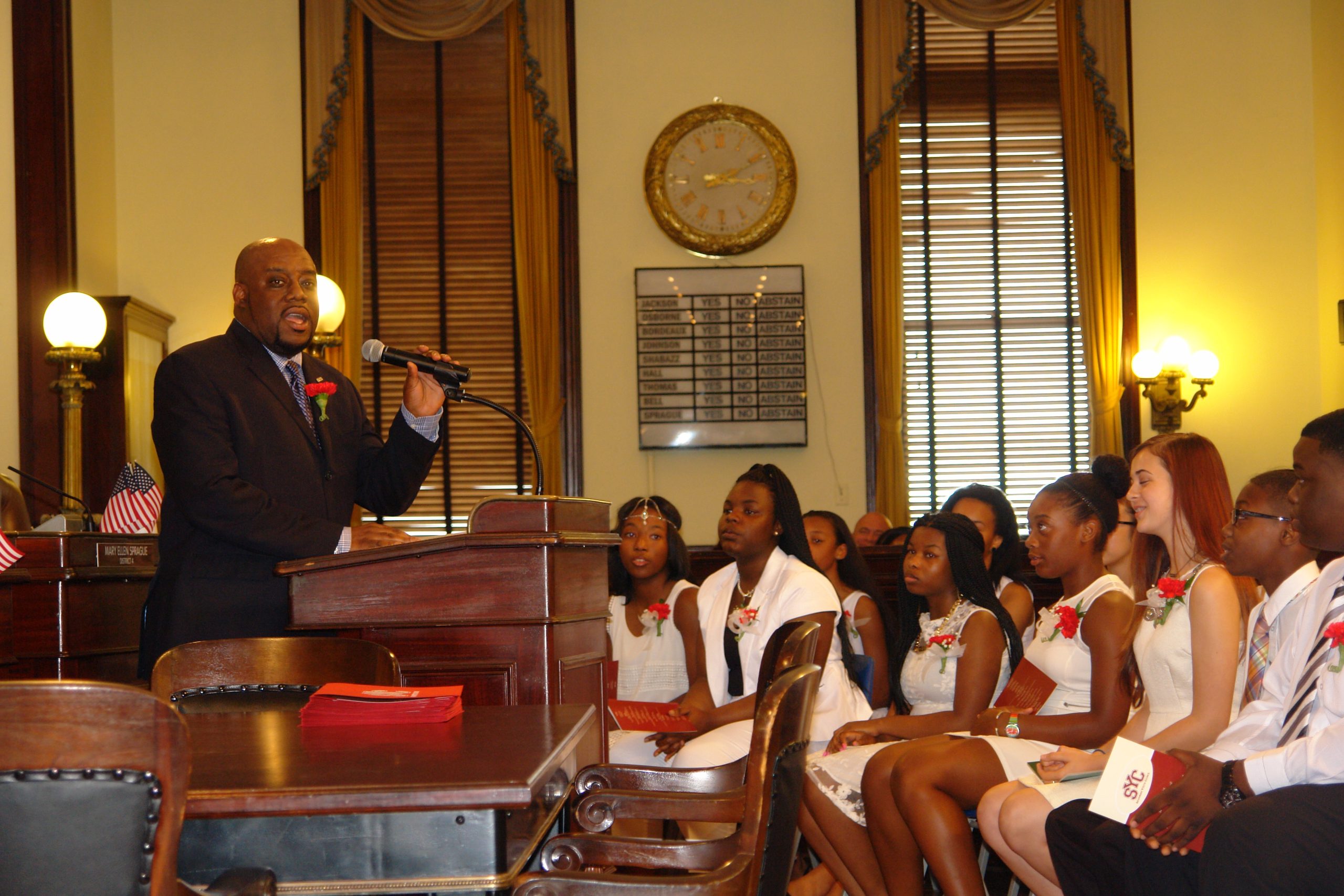
Johnson never expected to stay in Georgia after graduation, but when he couldn’t find a good job back in New York, he returned to Savannah. In time, he would become the assistant director of human resources for Chatham County (of which Savannah is a part), which helped him learn the ins and outs of managing a bureaucracy. He also became the director of the Chatham County Youth Commission, the host of a local talk radio show, a columnist for the Black weekly Savannah Tribune, a church organist and a police officer. And, in 2004, encouraged by some of the young people he mentored, he ran for city alderman.
“There were rules” for seeking political office in Savannah, Johnson says now. “You did not run for office if you were not a native Savannahian. You did not challenge an incumbent. And you had to be blessed by the ‘elders,’” local powerbrokers, most of whom were white civic leaders and businesspeople. Johnson broke all those rules—and won. On the nine-person city council, he represented Savannah’s first district, an area which included downtown Savannah, the west side of the city’s historic neighborhood and three public housing developments. “You had extreme tourism, you had extreme wealth and you had extreme poverty,” all in one district, he recalls. “For me, the balance was to try to ensure equity.” You couldn’t just represent the business district, or affluent residents, or the economically challenged; you had to work on behalf of all of them.
During the administration of Eddie DeLoach, however, Johnson became increasingly concerned that the issue of generational poverty wasn’t being addressed. While Savannah has a strong and diverse economy based on tourism, the Port of Savannah and locally headquartered companies such as Gulfstream and equipment manufacturer JCB, many of Savannah’s jobs, particularly in the service sector, pay only the federal minimum wage of $7.25 an hour. As a result, about a quarter of Savannah residents live in poverty, according to the advocacy and training organization Step Up Savannah.
“As the years went on, I became increasingly uncomfortable in my district,” Johnson explains. “I felt that the government was really getting away from being by and for the people.” The poverty rate was partly about race, Johnson says, but really it was about class—whatever their skin color, lower-income residents weren’t getting the education, the skills or the jobs they needed to lift themselves and their children out of poverty. “If you were Black and doing well in Savannah,” he says, “you were doing all right. If you were white and poor in Savannah, you were not doing all right. And people were seeing that.” So, Johnson began raising the issue and asking for feedback.
Johnson ran against DeLoach talking about themes of transparency, inclusion, accountability and trust. Though he was significantly outspent by DeLoach, the race wasn’t close. Last December, he beat DeLoach with 62 percent of the vote to DeLoach’s 38 percent—a landslide. “I think he did two things well during the campaign,” says Marinelli. “He rallied the community with his personality and charisma and enthusiasm. But he also combined a fresh new approach with the leadership experience of having served on the city council for 16 years.” Plus, there was the simple fact that Johnson was comfortable talking to anyone—whether you were white or Black, rich or poor, gay or straight, Van Johnson would listen to you.
“After he had won the election and they were arranging the inauguration,” recalls Cynthia Johnson, the mayor’s mother, “I said to Van, ‘All I want to hear is Lift Every Voice and Sing, the hymn considered an unofficial Black national anthem. “And he said no. I said, ‘You’re a Black man, how could you not have that song?’ Van said, ‘You don’t understand, I’m not only a Black man, I’m going to be mayor for all the people. So why would I do Lift Every Voice and Sing when it’s only for some of the people?’” Still, Cynthia Johnson says, the arc of Johnson family history resonates powerfully in Van’s story. “Van’s grandmother rode the back of the bus in Savannah,” she says. “His father fought for civil rights and was jailed in Savannah. So, it was hard at first to wrap my mind around the fact that this same boy whose grandmother rode the back of the bus is now mayor of the city. It’s pretty amazing.”
Johnson’s commitment to inclusion was powerfully demonstrated in the weeks of protest that followed the killing of George Floyd in Minneapolis—a second test for the still-new mayor, and one that he has also handled deftly. The city experienced just one day of protest, Sunday, March 31. The day before, Johnson spoke at a press conference, in which he emphasized the civic importance of protest but warned that looting and lawbreaking would not be tolerated and imposed an 8:30 p.m. curfew. Then, the next afternoon, Johnson marched with the thousands of protesters. “We are one community,” Johnson said to the protesters. “We are all Savannah.”
“Van not only embraced the protest, he became a part of it, which allowed him to lead it,” says Tollison, who walked with the mayor throughout the day. “The tension was there, but not nearly as bad as what you saw on TV in other cities.”
At the end of the day, Johnson was out talking to protesters, hearing their feelings and sharing his. It worked. There were a handful of arrests for minor offenses, but the day and night were peaceful. “You can’t be afraid of the people,” Edna Jackson says, “and Van is not afraid of the people. And that is why he is an effective mayor here in the community.”