


Nick Cimino is PNC’s head of private investments and alternative credit with the bank’s investment advisor research group and my most recent interviewee.
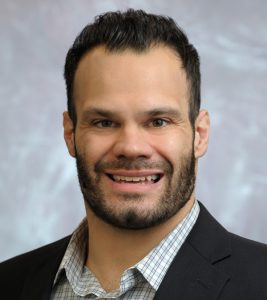 In this capacity, Cimino (pictured right) is responsible for choosing private funds for the bank’s internal platforms in the personal wealth and institutional asset management spaces, which combined make up PNC’s Asset Management Group (AMG). As of September 30, 2020, AMG reported $300 billion in client assets under administration.
Cimino also focuses on providing investment advisor teams with insight into portfolio holdings, market developments and performance, primarily for alternative asset management strategies.
Q: Nick, thank you for agreeing to share your views with the Worth community at this unique time in the markets and for the country overall. What are PNC’s underlying clients currently expressing the most interest in from an investment perspective?

A: Thank you for having me, Nancy.
Given the ongoing effects of the pandemic on the economy and markets, there is definitely interest in making investments that will help the world get through the pandemic and thrive post-pandemic, but also a desire to maintain consistency and discipline with regard to longer term strategic allocations given the high degree of uncertainty that remains. To that end, we are looking to continue to build up core allocations to private markets, making leveraged buyout and growth equity investments across primary funds, co-investments and secondary funds, in addition to middle market direct lending.
On the more opportunistic side, a decent amount of capital was committed to a lower middle market direct lending fund during the first half of 2020, and this is where we began to see some early pandemic-related opportunities in the less liquid credit markets. More specific opportunities also emerged for a couple of underlying companies that were able to acquire weaker competitors at very compelling valuations.
Following the fuller onset of the COVID-19 pandemic, we aimed to increase our exposure to private distressed managers. We believe these to be attractive strategies.
Finally, our clients have also expressed interest in additional environmental, social and corporate governance (ESG), as well as diversity, equity and inclusion options in the private markets. As a firm, we agree that ESG, Responsible Investing as it’s called at PNC, is an area in which we should increase our focus. As a result, we plan to onboard a fund this month that will focus on generating returns through investments in companies and infrastructure located in low-income communities, with emphasis on local economies, job creation, racial equity and sustainability.
What are some of the markers of your private fund selection process?
We generally look for managers with an established track record. Our platform managers typically have at least $200 million in AUM (at the firm level) and will be fundraising for at least a Fund III when we begin looking at them; it depends on their specific strategy, but these two criteria will typically equate to a five-plus-year track record. Our goal for any private markets program is to provide diversification and return enhancement to an existing portfolio that likely already includes publicly traded equity and fixed income securities (both actively and passively managed), as well as hedge funds and other alternative investments. Assuming that this is the case, the private markets allocation would be used as return enhancement. For more specific, and likely riskier, strategies and programs, we would need to see the potential and likelihood of achieving a spread above a public market equivalent, based on historical deals and funds. For more conservative institutional asset management clients looking to balance their assets and liabilities, we may focus on private credit that is more senior in the capital structure—so the absolute return may be lower, but we are still looking for a meaningful spread over a public market equivalent in such cases.
You mentioned that your team was in the process of increasing private debt exposure across the platform before COVID-19 struck, and that you’re broadly exploring more distressed exposure now. Please speak to your basic criteria for such managers, for general partners that may want to be considered.
In terms of firm history, assets under management (AUM) and track record, we look for criteria similar to what I spoke about in an earlier question—ideally, a manager with at least $200 million in AUM (at a firm level) that is currently raising for a Fund III, likely indicating a 5-plus-year track record and at least several fully realized deals that we can examine. We are looking at managers doing both control and non-control investments, with a preference for multi-strategy managers that can do both. Depending on the anticipated split between control and non-control, most programs we are considering have achieved net multiples of at least 1.5x in their prior vintages (with more control-focused managers reaching 2.0x or higher), with an overall fund life of seven to 10 years.
Are there sub-strategies within these broader private debt and distressed strategy categories that are of more interest to you and the PNC team, and why?
Within the distressed space, we are seeing opportunities now in stressed and opportunistic lending to companies that should be able to survive COVID-19 and remain solvent over the longer term, but need some additional help getting through the pandemic. These new money lending opportunities can occur in the form of newly originated loans or restructured existing loans. Over the longer term (in the next two or three years), we think that there will be opportunities in corporate distressed-for-control and debt-to-equity restructurings; we are already seeing a spike in defaults in lower quality companies, but we are eventually going to see good businesses (with suboptimal capital structures) reach the point where they will need to restructure or file for bankruptcy. The performance of the high yield, leveraged loan and direct lending markets will ultimately dictate many of the specific opportunities (sectors/regions) in distressed-for-control and debt-to-equity restructurings, but we also like some other more specific special situations opportunities in hard assets (e.g., aircraft) and litigation claims.
In recent years, when clients first started requesting more exposure to closed end funds, how did PNC accommodate? Please speak to the evolution of such exposure options on your platform.
In order to begin building diversified, long-term allocation recommendations to private markets (via closed end funds), we needed to establish a core program and then allocate to more specific satellite or niche opportunities that supplemented the core allocation.
It’s important to note that these considerations are separate from pacing models and other tools that we are using with clients just beginning an allocation to private markets, with the goal of having that allocation become self-funding by around its 10th year.
For our core program, we work with a firm that is one of the largest allocators to private market capital in the world. We designed a custom solution for our clients that includes combined exposure to the following: primary buyout funds, direct co-investments, diversified secondary funds and direct credit investments. The minimum investment to gain access to this customized solution is low enough for many of our smaller clients to be able to participate. Based on how it was developed and given the diversified opportunity set included in the holistic solution, we believe this can actually serve as a client’s only allocation to private markets if they so choose. In our view, it provides vintage year diversification, as well as strategy and asset class diversification too.
For clients who have additional capital to invest in satellite private programs, we also offer core, value add and opportunistic private real estate strategies, as well as lower middle market direct lending, private infrastructure and private distressed/special situations strategies. Going forward, the continuing evolution of our platform will likely focus on adding exposure to lower middle market focused managers investing in smaller companies, as well as venture capital. It will also be highly dependent on the rapidly evolving macroeconomic backdrop and investment landscape as new opportunities arise.
Given your vast experience selecting alternative asset managers, what have you learned over the years that is serving you well at this time in the market cycle?
Stay disciplined with your strategic asset allocation is my advice. Vintage year diversification is key, so keep investing with managers who have generated strong track records through different market environments and cycles. Remember that investment periods last a couple of years or more, so understanding that the opportunity set can change for some managers during the investment period is something to keep in mind—especially for managers coming to market with new funds in the current environment. Tactical or opportunistic exposures can be added to enhance the strategic allocation. These can be specific to the prevailing market conditions at the time of investment, or even forecasts of opportunities in the immediate future—but, strategic asset allocation should always remain top of mind.
For family offices, smaller institutions and wealthy individuals that are typical of the types of clients you serve, what advice and insights might you share?
Education is very important. For smaller clients building a private markets allocation for the first time, it is essential that they understand the private markets asset class. Obviously, there are benefits to investing in private markets, but it is a different experience for new investors in the space—they are not used to having their capital locked up for 10 years, with no ability to redeem. Performance reporting for private markets investments will also likely be new to them, with most of their experience being with time-weighted returns rather than dollar-weighted metrics. And the J-curve effect of private markets is likely to make them at least a little uncomfortable at first, often seeing the value of their investment decline during the first few years even as they continue to put money into a fund without seeing any distributions. (One way to mitigate this is to increase allocation to secondaries and credit investments early in the adoption of the private markets allocation.)
Thank you for sharing your views at the end of this most unusual year, Nick.
Thanks for having me, Nancy.