

MCLAREN FORMULA ONE: EMBRACE THE HISTORY, CULTURE AND HERITAGE.
Mention the name “McLaren” to a racing fan, and get ready for a lengthy recitation of heroics. There’s the five decades of serial Formula 1 championships, with some of the greatest cars and drivers in history: Fittipaldi, Hunt, Lauda, Prost, Senna and Hamilton. Next, you’ll hear about Bruce McLaren himself. The preternaturally gifted driver, engineer and car designer founded his underdog New Zealand company in 1963. He led it to the pinnacle of motorsports before he died in 1970, at just 32 years old, while testing his dominant Can-Am racer in Goodwood, England. In his short-but-stratospheric life, McLaren became the youngest race winner in F1 history, at age 22, a record since surpassed by just two drivers. He drove the Ford GT to the first 24 Hours of LeMans win for any American car.
Yet Amanda McLaren, the brand ambassador and only child of the company founder, says the casual car fan might not be up to speed on that rich history. That’s because prior to 2011 McLaren had only produced one car for the street: the F1, a $1 million, 237-mph interstellar fantasy that dazzled our automotive world in 1992. Adhering to McLaren’s exacting principles, as the company that pioneered the carbon-fiber chassis in F1 racing—the lightweight miracle material now common in everything from America’s Cup yachts to the Boeing 787 Dreamliner—that F1 became the world’s first carbon-fiber showroom car. It also remains the last street-based car to win the 24 Hours of LeMans.

Only 106 F1’s were ever built, and it has become one of the world’s most sought-after collectibles, with examples fetching $13 million and more. Now, a remarkable reimagining and expansion finds McLaren battling for new customers along with the usual checkered flags. From its yin-yang shaped McLaren Technology Center in Woking, England, created by renowned architect Norman Foster, the company is on track to produce some 4,000 cars a year. The numbers are growing exponentially, McLaren says, but the company’s obsessive attention to detail, design and technology has never wavered.
“McLaren has always wanted to be the best at what it does, whether that’s F1, Can-Am, Indianapolis or road cars,” McLaren says. “The basic principle and philosophy of those cars is exactly the same as what we’re building now.”
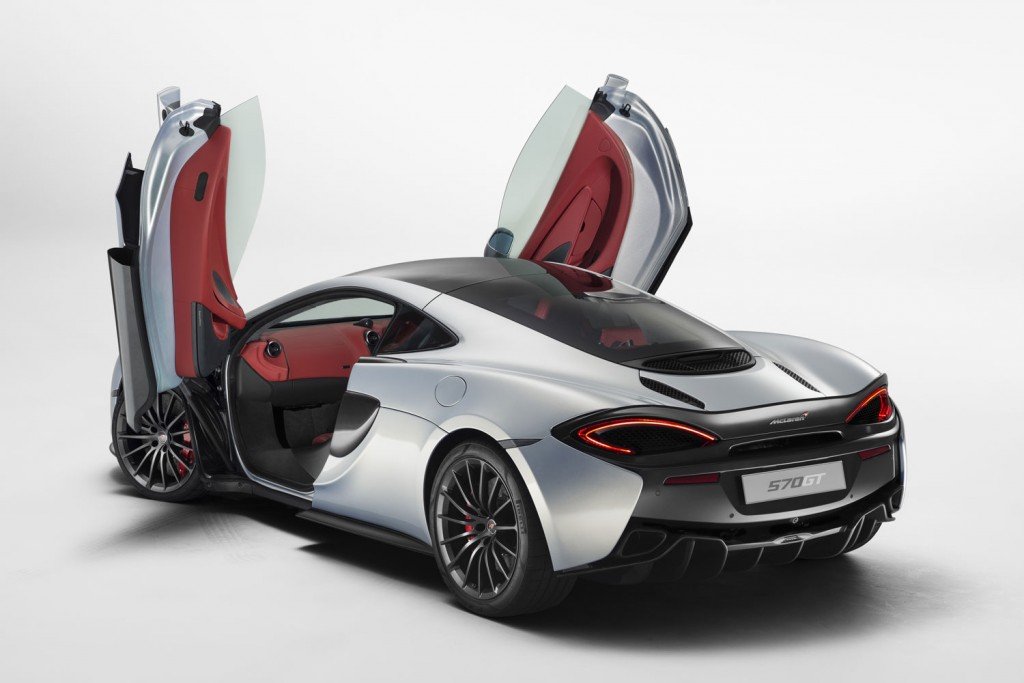
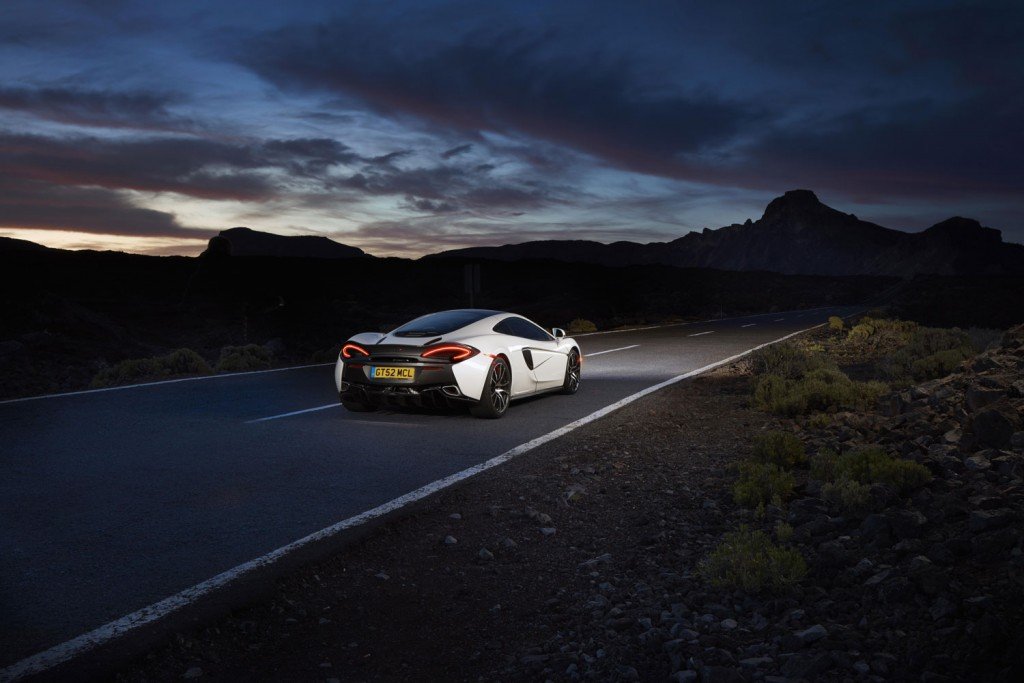
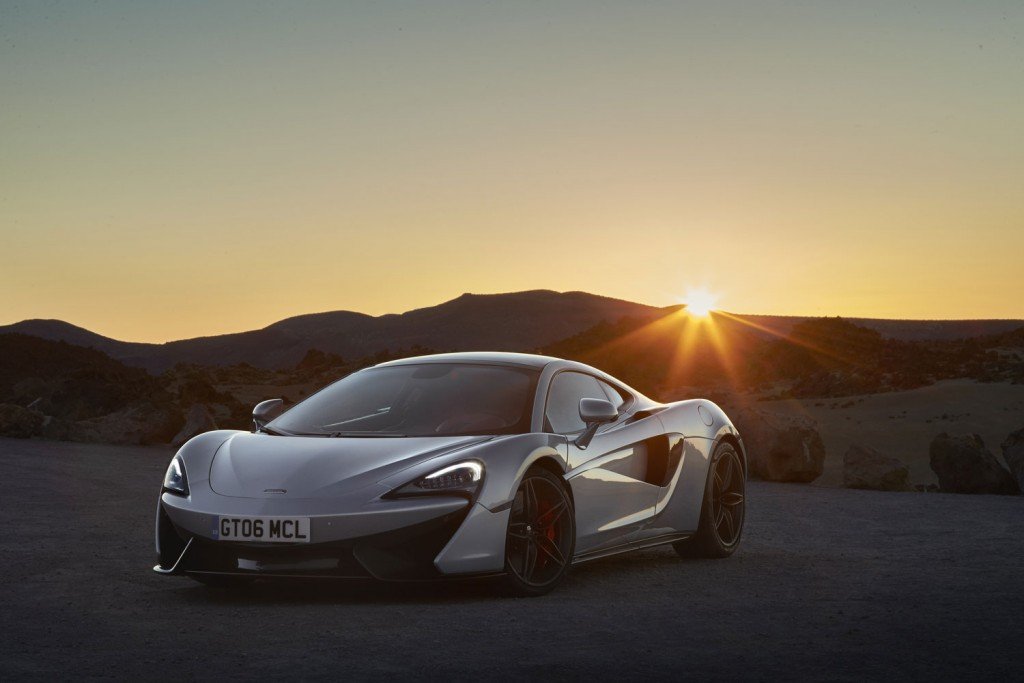
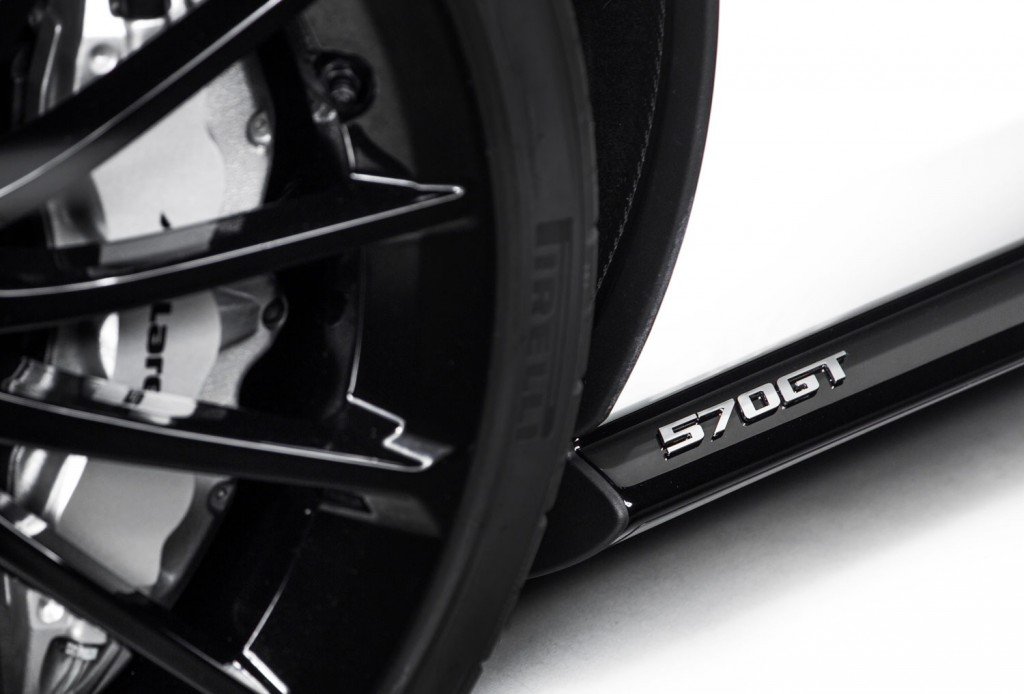
That lineage couldn’t be clearer, or faster, in the 903-horsepower McLaren P1, whose groundbreaking gas-electric hybrid powertrain helped it quickly sell out 375 examples, despite a $1.2 million base price. Now, the company’s new Sports Series delivers that signature blend of a carbon-fiber monocell, exhilarating performance and pinpoint handling, but at a hitherto unheard-of price of $187,400 for the 570S coupe, or $201,450 for the luxurious 570GT.
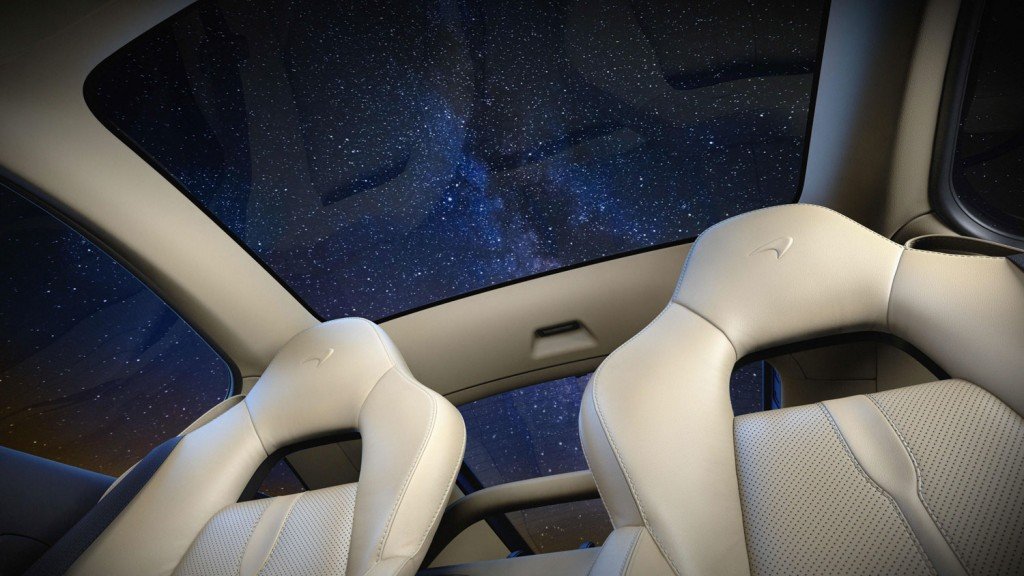
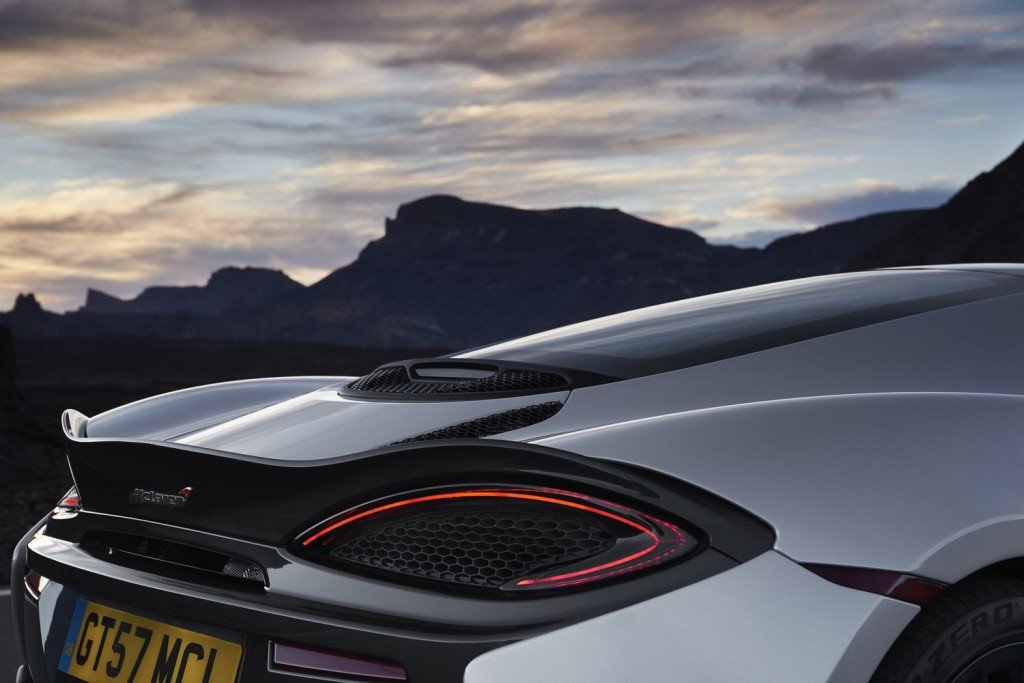
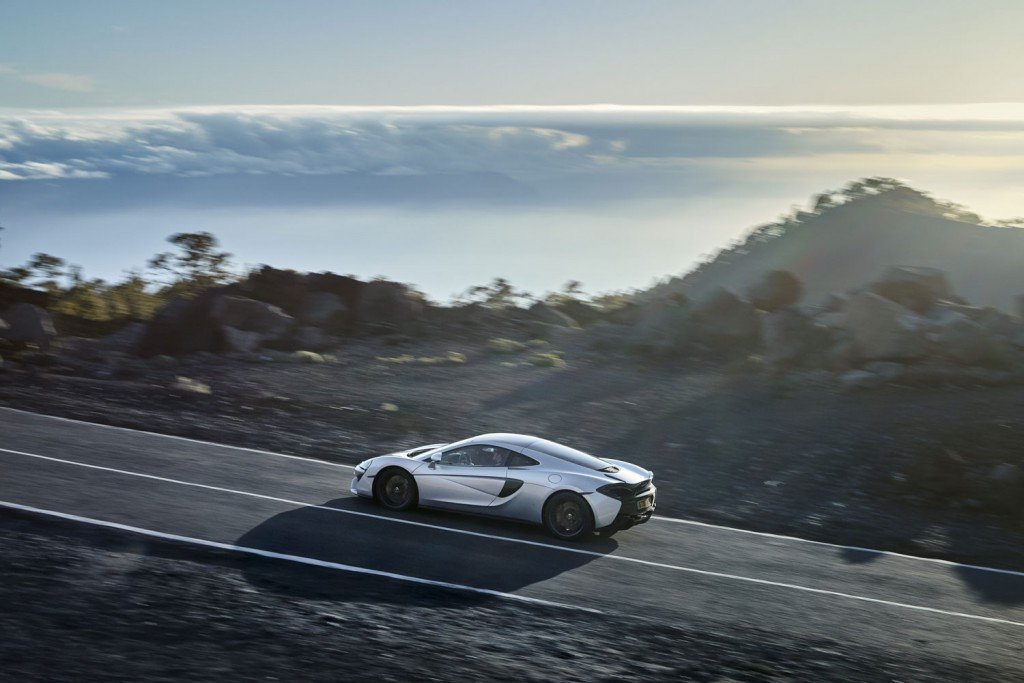
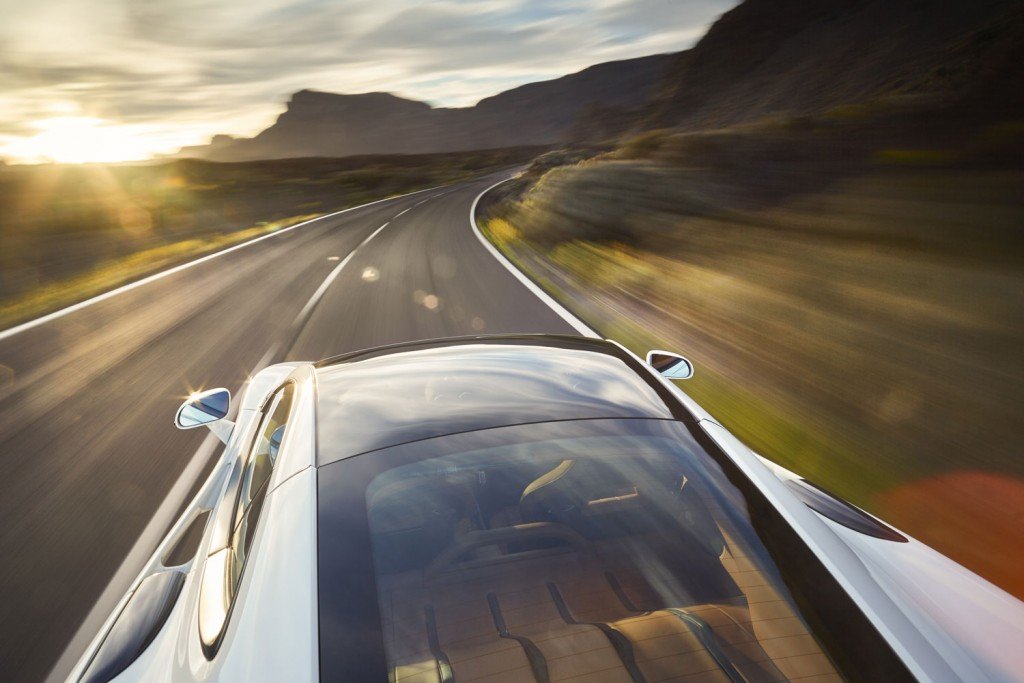
With ideal weight balance from a mid-mounted, 562-horsepower twin-turbo V8 and a seamless seven-speed automated gearbox, the Sport Series models will slay 0-60 mph in 3.1 seconds, en route to a 204-mph top speed. The Sport Series adds another trump card to the stacked deck: all-day driving comfort. That includes easier entry and exit through the bravura dihedral doors, with lower, slimmer doorsills than the more-focused Super Series 650S and 675LT. The 570S GT adds a clever side-opening rear hatch for expanded luggage space, along with a panoramic glass roof to bring more light into the cabin. A wide spectrum of driver-selectable settings for the engine, suspension and transmission make these true daily driving sports cars, as eager for a long-distance vacation as a track workout.
That versatility, McLaren says, is what separates the Sport Series models from its rivals.
“You can drive it slowly if you like, and it doesn’t mind sitting in traffic. You go to the race track and turn a few buttons, and you have a race car. Then you go turn it back to ‘Normal’ mode, and it’s easy and comfortable to drive,” she says. “It’s really the best of both worlds. You’ve really got a supercar at a sports-car price, and I just love it to pieces.”
It’s a vision that again traces to the company’s beginnings, and the M6GT of 1969. Bruce McLaren dreamed of building the world’s fastest, best-handling road car, one that could win races as well. The curvaceous M6GT was the result, a car that McLaren used to commute to work and race meetings. But racing rules changed, and the project was shelved after only three prototypes were built.
Amanda McLaren, now the company’s Brand Ambassador, was asked to drive her father’s personal M6GT at England’s prestigious Goodwood Revival in 2015. The pressure was on, with McLaren nervous about stalling the car in front of a huge festival crowd, pillows stuffed behind her to help her reach the pedals.
“I can’t stall, I can’t bunny hop, and pushing the clutch was like bench pressing 100 kilos,” McLaren says with a laugh. “After three laps, I was exhausted mentally and physically. But of all the cars in the world I could have asked to drive, that was the one.”
With a five-decade edge in technology and know-how, the modern culminations of Bruce McLaren’s dream remain beautiful and fast, but they’re also reliable and versatile enough for anyone’s morning commute. As brand ambassador, Amanda McLaren spends most days taking customers, fans and prospects around the McLaren Technology Center, guiding them full circle through that evolution.
“I see it all through their eyes,” she says. “I’ve had people cry and people just about pass on me. They want to see the iconic F1, or they want to see the fabulous production center where the road cars are made. Or they’ve already bought a McLaren, and now they want a Sports Series to have something more practical.”
Asked what her father might say on one of her tours, McLaren thinks for a moment before replying.
“We’ve come so far in the past 50 years,” she says. “I think he’d be amazed at how big the company is and the technology that drives the company. He’d poke around the production center and say, ‘Good job, boys,’ or, ‘Please explain this to me.’ But I think he’d be pretty pleased that his name is still attached to it.”


An exclusive offer to drive one of the driver-centric and performance oriented sports cars.