
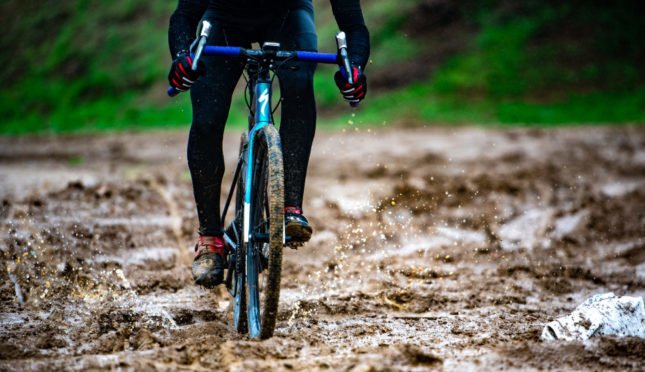
A couple of years ago, longtime cyclist Sam May found a new way to enjoy his bike. He spotted groups of riders, more than usually dust-covered and equally high-spirited, rolling into Ketchum, Idaho. The crowd ran the gamut from elite athletes on all-carbon bikes to paunchy men on heavy touring rigs. But as May soon learned, they had all lined up together at the start of Rebecca’s Private Idaho, an annual “gravel event” that covers up to 100 miles on the unpaved backcountry roads surrounding Sun Valley.
Now, still wearing their dirty bike clothes, the riders were on their way to the post-ride celebration. “There was a real sense of camaraderie and fun that you don’t usually see after a race, especially one that’s 100 miles,” says May, a partner in a global professional services firm who splits his time between Charlotte, N.C., and Toronto.

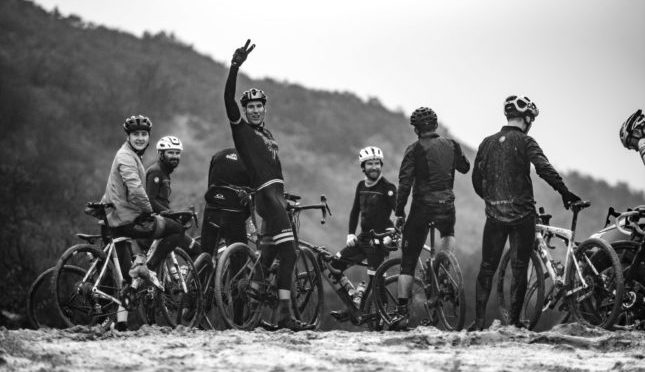
May’s observation was further confirmed when the race organizers rolled out a 10-foot bar for Gelände Quaffing, a beer-drinking game where players catch a beer mug in mid-air and quaff the beer in one smooth motion. (The game was apparently founded by American skiers in the 1980s and has multiple variations.)
The word “gravel” has traditionally not made bikers feel all warm and fuzzy inside. Road cyclists associate gravel with the dangerous scree that causes crashes, while mountain bikers hear “gravel” and think death by boredom.
But gravel riders think differently about, well, gravel. To them, it represents a go-anywhere philosophy of cycling that takes riders off busy roads or the confines of designated bike trails and gives them permission to ride virtually anywhere. “‘Gravel riding’ is an unfortunate name for something that really means riding anything beyond just a truly paved road,” says Gerard Vroomen, who cofounded Cervélo Cycles and, after selling his stake in the company, turned his attention to gravel. “I’m in Amsterdam and I need to ride maybe 15 minutes to hit trails, so it’s really covering different surfaces to string together a ride.”
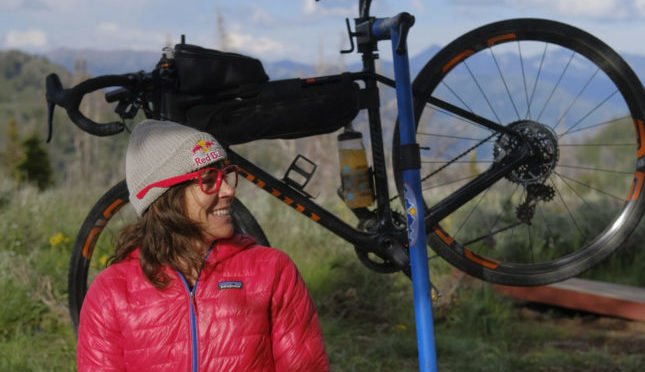
There are more than 1 million miles of unpaved roads in America, and in many parts of the world there are seemingly endless options to piece together routes. “To me, gravel riding is an invitation to explore,” says Rebecca Rusch, an endurance cyclist whose feats earned her the nickname Queen of Pain. “You peek down a road and it’s a road less traveled.” In 2013, Rusch started her eponymous gravel festival in Idaho. It culminates with races covering different distances, from the 19-mile Tater Tot to the 100-mile Baked Potato.
“I call it the incredibly fun, welcoming side of cycling,” says Ted King, a former UCI World Tour professional cyclist who raced in the grand tours, including the Tour de France and Giro d’Italia, before retiring in 2015 and finding his way to gravel. King doesn’t consider himself a professional gravel cyclist—that term, like racing, is antithetical to the ethos of gravel—but he’s gained a bigger following winning major gravel events than he did racing the grand tours in Europe.
“I think gravel is the most exciting aspect of cycling, especially here in the U.S., because it’s so participatory,” he says. These participants range from full-time athletes to full-time parents, to full-time entrepreneurs—GU Energy Labs cofounder and CEO Brian Vaughan took up gravel several years ago—and investors. “Gravel is more social,” says Chris Hobbs, a startup advisor and early-stage investor. “If you want to ride side by side, better to do it on a fire road than a busy road.”
You really lose the stress of riding on the road with the cars, traffic lights and everything else that is competing for your attention.
To the extent that there is one, the typical gravel rider might partake in a couple of organized events a year. But for many people, gravel is mostly about unplugging. “You really lose the stress of riding on the road with the cars, traffic lights and everything else that is competing for your attention,” says Justin Kelly, CEO and CIO of Winslow Capital Management in Minneapolis, where he can ride countless miles of unpaved farm roads on the outskirts of the city. “You sort of hit this escape velocity to the peaceful place where you have much better scenery and a much calmer environment.”
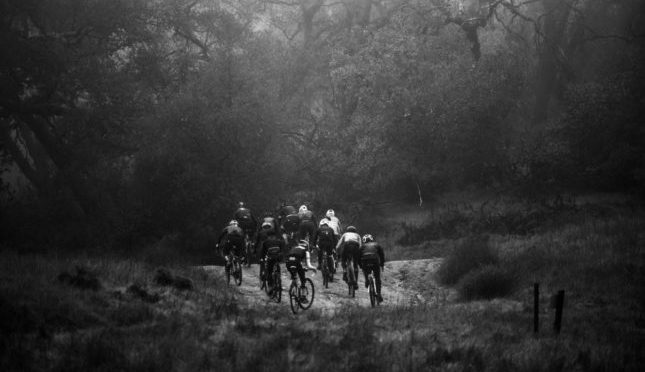
“The adventure side of it is what appeals to me. It takes me back to when I started to ride a bike as a kid,” says Neil Shirley, who retired from professional cycling in 2010 and has since competed in and won many of the larger gravel events. Some of his favorite rides are those he and friends have dreamed up, including one in Southern California that took them to four decommissioned Nike missile sites, built during the Cold War and accessible via dirt roads and 60-year-old pavement. “We rode more than 100 miles, did 14,000 feet of climbing, and in eight hours saw five cars,” says Shirley.
Still, organized races are growing in number and popularity. “Most races aren’t really billed as races,” says Ben Farver, founder of Argonaut Cycles, a bespoke bike builder based in Bend, Ore. Nearly half of all new inquiries for Argonaut’s hand-built carbon bikes are for customers interested in gravel. “There are people racing, but it’s totally acceptable to show up, ride the course with friends, stop at all the aid stations and just be social.”
New gravel events have sprung up in nearly every U.S. state—with names like Filthy 50 and Crusher in the Tushar—and across Europe. Jayson O’Mahoney, founder of GravelCyclist.com, can hardly keep count of the number of new gravel events popping up, but he estimates that there are more than 450 on the calendar for 2019. With the exception of Hawaii, he says, every state now has at least one gravel event.
The courses are as wide-ranging as the backgrounds of the people who ride them, though they usually string together unpaved rural roads, shoddily paved byways, dirt tracks and bike paths. Some events award prizes to the top men and women, but many, including some of the largest, pay nothing. Most events revolve around food and beer. The Belgian Waffle Ride in San Diego, for example, attracts top male and female pros—but it serves a waffle feast at the start, beer at the finish and bacon in between.
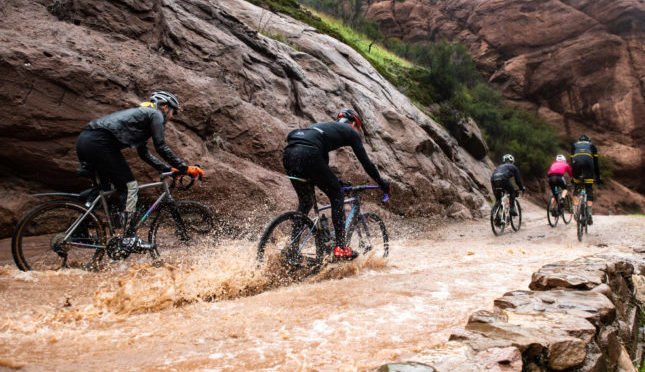
“The vibe is completely different from road racing,” says Olivia Dillon, a national champion road cyclist from Ireland who retired in 2015. “It’s a bit of a party atmosphere where you meet all sorts of people with different backgrounds and goals and reasons for why they’re there.”
Another notable difference with gravel events is the percentage of women showing up at the start, and the emphasis that race organizers put on bringing them there. More than a third of all participants in the 2018 Rebecca’s Private Idaho were women. At the Belgian Waffle Ride, any woman who signed up for the 133-mile event received a free entry for another woman. In Steamboat Springs, Colo., organizers of the new SBT GRVL race set aside an additional 200 slots for women after the event sold out and promoted the August event with the hashtag #SBTPARITY.
“I loved the inclusivity of the mass start, men and women riding together,” says Laura King, an elite cyclist who is married to the former professional cyclist Ted King. At the behest of acquaintances and fans, the Kings are putting on a new gravel event in Vermont, where unpaved roads outnumber paved roads. “Rooted Vermont” includes a 45-mile and an 85-mile course and follows what the Kings call the “mullet protocol”—business up front and party in the back. The event sold out in less than a month, though the Kings are fielding pleas for more slots. “One couple said it’s their anniversary gift to each other, and could we please spare two more spots,” she says.
What happens is you get around all these people and there’s a collective energy, and a motivation that you will push yourself.
Because most gravel events cover long distances and challenging terrain, it helps to have a crowd. “What happens is you get around all these people and there’s a collective energy, and a motivation that you will push yourself,” says Rusch. “It’s like going to a rock concert.”
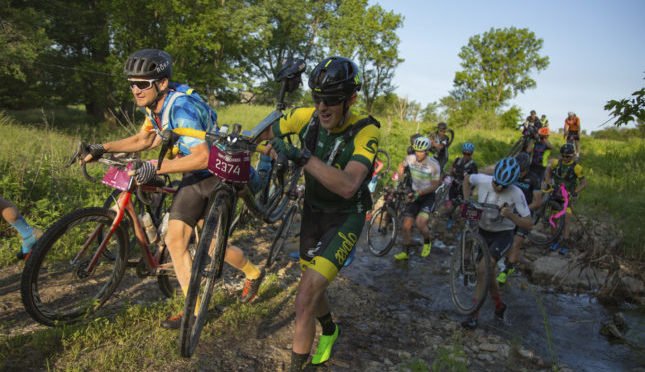
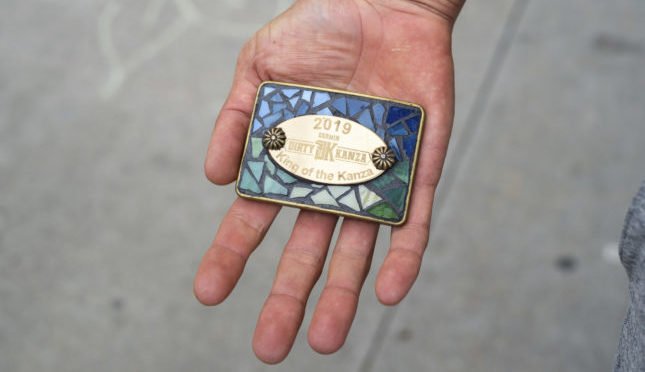
Perhaps nowhere is the spirit of this two-wheeled phenomenon more on display than in Emporia, Kan., a town of 25,000 that hosts Dirty Kanza, which many consider the Super Bowl of gravel riding. While Dirty Kanza covers a wide range of distances, from 25 miles to 350 miles, the main race is a grueling 200 miles, with winners finishing in around 10 hours and the last participants coming in 21 hours after the start. With the exception of two checkpoints, riders cannot accept any support from noncompetitors.

That’s a big part of the appeal. “You get out there in the middle of those hills and no one is going to come rescue you. It’s up to you to get to the next checkpoint and it’s gut-check time,” says Jim Cummins, who cofounded Dirty Kanza in 2006 with the late Joel Dyke after becoming intrigued with Trans Iowa, a 340-mile gravel ride across the state.
“If you look at our demographics, age-wise it’s the perfect bell curve and the center of that is 45 years of age,” he says. “It’s middle-aged professionals who are bored with careers and looking for some excitement. Gravel gives them that challenge, gives them a place to test their mettle.”
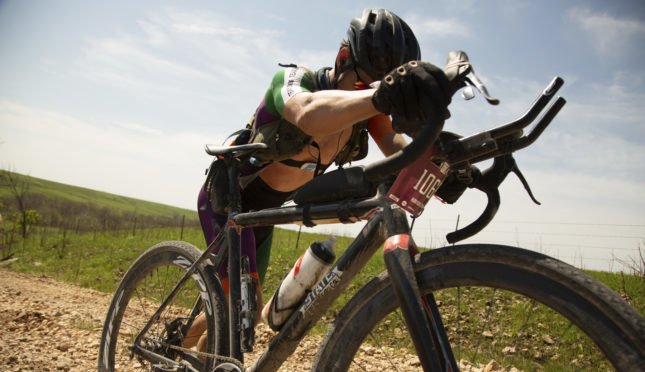
Cummins and Dyke originally planned to take turns racing and playing the role of race director. That worked for the first year, when 34 people showed up. The event has grown exponentially. This year’s Dirty Kanza drew more than 2,700 people—and twice as many applied for the lottery to get in—with every U.S. state and 28 different countries represented. “You’ll see just about anything and everything from $10,000 carbon bikes to $150 Walmart bikes and everything in between,” says Cummins.
Gravel riding doesn’t require a special kind of bike—that’s another thing in its favor—but the industry has responded to consumer demand by rolling out gravel bikes designed specifically to roll fast over pavement but accommodate wider, nubby tires that can handle a wide range of terrain.
After Gerard Vroomen sold his shares in Cervélo, a friend invited him to ride the Almanzo, a Minnesota gravel event started in 2007. “He said, ‘Just bring whatever bike you have that has the most tire clearance,’” says Vroomen, who used a road bike he’d designed for the cobblestones of the Paris-Roubaix road race. “We squeezed the biggest tires into that, and I rode that gravel and thought, This is the kind of bike I need, but I need more tire clearance.”
He went home to the Netherlands and built that bike and in the process launched a new company, Open U.P. The gravel-specific bike combines the lightweight qualities and handling of a road bike with space for tires nearly as wide as a mountain bike’s. When he debuted the bike at Sea Otter Classic in 2015, a California event that doubles as an unofficial industry trade show, product managers from larger brands expressed skepticism over whether such a bike had staying power. Today, Open U.P. is sold by more than 300 dealers globally.
Most of the major bike manufacturers now make a gravel bike, and the growth of gravel riding has influenced everything from clothing and accessories to components and wheels. In 2018, Enve Composites, a maker of high-end bicycle wheels and components, unveiled a gravel-specific wheel designed to give a cushier ride and minimize pinch flats that occur when the rim of the wheel cuts into the tire. “The G23 is now our second-best-selling wheel, and it’s been on the market for only one year,” says Neil Shirley, who now works for the Ogden, Utah-based company.
“The main reason gravel has staying power is it’s very much aligned with the way many people want to ride a bike,” says Vroomen, who is also a partner in 3T, an Italian company for which he designed a high-performance go-anywhere bike called the Exploro. “I’m convinced 100 percent that five years from now the pure road bike market will be a tiny, tiny market and the main slice of this market will be the gravel bike—or whatever we call it then.”
Oregon-based business writer Sarah Max is also a longtime endurance athlete who took up gravel racing a year ago, recently finishing second at the Belgian Waffle Ride and third at Dirty Kanza. While she was reporting and writing this story, Max became an ambassador for Argonaut Cycles and Enve.
Anatomy of a Gravel Bike
Anything goes with adventure riding, but gravel bikes typically resemble road bikes with longer wheelbases and lower bottom brackets for stability, disc brakes for stopping power, plus clearance for wider tires to roll over any terrain. Below are two standouts, lightweight bikes that excel both on road and off-road, the Argonaut GR2 and 3T Exploro.
Argonaut GR2
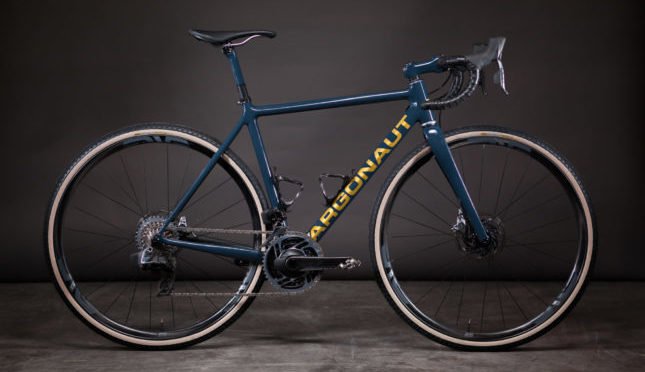
The carbon layup of this hand-built Argonaut frame is customized based on weight, size and riding preference. It features a SRAM Red eTap AXS drivetrain with integrated power meter; Chris King i8 headset and T47 ceramic bottom bracket; Enve cockpit, fork and G23 wheelset. Price: $14,000 as shown, argonautcycles.com
3T Exploro LTD
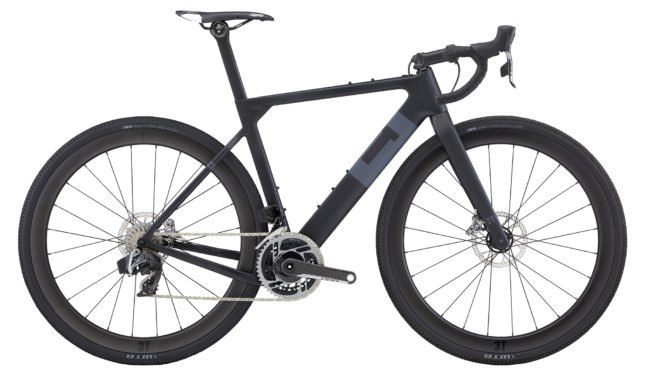
The aerodynamics of a road bike meets the burly features of a gravel bike with the 3T Exploro LTD. It features a SRAM Red eTap AXS drivetrain for seamless shifting; 3T SuperGhiaia gravel handlebars for extra stability; and 3T C45 Wide LTD wheelset to accommodate wide gravel tires. Price: $9,990 as shown, 3t.bike/en
Rides, Races, Camps and Clinics
There are now gravel events in virtually every state, but here are some notable examples. For a comprehensive calendar, visit gravelcyclist.com/calendar.
Belgian Waffle Ride: The course for BWR varies every year, but riders can expect a wide range of terrain covering 130 to 145 miles in and around San Marcos, Calif. May 3, 2020. belgianwaffleride.bike
Dirty Kanza: Emporia, Kan., welcomes riders from around the world for this premier gravel event with distances ranging from 25 to 350 miles. May 30, 2020. dirtykanza.com
Grasshopper Adventure Series: Now celebrating its 20th year, this series hosts low-key, mixed-terrain events throughout Northern California starting in January. grasshopperadventureseries.com
Rebecca’s Private Idaho: It’s not too late to sign up for this year’s RPI from August 29 to September 1. Join the “Queen of Pain” Rebecca Rusch for a multi-day gravel festival that culminates with races ranging from the 19-mile Tater Tot to the 100-mile Baked Potato ride. rebeccasprivateidaho.com