
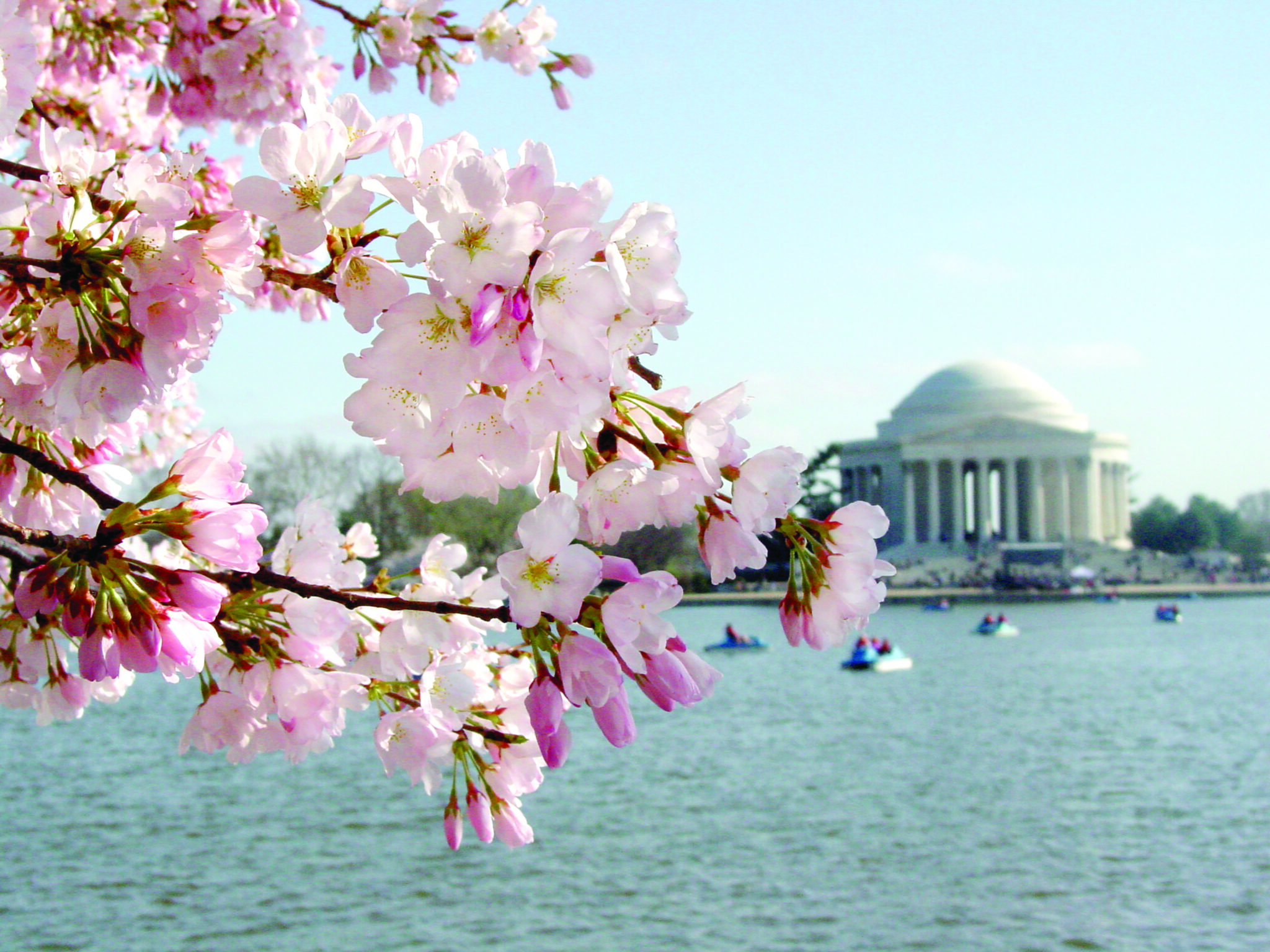
If you’re bringing your family to Washington, D.C., for a vacation, as I did recently, you know you’re supposed to see the capital’s greatest hits. The Washington Monument. The Smithsonian. The White House and Capitol. The memorials—Jefferson, Lincoln, FDR, MLK, Vietnam, World War II. The Native American and African American history museums. Washington has an abundance of cultural icons.
But if you’re interested in the future, as well as the past, you should investigate one of the city’s newest cultural attractions, a 24-acre, mixed-use development on the Anacostia River called The Wharf. Located in Southwest Washington, The Wharf is easy to get to by foot, bike or scooter, by D.C.’s subway and bus systems (known as the “Metro”), even by water taxi. It used to be a light industrial neighborhood, probably best known for its fish market, which dates to 1805. But after a recent multi-billion-dollar transformation, The Wharf is a bustling complex featuring residential, retail and commercial development, including some 14 acres of park and public spaces. Locals and tourists visit The Wharf to dine at restaurants like Mi Vida, an excellent Mexican place, or the Rappahannock Oyster Bar. They can hear live music at The Anthem, which this fall had scheduled youth-oriented artists such as Phoebe Bridgers and Pigeons Playing Ping-Pong. They can rent a kayak and paddle on the river. Or they can visit the revitalized Municipal Fish Market, with its rows of booths offering crab legs, spiced shrimp, lobster and seemingly countless species of fish packed on ice.

What the casual visitor may not see is that The Wharf is an advertisement for urban sustainability. To get a birds-eye view of that perspective, try typing “The Wharf D.C.” into Google Earth. As the satellite camera homes in on its rooftops, you’ll see square after square of green—rooftop gardens, to capture rainwater that would otherwise run off into the Anacostia. You might also see what look like gardens in the river itself. They’re known as “floating wetland systems,” and they help filter the river water while providing habitats for fish and other life. You might be able to see the ubiquitous, integrated bike trails and prominently placed bike racks. Less visible are the built-in touches, like the fact that all the buildings at The Wharf are LEED-certified, that developer Hoffman-Madison Waterfront constructed a 600,000-gallon cistern and permeable pavements to help collect rainwater run-off and prevent it from polluting the river. The hotel where I stayed, The InterContinental Washington, D.C.—The Wharf, is LEED Gold, from its green roof to its recycled construction materials to the absence of those environmentally indefensible shampoo bottles in its bathrooms. In January 2022, the Intercontinental will be hosting “Organic Week,” a conference by the Organic Trade Association. “We know you care about sustainability, and so does the InterContinental,” the hotel proclaims in materials promoting the event. And sustainability also means trying to foster economic equity in your own backyard; over 70 percent of the InterContinental’s employees live in the D.C. area.
The Wharf isn’t just an example of environmentally progressive urban redevelopment, it’s a demonstration of how Washington, D.C. has, quietly and without a lot of fanfare, transformed itself into one of the country’s most sustainable cities. That may come as a surprise to people who wouldn’t expect it from the nation’s capital. Typically, when Americans think of sustainable cities—those that work to reduce their carbon emissions, facilitate clean energy use, and promote good health and shared prosperity—we think of outdoors-oriented, western cities like San Francisco, Denver or Portland, Oregon. Washington is better known as the home of the federal government, full of contention and seemingly incapable of forward motion. But that bad reputation obscures the impact of D.C.’s local government and the engagement of its residents. In the space of about two decades, Washington has made itself into an environmental leader, demonstrating how cities can reduce their impact on the planet while improving the quality of life for their citizens. In 2017, the United States Green Building Council, which developed the LEED ratings systems, declared Washington the world’s first LEED Platinum city, an award created to honor leadership in sustainability.
Washington’s green evolution really began with buildings, which are estimated to generate over 70 percent of the city’s greenhouse gas emissions.
In 2006, pushed by a local activists, subject experts and a liberal city council, D.C. mayor Anthony Williams signed the Green Building Act, which mandated that all public or publicly financed buildings had to meet LEED Silver (or higher) requirements. For public housing and public schools, the mandates were even stricter—they had to be LEED Gold. For lower income citizens of Washington, many of whom are Black, that stipulation “sent a message to parents that they could educate their kids in D.C. and not have to move out of the school district,” says Anica Landreneau, the head of sustainable design at global architecture-engineering firm HOK. The mandate for affordable housing would have a tangible impact on residents’ quality of life, translating into lower energy bills and better health. LEED-certified buildings have a positive impact on respiratory health, and several published studies have shown that they reduce the number of lost work and school days, as well as emergency room visits, due to asthma.
The Green Building Act also stipulated that, as of 2012, commercial buildings of at least 50,000-square-feet would have to be LEED-certified. (The law has since been modified to apply to buildings 10,000-square-feet and bigger.) “That law was one of the first in the country to mandate that privately constructed buildings had to meet LEED standards,” says Cliff Majersik, a policy analyst at the D.C.-based Institute for Market Transformation who helped write the legislation.
Before D.C.’s Green Building Act, cities tended to encourage developers to meet LEED requirements by offering tax incentives or accelerated building permitting. The impact was modest. But within a few years, Majersik says, over 100 cities had passed laws similar to Washington’s. The reason? For one thing, the requirements didn’t send any potential developers fleeing for other, less-regulated cities. In D.C., developers quickly bought into the idea. Clients, it turned out, liked sustainable buildings, which meant that developers could lease or sell LEED-certified space at a premium. When the trend became apparent, “nobody wanted to build the last brown building on the block,” says Landreneau.
D.C. also benefitted from the fact that it houses the federal government: If you needed to work with the government, you had to be in Washington, LEED requirement or not. That constituency includes a sizable number of environmental non-profits, which supported D.C.’s policy initiatives both in spirit and more concretely—their staffers often provided policy expertise and legal advice. And the federal government, itself, under the Bush and Obama administrations, began mandating that new or substantially renovated federal buildings also meet LEED Gold requirements.
“Within maybe five years of the [2006] law’s passage, the fact that buildings needed to be LEED-certified was immaterial” to developers, says Lindsey Falasca, director of IMT’s High Performance Building Hub. “They were just going to do it.” Adds Landreneau, “There is no longer a premium for green construction [in Washington] because it’s the only kind of construction in town.”
The grass-roots wave of environmental concern—and the success of the resulting measures—brought other efforts toward sustainability. Completed in 2008, the Washington Nationals baseball stadium, Nationals Park, was the first LEED-certified major sports stadium in the country. That same year, D.C. launched a bike-sharing program, the first of any big city in the country; it now has some 500 solar-powered bike stations. (And Washington buses come equipped with bike racks on their fronts, to facilitate multiple-stage trips.) That was followed by scooter programs and, more recently, a moped system. D.C. offers extensive public transportation, from its underground Metro to a bus system that includes a zero-emission circulator bus network. “I’ve never been anywhere else in America with as many mobility options as there are here in Washington,” says Falasca.
Some improvements are granular: A 2009 law imposed a five-cent tax charge on plastic and paper bags. In 2019, Washington banned restaurants and other businesses from using plastic straws (only Seattle preceded Washington’s move). Almost certainly most impactful was the systemic change, the enthusiasm with which the District government came to embrace and internalize the ethos of sustainability. One example: the city’s Department of Energy and Environment (DOEE), once a tiny agency, now has a staff of over 300. “Now, in D.C, you have the attitude, ‘That’s great, we can be the first.’”
In 2019, the DOEE helped Washington mayor Muriel Bowser launched a plan called “Sustainable D.C.” It sets Washington on a path to being carbon-neutral by the year 2050. Even sooner, Sustainable D.C. mandates that 100 percent of the city’s electricity come from renewable sources by the year 2032. And all of this is being done with a concerted focus on equity and inclusion. As the Sustainable D.C. plan points out, communities of color are more likely to suffer from “deep and persistent gaps in income, health, employment and education.” Any city aspiring to a meaningful definition of sustainability must address those gaps. One example of how D.C. is trying to do that: It’s building a new hospital in the Anacostia neighborhood, one of the city’s poorer sections. That hospital will be LEED-certified for health care, “which is more stringent than regular LEED,” explains Landreneau. The city’s best-known hospitals, which typically serve a more affluent population—at Georgetown and George Washington universities, for example—don’t meet that certification. “So, the greenest hospital in the district is going to go to Anacostia,” Landreneau explains. “There’s something to be said for that.”
None of this is to say that D.C. has solved all its sustainability challenges. Car traffic in and around the city is still a serious problem. A more human toll comes from the city’s plague of gun violence, mostly in its poorer neighborhoods; you can’t say a city is sustainable if its young people are killing each other at alarming rates.
But the work Washington has done to make itself sustainable has not only helped the fight against climate change, it has made Washington a remarkably livable and appealing place, where concern for the environment isn’t just a marginal concern but part of the fabric of everyday life. Working on sustainability “feels really good,” says Cliff Majersik. “You’re helping transform the city for the better.”