


It’s easy to forget what disruption truly means in a world overflowing with self-proclaimed “disrupters.” But venture capitalist Noor Sweid (pictured below) truly embodies the term—on both a personal and professional level.
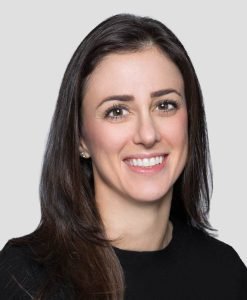 As the founder of Dubai-based, growth-focused venture capital firm Global Ventures, Sweid backs founders of innovative and disruptive companies in emerging markets with the ability to scale, and with a portfolio of companies tackling issues from health care inclusion to financial equity, she’s changing the world in the process.
Not only that, Sweid is the only Arab woman in the Middle East running a VC fund and the first woman to lead an IPO in the region, when her father’s interior contracting company Depa listed on the London Stock Exchange and NASDAQ Dubai in April 2008.

While in the process of transforming Depa from a $60 million company into a $600 million one, Sweid also “accidentally” built her own business—the first yoga studio in Dubai, which she built into the largest chain of yoga and pilates studios in the Middle East before selling the company to a private equity firm in 2014.
“I realized during that journey that it was so much harder to run a startup than to run a billion-dollar company,” Sweid recently told Worth during an interview over Zoom. “I started engaging with founders, especially female founders, and angel investing and mentoring. As I started investing, they needed increasing amounts of capital; and since I’m not that scalable, I got into venture because that’s all venture is: Pooling capital to invest in startups and helping them grow.”
In 2016, Sweid was pulled in by the government to serve as the chief investment officer of the Dubai Future Foundation to help with its innovation strategy. But clearly, the plight of founders was still on her mind.
“Two and a half years ago, I left that role [as CIO at the Dubai Future Foundation] to start my own fund with a thesis that entrepreneurs are everywhere and in emerging markets, founders are even more resilient because it’s harder for them to get up and running,” she explained. “There’s less capital available for them although they are very effectively solving real problems around the world—we want to invest in companies that are scaling globally from here.”
And even as COVID-19 hit, the pandemic didn’t stop Sweid from looking ahead. Instead, she turned her attention to the health care tech space, diving into the data around health care inclusion and access to health care.
“Is health care inclusion and access to health care an anecdotal problem? What does the data reflect in our part of the world, in MEA? Our answers informed our investment thesis: Per 1,000 people, we have 1.3 doctors—as opposed to the U.S. which has 3.7,” she said. “Per 1,000 people, the number of hospital beds is around 1.7, as opposed to 4.5. This is a real problem affecting 1.5 billion people here.”
For Sweid, COVID-19’s role in accelerating health care inclusion directly correlates with the way the global financial crisis accelerated the use of technology in the financial sector to address financial inclusion. The pandemic is changing the speed at which insurance companies, hospitals and doctors are adopting health tech in the same way that big banks and regulators became more accepting of fintech on the heels of the 2008 recession. With regulators open to new ideas, life-changing technology can emerge.
“If you’re building a company from scratch and you’re not regulator-driven, you can build something that makes sense for the patient, while satisfying compliance,” Sweid said.
So, in April, Global Ventures led a $7 million, Series-A round for Helium Health, West Africa’s leading electronic medical records (EMR) provider that’s accelerating health care accessibility throughout the region. And that’s just the beginning for Sweid and her firm’s foray into health care inclusion investing.
“It’s a problem that most people who have capital to invest will never see,” Sweid explained. “It’s one of these issues where we see a disconnect. So, working very closely with founders to identify the real pain points along the patient journey is as important as working with the LPs to help them identify the macro opportunities. We become the bridge between both worlds.”