
Spring was the urban tragedy, and fall is the rural catastrophe.
Yet I don’t see any headlines proclaiming, “the end of rural America,” while the deluge of stories about the inevitable demise of cities pours out, unabated. Google “cities are over,” and you could spend between now and the moment that CVS starts proclaiming vaccine availability reading them all. It’s like a sudden break-up with a girlfriend: Suddenly there isn’t a single good thing to be said about your ex.
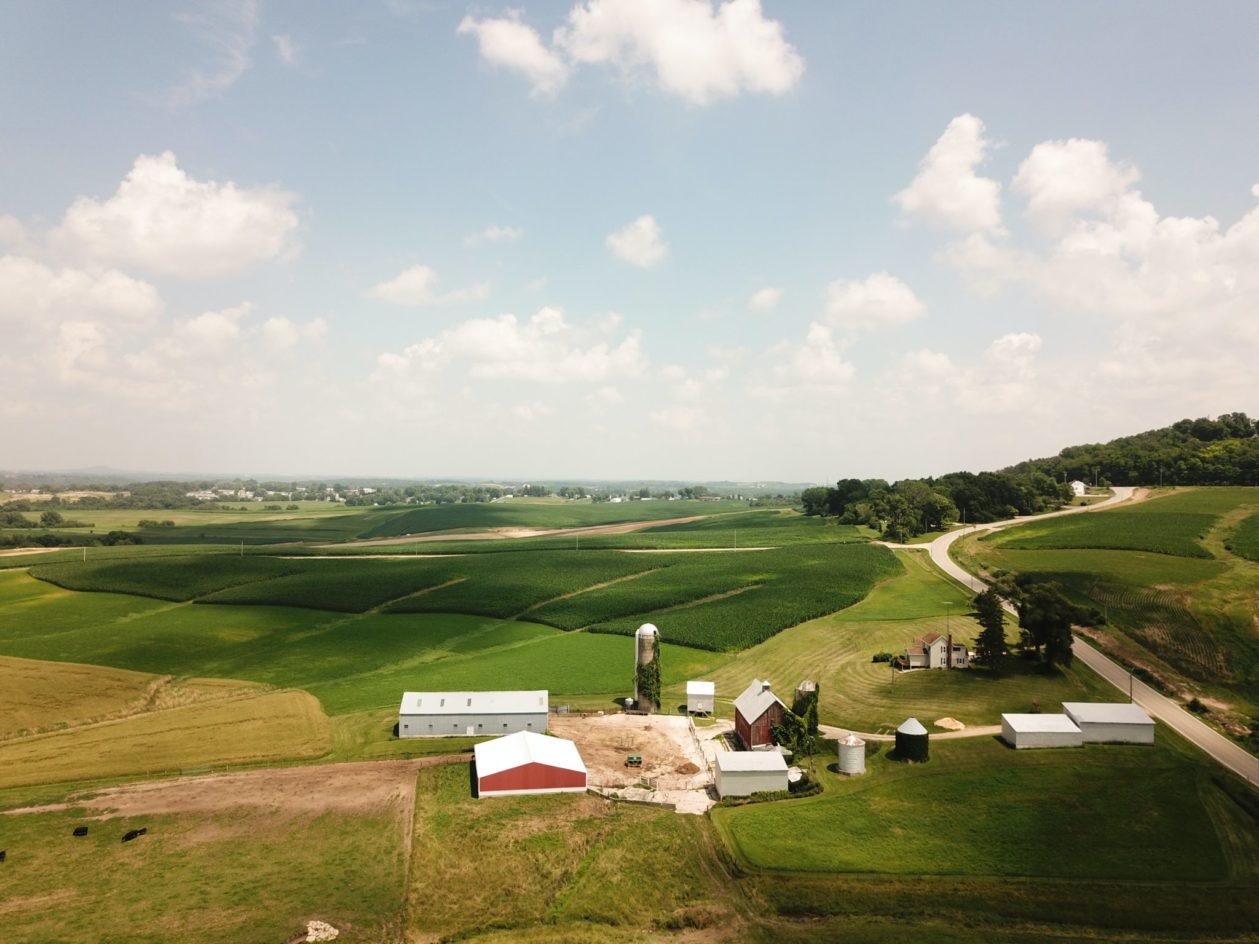
But Google “is rural America over,” and there’s nothing about the pandemic, even though the virus has turned its attention to urban-free America. It’s flown commercial, rode the dog, hoodwinked college kids heading home and is corona-bombing our small towns, where NPR writes it is “surging in rural communities…overwhelming some local hospitals.”

The positivity rate in the three states that rank lowest on population density are at crisis levels: Wyoming is 77.2 percent; South Dakota is 48.2 percent; and Montana is 41.5 percent.
Meanwhile, how are denser, more urbanized states faring? New York is at 2.9 percent, just three positions away from the safest, Hawaii and Vermont; Washington, D.C. is at 2 percent; California, the worst of the bunch, is only at 7 percent. Wide-open spaces are more deadly than the Number 7 train.
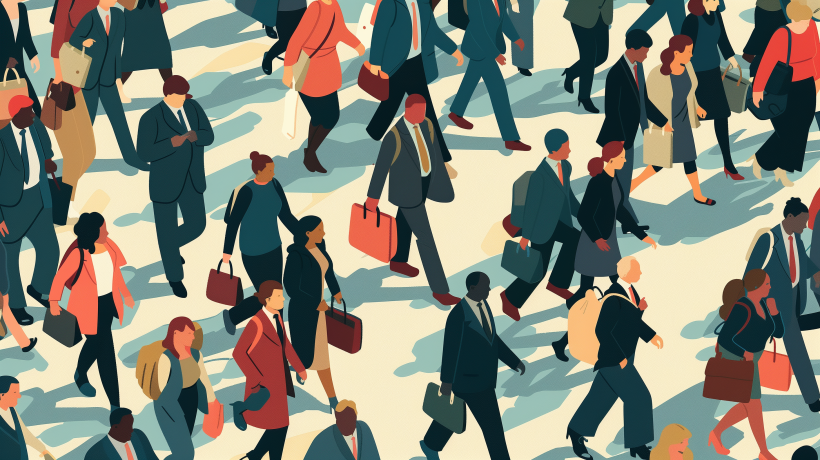
Nonetheless, the urban finality narrative continues: Cities will become desiccated, deserted, Ray Bradbury-like landscapes. At the end of August, after the grim months of April and May, The New York Times—perhaps in an effort to show eponym objectivity—ran a bluntly-titled story “Is New York City Over?” They wrote “no Broadway, no nightlife, uncrowded subways have led some people to proclaim that New York City is ‘over’ as we know it.” (Italics added.) To me, that sounds very Trumpian; how different is the mysterious “some people” from his oft-repeated “a lot of people are saying”—which The Washington Post called out as conspiracy-mongering?
But the Times is not alone; the drumroll of urbageddon is a media narrative, where every data scrap is forensically reviewed, including the number of New Yorkers who have left forwarding addresses. CNN screams that the virus is making people rethink where they want to live, fortified with a photo of an inhumanly crowded subway. Even the sober Canadians are alarmist, with Maclean’s declaiming: “Abandoned office towers, empty subways, deserted cages—post-pandemic, many cities will never be the same.”
The meme of fleeing urbanites has also been picked up by rural media. Back in July, when the West was still safe, a columnist for The Bozeman Daily Chronicle wrote archly of “elite escapism” and the “hordes of privileged tourists from America’s wealthy urban centers” who “descended upon the West…Like trendy harbingers of death.”
Yet today, with crazy positivity rates and hospitals at the breaking point, there is no corresponding media narrative about the end of rural America, even though so many of the cities and towns being hit now were weakened and teetering before, bludgeoned by job loss and the opioid epidemic, twin catalyzers of suffering that made them vulnerable long before the virus made its way there. Add to that the disappearance of family farms and family ranches, and the picture gets darker.
Why are these two realities so bifurcated? Why the schadenfreudian clickbait about urban collapse?
Inescapable, existing narrative imprints, that’s why. The rural fantasy of ditching urban areas for bucolic settings, and the evil nature of the city, have been a cultural foil for centuries. The Aesopian cautionary fable of the city mouse and country mouse goes back to classical times; a summation by the 13th-century preacher Odo of Cheriton spoke in contemporarily resonant terms: “I’d rather gnaw a bean than be gnawed by continual fear.”
In As You Like It, Shakespeare continued the celebration of the pastoral, as the exiled Duke and his supporters find balm from the court, which is a stand-in for the treachery of the city. “Are these woods/More free from peril than the envious court,” the Duke wonders aloud. And later in that soliloquy appears the famous celebration of a life in the Hudson Valley that “Finds tongues in trees, books in the running brooks/Sermons in stones, and good in everything.” (Actually, not the Hudson Valley, but you get the drift.)
There’s no shortage of cultural frameworks for the apotheosis of the rural; may I leap from Blake’s “dark satanic mills” to Green Acres? As Wikipedia drolly notes, it’s a sitcom about a “prominent and wealthy New York City attorney”—Eddie Albert—“fulfilling his dream to be a farmer.” He and Lisa Douglas—Eva Gabor, no less—are “uprooted” from an “upscale Manhattan penthouse to a defunct farm,” with the theme song “Green Acres is the place to be/Farm livin’ is the life for me.” And, apparently, for many others.
Putting aside the fact that rural America releases powerful pheromones that seduce reporters who fantasize about moving to the woods to finish their great American novel, what does the fact that we have soon-to-be FDA-approved vaccines mean for the future scamperings of the city mouse and the country mouse? (Or, for that matter, the suburban, minivan-driving mouse.)
I don’t see a permanent, linear extension of these pandemic-induced shifts and movements. I am optimistic about cities and worried about rural America, given the economic and health care burden the pandemic is placing on their already overburdened local governments. Rural America is a glass-jawed geography compared to the ability of cities to absorb multiple poundings. The resiliency of cities is well-documented.
These romanticized, fetishized destinations—whether really rural or the burbs—will simply not remain attractive to urbanites once we have a vaccine. These are not welcoming spots for misfits and mischief-makers, for those looking to escape and discover (and devour). As America becomes more diverse and full of the restless searching that drives immigrants and entrepreneurs—the self-unsatisfied, those who don’t look or think or feel like the cultural memo so instructs—cities will remain the natural destination for their fiery restlessness. Back in 2015, in its inimitable way, Buzzfeed ran a listicle headlined: “11 Reasons New York Is the Best Place to Reinvent Yourself.”
Yes, I know that rural America is hipsterizing, and the suburbs are becoming more diverse. But has the claustrophobia and small-mindedness of small-town living—from Sinclair Lewis’ fictional Gopher Prairie in Main Street, to the commuter worlds of Cheever and Updike—changed all that much? Lewis describes a disillusioned character who tried valiantly to open the minds of her neighbors: “Had she actually believed that she could plant a seed of liberalism in the blank wall of mediocrity?” he wonders aloud. The question will linger.
In his novel Couples, Updike pointedly captures the downside of suburbia by detailing the “chronic sadness of late Sunday afternoon, when the couples had exhausted their game…and saw an evening weighing upon them… an evening spent among flickering lamps and cranky children and leftover food… an evening when marriages closed in upon themselves like flowers from which the sun is withdrawn…” Do Millennials really want to relive the 1960s?
I’m confident that in three years cities will be roaring back. The fast brain drove the rapidity of the flight, and the longing for what was lost will create a reflex, rethink. What E.B. White wrote in his now-poignant essay “Here Is New York” captures the ineffable quality of what has been (temporarily) abandoned:
“A poem compresses much in a small space and adds music, thus heightening its meaning. The city is like poetry: it compresses all life, all races and breeds, into a small island and adds music and the accompaniment of internal engines. The island of Manhattan is without any doubt the greatest human concentrate on earth, the poem whose magic is comprehensible to millions of permanent residents but whose full meaning will always remain elusive.”
The transformative power of this concentrate is called out in Steven Johnson’s book Where Good Ideas Come From, where he credits the coffee house culture of London with nothing less than the birth of Enlightenment. Johnson speaks of “generative spaces” and “liquid networks” where “people would hang out in this intellectual hub and have free-floating conversations about all these different interests and passions.” The crush and spark of an urban setting cannot be transported in packed moving trucks.
New York’s demise was predicted in the dangerous ‘70s, and it was pronounced fatally Disneyfied in the safe 2000s. Today’s doomslingers have a long history of being proved wrong. Edward Glaeser knows why. In the ancient days of 2011, he published a book, Triumph of the City: How Our Greatest Invention Makes Us Richer, Smarter, Greener, Healthier and Happier. His thesis still holds, and this invention will return, as marketers like to say, “new and improved.”
A terrific piece from the Kinder Institute at Rice University sets out how the pandemic can be a catalyst for more of what makes cities the great inventions they are. The author William Fulton—who runs the institute and directs economic development for San Diego—predicts more flexibility in public transport, reinvented management of cars and parking, and better public health policies and response mechanisms. He also predicts the recapturing of “under-used urban space by building housing on old retail sites”—and sees street life bustling with more bars, restaurants, coffee shop and ground floor personal care businesses. I’ve also been reading about the concept of placemaking—reimagining public spaces as the beating heart of every community—and it is inspiring. The impossible-to-imagine crisis of the pandemic will birth otherwise impossible-to-imagine urban revolutions.
In his paean to New York, White famously observed that anyone who comes to New York has to be “willing to be lucky.” There will be a lot of luck to be found in the future of cities—empty stores and restaurants and offices, and welcoming rents for once—for those with the gambling spirit. “Another hundred people just got off of the train,” Sondheim wrote. Don’t think they will be stopped.