Facebook Cofounder Chris Hughes Thinks Libra Could Endanger the World Economy
Experts see Facebook’s Libra cryptocurrency as a threat to central banks and believe it may be banned.
July 8, 2019
Facebooks cryptocurrency
Facebook officially announced the creation of Libra, the social network’s very own cryptocurrency—backed by a basket of reserve currencies and launched with a network of partners including Uber, Visa, Mastercard and PayPal—on June 18. Its white paper described Libra as enabling “a simple global currency and financial infrastructure that empowers billions of people.” Yet the reality could be something more complicated: A private company with a monopolistic hold on billions of people’s data and communications that is also the arbitrator of the first truly global currency, potentially without any significant oversight.
“If Facebook were a religion, it would be the world’s largest religion,” says Kevin Dennean, a technology equities sector strategist at UBS. “It’s bigger than Christianity. It’s bigger than Islam. It’s bigger than Hinduism. And what this means is that if you’re one of these companies in this Libra coalition, you’ve got a choice: You’re either with them or against them.”
Facebook cofounder Chris Hughes. Photo by Damon Winter/The New York Times
Facebook’s plans for a cryptocurrency “are concerning for a lot of reasons,” Facebook cofounder Chris Hughes told Worth on June 17. In an immediate sense, there are privacy concerns over Facebook knowing “who we are and what we’re doing, what we’re spending money on and who we’re transacting with.”
Even before the announcement of Libra, Facebook had been under fire for a series of privacy breaches, the promulgation of fake news and the Cambridge Analytica election scandal. These factors alone had caused Hughes, who left the company in 2007, to call for Facebook’s breakup on an antitrust basis. Now the greater issue may be that Libra could give Facebook tremendous power over developing economies.
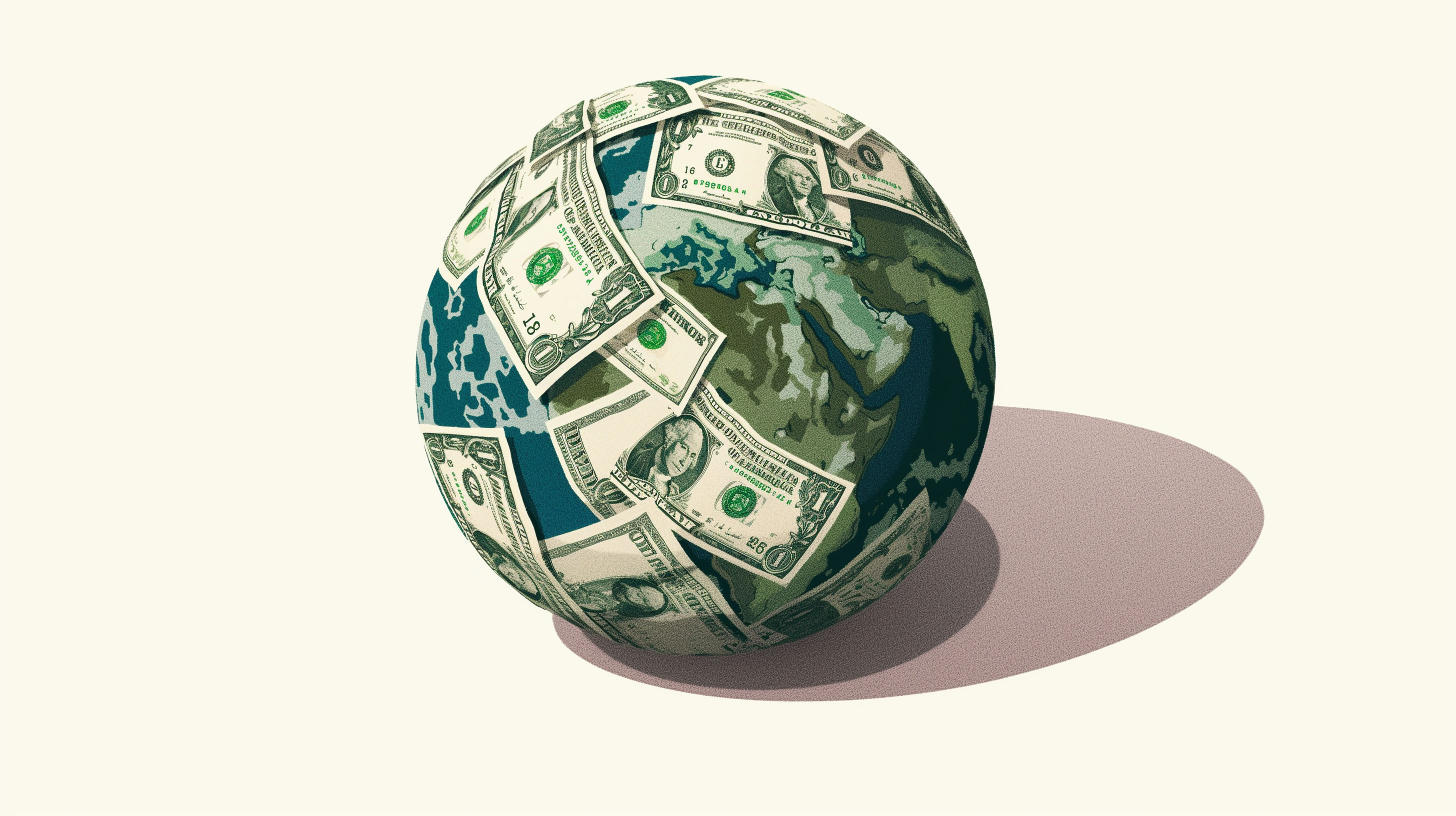
“If this sees any meaningful uptake in developing world nations, it means people in India or Turkey or Argentina will effectively be transacting in dollars, pounds and euros, which means less and less control from central banks in emerging markets,” says Hughes.
Libra will be backed by a basket of reserve currencies—dollars, euros and pounds—and as a so-called stable coin, its value will be pegged to that of those currencies. Effectively, then, the value of Libra will in some ways be tied to decisions made by institutions such as the Federal Reserve and the Bank of England, which could be a problem for developing economies and the health of the global economy as a whole.
“It’s a slippery slope,” says Juan Hernandez, founder and CEO of digital securities trading platform Openfinance. “If they gain traction at a broader scale, that ability to get around some of that central bank governance is possible.” And at that point, “we have to take Facebook on their word that they won’t do it. And they’ve been known to—not toe the line and step over it on trust or privacy matters.”
Economists generally argue that in a situation where, for instance, “India’s economy is weak, they can devalue their currency a bit and make it a place where people want to invest,” Hughes says. “If you have a nation with a currency pegged—you see what happened in Greece.” Greece during the eurozone financial crisis struggled to stoke economic growth because it lacked the ability to devalue its own currency, since it uses the euro. Those fiscal problems soon became a contagion that put the entire world economy at risk.
“If I’m in some country with rampant hyperinflation, and I can convert whatever currency I have into Libra, I have essentially just bought a basket of stable currencies at a very low price,” says UBS’ Dennean. “I do see where government agencies will be very focused on what this means in their ability to control their currency.”
This raises serious privacy, trading, national security and monetary policy concerns for not only Facebook’s over 2 billion users, but also for investors, consumers and the broader global economy.
The attention has already begun. House Financial Services Committee chairwoman Maxine Waters (D-California) has already scheduled hearings on Libra set to begin July 17, and the Senate is expected to hold a similar hearing on July 16. On July 2, Waters and committee Democrats sent a letter to Facebook executives, including CEO Mark Zuckerberg, demanding that the company cease “any movement forward” on the cryptocurrency. “It appears that these products may lend themselves to an entirely new global financial system that is based out of Switzerland and intended to rival U.S. monetary policy and the dollar,” the letter says. “This raises serious privacy, trading, national security and monetary policy concerns for not only Facebook’s over 2 billion users, but also for investors, consumers and the broader global economy.”
And Fed chairman Jerome Powell said in June that the Central Bank would examine the cryptocurrency “very carefully” and that the Fed’s expectations “from a consumer protection standpoint, from a regulatory standpoint, are going to be very, very high.”
Some of the 27 partners who signed on to be part of the Libra coalition (although created by Facebook, the currency would be administered through a Swiss-based nonprofit) are already responding to the attention. According to the New York Times, while each of those companies committed to putting $10 million into backing Libra, as of late June, none had actually transferred any funds.
It is very difficult to regulate Facebook without just deciding to turn it off.
Yet Facebook has proven notoriously difficult to regulate except via the bluntest methods. Libra would “effectively put more and more control and power in an American company than a lot of countries,” Hughes says. “It is very difficult to regulate Facebook without just deciding to turn it off as the Chinese have done.”
These sorts of blanket prohibitions may be one of the few tools governments have to combat Libra, unless Facebook is broken up. “They’re not going to be in China and India because those entities have put a ban on cryptocurrencies,” says Hernandez. “You’re going to see all the countries pass some sort of decree saying we will or will not allow this in our country. There will be external regulators.”
Since 2020, consumers have become more conscious of their values, time, and social networks—demanding empathetic and human-centered business transformations.