
I started my blog at Covidconomy.com with a Lenin quote set to permanently ricochet in my brain: “There are decades where nothing happens, and there are weeks where decades happen.”
This compression will result in both projectability and uncertainty. We have no supply/demand imbalance, for example, among those maintaining that remote working will exhibit pandemic persistence. But less certain is the impact of a distributed workforce on essential drivers of our mutual success, like creativity. Will separation make it more challenging to rise to the monumental “Loonshots,”which Safi Bahcall winningly described—in his book by that name—as those “crazy ideas that win wars, cure diseases and transform industries.”
Sometimes great leaps happen in a solitary brain—like Einstein in the patent office—but most of the time, they require what Steven Johnson, in his invaluable book Where Good Ideas Come From, called the “coffee-house effect,” based on 18th-century London and the essential role of urban meeting places during the Age of Enlightenment. We run the risk of losing that.
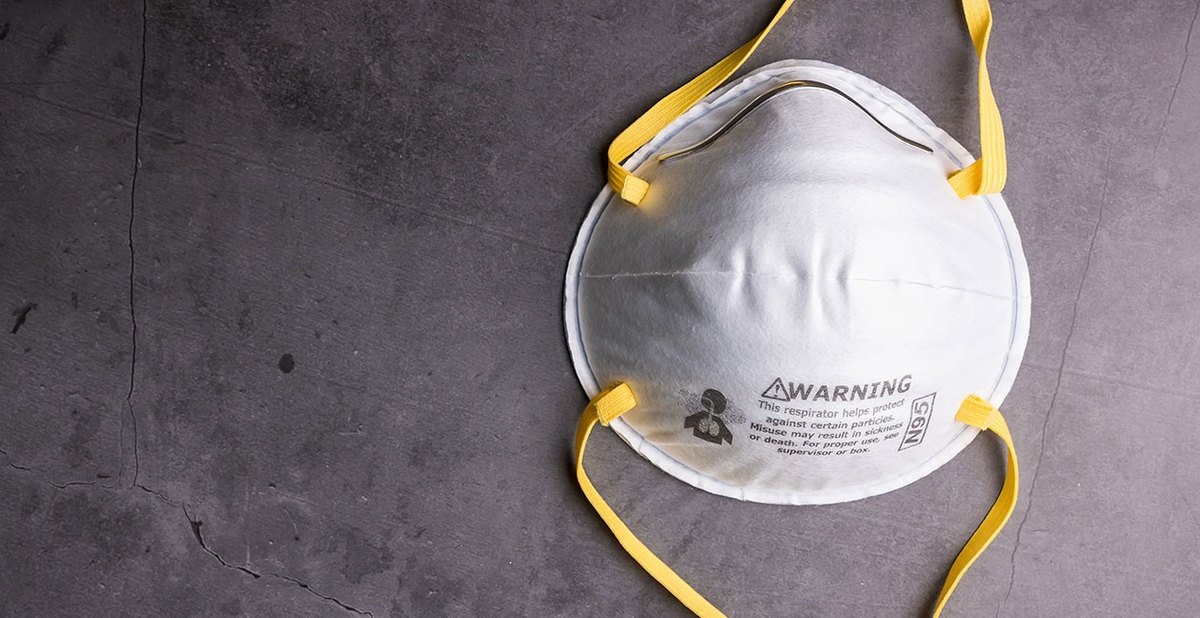
Another looming X factor is the subject of my initial blog post, which speaks to the rapidity with which for-profit companies, large and small, are behaving like nonprofits. They are not just donating money but switching their production lines from whiskey and clothing to sanitizers and face masks. And in the case of Shake Shack—a gesture which happened after I published my original piece—the return of their $10 million stimulus check.
The conundrum, though, which is the crux of my piece, is how companies can derive reputational value from their contributions—which consumers are expecting, if not demanding, in this New Normal—without coming across as smarmily opportunistic? I propose a nonprofit solution as a way out of the paradox.
If one outcome of the new Covidconomy will be a wave of populist hostility against the wealthy—no matter how committed they are to addressing society’s shortcomings, as this piece in The Atlantic suggests—the complexity of messages that describe “Capitalists Behaving Nicely” will most definitely be something that occupies Worth and its readers in the future,
Below, please find Adam’s original Covidconomy post, “Open Your Wallet But Shut Your Mouth: A Solution to the Corona Marketing Conundrum,” initially published on Medium and republished by Worth with permission from the author.
How do the many companies that have risen to the moment and demonstrated the beneficence of empathy—and the warm heart of some of America’s businesses—get credit for what they’re doing?
That is…get recognized without coming across as self-aggrandizing, back-patting and credit-grubbing in the midst of an unprecedented tragedy?
These two statistics put the paradox in crystalline relief:
The survey firm Morning Consult found that “more than 4 in 10 U.S. consumers say that brands are trying too hard to appear as if they care about anything beyond sales.” In fact, the self-congratulatory crescendo has reached the point where that’s a bigger number than those who say they appreciate what these same companies are doing.
Quite the existential paradox, when you consider that at the same time, the Edelman Trust Barometer found that 62 percent of people “said that their country will not make it through this crisis without brands playing a critical role in addressing the challenges.” And companies are indeed stepping up; 55 percent said that the private sector is “responding more quickly and effectively than government.”
OK, so people are saying companies should act loudly and speak silently—a convoluted inversion of Theodore Roosevelt.
But here’s the thing. How can consumers who want companies and brands to play a vigorous role in fighting the pandemic, discover which ones are doing the right thing—acting generously and soulfully—if that good will is destroyed by over-marketing?
Or just marketing, period. True, there are random lists of brands that are giving back, but they are incomplete and you have to work to find them. But consider that there are thousands and thousands of companies that are rising to the moment and tens of millions of consumers who want to know about them…but not from the companies themselves.
My paradox un-tangler: covidgoodguys.org
I am proposing a new nonprofit, a Google for Goodness, that will become the trusted source of data, compiling and updating a continually updated national and local master list of what companies are doing, and the dollars they have put behind it—when available.
This will include the full range of right-thing-ness—everything from straight contributions; pivoting manufacturing to make gowns and masks (Carhartt); and policies that include paid sick leave for all temporary staff and vendors (Google); to paying hourly maintenance workers even when closed (Microsoft); and extending mental health benefits (Starbucks).
Small and medium-sized businesses that act generously, and have far less resources to invest, would be noted side-by-side with the largest; that means Jack-Azz Distilling, which started making hand sanitizer, and LVMH, which stopped making Givenchy and Dior in order to help disinfect society, both get called out.
I bought covidgoodguys.org, and I’m offering it free to anyone who thinks this idea is important and wants to create the first searchable and filterable registry of Good Guy Companies.
This would immediately remove the risk of a company being perceived as self-serving by creating its own hagiography, while allowing brands to get the credit they deserve for the behaviors that consumers are demanding.
If a company chooses, it can use its appearance on the website as third-party validation. Brands can also be eleemosynary and encourage consumers to support ALL companies on the list, thereby creating even more goodness momentum in the economy.
This scheme wouldn’t take much funding at all; progressive capitalists like Mike Bloomberg, Tom Steyer and Andrew Yang could make it happen. It needs a team of great journalists, editors and researchers; sadly, there is no shortage. We also need Mike, Tom, Andy and a group of philanthropists and family offices to invest real marketing dollars to generate awareness for coronagoodguys.org—encouraging people to make their buying decisions based on this data.
Giving to covidgoodguys.org would have a multiplier effect well beyond giving to a single cause. It would create an arms race of generosity, creating a new, reflexive behavior—like comparison shopping—among millions. In fact, it is a form of comparison shopping, except you are comparing values versus value.
This third-party, no-dog-in-the-hunt platform is a conundrum buster. In fact, it would actually encourage companies to give more and do more, because with covidgoodguys.com, their magnanimity is accessible.
I believe that most of the companies acting honorably haven’t been primarily motivated by PR value but by the enormity of the crisis and a genuine commitment to contribute what they can.
Was there no calculation of the reputational lift or the signal it sent internally? I’m sure there was, but legitimate generosity and bottom-line realities can, and do, co-exist. As F. Scott Fitzgerald wrote, “The test of a first-rate intelligence is the ability to hold two opposed ideas in the mind at the same time, and still retain the ability to function.” The conflicting Morning Consult and Edelman data captures that stress.
One could argue forever with the cynics who see every pro-social behavior of a capitalist entity as a Machiavellian scheme for further oppression of the masses.
So, I won’t climb down that rabbit hole. I’d rather focus on my solution, which mitigates the risk of hypocrisy and enables consumers to support companies that act as the kind of corporate citizens we want them to be.
This “Google of Goodness” is also essential because companies that are working hard to stand up and be counted run the risk of being overwhelmed by bad actors. If The Atlantic and others are right, and a populist coronavirus class war will soon erupt, it will be, in part, because all corporations are deemed equal opportunity offenders.
Last week, in the New York Times, opinion columnist David Leonhardt singled out “Companies Behaving Badly,” including those with punitive sick leave policies, those that have failed to provide safe workplaces and those that have furloughed workers, putting their health insurance at risk.
Leonhardt asks if there is a remedy, and then answers it: “There is at least a partial one: attention. If employees, journalists and—most important—customers call attention to selfish behavior that endangers people, there is at least a chance that companies will stop it.”
That’s one strategy for modulating capitalism at its worst.
My idea, for celebrating capitalism at its best, uses the same approach, the same bright, hot white light, to bring attention to the right behaviors. And encourage more of them. Then, we can extend the economic and moral flywheel from responsible actions during the crisis, to beyond.
Our society needs to address climate change; massive job training and reskilling; the wealth gap; and the realities of an education, housing and health care system that has had a tragically disproportionate impact on black and Hispanic Americans amidst the coronavirus outbreak.
Companies and brands will need to continue to play a muscular role in that, and they will continue to face the conundrum of a public that wants them to help but doesn’t want them to boast.
A “Google of Goodness”—one that becomes part of the researching and buying behavior of every American—is the way to inspire companies to have America’s back, without patting themselves in the very same place.
Adam Hanft, an internationally known marketing and branding expert, is the founder and CEO of Hanft Projects, a strategic consultancy that provides marketing advice and insights to leading consumer and business-to-business companies.