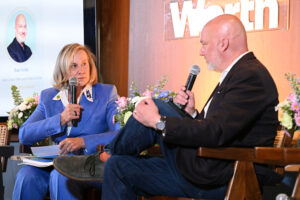
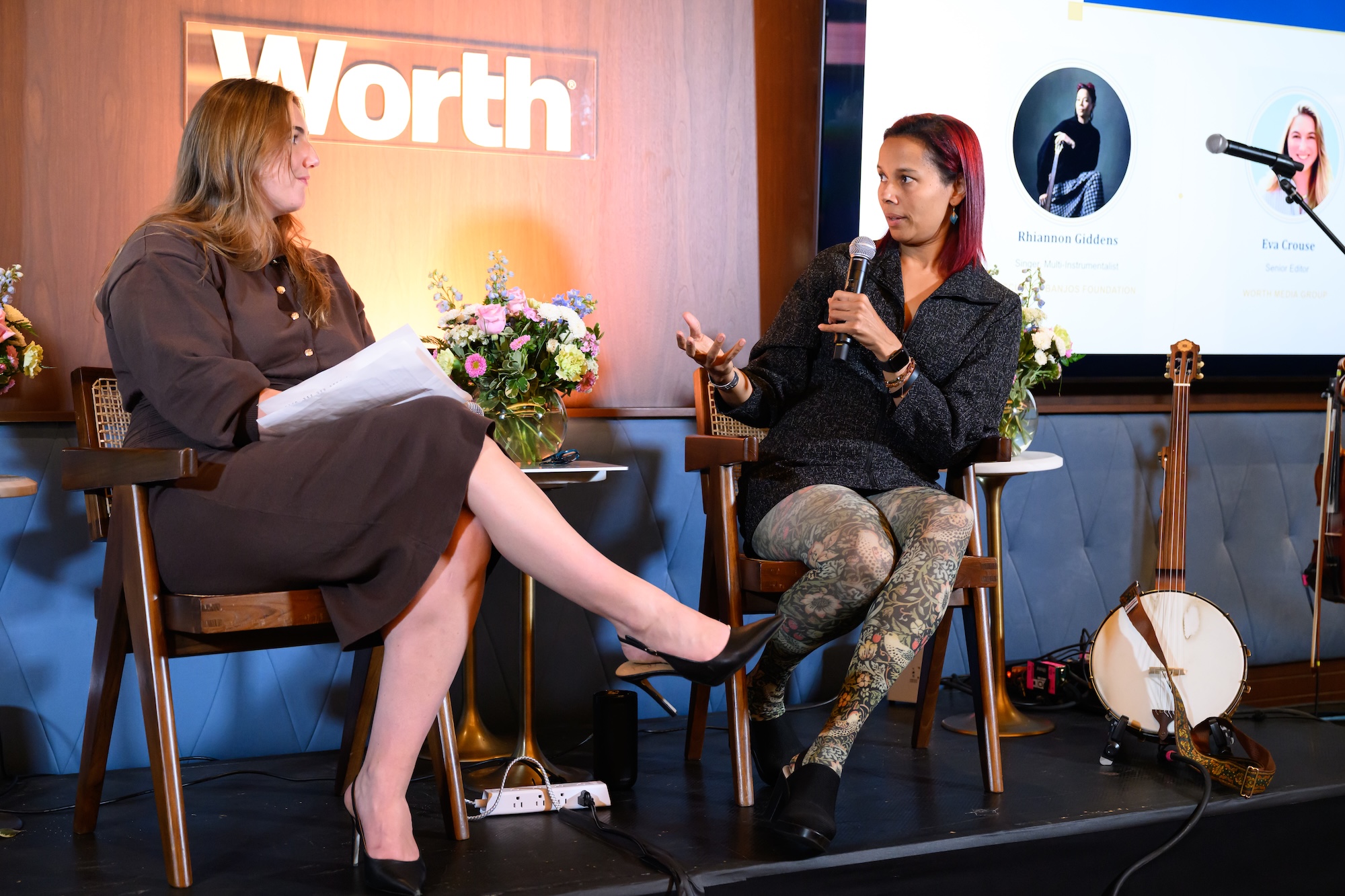
It takes nerve to program a sleep panel right after lunch, which is exactly what I did at Living Well 2026. I said so from the stage, and the room laughed because half of them were fighting fatigue. There was coffee in the hallway. We survived.
Then I did what everyone in that room does every morning. I checked my Oura ring. It had flagged my sleep midpoint the night before. Not the hours. The hours were fine. The midpoint had drifted off my baseline, and the ring wanted me to know. “That alone can be destabilizing,” I told the panel. Dr. David Benavides, a sleep physician at Harvard Medical School and Mass General Brigham, answered in one word: “Massively.”

We built devices that measure sleep with real precision. The measurement became a new thing to lose sleep over. The interesting question now isn’t better data. It’s whether a machine can do something with the data besides tell you last night went badly.
RAND puts the cost of insufficient sleep to the U.S. economy at up to $411 billion a year, 2.28% of GDP, plus a 13% bump in mortality risk and 1.2 million lost working days. The CDC counts 30.5% of American adults sleeping less than seven hours, and the shortfall peaks between 50 and 64. That’s the corner office.

The long-term bill is worse. In Whitehall II, the British civil-servant cohort followed for decades, people sleeping six hours or less in their fifties and sixties carried roughly a 30% higher dementia risk years later.
Oura raised more than $900 million last October at a valuation near $11 billion, the largest round in sleep-tech history. Whoop shipped two new bands in the spring. Wearable sleep trackers cleared $16 billion in 2025. All of it rests on one premise: see your sleep, and you’ll fix it.
Benavides gives the wearables their due. “Thanks to wearable companies, patients and consumers are starting to notice that sleep is actually really important,” he said. He sees the awareness surfacing in cardiology, neurology, and endocrinology. But he also watches the data turn on its owner:
“I’m already worried about my sleep. Now I’m looking at my data. Now I’m getting more stressed about my sleep because I saw I slept badly last night. Now I am more stressed about getting good sleep tonight.”
There’s a clinical name for that spiral: orthosomnia. Kelly Baron and colleagues at Rush coined it in a 2017 Journal of Clinical Sleep Medicine paper about patients so fixated on perfect sleep scores that the fixation wrecked their sleep.
A 2024 meta-analysis found consumer wrist devices still don’t match clinical polysomnography, with some overestimating sleep by nearly half an hour and misreading REM. This raises questions about the reliability of sleep data from wearables, which is important for readers to understand when interpreting their sleep scores.
Benavides’s prescription is to demote the number. A tracker is a baseline instrument, not a report card. “Where sleep trackers can be useful is not the night-to-night data,” he said, “but understanding what your baseline is, so that when you see a deviation from that norm, you can interrogate what was going on.” Build years of data. Watch the trend. Stop grading the night.
That’s a sensible answer to an inadequately designed product. Caitlin Shure is building a better one.
Shure runs product and content at NextSense, a spinout of Alphabet’s X moonshot lab that raised a $16 million Series A in November, with backers including the neuroscientist David Eagleman and Esther Dyson. The product is a pair of earbuds with six clinical-grade EEG sensors, three per ear. EEG is a hundred-year-old technology that normally lives in a sleep clinic and requires a headful of wires. NextSense put it in something you’d wear on the subway.
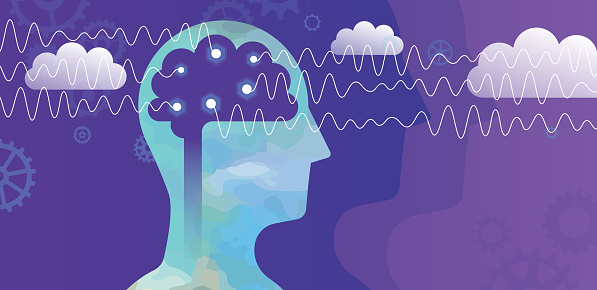
She’s precise about what the sensors deliver. “We’re not reading your mind,” she said. “It’s more like a brain rhythm.” Because the signal comes from your head instead of your wrist, the data beats anything a ring can produce. But data isn’t the pitch. “Our big thesis is to go beyond tracking, and not simply say, hey, your sleep was bad.” She played the customer’s reply for the room: “Yeah, that’s why I bought a product. I thought you were going to make my sleep better.”
So, the earbuds try to make it better. During deep sleep, they play frequencies timed to boost slow waves, the brain activity that drives physical restoration and, in some studies, next-day cognition. The starting material was already in our ears. The most popular sleep sounds on the platform are rain, campfire, and waves. Shure’s theory: those are the acoustic environments our brains spent a few hundred thousand years falling asleep in.
Benavides, for the record, still steers most patients to the cheapest tool in the drawer: same bedtime, same wake time, seven or eight hours, every night, over everything else. Old-fashioned, he admits. It also works. The earbuds beaming pink noise into your skull at 3 a.m. are betting they can beat that advice, or at least earn a spot beside it. The scoreboard that matters isn’t on your ring in the morning. It’s whether, a year from now, any of this has put you to sleep.