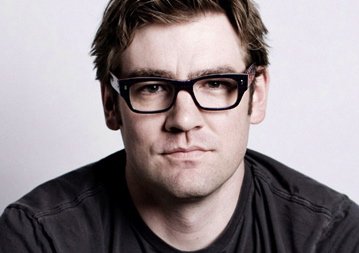
 Chris Dixon is a New York guy with a degree in philosophy from Columbia University. He’s also, as of last fall, a partner at hot Silicon Valley venture capital firm Andreessen Horowitz (which shortens its name to A16Z—16 is the number of letters between the A and the Z). All in all, that gives him a pretty interesting point of view on the big technology shift that’s being labeled the Internet of Everything (IoE).
Dixon already has quite a track record as an investor and entrepreneur. He co-founded Hunch, which eBay bought for $80 million in 2011, and then started Founder Collective, a seed-stage venture fund. Alone or with a fund, he’s been an early-stage investor in Kickstarter, Pinterest, Foursquare, Dropbox, and Warby Parker.
Dixon talked about the IoE—and New York—with Techonomy’s Kevin Maney.
Lots of big companies are talking about the Internet of Everything. What are the opportunities for entrepreneurs?
We look at it from more of a consumer point of view—the home, the car. Not that we don’t believe in the industrial side, but there’s just not a lot of start-ups doing it.
We do see companies creating new technologies that will help power [the IoE]—like chips and cloud services. We’re seeing startups building things like Nest, a new home thermostat, with the ability to branch out from that into other areas—like a foothold for going broader. Or like SmartThings, selling home kits for enthusiasts.
So is the IoE the powerful trend it’s being made out to be?
It feels like it’s finally happening. One of the reasons is that smart phones may be the interface for it. But we’re still talking about what’s real and what’s the right path into it. It’s still at a very early stage.
Any companies you’re seeing that are new and interesting in this space?
We have a small investment in Lockitron. It’s like Nest but for locks. Tap buttons on your smartphone and you can provision locks if you have guests for a few days, or a small business can set it up so certain people can come in and out at certain times. We’re investors in Jawbone, and they have UP (a wristband that tracks your movement and sleep), so we have a big bet there.
How about 3D printing? You invested in Shapeways.
Shapeways is more of a service model. You can upload a design and have it made and sent back to you, or one person can create an interesting design and others can buy it and have it made. If you’re a student designer and you design a new type of bracelet, you can upload it and sell it to strangers and not have to worry about going to a factory and having lots of capital up front.
Cars?
We have a small investment in Automatic. It’s almost like a Fitbit for your car. The challenge with cars is that the car companies want to do most of it and don’t provide interfaces. It’s a hard area for start-ups to enter.
A lot of prognosticators say the IoE is going to be more impactful even than the Internet. Do you think that’s true?
It’s hard to predict. Who would’ve predicted all the stuff that happened on the Internet? Twitter or Wikipedia? But we’re definitely excited and it’s not a crazy thing to think this will be bigger—it’s just hard to predict ahead of time.
Usually people get excited about these things too early, and then when it doesn’t happen right away, they get depressed about it—and then once you get developers and third parties involved, you get a massive wave of innovation.
New York has been trying to become a hotbed of tech startups for a couple of decades. Is that finally going to happen?
This year has been about taking things invented in California and applying it to other industries, and a lot of that will take place where those industries are historically based. In New York, there’s media and advertising and commerce. That’s a big trend driving [the New York scene]—a hybrid of technology and other industries.
It’s also about getting to critical mass. You need a minimum of engineers and investors and consultants—an ecosystem—to make it work. My sense is we’re getting to that point in New York. If it continues to go that way it will reach a tipping point. I feel it’s really getting there.
Did Andreessen Horowitz want you in part because of your New York connection?
I don’t think that’s why I joined, but it’s seen as a positive. It didn’t hurt. They’ve already been investing in New York—they’ve done Foursquare, Fab, Quirky, all in New York.
In partnership with Cisco, Techonomy convened a half-day event, Techonomy Lab: Man, Machines, and the Network, on May 16. in Menlo Park, CA.
Business + Innovation
A16Z’s Chris Dixon on the Internet of Locks, Cars, New York, and Everything Else
Chris Dixon is a New York guy with a degree in philosophy from Columbia University. He’s also, as of last fall, a partner at hot Silicon Valley venture capital firm Andreessen Horowitz (which shortens its name to A16Z—16 is the number of letters between the A and the Z). All in all, that gives him a pretty interesting point of view on the big technology shift that’s being labeled the Internet of Everything (IoE). Dixon already has quite a track record as an investor and entrepreneur. He co-founded Hunch, which eBay bought for $80 million in 2011, and then started Founder Collective, a seed-stage venture fund. Alone or with a fund, he’s been an early-stage investor in Kickstarter, Pinterest, Foursquare, Dropbox, and Warby Parker.