

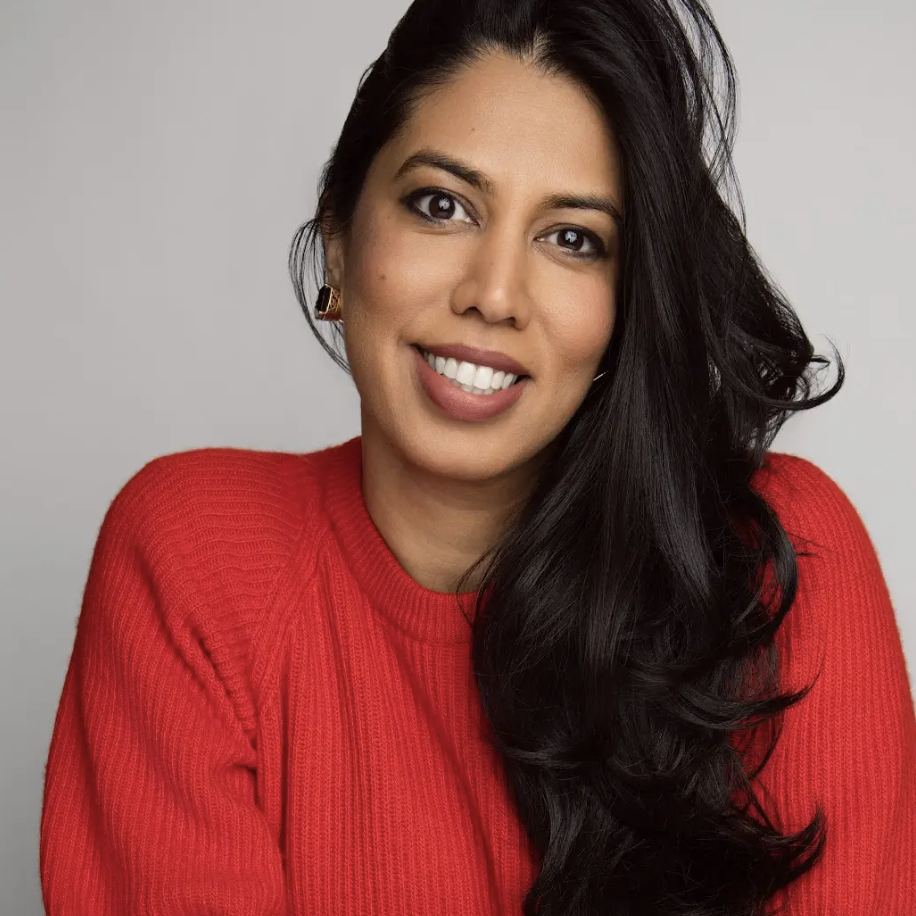
Nabiha Syed runs the Mozilla Foundation—the nonprofit that owns Mozilla Corporation (the company behind Firefox). The Mozilla Foundation answers to no shareholder but the public. She was appointed Executive Director in 2024, and hit the ground running. In a move only a nonprofit would dare make amid the slings and arrows of the AI industry’s race for market share, she rebuilt the foundation’s brand identity around what she calls “defiant optimism” and pointed its programs squarely at the AI era: Common Voice, an open dataset of speech in underrepresented languages that anyone can use to train AI models, and a Data Collective designed to give communities control over how their data gets shared and licensed. The goal? To become the force pushing the AI industry to benefit the public good, not just serve as another tool for capital extraction from consumers.
Syed told Fast Company that Mozilla is one of those brands “that has this history of putting people before profit and creativity before control.” As the foundation’s Executive Director, Syed embodies that idea, often saying that people’s digital lives should be marked by joy and creativity. But she is far from naive.
Back in 2013—years before most of journalism thought to ask—she co-founded Drone U, one of the first real efforts to ask what happens to privacy when the sky fills with cheap, commercial drones. By then, she was already a Yale Law graduate and a Marshall Scholar who’d studied media law at Oxford. She built a career defending the people who ask hard questions for a living: legal access work at Guantanamo, a First Amendment fellowship at The New York Times, and years as BuzzFeed’s first newsroom lawyer, where she ran the successful defense of the Steele Dossier litigation.
Then she built something of her own. As CEO of The Markup, she turned data journalism into an actual accountability weapon. Investigations conducted by The Markup were cited by Congress 21 times, earned a national Murrow Award, and a Loeb Award. One story alone found that a third of the country’s top hospitals were sending patient data to Facebook. In 2024, she led it through its acquisition by CalMatters.
Syed has spent her career betting that technology can answer to people instead of shareholders, and proving, over and over, that the bet pays off. She sits on the boards of the Guardian’s Scott Trust and the Mellon Foundation, and she’s collected a Forbes 30 Under 30 and the NAACP-Archewell Digital Civil Rights Award along the way. But beyond the applause, which she has earned in full, is a pattern: Syed defends people, not profits. Whether she is explaining the push for external AI governance in the wake of the Hugging Face hacking scandal, or running the investigative newsroom that showed how hospitals were leaking patient data to Facebook, Syed is a welcome voice of integrity amid a sea of for-profit whales hunting for the next, most lucrative frontier for AI usage.
