
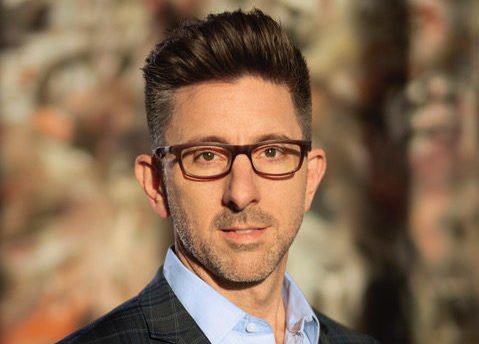
Not long ago, I saw Yale professor Marc Brackett give a talk at a public school in Chappaqua, N.Y., for about 100 local parents. We all thought that Brackett, the 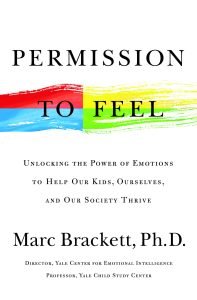 founding director of the Yale Center for Emotional Intelligence, was going to talk to us about our kids. Instead, Brackett started challenging us to talk about our own feelings. As Brackett writes in his new book, Permission to Feel: Unlocking the Power of Emotions to Help Our Kids, Ourselves, and Our Society Thrive, “Do I even know how I’m feeling? Have I given myself permission to ask? Have I ever really asked my child, my partner, my colleague?”
At first, no one answered Brackett’s question. But by the end of the evening, the whole room was opening up, sharing things with the room that would have felt intimate in a psychiatrist’s office. Only by doing that, Brackett told us, could we begin to understand what our children were feeling.

Brackett has spent his career exploring the concept of emotional intelligence, a term that’s become part of our pop psychology parlance in the last 30 years but is widely misused. Emotions, Brackett writes in Permission to Feel, “exert a huge, though mostly unconscious, influence over how our minds function.” If we can develop the skills to recognize and regulate them—basically, develop our emotional intelligence—we can “create a culture and society unlike anything we’ve experienced thus far—and very much like the one we might dare to imagine.”
I spoke with Brackett recently about his own emotional journey, how emotional intelligence can help corporate America and why the high net worth are particularly bad at understanding their own emotions.
Q: In Permission to Feel, you describe a childhood in which you struggled with emotionally distant parents, were bullied at school and were sexually abused by a neighbor. Why was it important for you to write about that personal history?
A: The reason why I decided to tell my full story in my book is that I feel like I’m not being authentic when people ask me about my motivation. I can say that I was bullied, and that’s true. But the truth at the core of Permission to Feel is that, as a child, I did not have the permission to feel. I was silenced. I was silenced by the abuser for years. I felt disgust and hatred and shame and fear and couldn’t talk about it—I was afraid to.
How would your parents have felt about you writing about these painful subjects?
I couldn’t have written the book if they were alive. And I tried to be kind. They loved me. They really did. They just didn’t have the skills.
One of the themes of the book is that this feeling of being silenced exists not only in the family, but also in the workplace. What’s the dynamic there?
As I’ve been running around the world teaching emotional intelligence, I see the same thing in workspaces—people are silenced by their bosses. They can’t tell their bosses how they really feel because they worry that they’re going to get fired or not get their raise or get a promotion. That’s why I cofounded Oji Life Lab to help businesses bring EI skills to the workplace.
So is this silencing something that managers do deliberately, or are they just unaware that they’re creating an environment where their employees don’t feel they can speak up?
I think a large percentage of bosses are aware of it, but they don’t care. Because they’re not trained in how to regulate their own feelings.
So how does this lack of emotional intelligence affect the health of a business?
Companies would do far better if they gave people permission to feel. People would be more creative, spend more time on tasks. If they don’t feel a bond with their supervisor, employees spend way more time off-task, kvetching with each other or hanging out on Facebook.
So a manager’s level of emotional intelligence has a direct impact on employee productivity.
The emotional intelligence of the supervisor is highly correlated with how people feel at work and related to time on tasks, employees’ intention to leave their jobs, burnout and ethical behavior.
Are there companies that do a good job of creating a culture where emotional intelligence is valued and supported?
The tech companies think they’re doing it, but everyone I know who works at Facebook, Google and Twitter, they all hate their jobs. They’re miserable. Companies like LinkedIn try to take a big stand on consciousness or wellbeing—they have a yoga program or a mindfulness thing. Everyone thinks that sitting on the cushion and breathing is going to solve the world’s problems. It drives me crazy.
So those sorts of company wellness programs are window-dressing?
This is why most companies are dysfunctional. Everyone lives in fear of being their true self, and they refuse to be that self because they’re afraid of their reputation and afraid of repercussions. They don’t give feedback because they don’t think that the people they’re giving feedback to can handle it. I see it all the time.
In your book, you discuss the fact that you often encounter resistance, if not outright hostility, to the idea of emotional intelligence, particularly in male-dominated fields. How do you explain that reaction?
I think it stems from old ways of thinking that emotions make you weak. You’re supposed to plow through things and not be emotional. If you’re sad or you feel fear, you’re a wuss. You’re weak. And that’s what I hear in organizations.
You also write that intelligence has long been defined in a way that excludes the importance of emotions.
The people at Yale that I work with—all their success came from test scores, SAT scores, GPAs, admission to prestigious places, memorizing facts. They’re not relationship-driven people. They’re power-driven. And power is a tricky thing when it comes to emotional intelligence, because the person of greater power has the ability to say whatever they want to say. And the people of lesser power don’t.
Which brings me to the inevitable question of emotional intelligence and Donald Trump. That dynamic seems universal in his relations with the people who work for him.
That’s the number one question people ask me, about Donald Trump.
And the answer is….?
Emotional intelligence has different skills. It’s a disservice to think of it as one solid ability. It’s helpful to think about it as a discrete set of skills that work together or not. So, it’s clear that Trump has zero emotional regulation skills. He acts out and he suppresses. But he’s very good at generating emotions in other people, and that’s one piece of emotional intelligence.
You write about the fact that many people think they understand the concept of emotional intelligence, but really don’t.
Most people think of it as empathy or self-control. In the business world, they all think of it as charisma. I was speaking once at an elite New York City private school, and one of the board members came out to be introduced to me. He was like, “Oh you’re the emotional intelligence guy.” And I was like, “Yeah.” And he said, “Well, let me tell you something, Marc—I made my millions from my emotional intelligence.”
So you just don’t know how many of us have gotten accurate feedback in our emotional perception skills.
Are we getting better with the skills of emotional intelligence over generations? You’d like to think that we’re all better at this than our parents were, but it doesn’t always seem that way.
We’re getting worse. I’m writing a paper about how the internet emerged at the same time as [the theory of] emotional intelligence. In 1990, emotional intelligence is founded, and the same year the internet is starting. Think about that. Twenty-five years ago, teens weren’t spending six hours a day on their phones. Which they do, even though research shows that time spent on these tasks—social media, phones—is related to unpleasant emotions.
You and your colleagues at Yale have developed a system for implementing emotional intelligence skills that you call RULER—for recognition, understanding, labeling, expressing and regulating. Who’s the target audience?
RULER is an approach to social and emotional learning that starts in pre-school, but we first work with the adults to get them to be aware of why emotions matter and what the skills of emotional intelligence are, so that they can be role models for the children. And it takes a while because the adults who are 30, 40, 50 years old have not had an emotional education.
Is it hard to teach emotional intelligence skills to adults?
The biggest issue I face is that people don’t want to put the effort into developing the skills. It means you’ve got to pause, you’ve got to breathe, you’ve got to be late for work once in a while.
But here’s the thing. Think about how much effort we put into math skills, reading skills, writing skills. You don’t just want to be a poet and wake up and you’re a poet. It’s the same with this.
How does emotional intelligence play out among high net worth individuals, with all the complicated human interactions that wealth can bring?
The problem for high net worth individuals is that you can pay off your kids’ negative feelings.
What does that mean?
“Don’t be so sad, look at the house we live in.”
I had a billionaire woman tell me, “I don’t understand why my kids are so sad, they can take our plane anywhere they want to go.” I was like, there’s the problem. Another woman whose child was being bullied asked me how to handle it. After I answered, she said, “I just think I should hire my son a sexy tutor.”
Sounds like they’re actually less skilled at emotional intelligence than people who may be less financially successful.
People who are very high net worth don’t always see the value of developing their emotional skills because they don’t see how that adds to the bottom line. They have a very narrow view of their own success.