


It’s a scene that Chris Brickler—founder of HTC VIVE partner company MyndVR—will never forget. An elderly couple that had been married for 50 years had all but lost the ability to communicate due to the woman’s Alzheimer’s disease. Walking into her room in a New Jersey care facility with a VR headset loaded with amazing content, Brickler asked if she’d like to revisit a place that had had meaning in her life. She chose Paris, the site of the couple’s honeymoon and many family vacations. Brickler gently placed the device on her head. The woman virtually ascended into a 3D immersive version of the City of Light, “re-experiencing” everything from the Eiffel Tower to the Louvre. After no more than 60 seconds, Brickler recalls, she started speaking animatedly about events that had occurred decades earlier. The phenomenon, known as reminiscence therapy, is a VR-enabled breakthrough whereby the brain is triggered to sharper and better functioning in a way that’s never been possible before. The woman had the surrounding clinicians in happy tears. This—and so much more—is the promise of virtual reality technology.
For more on technology-driven advancements in healthcare join us in Boston on October 11 for Accelerate Health: Pioneering Solutions for a Healthier Society.
There was a time when the excitement surrounding the metaverse was at fever pitch. The company then known as Facebook’s 2014 acquisition of Oculus set the stage. Years-long rumors of Apple being “about to launch” an augmented reality (AR) headset of its own added more heat. The intervening years saw dramatic growth in VR headset sales—that have never stopped—but when Facebook became Meta, the metaverse hype had kicked into overdrive, only to apparently fizzle out soon after.

Recent months, however, seem to signal the metaverse—but a version with many more facets than Meta’s vision entailed—is back. Apple’s June announcement that its Vision Pro AR glasses will be available in 2024 and Meta’s own proclamation, days before, that its Quest 3 VR headset will be introduced this Fall set the stage for a possible race to the top reminiscent of the iPhone/Android wars. TikTok owner ByteDance’s 2021 acquisition of PICO, one of the largest VR companies to come out of China, has also added to excitement. One company that has been making demonstrable impact on people’s lives in the healthcare, education, aerospace, automotive, and other enterprise areas all this time with its solid, successful, and distinct version of a VR business is HTC VIVE.
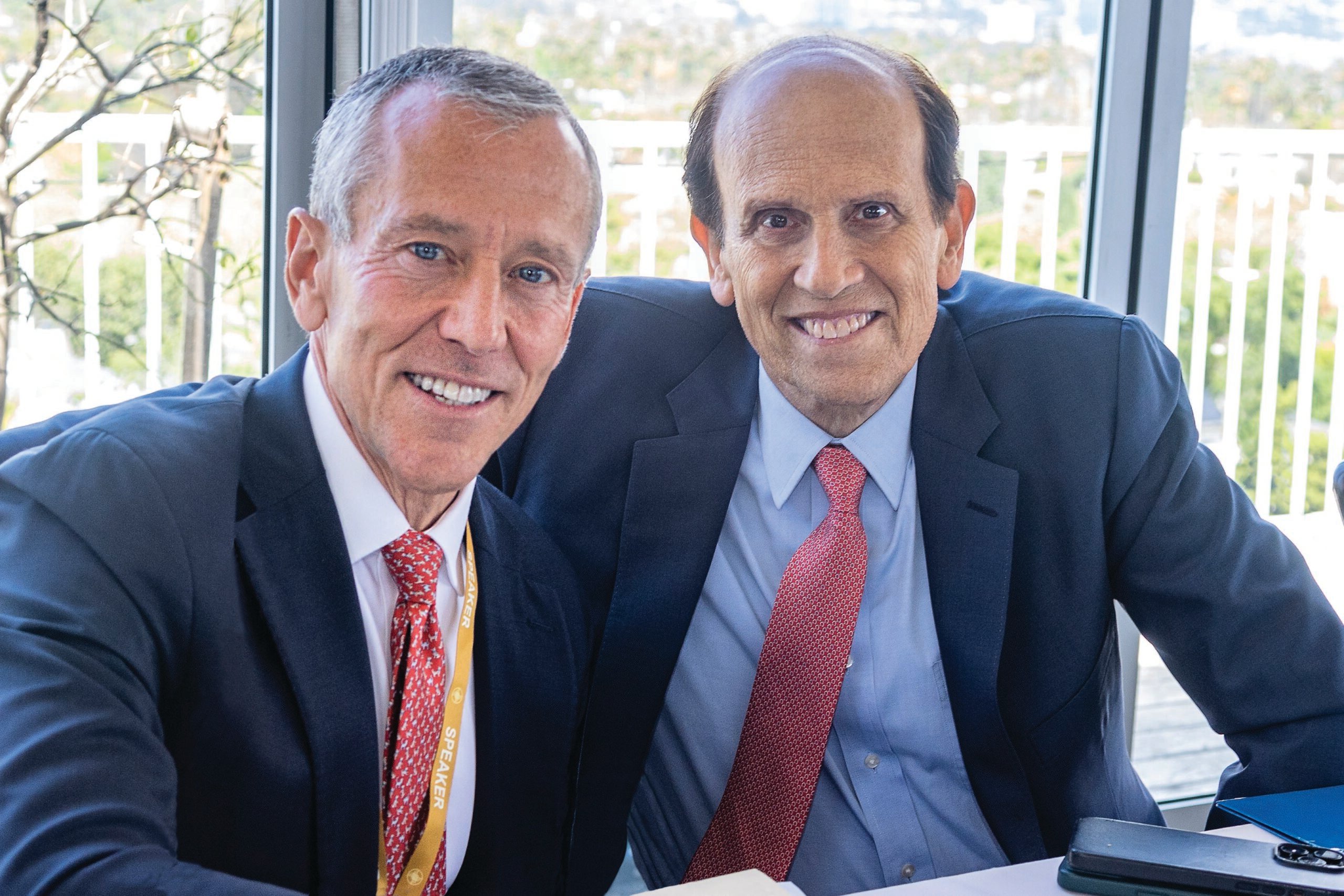
With HTC consumer electronics as its corporate parent—at one point, HTC was the largest smartphone supplier in the U.S., and sold 48 million annually—VIVE’s General Manager of Americas Dan O’Brien says a long-view approach to innovative design and real-world solutions have helped the division excel. (As has, a conversation with O’Brien proves, an ability to clearly impart what the metaverse—or VIVERSE, as the company dubs its own immersive ecosystem—actually is: A virtual environment in which consumers can exist together via not only headsets but phones, tablets, and other devices at different levels of immersion.) An exclusive deal with software company Valve, which makes, publishes and distributes games on Steam, the biggest gaming platform in the world, to use its headsets provided an economic foundation for VIVE. But HTC had a view towards meaningful enterprise uses for its VR headsets from the beginning. “When Cher created this piece of the company,” O’Brien says, referring to Cher Wang, c0-founder of HTC and pioneer of its VIVE VR division, “it was about creating solutions to better humanity.”
Watch Techonomy’s interview with Dan O’Brien, HTC VIVE’s General Manager of Americas below.
The aim makes sense. In the case of education and healthcare particularly, the advantages of VR are well documented. Students typically retain just 5% of what they learn in lectures but 75% with immersive lessons in VR. A PricewaterhouseCoopers study showed that VR-trained employees worked four times faster than those who learned the same skills traditionally. Similarly impressive stats apply in healthcare. A Yale medical school study showed that VR-trained surgeons made 6 times fewer mistakes and worked nearly a third faster than those whose learning took place exclusively in the classroom. Hundreds of randomized trials reflect better overall outcomes when VR is involved in a patient’s treatment.
HTC’s strategy has paid off. A partner like MyndVR’s ability to increase the effectiveness of occupational therapy by gamifying exercises, and to enable breakthroughs in areas like cognitive decline via things like the Paris “trip,” will only be more useful in the next decade; the 65 and overpopulation will outnumber those 18 and under for the first time in history. Other HTC partners doing meaningful work include Surgical Theatre, which uses VIVE headsets to let patients and doctors “fly through” the brain and thereby better apprehend problems and plan solutions. Sheer business dividends abound as well. HTC partner and aerospace manufacturer Bell used VIVE headsets to cut its usual 5-to-7-year timeline to build a new helicopter prototype down to six months, and saved $100 million in the process. Another PricewaterhouseCoopers study shows VIVE partners who use VR to train employees benefit from the fact that such teachings leave employees 275% more confident to act on what they’ve learned (VR simulations help people gain experience that feels real, resulting in them applying their skills with increased ease).

Still, why do partners choose to do deals with HTC when, say, Meta is getting into similar enterprise areas via its deal with Microsoft? Part of it is cutting edge design. Its new VIVE XR Elite headset is the first to seamlessly transform into glasses, increasing use cases, and it allows for easy charging in that mode: the product can be plugged in directly via USB to an outside outlet, extending its life indefinitely. O’Brien also notes that HTC is the first company, globally, to bring 5G connectivity options to its XR headsets and to spatial computing as a whole.
Issues of privacy in VR are also top of mind to enterprise clients and O’Brien, again, points to HTC’s thinking ahead. “Privacy by design is our business,” he says. “We don’t capture the users’ data.” (Rare exceptions involve things like warranty validation, but customers are made aware of it in such instances.) This is in contrast with Meta, and critically important to customers who demand strong privacy controls in verticals like healthcare, design, and defense. “Why is Facebook in this business? It is to consume your data, right? And I don’t know how many people are really signed up for that.” Apple’s privacy policy is similar to that of HTC, but O’Brien notes its Vision Pro will cost more than three times as much as VIVE’s latest offering, the aforementioned XR Elite.

In the end, O’Brien believes even Meta-created hype may have underestimated the metaverse’s potential. “Wearables are going to wipe out smartphones,” he predicts and says a “hockey stick moment”—i.e., sharp upturn in sales—will happen between 2027 and 2030. Still, what he and HTC are most excited about is the meaning behind the business magic. “I think we’re going to make a huge impact on kids that didn’t think they were great learners so lost confidence in themselves to become successful contributors to society…I also think that we’re going to democratize access to data and information.” And that, he says, fulfills HTC’s original promise, and the mission to combine its three core tenets: Humanity, technology, and imagination.