In this video, David Kirkpatrick interviews Beth Seidenberg of Kleiner Perkins Caufield & Byers about her involvement in developing biotech companies.
Kirkpatrick: So now we’re going to turn to a slightly different perspective on the whole set of issues that we are here today to discuss, which is a more financial-oriented point of view, but really, Beth Seidenberg of Kleiner Perkins Caufield & Byers is a big-picture thinker who, as an investor, I think can shed light on a lot of the things we’ve been hearing today. I mean, Beth has been a VC in the biotech arena for how many years? Quite a few.
Seidenberg: Nine years.
Kirkpatrick: Nine years. And prior to that you were a chief medical officer at…?
Seidenberg: Amgen.
Kirkpatrick: Amgen, right. I was going to get that.
Seidenberg: Small, little company.
Kirkpatrick: Little company. And so you are a doctor.
Seidenberg: Yes.
Kirkpatrick: You’ve done a lot of medical research, and now you’re doing investing, and you’ve put money in a number of interesting companies, and you’re at one of the signature companies of the investing world. So first of all, I just wanted to ask you, any observations on things you’ve heard so far today? Anything that struck you as particularly noteworthy, or maybe something you disagreed with? Anything that you’ve heard, I’m curious to get a reaction.
Seidenberg: Yes. So, first of all, I’ve enjoyed the sessions so far. The speakers have been provocative. There’s a lot of innovative thinking, and a sense of irreverence, that status quo is not okay. And that I heard across the board, whether it’s research or combining different areas of expertise to work together to make data available, to complaining about the FDA—one of my favorite topics. It’s good to hear. And I’m encouraged, and continue to be encouraged every day, in my job at Kleiner Perkins, to see many people who are not native to the biotech or science world coming into the world of medicine, broadly speaking, how we deliver it or how we treat disease or diagnose disease, and basically being unencumbered by the conventional norms, and breaking a lot of glass, and that’s how we’re going to make progress.
Kirkpatrick: So you’re not a fan of the status quo, clearly.
Seidenberg: No.
Kirkpatrick: Obviously, investors typically, especially venture capitalists, typically aren’t, but it does seem like the status quo in medicine in particular is especially frustrating right now. And we heard a minute ago a little bit about the FDA. I was actually going to ask you to talk about that briefly. Do you see that—I thought there really were a bunch of great slides in Andrew’s presentation, but that statistic that 27 drugs of all kinds were approved last year in the United States, is a pretty depressing slide.
Seidenberg: Yes.
Kirkpatrick: How quickly can we break through that set of problems, do you think?
Seidenberg: Yes, that number of 27 is a complex number, and it’s not all based on FDA. It’s also based on rapidity of science and translation of the new information, particularly this group has been talking a lot about the human genome and where that’s been beneficial, but let’s remember that the first sequence of the human genome was just a decade ago, and I remember a decade ago myself saying, “Well, in 10 years, we expect this.” Well, we’ve actually seen tremendous changes in the past decade, and if you just think about where we started from, we’ve identified about 1,800 different genes that are related to disease. There have been about 2,000 different diagnostic tests. So the last speaker was focusing on diagnosing disease early. That’s a good place to start. And we have about 350 different products that are in clinical trials today, that have to get through the pipeline. So we’re making progress. It’s never as fast as anybody wants it to be, because we all have a personal passion and an interest in moving things much faster.
FDA has made great strides in the past four to five years. We had a tremendous slowdown at FDA in the mid-2000s, and it was to the point where we became activists at Kleiner Perkins, and the National Venture Capital Association formed a coalition called MedIC, which was focused on basically shaking the tree at FDA and getting them to change. They’ve made a lot of changes. There’s breakthrough designation that was mentioned by a prior panelist. They are doing better with cancer. We now need them to think bigger about some of the bigger, harder, chronic diseases, like Alzheimer’s disease, diabetes, etcetera. But I’m optimistic that we’ll see some changes.
Kirkpatrick: Okay. Just, let’s step back and go to the bigger question for a second. How would you compare progress in biology, generally, to progress in the Internet and IT, which is really what Kleiner is most known for?
Seidenberg: Yes.
Kirkpatrick: What’s your way of thinking about the comparison between the two, and the future prospects of one versus the other?
Seidenberg: Yes, well we’re very bullish on both sectors, and I think there were quotes earlier today about the sequencing of the human genome, and as I mentioned, it’s just a decade ago, the first sequence cost us $1 billion and it took 13 years. We now can sequence the genome for $1,000 in 24 hours. So we’re making enormous progress. It’s definitely broken the barrier of Moore’s Law, and I expect—
Kirkpatrick: Faster.
Seidenberg: Much faster. And I expect we’re going to continue to see progress. I brought something, because we’ve been talking a lot about cancer, but I want to also share some optimism about other diseases. So this is just an article from Nature magazine from this week.
Kirkpatrick: [to audience] I’ll read it to you.
Seidenberg: “Treatment Triumphs,” but it’s about Hepatitis C. And you’re probably reading a lot, there’s controversy about how much the medicine costs, but I remember when I was training, it was called Non-A/Non-B, the hepatitis just showed up on the scene in the 1980s— 1989, the virus was identified. We could not crack the code for decades, and now we basically have drugs, the first ones on the market, where 95 percent of patients just taking oral therapy are cured from Hepatitis C. It’s the leading cause of cirrhosis and the leading cause of liver cancer, 200 million people are affected with Hepatitis C.
Kirkpatrick: So you’re saying this is an example of extraordinary progress in a short period of time.
Seidenberg: In a very short period of time. FDA facilitated, the science facilitated, being able to understand the genetic abnormalities of the virus itself, and being able to target very specific drugs, and see cure rates that we’ve never seen before. So I believe you’re going to see things like this happening, you know, my lifetime, this is one example where I remember when the virus was identified. I’ve had the same experience—so, two times in a career of a few decades—HIV is another example, where when I was in medical school and training, the virus wasn’t identified. Today there’s an 85 percent drop in the death rate from HIV, which hit its high 1994 to 1995. And now 85 percent fewer people—they’re living with the disease, it is a chronic disease. And I believe we’re going to see the same thing with cancer. That’s happening quickly. Harnessing the immune system. Somebody was talking about that. I’m a firm believer, we have four companies that are focusing on harnessing the immune system to tackle cancer.
As far as tech goes, this convergence of technology bringing the knowledge of big data, analytics, open source information, where people can hack it and understand in a much more community-based way is going to be the way we’re going to see breakthroughs. I’m absolutely convinced. I think there are more people than in this room who are completely irreverent. They’re going to break the barriers that exist today, and we’re going to see great discoveries.
Kirkpatrick: That’s good to hear. You’ve mentioned the Human Genome Project a couple of times, and I know that you have a strong opinion about the role that it’s played in all of this. You want to just quickly talk about that?
Seidenberg: Yes, so I believe that there was an opportunity to really light the fuse on great discoveries, that we’re just seeing the beginning of today. The government played a big role. I think they’re playing a big role now, as we transform the entire healthcare platform, by saying we’re going to spend $3 billion and we’re going to crack the code. It’s just—
Kirkpatrick: More personal medical records and that kind of thing, yes.
Seidenberg: Yes. And they’re doing that—there are opportunities across the board. The Human Genome Project is, as I mentioned, we’re just beginning to understand. We’re, for example, just starting to take the cancer genome and understand, as we understand each individual tumor, what different genes are driving your personal tumor, and then we can pair therapeutics to those genes. The therapeutics are lagging behind the diagnostics, but they will catch up.
Kirkpatrick: I guess the thing that you said to me on the phone, that I just want to draw out of you again, is the idea of comparing the Human Genome Project and its impact on bioscience to the government’s creation of the Internet, and its impact on the economy. I mean, you do see a parallel there?
Seidenberg: There’s an enormous parallel, and I see it in two ways. One is, if we think about the government and triggering, whether it’s the Internet or releasing data about the geo-data for maps and for information—that triggered an enormous number of companies and opportunities. And the same thing is happening in the genomic area, where we’re really just scratching the surface now.
Kirkpatrick: I want to give the audience a question or two before I let you go, and time is passing—although you are going to be on a panel, so you get a chance to talk some more after I get off here. But one of the things that has been touched on a couple times, but I don’t think maybe enough yet on this stage, and we’re going to get to it again later in the day, but the whole ethical worries, and the kind of freaking out that the public tends to go through when they hear about what’s possible. I mean, it’s weird, on the one hand, the public seems to believe that anything can be done in biotech, almost miraculously, but they also feel like it could get out of control and they could all be screwed. Is there any way you think that we could sort of trump that process, or the public could be reassured, or are we just going to have to deal with that for the foreseeable future?
Seidenberg: On this topic, I’m less of an optimist. I believe this is going to be a problem we’re going to have to deal with for the foreseeable future. It’s frightening for the laypeople and people who don’t live in Silicon Valley, like we do and have the privilege of being informed about cutting edge technology. Many people in this country are just frightened by the prospects. For example, Alex talked about IPS technology, being able to clone basically skin cells into every different cell type of the body—and we can make a human clone today. I mean, that’s very easy to do. That would scare the death out of people, but if we stop that research, we would be stopping enormous breakthroughs in Alzheimer’s disease and cancer and many, many others. So we’re going to have to deal with it. We’re going to have to educate the public. We’re going to have to have a language around these new discoveries that’s understandable.
Kirkpatrick: Good luck on that. I mean—
Seidenberg: That’s your job, not mine, right?
Kirkpatrick: I mean, it’s not that easy to understand this stuff. I mean, I’m a professional journalist, and I’m pretty much swimming at the moment, but how can we get there? Especially with the American educational system?
Seidenberg: It’s pretty bad.
Kirkpatrick: That’s something else to be non-optimistic about, I’m afraid.
Seidenberg: Yes, you’re right. But, look, we all have to write about it. And I’ve been starting to do that more, and talk about the opportunities, and try and express things in a way that is not threatening but use a lot of metaphors in describing, you know, what are you doing with the human T cell to cure cancer? You’re creating this smart bomb, meaning you’re taking something that’s really smart, you’re putting it in your body, and it’s only going after the bad cells, not the good cells. Biology can be simplified, and I really believe that it’s up to people like you and me and others who are on the cutting edge to start writing more and to start educating, because there’s a lot of education to do.
Kirkpatrick: Well, despite what I said before, this is why we’re doing Techonomy Bio. We want to try and extend some of this discussion into the broader business community and the tech community and the IT community in a way that it hasn’t. So we do believe in that. Let’s take one question for you now, if there’s anybody who has one. You will get a chance to take some more in the next session. Maybe all the way in the back, in the middle? Can we get the mic back there pretty fast? Thank you.
Jorge Ochoa: Good afternoon. My name is Jorge Ochoa. I work with Exponent Consulting, and I had a question for you. You talked about an informed versus uninformed being a big problem, but that’s only one of the axes. I’m going to do the McKinsey two-by-two matrix. There’s informed people and uninformed people, but then there’s good people and bad people. The quadrant that scares me is the informed/bad people.
Seidenberg: Yes, fair enough.
Ochoa: And I mean, everybody up there has been—and I agree, I’m a positive thinker, all the time, but when I turned 50, I realized, at least in my understanding, there’s evil in the world.
Seidenberg: There is.
Ochoa: What can we do about that? Forget informed versus uninformed.
Kirkpatrick: So this is really a moral question you’re asking?
Ochoa: No, it’s a realism question.
Kirkpatrick: I mean, it could be asked about any sphere of human activity, by the way, but go ahead, give it a shot, whatever.
Seidenberg: Yes, I don’t know how to address evil. I agree that it exists. If I could cure that, I would. Gosh, you know, it’s a really important comment that you’re making. I do believe that there are regulations that exist today that stop some of the bad people from doing bad things. It does help. We’re going to have to continue to have regulations. As science progresses—this may upset some of the leading-edge scientists, who say why can’t all this information be public or why can’t I go clone my smartest friend—well, you know, there are going to have to be rules and laws around that. More than that, we’re all going to have to fight evil with whatever tools we have.
Kirkpatrick: Nice response. So, you stay here. I’m going to go away. Paul Gurney of McKinsey is going to come up and moderate a discussion with a couple of other really smart investors. Paul? So you take it away from here, and introduce your panel. Thank you so much.
Participants

 Ethics + Responsibility
Melissa Stevens on How Strategic Philanthropy Is Replacing Traditional Giving
Milken Institute's Melissa Stevens on how philanthropy is evolving during the largest generational wealth transfer in modern history.
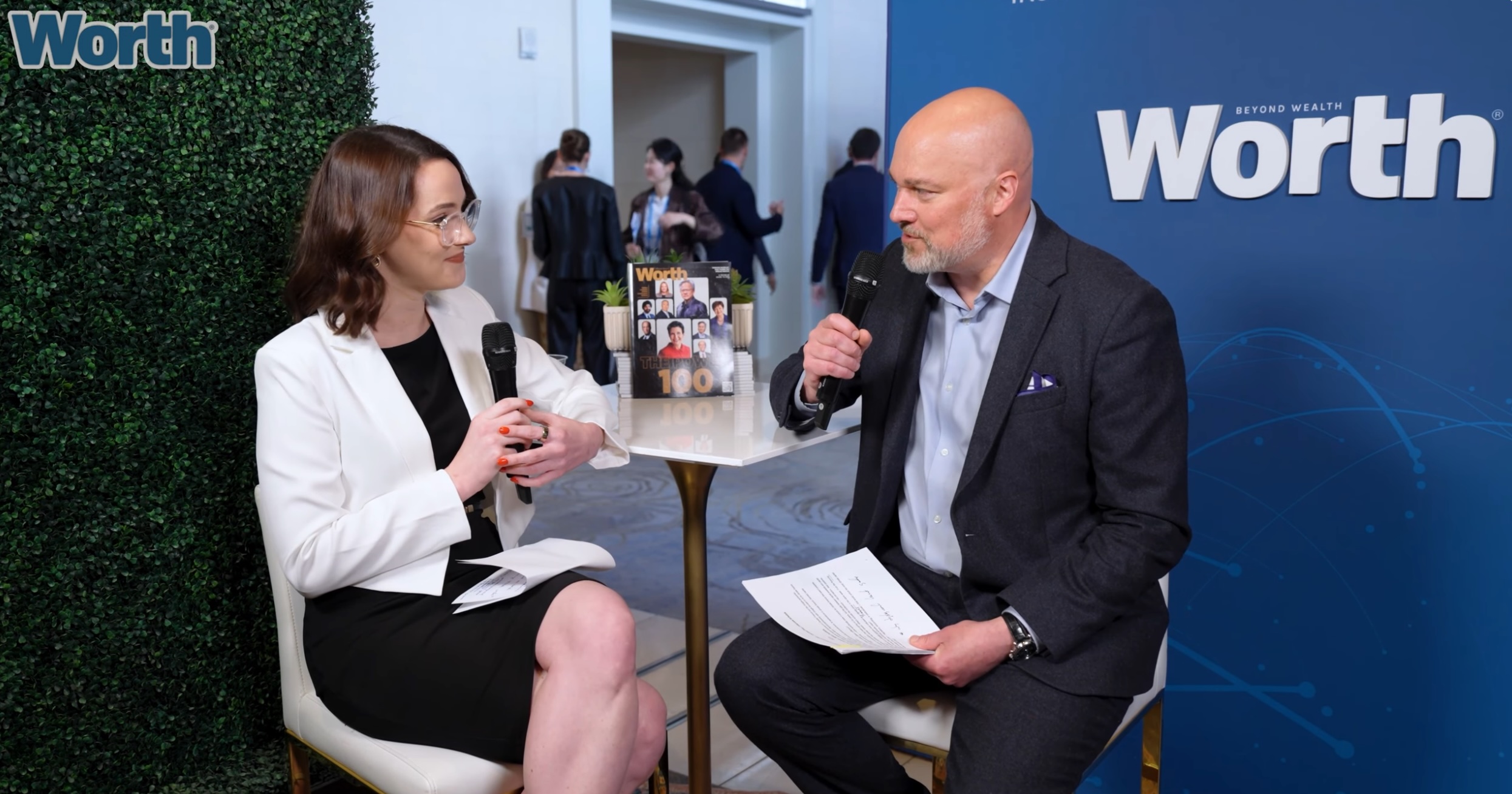 Ethics + Responsibility
The AI Boom Is Creating an Energy Crisis Nobody Is Ready For with Milken Institute’s Rachel Halfaker
Rachel Halfaker of Milken Institute discusses AI, climate finance, energy infrastructure, and the future of American development.
 Ethics + Responsibility
Building Trustworthy AI
As AI systems influence hiring, health, and democracy itself, the demand for explainability and accountability grows urgent. This conversation moves beyond ethics decks to real mechanisms—audits, liability models, and transparency tools—that ensure technology earns public trust.
 Ethics + Responsibility
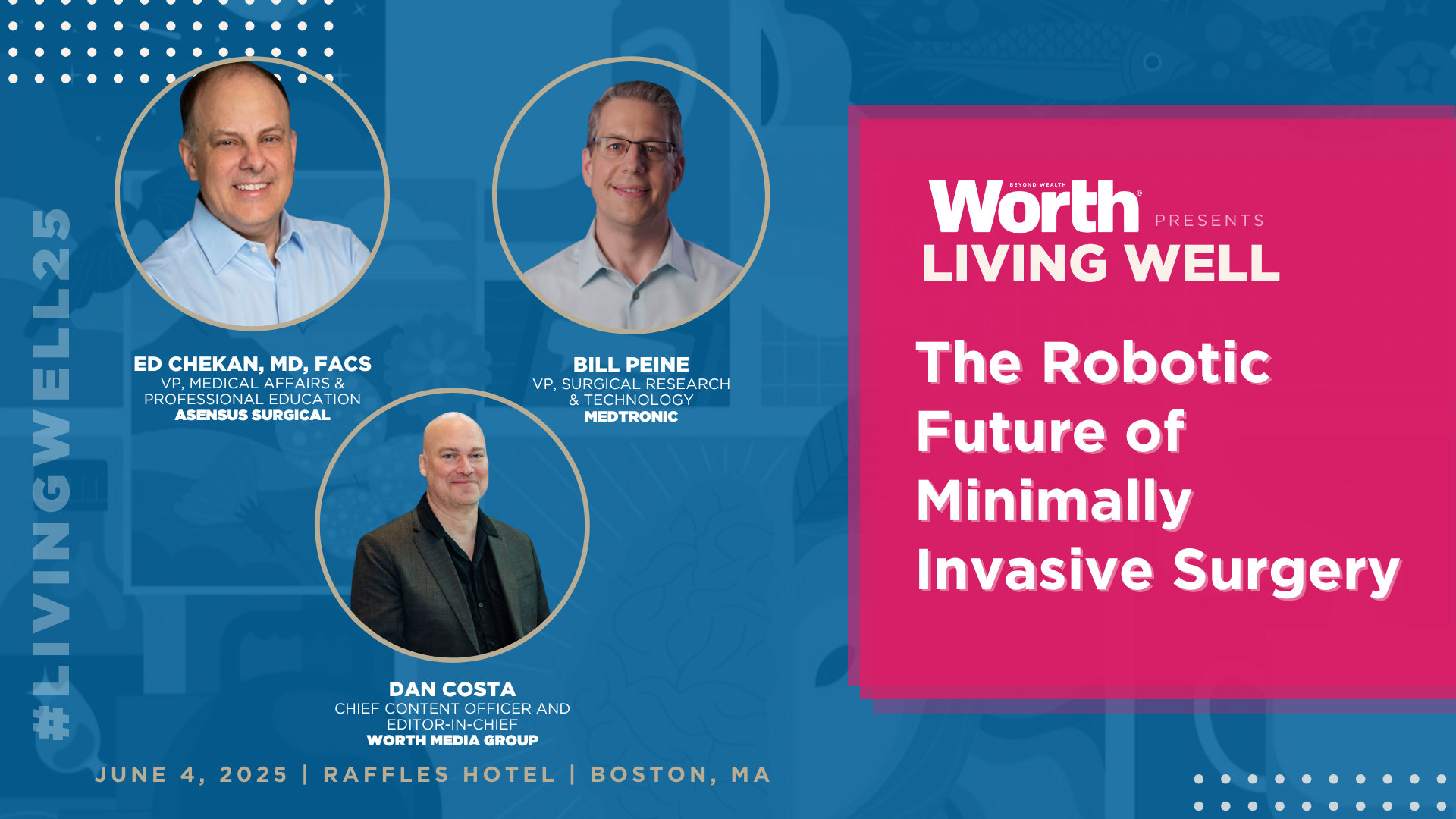
The Robotic Future of Minimally Invasive Surgery
What happens when artificial intelligence meets robotic precision? Dr. Ed Cheken and Bill Peine will reveal how smart surgical systems are reshaping training, performance, and patient safety.