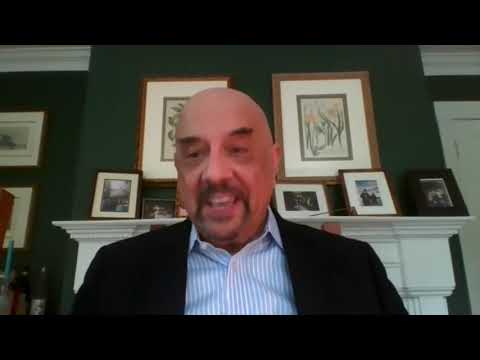

Universities and colleges are facing momentous new challenges as they respond to the Covid-19 crisis. For one, they are undergoing rapid technologization, almost overnight. In a recent Techonomy roundtable, a panel of three experienced educators from Duke, Northwestern, and Dakota State University addressed the new obstacles and what the future of higher learning AC (after-Covid) may look like.
In the scramble this past spring to suddenly replace college life with remote online learning, both obvious and less tangible struggles arose. “We had to look at how [we] deliver that functionality remotely to our students,” said José-Marie Griffiths, the president of Dakota State University, who says that despite the school’s longstanding engagement in online learning for the past two decades, it encountered numerous challenges. Despite about half of students learning online already, and even having remote tenure- track faculty who operated fully online, it had difficulty providing online substitutes for its state-of-the-art high-tech equipment and other physical resources on campus. Another major loss in the shift to digital schooling, she continued, was the critical social fabric found in “out-of-class learning activities” and “social interactions that build and sustain community.” “We’ve had to be deliberate in creating those opportunities [online] for people to connect.”
“Non-academic curricular learning is where the real value is,” agreed Tony O’Driscoll, a leader in four different programs at the Fuqua School at Duke University. He added that the physical layout of the US college campus is designed to bring about beneficial “knowledge accidents.” When you strip the college experience of the capacity for these serendipitous, collaborative moments and replace it with solitary content consumption, there is a leveling of tiers–everybody’s experience is in some way the same.
As for what the future will hold, O’Driscoll predicts two forms of disruption: “One is accelerative. In a way, Covid-19 kind of accelerated us to 2030, and some of the trends we thought were going to happen are just happening sooner...The second is paradigmatic, in which the wormhole takes us into the future, but perhaps on a different track.” Because of all this, he acknowledged that it can be “tough to figure out what the future is going to look like.”
“But I presume that there are things that will not change back,” added Julio Ottino, the Dean of the School of Engineering at Northwestern University. A proponent of opportunities brought forth by this moment, he proposed that now is the time to restructure and create a system “that is much better suited to the current reality than the one that we have now.” He argues that ultimately, schools shouldn’t even be divided by departments, but instead by the domains of creation, organization, and knowledge.
The panelists said that while education is one of the least changed industries in history, educators are largely welcoming this crisis-driven catalyst as an opportunity to leverage technology in order to transform not just the approach to learning, but also education’s role in society. O’Driscoll emphasized an intersectional approach, so higher education can move beyond “productive learning, which is teaching people how to do things we already know how to do...We all need to know the laws of physics, but they're learnable online quite readily and at scale” But what he finds even more important is something else: “It's the generative co-creative learning that's going to find a new future based on diversity of perspective and thought.” O’Driscoll went on to outline some specific suggestions for how our methods of higher education ought to shift:
- “We have to think about context curation, at least as much as we think about content creation.”
- “We have to focus on problems and needs, over focusing on learning objectives.”
- “We have to figure things out a lot more than find things out.”
- “We have to think more about learning to innovate rather than teaching to imitate.”
- “We need more problem-solving networks rather than subject matter experts.”
Interdisciplinary projects have already started to find success in learning world-wide. At Dakota State University, a very unusual regional institution for its extremely strong focus on computer science, cybersecurity, and game design, “all sorts of new ideas and innovations are emerging” as the university creates “new spaces to facilitate that kind of interaction,” Griffiths explained.
Techonomy’s panelists predict the emergence of far more complex and interactive partnerships with the outside world. Ottino said “some people are taking this as a chance to create communities to connect possible employers with the students.” O’Driscoll added: “The space of generative learning is one where universities, companies, and NGOs [are] coming together to create contexts where sensemaking can happen, to find our way to a better future.”
U.S. higher education will also see some dire outcomes as the result of Covid-19. Ottino opined that “places that have $34 billion in endowment won’t go under anytime soon.” But Griffiths said she worries that pre-COVID fears of diminishing funding for smaller schools will only accelerate, leaving some schools highly sensitive to enrollment numbers. “There’s a whole layer of higher education institutions that are likely to be wiped out...over the next three years.” (She did not include hers in this assessment, however.)
But in the face of this challenge lies an opportunity for core shifts to the education model. “We have to rethink everything, even K-12 education,” said Griffiths. While the need for bachelors’ level degrees will likely continue, she suggested that “multiple pathways into the higher education system” will arise. She’d like to see, for example, more “stackable credentials,” including digital badges, certificates, and apprenticeships. As an alternative to the elite model defined by exclusivity, O’Driscoll proposed a more creative economic model in which schools literally invest in their graduates. Schools would thus attract students to their ecosystem with free tuition, and then share in the benefits created after graduation, perhaps by receiving a percentage of a graduate’s salary.
Griffiths summarized by saying that ultimately, what COVID may leave us with as a society, if we can respond with imagination, is “a culture of learning.”

AI-Driven Decarbonization at Scale
John Mennel and Lyndsay Harris-Kyei explore how AI can power sustainable transformation without compromise. Drawing upon real-world use cases—from agriculture to utilities—they’ll reveal how businesses can move beyond forecasts into operations. Learn how to navigate strategic trade-offs, integrate AI into decarbonization programs, and deliver measurable environmental and financial returns.

AI for Equity in Healthcare
Kabir Daya explores how artificial intelligence can reduce disparities in healthcare by expanding access, improving personalization, and closing digital divides. He will share insights on how technology can be designed and deployed to empower patients, support providers, and build a more inclusive health system for all.

From AI to Access: A Vision for the Future
Dr. Gaurav Deshpande explores how artificial intelligence, data-driven protocols, and global collaboration are transforming surgical safety and expanding access to essential care. He will share a forward-looking vision for scaling access to high-quality care worldwide—tackling disparities and equipping under-resourced communities with the tools to deliver care independently.

Climate Science That Speaks to the Heart
Facts alone don’t change minds—stories do. Katharine Hayhoe, Chief Scientist at The Nature Conservancy, shares how connecting climate science to people’s values creates hope and action. In conversation with Dan Costa, she reveals how to bridge belief and data to inspire collective solutions to the climate crisis.