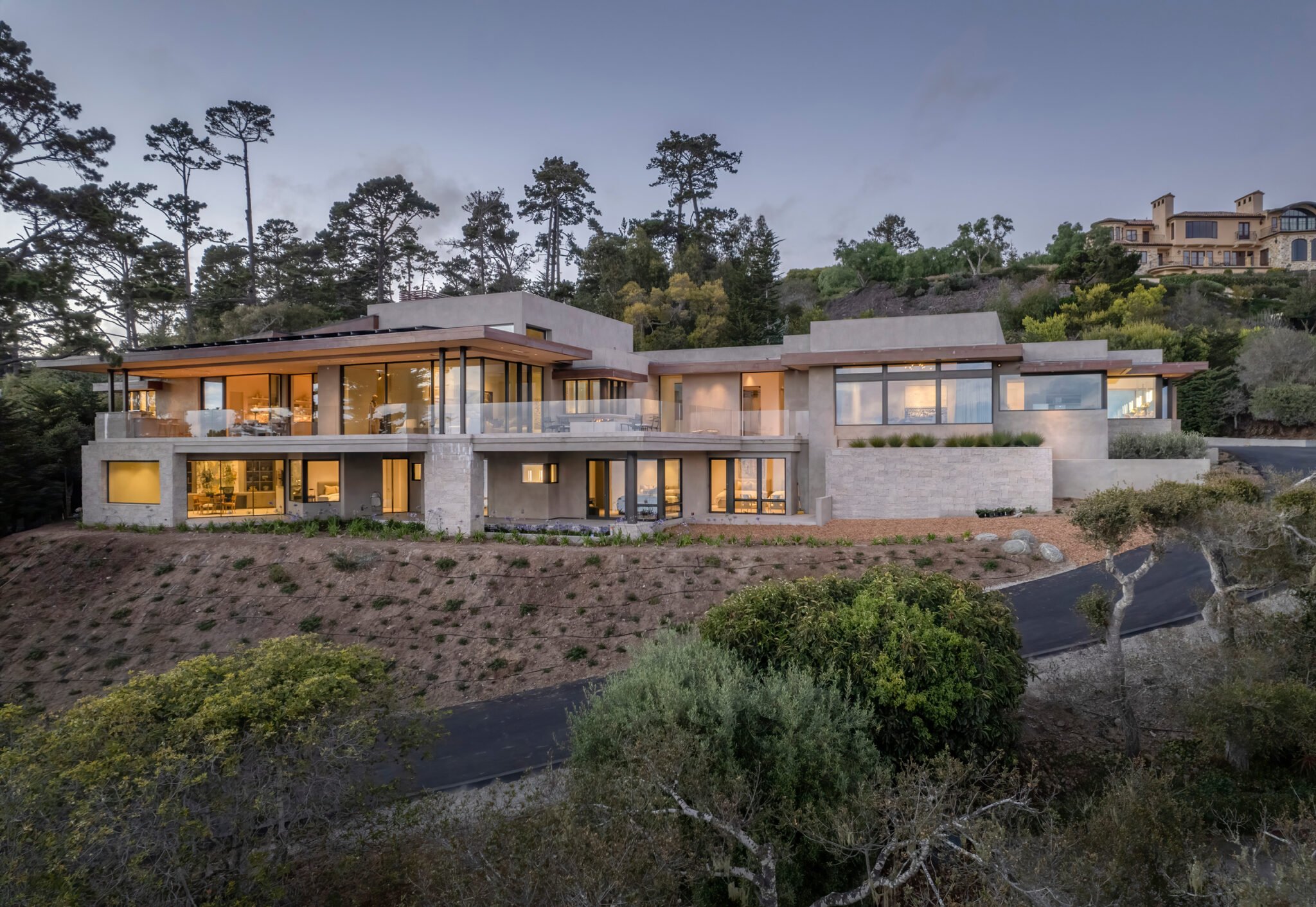

The new must-have status symbol for your home? According to The Wall Street Journal, it’s trophy trees; those which surround a property and inform its architecture or even take pride of place in the center of the house. “Living up close with trees and nature is the greatest luxury,” explains architect Jim Olson of Seattle-based Olson Kundig. “Trees represent the miracle of life on Earth and remind us that we’re part of the natural world.”
From London to Long Island, N.Y., the trend is seeing homeowners not only design their architecture around existing trees but also has them transporting especially striking specimens from locales as far-flung as the olive groves of Tuscany. If properly prepared to endure the journey, say the tree brokers who facilitate these moves, the trees will settle into their new home with ease. In some cases, they claim, the relocation even allows trees that would otherwise be cut down to endure.

Read on for four examples of how top contemporary architecture is taking inspiration from—and providing a celebration of—trees.
1. Fire Island House, Long Island
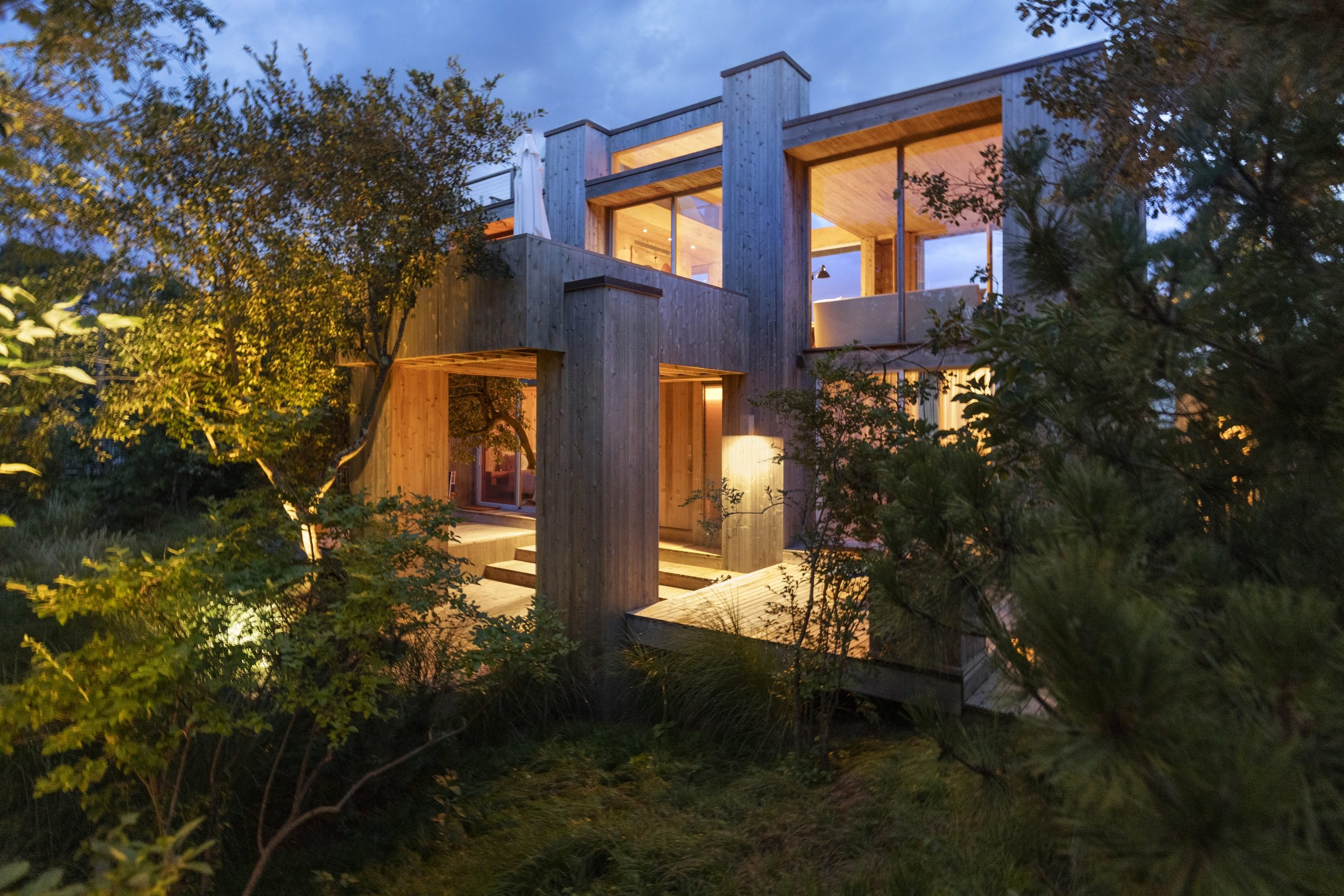
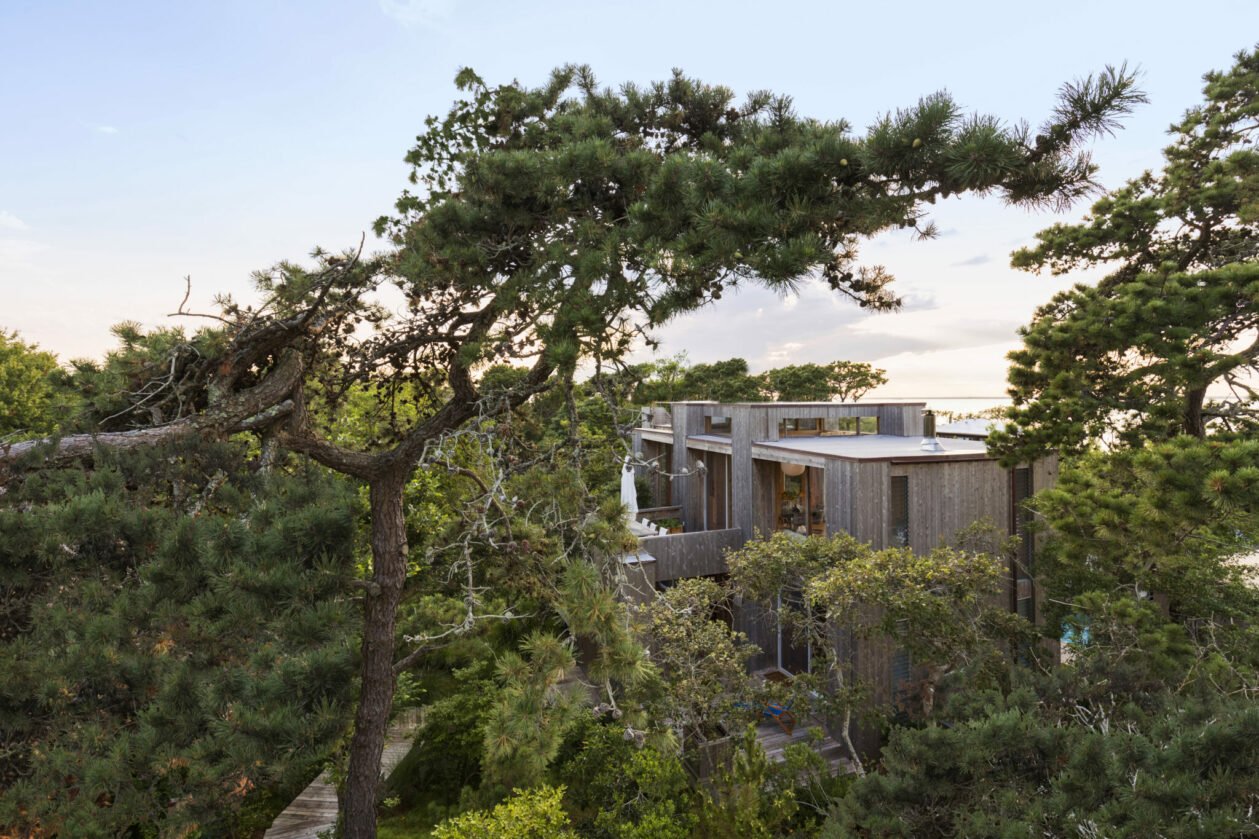
Built by celebrated beach house architect Horace Gifford in 1965, this cedar-clad home on Fire Island is nestled in the trees. When its new owner called on New York’s Andrew Franz Architect to restore and renovate the mid-century modern home, it’s landscape, though neglected and overgrown, was still largely intact.
“There were some large Japanese pines that had matured and embraced the existing architecture, gesturing around it like dancers, as well as trees that yield berries and attract birds aplenty,” says Franz. “There was great emphasis to preserve all of these, and the owner, with a distinguished landscape team lead by Tania Compton, planted many more, recognizing that the landscape was as important as the architecture.”
Franz’s restoration adds a cantilevered staircase, a new entrance pavilion, a pool and a guesthouse but maintains the home’s beautiful blend into its surroundings. “The result creates two experiences,” he says. “Down below, you’re in a private garden where you feel protected while meandering on integrated wood paths or around the pool. While up on the second floor, you’re placed in the canopy of the trees—as though you’re inhabiting a tree house.
2. Pear Tree House, London
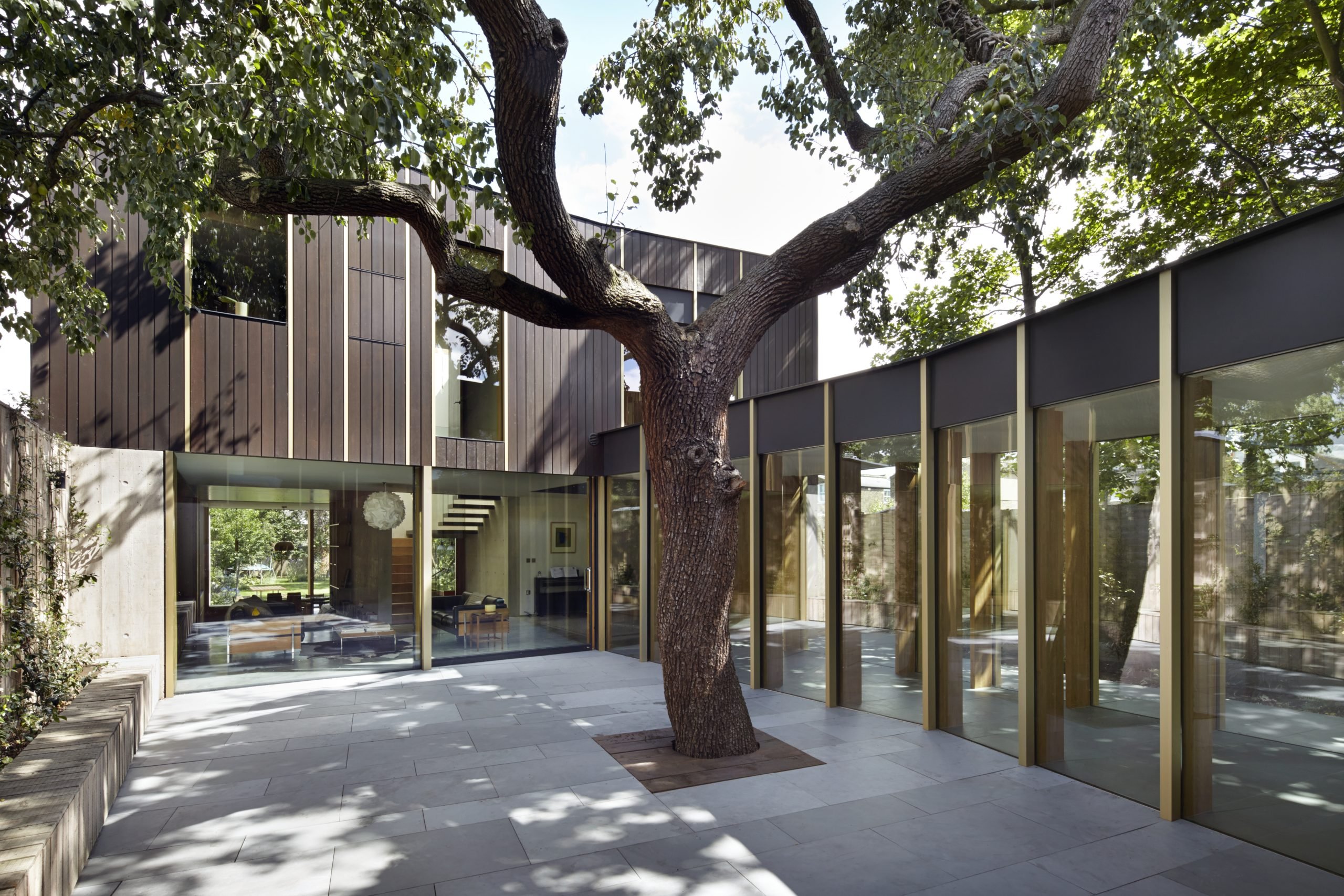
Framed around a 100-year-old pear tree, the two halves of this house in South East London are connected by a glass walkway to form a space in which the sculptural tree takes center stage.
“By forming a courtyard around the tree, we were able to bring light and air into the center of the house while maintaining privacy from neighbors,” says architect Jake Edgley of London-based Edgley Design, who created the home for his own family. Edgley also made use of slender vertical elements in wood throughout the home, evoking the experience of looking through trees and paying homage to the site’s history as a Victorian fruit orchard.
“We all want to live in close proximity to nature,” he says. “And a house that is built around a tree brings nature into the space and the everyday experience of a home.”
3. Cabin at Longbranch, Washington
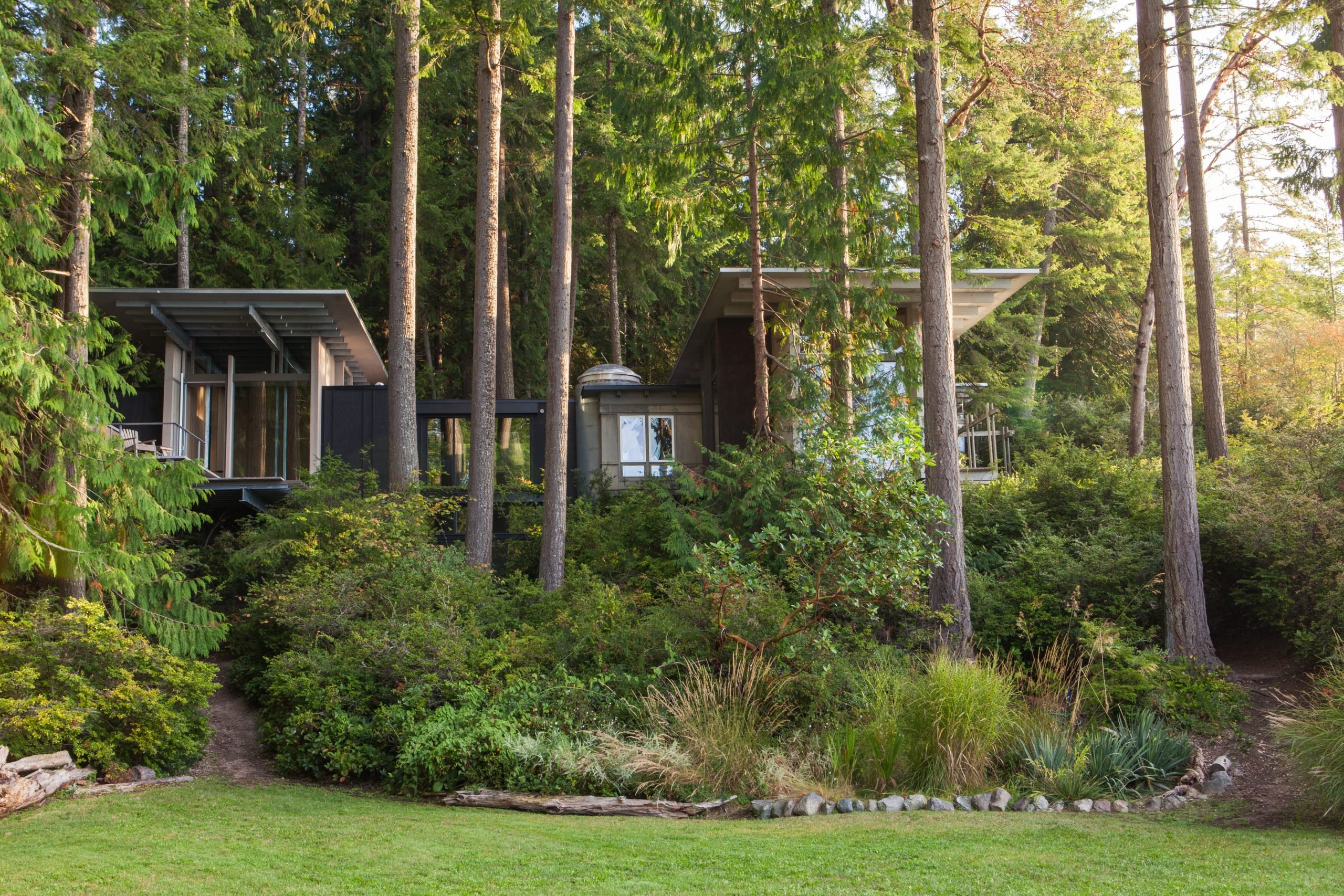
Immersed in fir trees on a hillside overlooking Puget Sound in Washington state, this poetic retreat for architect Jim Olson and his family began as a pet project when Olson was a first-year architecture student. Over the years he’s added to it, incorporating three of the ancient trees into openings, maintaining the now 2,400-square-foot (223-square-meter) home’s seamless integration into its wooded surroundings.
“We want to be near trees for the same reason we put flowers on our tables: there is endless beauty in nature,” says Olson. “We enjoy the expansive branches, the patterns and translucence of their leaves, and the beauty and fragrance of blooms. Trees are markers for the changing of the seasons. They’re full of the songs of birds—there’s a whole world in every tree.”
4. Hayes Residence, West Virginia
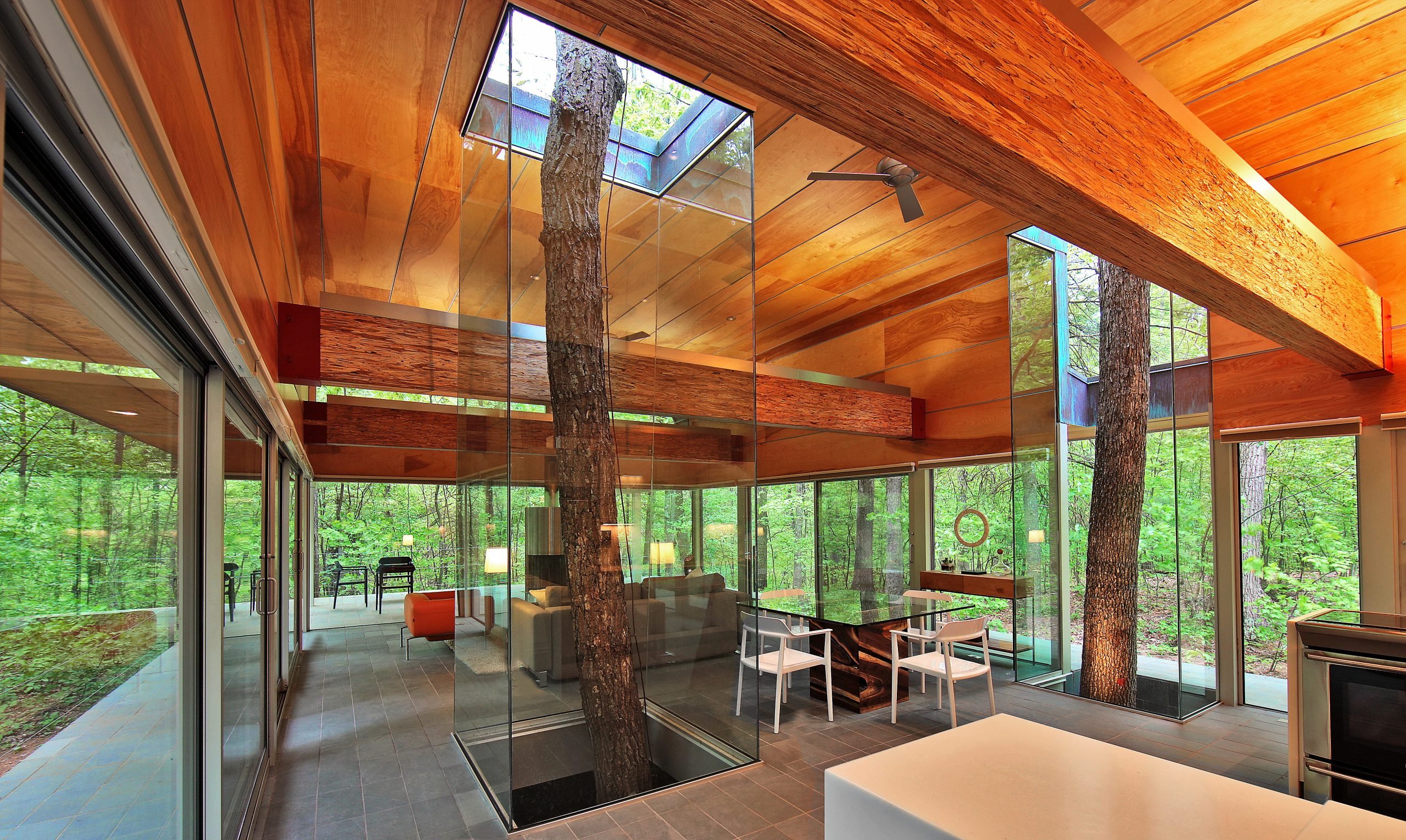
“We wanted this home to appear not as a house, but an open meditative platform floating in an existing tree glade,” says architect Travis Price of Hayes Residence, a home his Washington D.C.-based practice designed in a wooded landscape in West Virginia.
Set on concrete columns, so as not to disturb deep-lying roots, the nearly all-glass home saved the site’s surrounding trees and made them the defining element of the property. “The house was built to leave them where they were,” says Price. One of the mighty oaks penetrates the roof of an open courtyard in between the home’s main living area and its adjoining guesthouse. And, encased in glass boxes, two trees puncture the main volume and grow through the house.
“The glass inside allows light to bounce through the house to each tree,” Price explains. “The summer shade and winter light dances throughout the home from dawn to dusk, and even at night as lights appear and disappear.”
This story originally appeared on Luxury Defined by Christie’s International Real Estate.